乡村旅游

Search documents
北京昌平:草莓季赋能冬日乡村旅游新活力
Zhong Guo Qing Nian Bao· 2025-12-22 11:25
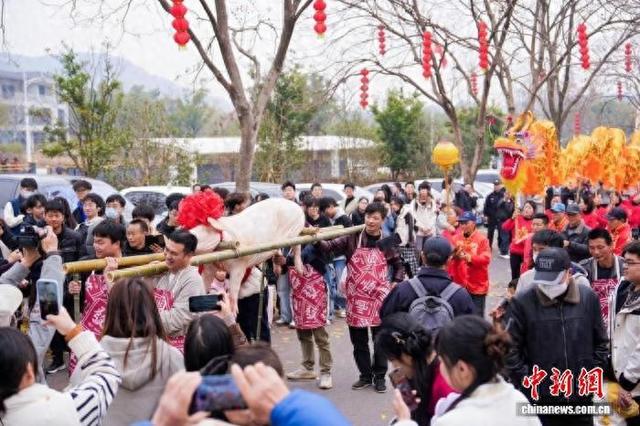
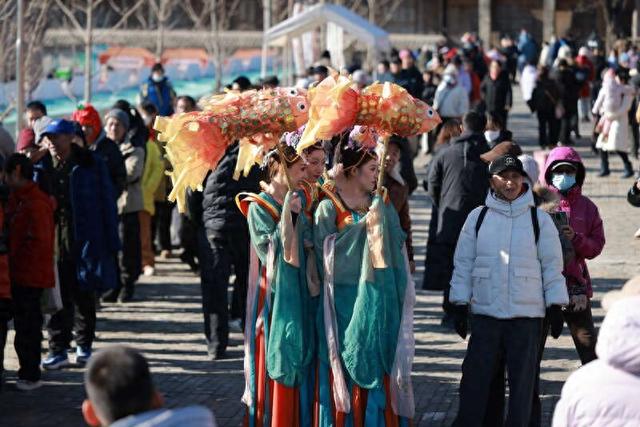
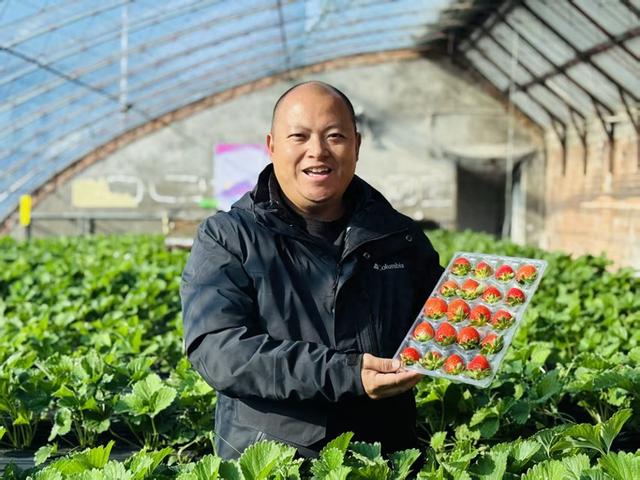
Core Insights - The "Xingshou Rural Tourism Promotion Conference and the Second Xixincheng Strawberry Festival" held in Changping District, Beijing, aims to boost winter consumption through a combination of agricultural enjoyment and folk performances [1][3] Group 1: Event Overview - The event took place on December 20-21, showcasing organic strawberries from local farmers, with popular varieties like Hongyan and Zhangji attracting significant attention due to their sweet taste [1] - The festival featured folk performances and interactive experiences, including traditional dances and games, which drew large crowds of visitors [1][3] Group 2: Tourism and Economic Impact - The event is part of a broader initiative to promote rural tourism, linking cultural heritage with agricultural activities, and includes a winter tourism route that connects strawberry picking, skiing at Jingzhihu Lake, and homestay experiences [3] - The upcoming auction on December 26 for strawberry rights aims to enhance the market presence of Changping strawberries, focusing on high-end market access and establishing a "quality for price" benchmark [5] Group 3: Auction Details - The auction will feature rights to high-quality strawberries from multiple greenhouses, with starting bids set at 30,000 yuan per greenhouse, including various value-added services such as technical guidance and remote monitoring [5]

更大力度推进“百千万工程”集成式改革 | 市委书记抓乡村振兴(2025.12.15-12.21)
Nan Fang Nong Cun Bao· 2025-12-22 09:31
Core Viewpoint - The article discusses the ongoing efforts in Guangdong Province to implement the "Hundred Counties, Thousand Towns, and Ten Thousand Villages High-Quality Development Project," focusing on rural revitalization through various local initiatives aimed at enhancing economic growth and improving living conditions in rural areas [4][12][18]. Group 1: Local Initiatives - Guangzhou is advancing urban village renovations and accelerating ecological construction to enhance urban quality [5][14]. - Shaoguan is promoting the integration of agriculture and tourism, aiming to create job opportunities close to villagers' homes [6][18]. - Meizhou emphasizes reform to unleash grassroots vitality and expand development space [7][29]. - Shanwei is seeking new development opportunities from the sea, diversifying its marine economy [8][36]. - Zhongshan is planning rural construction with an artistic perspective, developing industries that enrich and empower villages [9][40]. - Jiangmen is advancing provincial pilot projects for agricultural and cultural tourism integration, focusing on specialty economic forests [10][53]. - Maoming is enhancing the entire agricultural chain and promoting industry integration [11][60]. Group 2: Leadership Statements - Guangzhou's Party Secretary emphasizes the need for coordinated urban-rural integration and rapid advancement of the "Hundred Thousand Project" [12][13]. - Shaoguan's Party Secretary highlights the importance of developing leading industries and promoting high-quality development zones [18][20]. - Meizhou's Party Secretary stresses the need for continuous exploration to overcome grassroots development challenges through reform [26][32]. - Shanwei's Party Secretary calls for the development of modern marine ranching and energy industries [34][36]. - Zhongshan's Party Secretary focuses on developing high-end health and wellness industries while enhancing rural aesthetics [40][42]. - Jiangmen's Party Secretary advocates for the development of the forestry economy and the integration of agriculture, culture, and tourism [53][55]. - Maoming's Party Secretary emphasizes the importance of agricultural production management and project construction [61][64]. Group 3: Economic Development Goals - The article outlines various goals, including significant changes within five years and fundamental transformations within ten years, focusing on economic strength and improved living conditions in rural areas [37][71]. - The emphasis is placed on enhancing county and village economic strength through targeted development strategies [72][78]. - The need for ecological advantages to be transformed into economic benefits is highlighted, particularly in areas like Qingyuan [84][86].

京北构建一站式乡村旅游目的地
Bei Jing Wan Bao· 2025-12-22 07:21
Group 1 - The core theme of the event is "rural revitalization, cultural tourism integration, and folk customs inheritance," featuring various activities such as folk performances, strawberry markets, and a tourist train [1] - The event aims to create a one-stop winter rural tourism destination, showcasing the achievements of rural revitalization through interactive experiences and local cultural heritage [1] - A promotional campaign is being conducted in collaboration with five high-quality strawberry picking gardens, offering citizens an 20% discount on strawberry picking by sharing a specific article on social media [1] Group 2 - A strawberry rights auction will be held, connecting three major agricultural parks, allowing bidders to gain full rights to the strawberries and access to various supportive services [2] - The auction winners will receive comprehensive support including technical guidance, management, and logistics services for strawberry cultivation [2]
网红打卡点新范式:“百千万工程”里的乡村美学与旅游经济学
Nan Fang Du Shi Bao· 2025-12-22 05:18
"别小看村里的购物街,很多农户在这里卖农产品。游客来打卡,又带动了周边餐饮、住宿。"雁洋镇阴 那村党支部书记陈小菊向南都记者感慨,村里抓住了"百千万工程"的机遇。 阴那村距离叶剑英纪念园七八公里。作为全国爱国主义教育示范基地,叶剑英纪念园每年吸引全国各地 百万游客前来参观,瞻仰叶帅铜像,传承红色基因,在追寻革命足迹中赓续红色血脉。 梅州借助红色资源,在丙村镇、雁洋镇、松口镇片区打造"叶帅故里·大美梅县"丙雁松乡村振兴示范 带,农文旅融合取得初步成效,丙村、雁洋、松口镇片区被列入整县推进农文旅融合发展首批试点。 在更隐秘的岭南大地,正涌现一批新的"网红打卡点": 惠州龙门县龙华镇长滩村,一个曾破旧不堪的"空心村",经"修旧如旧"活化后,融入了现代文旅业态; 梅州叶帅故里,红色资源引来"流量","美丽乡村"点亮了"美丽经济";环南昆山—罗浮山"最美旅游公 路",上演着"永不落幕"的运动会;对接香港的从化马场正在如火如荼地建设,吸引国际目光聚焦…… 今年是"百千万工程"三年初见成效的关键之年,客家古村、红色老区、生态山区面貌已然焕新,"以前 没人来,现在节假日都会堵车!"农文旅融合不断走深走实,南都N视频记者多方走 ...
山西偏关:交通升级赋能 铺就民生与发展通途
Zhong Guo Xin Wen Wang· 2025-12-22 01:56
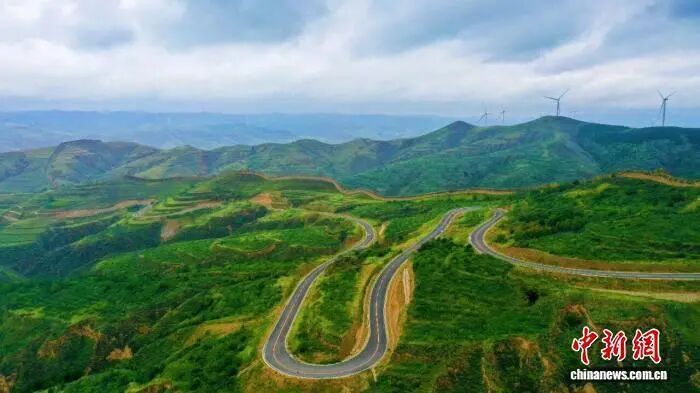
Core Insights - The rapid development of transportation infrastructure in Piegua County has significantly improved the local economy and residents' quality of life [3][4][10] Transportation Development - Piegua County has prioritized transportation construction during the 14th Five-Year Plan, achieving full coverage of cement roads in 149 administrative villages and connecting all towns to roads of at least three levels [4] - The Long Wall No. 1 and Yellow River No. 1 tourist roads have connected 39 scenic spots, 6 towns, and 70 villages, promoting a new tourism model in Piegua [4][6] Economic Impact - The completion of tourist roads has stimulated the "beautiful economy" in surrounding villages, leading to increased local entrepreneurship, such as homestays and expanded farming [6][7] - Local specialties like Yellow River carp and lamb have gained popularity among tourists, enhancing the income of residents [6][7] Daily Life Improvements - Transportation advancements have made daily commuting more convenient, with improved public transport options and the introduction of shared electric bikes [8][10] - The county has established a seamless urban-rural transport network, enhancing connectivity for students and workers returning home [8][10] Safety and Sustainability - Piegua County has implemented comprehensive measures for traffic safety, including the elimination of old diesel trucks and promoting green transportation [10] - The development of transportation infrastructure reflects a shift in development philosophy, aiming for high-quality growth and improved living standards for residents [10]
古建变身星级酒店,乡民做旺老街烟火,环“两山”引领城乡共富
Nan Fang Nong Cun Bao· 2025-12-22 01:31
Core Viewpoint - The article highlights the transformation of rural areas in Guangdong province, particularly through the "Two Mountains" leading area initiative, which has revitalized local economies and improved living conditions by integrating tourism and cultural heritage into community development [1][2][3]. Group 1: Economic Impact - The center village in Longmen County has seen a monthly income increase of over 200,000 yuan, with collective operational income rising from 225,000 yuan to 570,000 yuan within a year [12][13]. - The introduction of tourism has led to a 30% increase in visitors after notable literary figures visited the village, further boosting local economic activity [24][22]. - The revitalization efforts have resulted in over 3,600 villagers gaining employment, with an average income increase of over 20,000 yuan per household [66][69]. Group 2: Infrastructure and Development - A total investment of 1.1 billion yuan has been allocated for the comprehensive development of the center village, focusing on integrating cultural and commercial elements [17][33]. - The "Mountain Summer 1368 Hotel" and "Mountain Farm" projects are part of a 200 million yuan investment aimed at transforming historical sites into modern tourist attractions [34][35]. - The renovation of 85 ancient buildings has been carried out under the principle of "repairing the old as old," blending historical preservation with modern amenities [36][38]. Group 3: Community Engagement - The local government has collaborated with multiple administrative villages to raise 900,000 yuan for the construction of community facilities, promoting shared economic benefits [25][26]. - The introduction of a market for local farmers to sell their products has generated daily revenues of 3,000 to 5,000 yuan per stall, enhancing community engagement and economic sustainability [28][27]. - The "Youth Entrepreneurship Fund" initiative aims to support young entrepreneurs by providing opportunities to operate businesses without initial costs, fostering local innovation [52][53]. Group 4: Cultural and Tourism Development - The "Ancient Banyan Literary Village" has become a cultural hotspot, attracting tourists and literary enthusiasts, thereby enhancing the village's reputation [19][21]. - The integration of artistic elements and cultural experiences into the tourism offerings has created a unique identity for the villages, promoting both heritage and modern tourism [51][81]. - Future plans include the development of an "International Reception Hall" and "Creator Ecological Valley" to further enhance the cultural tourism landscape [74][75].
市政协成立乡村治理委员工作室
Xin Lang Cai Jing· 2025-12-21 19:39
Core Insights - The establishment of the rural governance committee office in Guxiang Village, Changping District, aims to provide intellectual support for rural governance, focusing on the theme of "Urban-Rural Co-construction and Building a Circle of Good Governance" [1][3] - This office is the 52nd committee office set up by the Beijing Municipal Political Consultative Conference, which will leverage the committee's extensive connections and professional advantages to modernize the rural governance system and capabilities in the capital [1][3] Group 1 - The office will collect public opinions and specific demands from rural communities, addressing both individual needs and common issues in rural governance through proposals and research reports [1][3] - It aims to explore effective ways for the committee to participate in rural governance, establishing a high-quality expert think tank and facilitating regular connections between committee members and rural areas [1][2] - Activities such as "Enterprise-Linked Villages" and "Village-Society Co-construction" will be organized to promote mutual development, enhance livelihoods, and foster talent [1][2] Group 2 - Wang Bigang, a member of the committee, suggested that rural governance should consider the unique characteristics of the capital, emphasizing the need for coordinated urban-rural development and optimizing village layouts [2][3] - Guxiang Village has developed unique industries, such as traditional tofu-making and honey production, which have led to significant economic benefits, but also face challenges like increased environmental pressure due to rising tourist numbers [2] - The committee office will play a crucial role in coordinating resources and providing professional guidance to help Guxiang Village address its development challenges [2][3]
乡村行·看振兴丨冬至到年味浓 浙江山村年猪饭“烧热”乡村共富路
Xin Lang Cai Jing· 2025-12-21 14:33
Core Viewpoint - The article highlights the vibrant cultural event of the "Year Pig Feast" in Maowu Village, Huzhou, Zhejiang Province, showcasing local traditions and attracting thousands of tourists, thereby boosting rural tourism and the local economy [1] Group 1: Event Description - The "Year Pig Feast" is a traditional custom in Maowu Village, celebrated around the winter solstice, where villagers prepare local dishes and engage in communal activities [1] - The event features the ceremonial slaughter of a nearly 300-pound local pig, accompanied by traditional music and a parade, creating a festive atmosphere [1] - Tourists participate in various activities, including visiting local specialty markets and experiencing traditional food preparation, such as making glutinous rice cakes [1] Group 2: Economic Impact - Since the inception of the "Year Pig Feast" in 2017, the event has significantly increased the village's popularity, leading to a rise in rural tourism and the establishment of local homestays [1] - The sale of local products, such as traditional rice cakes and other specialties, has improved, benefiting the villagers economically [1] - The village plans to continue leveraging its natural resources to develop more cultural and tourism activities, promoting rural revitalization and shared prosperity among villagers [1]
市集+小火车,采摘有福利!昌平草莓游,今冬玩法多
Bei Jing Ri Bao Ke Hu Duan· 2025-12-21 11:45
Group 1 - The event held from December 20 to 21, 2023, was the Changping Xingshou Rural Tourism Promotion Conference and the Second Xixincheng Strawberry Festival, focusing on rural revitalization, cultural tourism integration, and folk customs inheritance [2] - The festival featured innovative experiences, including the trial operation of a tourist train connecting scenic spots and the core area of the strawberry festival, which was well-received by visitors [2] - Activities included folk performances, a strawberry market, interactive experiences, and a one-stop winter rural tourism destination, showcasing the achievements of rural revitalization [2] Group 2 - The Beijing Daily client collaborated with five quality strawberry picking gardens in Changping to offer citizens strawberry picking benefits, with discounts available until March 31, 2026 [2] - The price for the first batch of strawberries is between 80 to 120 yuan per pound, with an additional 20% discount for self-picking customers [3] - A strawberry rights auction will be held on December 26, 2023, featuring dozens of greenhouses and various strawberry varieties, providing bidders with ownership rights and additional services [5]
(乡村行·看振兴)冬至到年味浓 浙江山村年猪饭“烧热”乡村共富路
Xin Lang Cai Jing· 2025-12-21 09:21
Core Viewpoint - The annual pig feast in Maowu Village, Huzhou, Zhejiang Province, has become a significant cultural event, attracting thousands of tourists and enhancing local tourism and economy [1][3][8] Group 1: Event Description - The pig feast, known as "Winter Solstice Gathering of Fortune," features traditional activities such as pig slaughtering, cooking, and communal dining, showcasing local customs and flavors [1][3] - A nearly 300-pound pig is ceremoniously paraded through the village, accompanied by traditional music and festivities, creating a vibrant atmosphere for both villagers and visitors [3][8] Group 2: Economic Impact - Since the inception of the pig feast in 2017, Maowu Village has gained popularity, leading to increased rural tourism and the establishment of local homestays and specialty product sales [8] - The event has significantly contributed to the local economy, with villagers benefiting from the rise in tourism and the demand for local products [8] Group 3: Cultural Significance - The pig feast embodies the villagers' joy for harvest and aspirations for a better life, reflecting the rich cultural heritage of the region [3][6] - The event includes educational components, such as cultural lectures on traditional practices, enhancing community engagement and cultural appreciation among visitors [6][8]