乡村旅游服务

Search documents
把边陲烟火气绘成兴边富民新画卷
Xin Lang Cai Jing· 2026-02-25 17:54
Core Viewpoint - The article highlights the efforts of Zhang Shiying, a representative of the National People's Congress and the secretary of the Mengla County Committee, in promoting rural revitalization and economic development in Mengla County, Yunnan Province, by leveraging local resources and enhancing community engagement [1][2]. Group 1: Economic Development Initiatives - Mengla County plans to host a total of 344 large market events by 2025, attracting approximately 2.1 million tourists and generating sales of 43.9 million yuan, which will increase collective income by 7.01 million yuan [2]. - The county aims to transform its traditional rubber industry, which previously accounted for 70-80% of farmers' income, by addressing challenges such as low added value and high market risks, and by proposing the establishment of a national modern agricultural industrial park [2][3]. Group 2: Community Engagement and Infrastructure - Zhang Shiying emphasizes the importance of grassroots engagement, frequently visiting villages and local businesses to gather feedback and identify development bottlenecks, thereby fostering a collaborative approach to rural tourism and economic diversification [1][2]. - Infrastructure improvements in villages like Manlongle and Shanglongyin have led to the emergence of homestays and courtyard economies, extending the vibrancy of market activities into daily village life [1]. Group 3: Strategic Focus Areas - The focus is on enhancing border town construction by leveraging geographical advantages and developing characteristic industries, which will improve overall quality and efficiency [2]. - Zhang Shiying plans to propose suggestions at the upcoming National People's Congress regarding the development of under-forest economies, park economies, and border economies, aiming to convert resource advantages into industrial benefits and improve the welfare of local residents [3].
已饱和!关于黔西市化屋乡村旅游村的温馨提示
Xin Lang Cai Jing· 2026-02-19 12:44
Group 1 - The current visitor capacity of Huawu Village has exceeded its maximum limit, indicating a high level of interest in the filming location of "Deep in the Wumeng" [1] - Visitors are advised to travel during off-peak times and consider alternative nearby attractions such as Daqian Town Yachi River (Qiulin Village) Scenic Area, Dujuan Street Wuloba (Taifeng Garden) Scenic Area, and others [1] - The message expresses gratitude for the visitors' understanding and cooperation, wishing them a pleasant journey and happiness with their families [1]
袁家村户户有股年年分红 股金年均收益超40%
Sou Hu Cai Jing· 2026-02-17 02:57
Core Viewpoint - The article highlights the successful transformation of Yuanjia Village into a prosperous community through a cooperative shareholding model, primarily driven by rural tourism and local entrepreneurship [3][4]. Group 1: Village Background and Economic Transformation - Yuanjia Village, known as a "well-off village," faced economic challenges after the closure of local enterprises in the late 1990s [4]. - Since 2007, the village has developed rural tourism, attracting nearly 11 million visitors in 2025 and generating over 1.3 billion yuan in tourism revenue [4]. Group 2: Cooperative Shareholding Model - The shareholding system began in 2012, allowing villagers to invest in local businesses, with each household contributing 11,600 yuan [6][7]. - By 2014, the village initiated its first profit distribution, with some villagers receiving significant returns on their investments, such as 9,000 yuan from an initial investment of just over 10,000 yuan [7]. Group 3: Community Engagement and Investment Growth - The village leadership actively encouraged participation in the shareholding model, leading to overwhelming interest from villagers to invest, often exceeding the funding needs of local businesses [8]. - In 2025, the intention to invest in a new cooperative reached 150 million yuan, showcasing the community's commitment to shared prosperity [8].

浙江“三农”指标全线攀升
Xin Hua Wang· 2026-02-01 01:43
Group 1 - The core viewpoint highlights the significant improvement in Zhejiang's agricultural and rural development indicators, with record highs in grain production area, total output, and yield per mu, alongside a notable increase in rural residents' disposable income [1][2] - By 2025, the integration of agriculture, culture, and tourism in Zhejiang is expected to enhance industrial advantages, with rural leisure tourism revenue projected to exceed 50 billion yuan [1] - The province aims to establish a comprehensive rural operation model, with 226 provincial-level key village clusters already developed, benefiting 1,447 surrounding villages [2] Group 2 - Zhejiang plans to achieve "eleven consecutive harvests" in grain production by 2026, with a target of over 3.5% growth in the added value of agriculture, forestry, animal husbandry, and fishery [3] - The province aims to develop 400 new provincial-level key village clusters and increase the total output value of specialty agricultural products to over 350 billion yuan [3] - Rural residents' disposable income is projected to surpass 47,000 yuan, reflecting ongoing efforts to enhance farmers' income and quality of life [3]
以绿色供应链提档乡村旅游产业能级
Xin Hua Ri Bao· 2026-01-29 21:40
Core Viewpoint - The rural tourism industry in China has transitioned from scale expansion to a critical phase of quality improvement and efficiency enhancement, exemplified by the case of Shuikou Township in Zhejiang Province, which has developed a new path for high-quality rural tourism through the construction of a green supply chain [1][4]. Group 1: Challenges in Rural Tourism Development - The early development of rural tourism in Shuikou Township was characterized by fragmented operations by individual farmers, leading to issues of efficiency, environmental impact, and quality [2]. - The imbalance between front-end and back-end service systems hindered effective planning and coordination, resulting in a bloated operational structure with low resource utilization and high environmental pollution [2][3]. - The low organizational level of the rural tourism supply chain, with various entities operating independently, limited collaboration and integration, thus constraining overall efficiency and high-quality development [3]. Group 2: Solutions for Improvement - To address the identified challenges, the local government, tourism managers, and experts collaborated to optimize resource allocation and enhance industry cooperation, aiming to improve the overall operational efficiency and service quality of rural tourism [4][5]. - A new green supply chain centered on shared back-end services was established, separating inefficient and polluting back-end operations from individual businesses and consolidating them into a shared service platform [4]. - The comprehensive planning of both front-end services and back-end support was emphasized, integrating suppliers and support facilities into a unified development framework to enhance the overall efficiency of the rural tourism industry [5]. Group 3: Policy Support and Future Prospects - Increased policy support and green regulatory measures are essential for the successful implementation of the green supply chain and the effective operation of the shared service platform [5]. - The ongoing development of the tourism back-end service sharing platform has led to a thriving rural tourism industry in Shuikou Township, providing a replicable model for enhancing quality and efficiency in rural tourism across the country [6].
【“十五五”开好局起好步】奋发进取 绘就乡村振兴新图景
Yang Shi Wang· 2026-01-10 11:50
Group 1 - The core viewpoint emphasizes the importance of advancing rural revitalization through the development of profitable industries, as highlighted by President Xi Jinping [1] - In Hubei's Jia Yu County, the annual output value of vegetable planting has surpassed 6.5 billion yuan, with plans to promote high-yield, resilient cabbage varieties in collaboration with research institutions [1] - The total output value of modern agricultural industrial parks in China has exceeded 3 trillion yuan [3] Group 2 - In Chongqing's Wanzhou National Modern Agricultural Industrial Park, the citrus harvest is expected to drive total output value to exceed 10 billion yuan through green processing and ecological branding [2] - In Xinjiang's Xuedu Village, tourism has become a major resource, with over half of the 700 residents engaged in the tourism industry, supported by new offerings like bonfire parties [3] - In Heilongjiang's Mohe North Pole Village, over 300 unique hotels and guesthouses have been established, attracting more than 700,000 tourists since winter began [3] - Yunnan plans to train over 500,000 individuals in various skills to support rural revitalization efforts [3] - Zhejiang has introduced the first local standard for "new farmers," addressing talent needs in the rural revitalization process [3]
(走进中国乡村)宁夏泾源:六盘山下“绿”变“富” 村民吃上生态饭
Xin Lang Cai Jing· 2026-01-03 04:51
Core Viewpoint - The transformation of Yejia Village in Ningxia's Jingyuan County from a "hollow village" to a thriving tourist destination showcases the successful integration of ecological protection and economic development, leading to increased income for local farmers through tourism and agricultural products [8]. Group 1: Village Development - Yejia Village has upgraded its homestays and facilities to attract more tourists, with a monthly income of nearly 30,000 RMB during peak seasons from accommodation and dining [2]. - The village's tourism development was initiated after the construction of a road in the early 2000s, which connected it to external markets and facilitated the establishment of agritourism [5]. - Currently, there are 135 agritourism businesses in Yejia Village, capable of accommodating 3,000 guests and serving 4,000 meals daily, making it the largest homestay village in Guyuan City [7]. Group 2: Ecological and Economic Integration - Jingyuan County has adopted a development strategy that emphasizes ecological foundations, cultural elements, and tourism integration, resulting in a year-round tourism product system [7]. - The county has achieved a forest coverage rate of 48.65% and over 93% of days with good air quality, demonstrating a commitment to ecological preservation [8]. - The "Green and Rich Win-Win" poverty alleviation case from Jingyuan County has been recognized as a global best practice, highlighting the successful collaboration between government, enterprises, and farmers [8]. Group 3: Economic Impact - The local brands "Jingyuan Yellow Cattle" and "Jingyuan Honey" have values of 3.519 billion RMB and 144 million RMB, respectively, indicating the significant economic impact of local agricultural products [8]. - The tourism industry has become the leading sector for rural revitalization in Jingyuan County, benefiting around 40,000 farmers through various income-generating activities [8].
三峡库区乡村新貌:农产品出海,游客、年轻人进山
Zhong Guo Xin Wen Wang· 2026-01-01 01:16
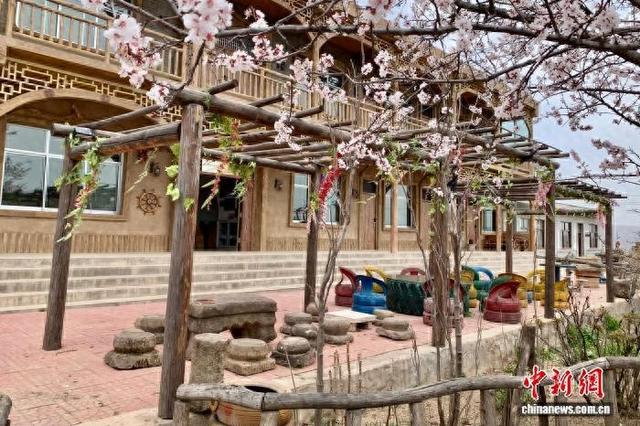
Group 1: Tourism Development - The local government is promoting a four-season tourism strategy, including activities like flower viewing in spring, water activities in summer, and hiking in autumn and winter [2][4] - The number of tourists in Pinghe Township is expected to increase significantly, with local accommodations and dining facilities expanding to meet demand, raising daily capacity to nearly 3,000 visitors [3] - In 2023, Pinghe Township attracted nearly 100,000 tourists, generating approximately 6 million yuan in tourism revenue [3] Group 2: Agricultural Innovation - Pinghe Township is focusing on "agriculture + tourism" and "agriculture + education" models, with plans to expand strawberry cultivation from 30 acres to potentially hundreds of acres, targeting both domestic and international markets [5] - A fish farming initiative has transformed previously idle ponds into productive sites, generating over 200,000 yuan in sales from fish sold to regions like Hubei and Hunan [6] - The return of young people to their hometowns is contributing to agricultural and tourism development, fostering a new wave of rural revitalization [7]

京北构建一站式乡村旅游目的地
Bei Jing Wan Bao· 2025-12-22 07:21
Group 1 - The core theme of the event is "rural revitalization, cultural tourism integration, and folk customs inheritance," featuring various activities such as folk performances, strawberry markets, and a tourist train [1] - The event aims to create a one-stop winter rural tourism destination, showcasing the achievements of rural revitalization through interactive experiences and local cultural heritage [1] - A promotional campaign is being conducted in collaboration with five high-quality strawberry picking gardens, offering citizens an 20% discount on strawberry picking by sharing a specific article on social media [1] Group 2 - A strawberry rights auction will be held, connecting three major agricultural parks, allowing bidders to gain full rights to the strawberries and access to various supportive services [2] - The auction winners will receive comprehensive support including technical guidance, management, and logistics services for strawberry cultivation [2]
“沉睡资产”变为“发展引擎”推动乡村振兴 文旅农商融合业态绘新景
Yang Shi Wang· 2025-12-19 03:34
Group 1 - The core viewpoint of the articles emphasizes the importance of coordinated development, promoting urban-rural integration and regional linkage, with a focus on revitalizing rural areas through land reform and tourism development [1][24] - The transformation of Zhanqi Village, which became a model for rural revitalization, is highlighted, showcasing its collective assets exceeding 1.19 billion yuan and attracting over a million tourists annually [9][11] - The successful land reform in Zhanqi Village, marked by the sale of 13.4 acres of collective land for 7.035 million yuan, has led to the establishment of various tourism projects and entrepreneurial opportunities for local residents [2][24] Group 2 - The articles discuss the role of talent and innovation in rural revitalization, with examples from Mianjiang Village where returning youth and external talents have contributed to the local economy through new business models like live streaming and hospitality [14][19] - The integration of traditional culture with modern tourism in Zhanqi Village has resulted in a diversified economy, moving beyond agriculture to include various industries such as food processing and cultural tourism [7][24] - The ongoing reforms in Chengdu aim to facilitate the market-oriented allocation of human resources, supporting the influx of skilled professionals to enhance rural development [21][22]