
农产品贸易

Search documents
中美贸易战开始反转?中国承诺美国未来三年每年至少购买2500万吨大豆
Sou Hu Cai Jing· 2025-11-02 17:24
Core Insights - The recent agreement for China to purchase 12 million tons of U.S. soybeans this season and a minimum of 25 million tons annually for the next three years reflects a strategic negotiation where China exchanges commodity purchases for key concessions from the U.S. in tariffs and sanctions [1][3]. Group 1: Impact on U.S. Agriculture - The soybean deal provides significant relief to U.S. agricultural states, which have faced challenges due to trade tensions, resulting in high soybean inventories and declining prices [3]. - The deal helps stabilize the sentiments in rural America, addressing political pressures faced by Washington from voters in agricultural regions [3]. Group 2: U.S. Concessions - In exchange for the soybean orders, the U.S. has agreed to lower tariffs on certain Chinese goods, delay sanctions related to Chinese shipbuilding and maritime sectors, and pause new rules regarding the "50% penetration" of Chinese products [3]. - These concessions indicate a softening of U.S. positions in critical strategic areas that have been essential for countering China in recent years [3]. Group 3: China's Strategic Position - China has developed alternative supply sources, such as Brazil and Argentina, which reduces its dependency on U.S. soybeans, allowing it to negotiate from a position of strength [3][5]. - The ability to pause U.S. soybean purchases without significant domestic market disruption demonstrates China's enhanced market leverage and strategic planning [3][5]. Group 4: Shift in Trade Dynamics - The transaction signifies a shift in U.S.-China trade relations, with China moving from a reactive stance to actively shaping trade rules through its market size and supply chain resilience [5]. - The dynamics of the trade relationship are evolving, with China using its purchasing power as a strategic tool rather than a necessity, indicating a redefinition of global trade rules [5].

中国刚重启采购美国大豆,巴西大豆就主动降价了
Sou Hu Cai Jing· 2025-11-02 09:47
为什么这么敏感?因为中国需求是美国大豆出口的弹性来源。之前出口订单节奏慢,现在一恢复,库存 消化有望加速,价格瞄准1100美分,甚至1200美分如果单产下调。 10月29日,贸易消息说,中粮集团买了三批美国大豆,总120万吨。新季作物,年底前交货。次日,美 国财政部长贝森特确认,中国承诺本季剩下来的时间买1200万吨,未来三年每年至少2500万吨。这笔单 子价值数百亿刀,直接给美国农民解围。农团欢迎,说这是有意义的进步。之前中国买美国大豆占 30%,去年出口13亿刀,现在恢复,能缓解不少压力。 但市场不傻,大家保持谨慎。历史上类似承诺落空过几次,这次看规模、节奏和执行条款。首批订单通 过私营贸易商,西海岸港口船期。峰会后,中国又加四船,25万吨。特朗普团队强调,这是贸易协议的 一部分,还在谈关税减免。农进步网报道,市场等USDA单产调整和南美天气数据,来判断反弹持久 性。 2025年10月底,中美贸易那点事儿又闹出新动静。中国这边刚松口,说要重新开始买美国的大豆,结果 巴西那边的大豆价格立马就往下掉。这不是巧合,背后是全球大豆供应链的连锁反应。 从今年年初开始,中美关系有点紧张,美国那边特朗普上台后,关税政策 ...
美豆堆到粮仓爆!巴西豆坐地起价?中国48小时签阿根廷 130 万单!
Sou Hu Cai Jing· 2025-11-02 06:09
背后的定价玄机和应对博弈,藏着大宗商品贸易的深层逻辑。 前言 2025年的全球大豆市场堪称"冰火两重天"! 中国1-9月从美国进口大豆的份额从21%跌至接近0%,转而吞下巴西80%的出口量,让巴西瞬间坐稳"供 应头把交椅"。 可就在10月,巴西大豆报价突然踩着火箭往上冲,短短几天从565美元涨到650美元。 巴西农业部喊着"全球需求激增",但中国买家直接暂停新订单反击。 这波涨价到底是市场必然,还是故意抬价? 暴涨真相:暴雨、堵船与贸易战的"连环套" 巴西大豆涨价绝非偶然,而是多重因素拧成的"死结",每一环都指向供应端的紧张信号。 先说天气这个"天然推手"。 10月初巴西北部主产区马托格罗索州遭遇持续暴雨,120万公顷大豆田被淹,新季产量预计减少 5%-8%。 更要命的是,巴西旧季库存已经见底,新豆要等到2026年1月才能上市,正好陷入"青黄不接"的空档 期。 这种供需缺口,成了涨价的第一个由头, 物流短板更是火上浇油。 巴西的基础设施本就薄弱,突然激增的出口需求直接堵死了港口,装船排队长达45天,10月计划出口 712万吨大豆却运力不足。 有货代透露,桑托斯港的大豆船连锚地都要等一周,滞港费一天就几十万美金 ...
2025年9月中国豆类进口数量和进口金额分别为1312万吨和58.84亿美元
Chan Ye Xin Xi Wang· 2025-11-02 01:04
Core Insights - The report by Zhiyan Consulting highlights the growth in China's soybean import market, with a significant increase in both volume and value in recent months [1] Import Data Summary - In September 2025, China's soybean imports reached 13.12 million tons, marking a year-on-year increase of 14.1% [1] - The import value for the same period was $5.884 billion, reflecting a year-on-year growth of 2.6% [1] Industry Overview - Zhiyan Consulting is recognized as a leading industry consulting firm in China, specializing in comprehensive industry research and providing tailored consulting services [1] - The firm emphasizes its commitment to delivering high-quality services and market insights to empower investment decisions [1]

2025年9月中国大豆进口数量和进口金额分别为1287万吨和57.53亿美元
Chan Ye Xin Xi Wang· 2025-11-02 00:57
Core Insights - The report by Zhiyan Consulting highlights the growth in China's soybean imports, with a notable increase in both quantity and value in September 2025 compared to the previous year [1] Group 1: Import Data - In September 2025, China's soybean import volume reached 12.87 million tons, representing a year-on-year increase of 13.2% [1] - The import value for the same period was $5.753 billion, which reflects a year-on-year growth of 1.6% [1] Group 2: Industry Context - Zhiyan Consulting is recognized as a leading industry consulting firm in China, specializing in in-depth industry research and providing comprehensive consulting services [1] - The firm has over a decade of experience in the industry research field, offering tailored solutions to support investment decisions [1]

中美谈完后,美国人劝特朗普,中国是好伙伴,不要再和中国对着干
Sou Hu Cai Jing· 2025-11-01 12:46
Group 1 - Recent US-China trade talks in Kuala Lumpur show a more relaxed atmosphere, with US farmers expressing a desire for cooperation rather than confrontation [1] - US soybean prices have plummeted nearly 60% compared to two years ago, leading to over 200 farm bankruptcies this year, with some farmers expecting losses exceeding $400,000 [3] - The majority of US farmers, traditionally Republican supporters, are now openly questioning Trump's tariff policies, indicating a shift in sentiment due to the economic impact of the trade war [5] Group 2 - China has become a crucial market for US agricultural products, with Brazilian soybeans now accounting for over 70% of China's imports, leaving US farmers with dwindling market share [3] - Recent purchases of 180,000 tons of US soybeans by COFCO signal a potential shift in trade dynamics, possibly leading to larger-scale purchases if an agreement is reached [7] - The upcoming US-China meeting on October 30 is seen as a critical moment for addressing agricultural trade issues, with soybean purchases being a key topic [9]
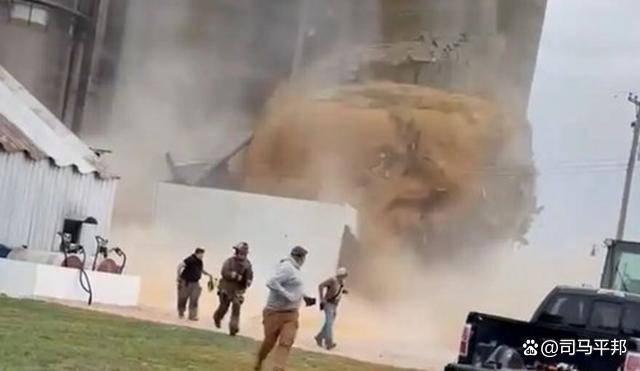
24小时内放大招!商务部公布中美谈判细则,中美经贸博弈转向
Sou Hu Cai Jing· 2025-11-01 11:10
Group 1 - The announcement from the Chinese Ministry of Commerce following the China-US summit indicates a significant shift in trade relations, with both sides agreeing to a "mutual pause" on tariffs and trade investigations [4][5][12] - The US has canceled the 10% "fentanyl tariff" and suspended the 301 investigation into China's logistics, maritime, and shipbuilding industries for one year, while also pausing the previously imposed 24% equivalent tariffs [4][5] - In response, China has also suspended corresponding countermeasures, which stabilizes order flows for affected industries and potentially lowers logistics costs for consumers, benefiting the overall market [5][8] Group 2 - China has resumed purchasing US soybeans, having already bought approximately 180,000 tons in three batches, which is a strategic move to control costs amid rising prices from Brazilian imports [7][8] - The stability in soybean prices will directly impact consumer goods prices, including cooking oil and meat products, ultimately benefiting ordinary consumers [8][10] - The announcement also includes a "mutual pause" on export controls related to rare earth elements, with the US suspending the recently introduced 50% export penetration rule, which had aimed to restrict products with any US technology content from being exported to China [12][14] Group 3 - The mutual pauses in trade measures are seen as a strategic move rather than a concession, allowing both sides to maintain leverage while addressing market demands [10][16] - China plans to use the year of suspension to refine its export control rules and processes, ensuring that it can respond effectively if the US reintroduces restrictions [16][18] - The US's willingness to negotiate is driven by its own economic interests, as American farmers and tech companies have faced significant losses due to trade tensions, highlighting a shift from unilateral pressure to mutual constraints in US-China relations [20][23] Group 4 - The focus of the announcement is on protecting China's chip industry, emphasizing the importance of maintaining export rights for Chinese semiconductor companies rather than merely increasing imports [27][28] - The Chinese semiconductor industry has developed competitive capabilities, and any US export restrictions could adversely affect its international market presence, making the protection of these companies crucial for China's technological autonomy [28][30]
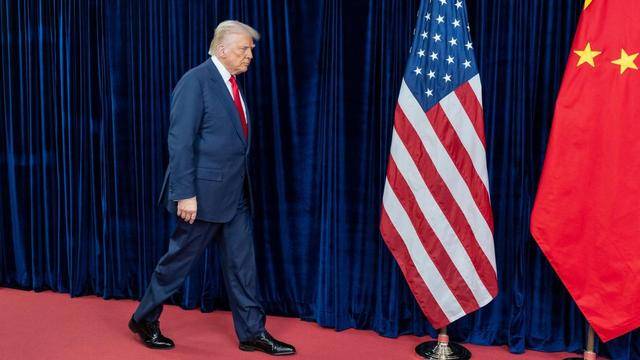
俄罗斯被排除,特朗普不再遮掩,一句话暗示将由中美两国领导全球
Sou Hu Cai Jing· 2025-11-01 11:10
Core Insights - The meeting between the leaders of China and the United States during the APEC conference in Busan lasted 1 hour and 40 minutes, significantly easing long-standing tensions and reaching substantial agreements that could alter the global landscape [1] - President Trump publicly introduced the concept of a "G2 era," indicating a shared leadership role for China and the U.S. in global affairs, while Russia was notably excluded from this core dialogue [1][12] - The U.S. demonstrated an unprecedented pragmatic attitude, making more concessions than China, particularly in tariff adjustments and regulatory pauses, reflecting a clear understanding of the current situation [1][3] Tariff Adjustments - The U.S. has agreed to reduce tariffs on Chinese goods by 10%, with the 10% fentanyl tariff being completely eliminated and the 20% fentanyl-related tariff reduced to 10% [3] - The overall tariff level on Chinese goods will decrease to approximately 47%, aligning more closely with tariffs imposed on other trade partners [3] Technology and Industry Regulations - The U.S. has paused several aggressive regulatory measures, including a one-year suspension of the 50% export control rules and the 301 investigation into maritime, logistics, and shipbuilding industries [4] - There is a noted easing of restrictions on chip exports, although the most advanced AI chips remain excluded from this relaxation [4] Agricultural Cooperation - China has agreed to resume and expand purchases of U.S. agricultural products, particularly soybeans, which had previously seen zero imports from the U.S. in September [6] - This cooperation is significant for U.S. farmers, who faced substantial losses due to the shift in Chinese imports to Brazil and Argentina [6] Energy Collaboration - A potential large-scale deal for the procurement of oil and natural gas from Alaska is being discussed, aligning with U.S. energy export goals and China's energy needs [7] Global Governance - Both countries have expressed a commitment to collaborate on global issues such as illegal immigration, telecom fraud, anti-money laundering, AI, and infectious disease control [9] - The U.S. recognizes the necessity of cooperation with China on these global challenges, while China has shown a proactive stance in promoting collaboration [9] Overall Assessment - Trump characterized the meeting as a "huge success," reflecting the U.S.'s urgent need to ease tensions with China and a rational choice stemming from the ineffectiveness of the trade and technology wars [10] - The meeting has injected more stability and certainty into U.S.-China relations, suggesting that both nations can achieve stable development and contribute to global peace and development opportunities if they maintain a spirit of dialogue and cooperation [14]
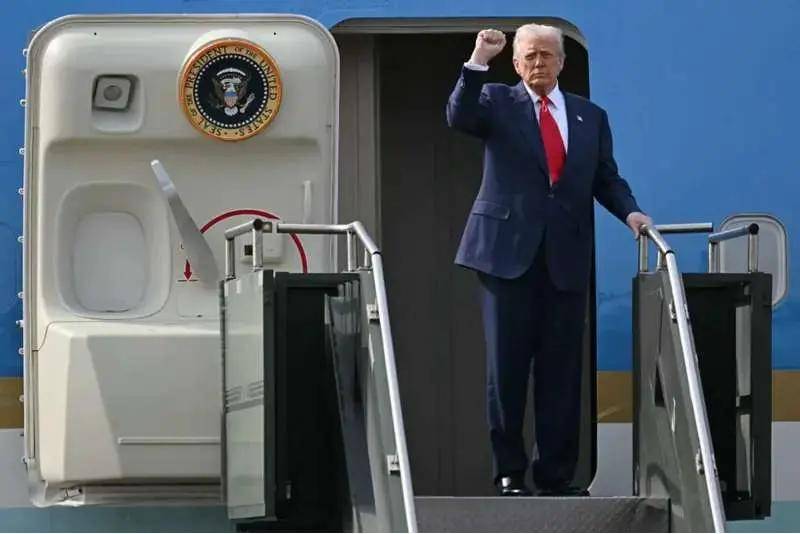
中企刚买4船美豆,特朗普又变卦,下架大批中货,不准中违约
Sou Hu Cai Jing· 2025-11-01 06:52
Group 1 - The core message of the article highlights the simultaneous occurrence of a soybean purchase by China from the U.S. and the U.S. imposing new restrictions on Chinese technology products, indicating a dual strategy of cooperation and pressure in U.S.-China relations [1][3][28] - In the last week of October, China quietly ordered four ships of soybeans, totaling over 250,000 tons, marking a significant development in U.S.-China agricultural trade after a period of stagnation [3][5][24] - The U.S. agricultural sector is experiencing anxiety due to high soybean inventories and sluggish exports, leading to pressure on the government to increase agricultural exports to China [7][30] Group 2 - The U.S. Federal Communications Commission (FCC) implemented new regulations that restrict the approval of devices containing "high-risk Chinese components," which has led to the removal of over a million products from major U.S. e-commerce platforms [9][11][26] - The timing of the soybean purchase and the new restrictions on Chinese technology products occurred within days of each other, reflecting a calculated approach by the U.S. to manage its trade and technology policies simultaneously [13][22][32] - The article emphasizes the structural contradictions in U.S.-China economic relations, where agricultural products are used as leverage for negotiations, while technology and supply chain security remain high-pressure areas for U.S. policy [13][30][32]
厦门象屿20251030
2025-10-30 15:21
Summary of Xiamen Xiangyu's Conference Call Company Overview - **Company**: Xiamen Xiangyu - **Period**: First three quarters of 2025 Key Financial Performance - **Revenue**: 316.9 billion CNY, up 6% year-on-year [3] - **Net Profit**: 1.633 billion CNY, up 84% year-on-year [3] - **Earnings per Share**: 0.49 CNY, an increase of 0.2 CNY [3] - **Return on Equity**: 7.83%, up 3.6 percentage points [3] - **Operating Cash Flow**: 7.1 billion CNY, an increase of 6.6 billion CNY [3] Sector Performance - **Total Purchase Volume**: 194 million tons, up 19% year-on-year [3] - **Black Metal Sector**: Purchase volume increased by 57% [4] - **Agricultural Products**: Volume increased by 31% [4] - **New Energy Sector**: Purchase volume increased by 83% [5] - **Logistics Revenue**: Increased by 17%, with significant growth in aluminum and new energy logistics [6] Strategic Initiatives - **Internationalization Strategy**: Over one-third of total trade revenue comes from international business, focusing on logistics-first global strategy [2][10] - **Logistics Expansion**: Establishing core logistics nodes overseas, particularly in the aluminum and new energy sectors [6] - **Diversification**: Product structure diversification and extending the industrial chain to enhance customer loyalty [8] Cost Management and Efficiency - **Financial Expenses**: Decreased by 5.68 billion CNY, primarily due to improved capital efficiency and reduced interest rates [7][18] - **Risk Control**: Enhanced risk management through dynamic monitoring of customer concentration and digital tools [9] Future Outlook - **Growth Expectations**: Despite macroeconomic uncertainties, the company is optimistic about achieving its annual performance targets [12][19] - **Investment in Logistics**: Plans to establish localized companies in Guinea, Brazil, and Malaysia to enhance international operations [13] - **Shipbuilding Sector**: Positive outlook with orders secured until 2029, supporting growth through the current industry cycle [15] Shareholder Engagement - **Incentive Programs**: Implemented third phase of equity incentives with plans for further phases to enhance employee engagement [16] - **Dividend Policy**: Commitment to stable high dividends, with plans for mid-term dividend policies based on operational performance [17] Conclusion Xiamen Xiangyu demonstrates strong financial resilience and growth across various sectors, with strategic initiatives aimed at enhancing international presence and operational efficiency. The company is well-positioned to navigate future challenges while maintaining a focus on shareholder value and sustainable growth.
