
城市治理

Search documents
2025广州社会蓝皮书表明:居民高品质生活场景覆盖面日益拓宽,居民幸福感持续提升
Zhong Guo Fa Zhan Wang· 2025-11-17 14:37
Group 1 - The core viewpoint of the blue paper is that Guangzhou will focus on high-quality development and efficient governance, assessing the social operation status in 2024 and forecasting the development prospects for 2025 [1] - The blue paper emphasizes the importance of the "14th Five-Year Plan" and the synergy between manufacturing and digital economy, with public service supply and social security becoming more resilient [2] - In 2024, Guangzhou's public budget expenditure on people's livelihood will reach a historical high of 68.5%, with total spending exceeding 280 billion yuan, and significant increases in funding for elderly care, childcare, and healthcare [2] Group 2 - The blue paper identifies structural challenges for Guangzhou in 2024, including negative growth in industrial output, employment mismatches, funding gaps for urban village renovations, and accelerated aging [3] - For 2025, the focus will be on building a model of Chinese-style modernization, addressing development imbalances through institutional openness, and enhancing urban governance through innovation and risk prevention [3] - The strategy includes improving smart governance in transportation, innovating housing supply models, and enhancing the resilience of urban safety through multi-stakeholder collaboration [3]
“国际科创菁英汇客厅”揭牌仪式在京举行 助力全球可持续发展人才培养
Huan Qiu Wang· 2025-11-05 01:59
Core Points - The "International Innovation Elite Exchange Hub" was officially launched in Haidian District, Beijing, marking the establishment of a new international platform for scientific and technological innovation exchange [1][2] - The platform aims to bridge the gap between higher education talent cultivation, international organization practices, and industrial innovation applications, focusing on training, internships, and exchanges [2][3] - The initiative is supported by the United Nations Sustainable Development Goals and Leadership Development Center, emphasizing the importance of global innovation leadership and sustainable development [1][2] Group 1 - The event was attended by over 30 guests, including UN officials, representatives from multiple universities, and local government leaders, highlighting the collaborative nature of the initiative [1] - The platform will leverage authoritative resources from the UN to provide precise internship opportunities for university students and conduct specialized training in digital literacy and sustainable development [2][3] - The operational support for the hub comes from Zhongguancun Science City Data Investment Operation (Beijing) Group Co., Ltd., which aims to create a two-way interactive international innovation exchange mechanism [3] Group 2 - The hub is designed to facilitate the transformation of mature solutions in AI and urban governance from Haidian District into courses and models for international dissemination [3] - The platform will actively attract global young innovative talents and projects to Haidian, enhancing its role in international scientific and technological cooperation [3] - Future plans include the output of intelligent products, international roadshows, and technical collaborations to strengthen the hub's value in global innovation [3]
奋进的河南 决胜“十四五”·郑州篇丨高效能治理,大城何以善治
He Nan Ri Bao· 2025-10-09 23:40
Core Insights - Zhengzhou is implementing a modern governance model that integrates party leadership with digital technology to enhance urban management and service delivery [5][7][11] Group 1: Urban Governance and Development - Zhengzhou aims to build a modern people-oriented city by promoting high-quality and connotative urban development [5] - The city has established a governance framework called "Ten Ones," which includes various mechanisms for efficient management and service delivery [6] - The integration of party organizations with digital platforms has improved the efficiency of urban governance, allowing for rapid problem resolution [6][7] Group 2: Smart City Initiatives - Zhengzhou is developing a smart city framework that combines various networks, including governance, emergency response, and economic operations, to create a comprehensive urban management system [11] - The city has installed over 415 smart sensors across key locations to monitor urban conditions in real-time, enhancing responsiveness to issues like flooding [10][11] - A digital platform has been established to facilitate data sharing among departments, enabling quick responses to urban challenges [9][10] Group 3: Community Engagement and Service Delivery - The city has created a "one-line communication" mechanism that allows for rapid reporting and resolution of community issues, ensuring that citizen concerns are addressed promptly [15][16] - Zhengzhou has implemented a community grid system that connects various stakeholders, including local organizations and government departments, to foster collaborative governance [8][9] - The integration of community workers and volunteers into the governance framework has strengthened local engagement and service delivery [9][12]

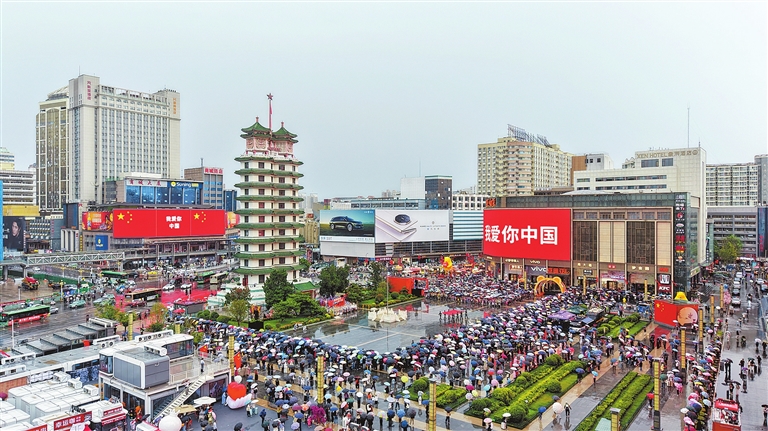
烟火气中的城市治理智慧
Ren Min Ri Bao· 2025-10-01 09:32
Core Insights - Shanghai has introduced measures to enhance street vitality by optimizing outdoor seating arrangements, reflecting a shift towards a more vibrant urban life [1][2] - The initiative aims to balance order and liveliness, ensuring that outdoor setups do not disrupt traffic or residents while maintaining cleanliness and food safety [1][2][3] Group 1: Policy Measures - The new regulations require outdoor seating to align with the regional aesthetic and encourage flexible operating hours during important festivals [2] - Additional infrastructure such as garbage collection containers and mobile toilets will be provided to support these outdoor setups [2] - Similar initiatives have been observed in other regions, such as Wenzhou and Anyang, focusing on utilizing idle spaces and enhancing food safety measures [2] Group 2: Urban Governance - Effective urban governance requires a nuanced approach rather than a one-size-fits-all solution, emphasizing the need for detailed and human-centered policies [2][3] - The use of digital platforms for guiding merchants on outdoor operations and community engagement for feedback is essential for creating a collaborative environment [3] - A shift in governance philosophy towards prioritizing public welfare and service-oriented policies is crucial for fostering a warm urban atmosphere [3]
智联欧亚 携手前行
Shan Xi Ri Bao· 2025-09-24 23:03
Group 1: Global Governance and Cooperation - The article emphasizes the consensus among many countries to deepen connectivity and jointly implement global governance initiatives amid profound changes in the global governance system [1] - The 2025 Eurasian Economic Forum serves as a platform for domestic and international participants to discuss hot topics in Eurasian development and provide intellectual support for regional cooperation [1] Group 2: Digital Economy and Urban Development - The ninth Silk Road Economic Belt City Roundtable Conference highlights the digital economy as a core engine driving high-quality urban development [2] - Xi'an has been focusing on national digital economy strategies, enhancing digital infrastructure like 5G and data centers, and promoting the integration of digital technology with various sectors [3] Group 3: International Collaboration and Knowledge Sharing - The conference facilitated discussions on smart transportation, ecological digital monitoring, and cross-border data sharing, leading to potential cooperation intentions among participating countries [3] - The establishment of a think tank cooperation mechanism during the 2025 Eurasian Economic Forum aims to enhance policy communication and economic connectivity among Eurasian countries [8][9] Group 4: Reports and Research Findings - The "Belt and Road Initiative: Eurasian Economic Observation" report provides insights into the dynamics and trends in trade and industrial cooperation among Eurasian countries [9][10] - The "China-Central Asia Economic Cooperation Report" analyzes the cooperation mechanisms and policy optimization paths for China-Central Asia economic interactions, aiming to facilitate high-quality project and enterprise collaborations [10]
四川出台“数据要素×”方案 聚焦12大领域加“数”前进
Si Chuan Ri Bao· 2025-09-13 01:28
Group 1 - The core focus of the "Data Element ×" key work plan (2025-2026) is to accelerate the development and utilization of data resources across 12 key sectors, enhancing economic and social governance through digitalization [1][2] - The 12 key sectors identified include industrial manufacturing, modern agriculture, commercial circulation, transportation, financial services, technological innovation, cultural tourism, healthcare, emergency management, meteorological services, urban governance, and green low-carbon initiatives [1] - A total of 34 key tasks have been outlined in the plan, such as promoting intelligent transformation in manufacturing, establishing digital agriculture laboratories, and advancing digital transformation in transportation infrastructure [1][2] Group 2 - In the cultural tourism and healthcare sectors, the plan proposes initiatives like the application of large models in the tourism industry and the integration of electronic medical records for better data sharing among hospitals [2] - New business models and products are to be developed in the cultural tourism sector, including smart travel companions and customized itineraries [2] - The healthcare initiatives aim to expand direct settlement for outpatient chronic diseases across provinces and improve data management for maternal and child health [2]
探索超大城市现代化治理新路子,“聪明”的武汉,更懂你
Chang Jiang Ri Bao· 2025-08-27 12:25
Group 1 - The core viewpoint emphasizes the integration of advanced technologies like drones and AI in urban management to enhance governance efficiency and safety in Wuhan [2][3][5] - The "One Network Management" smart platform consolidates urban operational data, allowing for real-time monitoring and proactive governance, transforming the city's management from passive to active [3][5] - The city has integrated 297 drones and over 1500 urban indicators into its management system, facilitating better decision-making and coordination among various departments [5] Group 2 - Community transformation projects have been initiated to create more engaging and accessible public spaces, encouraging resident participation in community governance [6][7][9] - The integration of professional social workers and volunteers is aimed at enhancing grassroots governance, fostering community involvement, and building a collaborative environment [9][10] - The city is focusing on upgrading old residential areas, implementing targeted renovation strategies, and improving living conditions through infrastructure enhancements [11][12]
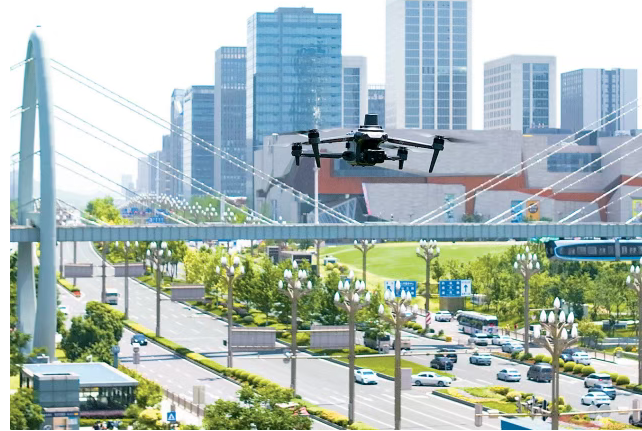
西部科学城重庆高新区 创新打造数智化综合场景应用 探索超大城市现代化治理新路子
Ren Min Ri Bao· 2025-08-19 22:14
Core Viewpoint - Chongqing is actively exploring modern governance methods for mega cities, emphasizing the integration of artificial intelligence in urban management to enhance service delivery and governance efficiency [1][3]. Group 1: Urban Governance and AI Integration - Chongqing High-tech Zone is implementing a comprehensive AI-enabled urban governance model, focusing on risk management and real-time data sharing to improve construction site oversight and environmental protection [2][3]. - The integration of digital technologies has led to a significant reduction in the average processing time for governance issues from 1.5 days to 0.5 days, showcasing enhanced operational efficiency [2][3]. Group 2: Event Management and Safety - The High-tech Zone has developed a digital safety management system for large-scale events, allowing for streamlined online applications and real-time risk identification, thus improving event management efficiency [4][5]. - The collaboration between various departments through a centralized governance platform has transformed the event approval process, significantly reducing bureaucratic delays [4][5]. Group 3: Community Governance and Public Engagement - The High-tech Zone is enhancing community governance by collecting public feedback and utilizing a comprehensive data platform to improve residential services and community safety [6]. - The "Residential Community Safety Integration" initiative has been recognized as a leading application in the digital governance competition, highlighting its effectiveness and potential for replication in other regions [6]. Group 4: Future Plans and Collaborative Governance - Future plans include the introduction of AI agents to optimize event management and risk assessment, further enhancing the collaborative governance model among government, educational institutions, and cultural sectors [5]. - The goal is to create a governance community that shares resources and risks, ultimately improving the overall quality of urban management in mega cities [5].
“电鸡”未停地铁口划线区域将统一迁移
Nan Fang Du Shi Bao· 2025-08-18 13:46
Core Viewpoint - Longhua District is initiating a special rectification action to address the issue of electric bicycle parking chaos in super-large cities, utilizing AI 3D modeling technology for intelligent recognition and governance [1][2][7]. Group 1: Governance Strategy - The special rectification action will implement a tiered and categorized governance system, designating strict management zones around eight key subway stations [1][4]. - The governance approach includes a phased strategy: pilot phase, deepening phase, and comprehensive rollout, ensuring effective management while considering citizen convenience [4][5][8]. - The first phase targets strict management areas, with bicycles parked outside designated zones or for over three days being relocated to temporary parking areas [4][5]. Group 2: Technological Innovation - The AI 3D modeling technology employed is a cutting-edge real-time 3D scene reconstruction technique that offers high precision and low computational overhead, enabling accurate identification of bicycle parking locations and durations [3][6]. - This technology supports dynamic target tracking and updates, providing essential data for scientific governance [3][6]. Group 3: Community Involvement - The governance of electric bicycles requires collective participation from society to build a shared governance framework [2][7]. - Citizens can report long-term idle bicycles through online channels, facilitating timely management actions [6][8]. Group 4: Long-term Goals - The long-term objective is to optimize the overall urban appearance and enhance residents' quality of life through systematic governance of electric bicycles [5][6]. - The initiative aims to improve the urban environment significantly, addressing the challenges posed by the rapid increase in electric bicycle ownership [2][6].
建设更加宜居美丽的人民城市∣学习贯彻中央城市工作会议精神③
Zhong Guo Huan Jing Bao· 2025-07-29 23:22
Core Viewpoint - The recent Central Urban Work Conference emphasizes the construction goals of a modern people-oriented city, prioritizing livability and addressing the expectations of the populace [1] Group 1: Urban Development and Green Spaces - Urban construction in China has achieved significant results under the "People's City" concept, with over 48,000 pocket parks and more than 128,000 kilometers of greenways built by the end of 2024 [1] - The increasing number of accessible green spaces has become a daily reality for many residents, enhancing their quality of life [1] Group 2: Urban Management and Public Services - Cities are improving their management precision, addressing local issues such as noise and restaurant emissions, and establishing long-term mechanisms to enhance residents' living conditions [2] - The development of public transportation and slow-moving systems is being prioritized to facilitate green travel, with cities like Beijing utilizing data integration for real-time transit information [2] Group 3: Challenges in Urban Development - Some cities still exhibit a tendency to prioritize aesthetic projects over functional needs, leading to resource wastage and inadequate management of newly built parks [3] - Persistent issues such as noise pollution, construction dust, and urban flooding remain significant challenges, alongside emerging problems like urban heat islands and light pollution [3] Group 4: Future Directions for Urban Planning - A shift in urban development philosophy is necessary, focusing on enhancing residents' quality of life rather than large-scale construction [3] - Successful examples, such as the integration of water and green spaces in Shanghai's Lujiazui area, demonstrate the potential for urban renewal to drive high-quality development [3] Group 5: Community Involvement in Urban Governance - Building a modern people-oriented city requires active participation from the community, ensuring that urban planning incorporates citizen feedback and addresses their needs [4] - The effectiveness of urban governance should be measured by residents' satisfaction and convenience, reinforcing the principle that cities should serve the people [4]