
未明确提及

Search documents
应从严监管上市公司募资改道补流行为
Guo Ji Jin Rong Bao· 2025-09-22 08:01
Group 1 - The company has redirected its fundraising to permanently supplement working capital, with a total of 465 million yuan allocated for this purpose, which accounts for 48.39% of its net fundraising of 961 million yuan for the year [1] - The company's initial fundraising projects have been disappointing, with a main project planned to invest 730 million yuan but not yet producing any output or profit, despite the project being scheduled for completion by the end of 2024 [1] - Investors feel deceived as the company has deviated from its original fundraising plans, leading to dissatisfaction with the decision to redirect funds [1] Group 2 - The practice of redirecting fundraising is common among listed companies, often due to market changes or poorly conceived projects aimed at raising capital without genuine intent [2] - Regulatory bodies need to strengthen oversight of fundraising redirection, particularly when it involves permanent working capital, to prevent companies from exploiting the system for financial gain [2][3] - Companies should prioritize investing original fundraising into suitable new projects, with a cap of 30% for redirecting funds to working capital, and any excess should be used for share buybacks [3]
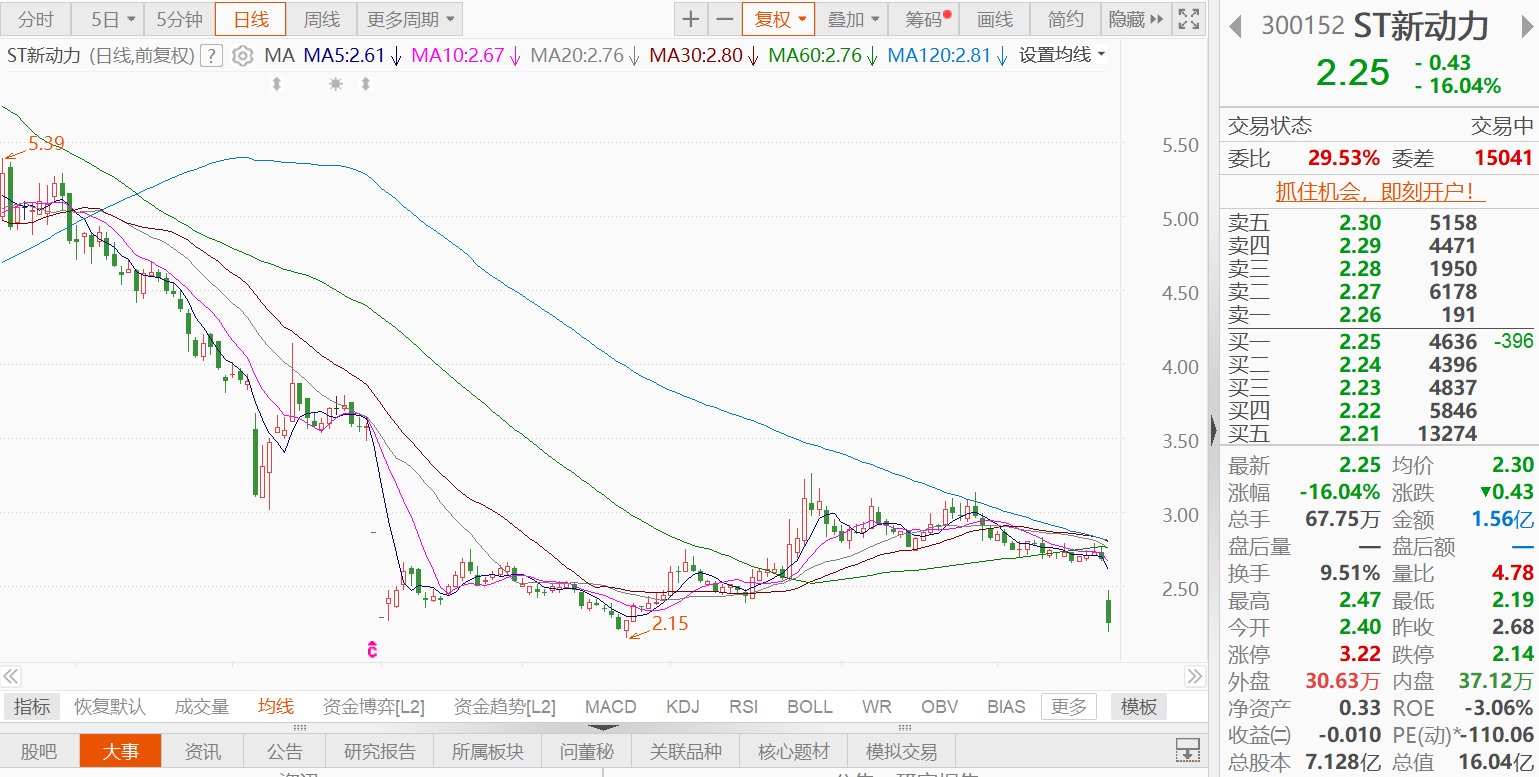
A股异动︱ST新动力暴跌逾16%,涉嫌信息披露违法违规被证监会立案调查
Ge Long Hui A P P· 2025-09-22 05:29
Core Viewpoint - ST New Power (300152.SZ) experienced a decline of 16.04%, closing at 2.25 yuan, with a total market capitalization of 1.604 billion yuan due to an investigation by the China Securities Regulatory Commission (CSRC) for suspected violations of information disclosure [1]. Group 1 - The company received a "Notice of Investigation" from the CSRC on September 19, 2025, indicating that it is under investigation for alleged information disclosure violations [1]. - Despite the investigation, the company's operational status remains normal, and it will actively cooperate with the investigation while fulfilling its information disclosure obligations [1].


新股日历|今日新股/新债提示
申万宏源证券上海北京西路营业部· 2025-09-22 02:32
Group 1 - The article discusses the stock issuance of a company named "圆美森" with a subscription limit of 950,000 shares and an issuance price of 8.25 yuan [1] - The industry price-earnings ratio is noted as 12.99, while the company's price-earnings ratio is significantly higher at 36.54, indicating a potential overvaluation [1]
新股日历|今日新股/新债提示
申万宏源证券上海北京西路营业部· 2025-09-12 02:04
Group 1 - The core viewpoint of the article highlights the issuance price and market performance of the company Miao You Sheng Co., Ltd. (stock code: 732418) [1] - The issuance price is set at 46.36 yuan, with an industry price-earnings ratio of 22.31 and a broader market price-earnings ratio of 29.08 [1] - The maximum subscription limit for investors is 15,000 shares [1]
美国对印度加征50%关税,印度却派400人赴美军演,莫迪在下什么棋
Sou Hu Cai Jing· 2025-09-07 03:31
Group 1 - India's unexpected military cooperation with the US amidst a trade conflict raises questions about diplomatic strategies [3][5][8] - Modi's government faces a dilemma between domestic political pressures and foreign relations, prioritizing electoral support over US demands [10][12] - The EU's unified stance against US tariffs indicates a shift in global power dynamics, emphasizing sovereignty and collective resistance [19][21][26] Group 2 - Russia's warning to Japan reflects concerns over military escalation and highlights the multifaceted challenges to US influence [23][28] - The changing global landscape suggests that countries are increasingly seeking their own paths, leading to more complex diplomatic calculations [30][32]

亨通股份: 浙江亨通控股股份有限公司董事会审计委员会工作细则
Zheng Quan Zhi Xing· 2025-08-25 16:30
Core Points - The article outlines the operational guidelines for the Audit Committee of Zhejiang Hengtong Holdings Co., Ltd, aiming to enhance corporate governance and ensure effective internal and external audit processes [1][2][3] Group 1: General Provisions - The Audit Committee is established to oversee communication, supervision, and verification of internal and external audits, reporting directly to the Board of Directors [2][3] - The committee is supported by an Internal Control Audit Department responsible for daily operations and ensuring the authenticity and legality of financial reports [3][4] Group 2: Composition - The Audit Committee consists of three directors who are not senior management, including two independent directors, with at least one being an accounting professional [4][5] - The committee is elected by the Board and has a term of three years, aligning with the Board's term [5][6] Group 3: Responsibilities and Authority - The main responsibilities include selecting and evaluating external audit firms, supervising internal audits, reviewing financial information, and ensuring effective internal controls [9][10] - The committee must approve significant financial disclosures and changes in accounting policies before submission to the Board [10][11] Group 4: Decision-Making Procedures - The Internal Control Audit Department prepares necessary documentation for the committee's decisions, including financial reports and audit evaluations [11][12] - Meetings are held regularly, with at least one meeting per quarter, and require a two-thirds majority for decisions [14][15] Group 5: Information Disclosure - The company is required to disclose the composition and professional background of the Audit Committee members, as well as their annual performance [16][17] - Any significant issues identified by the committee that meet disclosure standards must be reported promptly [17][18]

双元科技: 重大事项内部报告制度
Zheng Quan Zhi Xing· 2025-08-25 16:23
Core Viewpoint - The internal reporting system for significant events at Zhejiang Shuangyuan Technology Co., Ltd. aims to ensure timely, accurate, and complete disclosure of information, thereby protecting the rights of shareholders and stakeholders [1][2]. Group 1: Purpose and Scope - The purpose of the internal reporting system is to clarify the reporting obligations and procedures for significant events, ensuring compliance with relevant laws and regulations [2][3]. - The system applies to all departments, subsidiaries, and branches of the company, emphasizing the importance of accurate reporting [2][4]. Group 2: Reporting Obligations - Reporting obligations fall on various stakeholders, including major shareholders, board members, senior management, and department heads, who must report significant events to the board secretary and securities affairs department [3][4]. - The first responsible person for reporting significant events is required to ensure the accuracy and completeness of the information provided [4][5]. Group 3: Definition of Significant Events - Significant events include important meetings, major transactions, related party transactions, major risks, accidents, and other events that could impact the company's stock price or investment decisions [5][6]. - Specific thresholds for reporting major transactions are established, such as transactions involving assets exceeding 10% of the company's total audited assets or market value [6][7]. Group 4: Reporting Procedures - Upon identifying a significant event, the responsible person must promptly notify the board secretary and submit relevant documentation to the securities affairs department [12][13]. - The board secretary is tasked with analyzing reports and ensuring that the board is informed of significant developments [13][14]. Group 5: Confidentiality and Compliance - Reporting individuals are required to maintain confidentiality regarding undisclosed significant information and must not engage in insider trading [5][11]. - The company emphasizes the importance of training and communication to ensure compliance with the internal reporting system [14][15].

丰茂股份: 信息披露管理制度(2025年8月修订)
Zheng Quan Zhi Xing· 2025-08-08 16:23
General Principles - The information disclosure management system of Zhejiang Fengmao Technology Co., Ltd. aims to enhance information management and ensure the authenticity, accuracy, and timeliness of external information disclosure, protecting the rights and interests of the company, shareholders, creditors, and other stakeholders [1][2] - The term "information" refers to any information that may affect the company's stock price, trading volume, or investment decisions, including price-sensitive data and other information required by the China Securities Regulatory Commission (CSRC) and Shenzhen Stock Exchange [1][2] Disclosure Obligations - Disclosure refers to the obligation of the company or relevant information disclosers to announce information in accordance with laws, regulations, and the rules of the Shenzhen Stock Exchange [2] - Information disclosers include the company, its directors, senior management, shareholders, actual controllers, acquirers, and other parties involved in significant transactions [2][3] Information Disclosure Requirements - Information disclosers must fulfill their disclosure obligations in a timely manner, ensuring that the disclosed information is true, accurate, complete, and easy to understand, without any false records or misleading statements [2][3] - Information must be disclosed simultaneously to all investors, without prior disclosure to any specific individuals or entities, except as required by law [2][3] Types of Disclosure Documents - Disclosure documents include prospectuses, fundraising documents, listing announcements, acquisition reports, periodic reports, and temporary reports [3][4] - The company must ensure that the information disclosed in these documents is consistent across different languages, with the Chinese text taking precedence in case of discrepancies [5][6] Periodic Reporting - The company is required to disclose periodic reports, including annual reports, semi-annual reports, and quarterly reports, within specified timeframes [7][8] - Annual reports must be disclosed within four months after the end of the fiscal year, semi-annual reports within two months after the end of the first half of the fiscal year, and quarterly reports within one month after the end of the first three and nine months of the fiscal year [7][8] Temporary Reporting - Temporary reports must be issued for significant events that may impact the company's stock price or trading [14][15] - The company must disclose significant events immediately upon occurrence, including major lawsuits, asset impairments, or changes in shareholder equity [14][15] Board and Shareholder Meeting Resolutions - The company must promptly report board resolutions to the exchange after meetings, including details of the meeting and voting results [19][20] - Shareholder meeting resolutions must be disclosed on the same day as the meeting, including the number of shareholders present and the results of each proposal [20][21] Major Transactions and Other Disclosures - The company must disclose major transactions, including asset purchases or sales, external investments, and financial assistance, when they meet specified thresholds [57][58] - The company is also required to disclose significant litigation, commitments, and any other major events that could impact its operations or financial status [69][70]
澳亚集团(02425)8月5日根据供股发行2.8亿股新股份
智通财经网· 2025-08-05 09:19
智通财经APP讯,澳亚集团(02425)发布公告,于2025年8月5日完成供股发行2.8亿股新股份。 ...
思看科技: 关联交易决策制度(2025年7月修订)
Zheng Quan Zhi Xing· 2025-07-15 11:14
Core Viewpoint - The document outlines the decision-making system for related party transactions at Sikan Technology (Hangzhou) Co., Ltd, aiming to enhance corporate governance and ensure fairness in transactions to protect the interests of the company and its shareholders [1][11]. Group 1: Purpose and Legal Framework - The purpose of the system is to improve the corporate governance structure and regulate related party transactions [1]. - The system is established in accordance with the Company Law of the People's Republic of China, the Shanghai Stock Exchange's listing rules, and other relevant regulations [1]. Group 2: Definition of Related Party Transactions - Related party transactions include various types of transactions such as asset purchases or sales, external investments, transfer of R&D projects, and provision of guarantees [2][3]. - Transactions related to daily operations, such as purchasing raw materials, are excluded from this definition [2]. Group 3: Identification of Related Parties - Related parties include individuals or entities that control the company, hold more than 5% of shares, or are company directors and senior management [2]. - Family members of the aforementioned individuals are also considered related parties [2]. Group 4: Decision-Making Procedures - The board of directors is responsible for determining whether a transaction qualifies as a related party transaction, and must submit it for approval to the shareholders' meeting or board [4][9]. - Independent directors must approve related party transactions before they are presented to the board [10]. Group 5: Voting and Disclosure Requirements - Related shareholders must abstain from voting on transactions in which they have a conflict of interest [6][19]. - Transactions exceeding 30 million yuan or 1% of the company's total assets must be audited and disclosed to shareholders [15][18]. Group 6: Financial Assistance and Exemptions - The company is generally prohibited from providing financial assistance to related parties, with specific exceptions outlined [9][10]. - Certain transactions, such as cash subscriptions for public offerings, may be exempt from the related party transaction procedures [10]. Group 7: Implementation and Amendments - The system will be implemented upon approval by the shareholders' meeting and will be subject to amendments as per future regulations [11][29]. - The board of directors is responsible for interpreting the rules of this system [11][32].