
汽车软件

Search documents
中科创达20251029
2025-10-30 01:56
Summary of the Conference Call for Zhongke Chuangda Industry and Company Overview - The conference call pertains to Zhongke Chuangda, a company focused on AI operating systems (AIOS) and solutions in the automotive sector, among other areas [2][3][4]. Key Financial Performance - For the first three quarters of 2025, Zhongke Chuangda reported revenue of 5.148 billion CNY, a year-on-year increase of 39.34% [2][3]. - The net profit attributable to shareholders was 229 million CNY, reflecting a growth of 50.72% year-on-year [2][3]. - In Q3 2025 alone, the company achieved revenue of 1.848 billion CNY, up 42.87% year-on-year, with a net profit of 70.568 million CNY, marking a 48.26% increase [3]. Strategic Focus and R&D Investments - The company is concentrating on the development and implementation of AIOS, integrating Enjoy OS with Linux OS to create AI native systems [2][4][6]. - AIOS products are designed to revolutionize operating systems with features like generative UI and multi-modal interactions [4]. - Zhongke Chuangda is enhancing its ecosystem, particularly in the automotive sector, to support Chinese enterprises in expanding overseas [2][8]. Automotive Sector Developments - The company has launched the Drip AIOS platform in the automotive field, with the first mass-produced model released in September 2025 [6][10]. - Zhongke Chuangda's automotive business is growing steadily, covering major global car manufacturers and introducing AI Box products based on NVIDIA Drive AGX chips, offering up to 200 TOPS of AI computing power [5][12]. - The company aims to address AI computing bottlenecks and enhance user interaction through cloud and vehicle integration [12]. Global Expansion and Ecosystem Building - The rapid growth of overseas business is attributed to advancements in IoT, smart automotive, and intelligent software sectors [5][11]. - Zhongke Chuangda has established R&D centers in 16 countries, focusing on providing end-to-end services and expanding its global footprint [12]. - The company is also exploring new business models to improve overall efficiency and effectiveness [9]. Collaborations and Partnerships - The company maintains close collaboration with Qualcomm, focusing on driving platforms and cockpit integration, with significant developments on the Qualcomm 8,797 platform [10]. - Partnerships with NVIDIA for Robot Taxi and cockpit solutions have led to the launch of new products, showcasing the company's commitment to innovation in AI and automotive technology [15]. Future Outlook - Zhongke Chuangda expresses confidence in the rapid development of the AI industry and plans to continue strengthening its global strategy and product offerings [12][16]. - The company anticipates sustained growth in its automotive business and is committed to integrating AI capabilities across various platforms and applications [12][13]. Additional Insights - The company is not directly developing autonomous driving algorithms but focuses on cockpit operating systems and related solutions, collaborating with third-party algorithm providers [13]. - Future product developments based on Qualcomm's latest chips are expected, although specific details are not yet disclosed [14].

光庭信息净利增长逾三倍 AI赋能智驾驱动业绩高增
Chang Jiang Shang Bao· 2025-10-21 00:06
Core Insights - Guangting Information (301221.SZ) has demonstrated impressive financial performance in the AI and automotive software sector, driven by its internationalization strategy and robust growth in key business areas [1][2][3] Financial Performance - For the first three quarters of 2025, the company achieved a revenue of 421 million yuan, representing a year-on-year increase of 23.05% [2] - The net profit attributable to shareholders reached 44.7754 million yuan, marking a significant year-on-year growth of 308.53% [2] - Operating cash flow net amount was 98.2399 million yuan, soaring by 666.55% compared to the previous year, indicating improved profitability and cash flow quality [2][3] Business Segments - The intelligent driving segment emerged as a key growth driver, with revenue of 123 million yuan in the first half of the year, up 55.82% year-on-year [2] - The intelligent connected vehicle testing business saw a revenue increase of 70.77%, reflecting the company's successful provision of comprehensive testing solutions [2] - The intelligent cockpit business also showed steady growth, with revenue of 127 million yuan, a year-on-year increase of 11.65% [2] Internationalization Strategy - The company's international revenue doubled in the first half of the year, continuing this trend into the third quarter, supported by strategic expansions in Japan, Canada, and Germany [3] - This international strategy has enabled Guangting Information to effectively serve global clients and support domestic manufacturers' overseas strategies, contributing to revenue growth and enhanced profit margins [3] Talent Strategy - On October 18, the company completed the grant of 300,000 restricted stocks to 11 core personnel at a price of 39.80 yuan per share, reinforcing its talent strategy [4] - The total scale of the incentive plan is 5.892 million shares, with the first phase already completed, covering 177 core employees [4] - The plan aims to enhance the company's talent attraction and technological innovation capabilities, supporting sustainable growth [5]
QNX全球调研:中国汽车软件开发者展现韧性优势
Huan Qiu Wang· 2025-10-17 01:47
Core Insights - The report by BlackBerry's QNX highlights the evolving landscape of Software Defined Vehicles (SDV) development, emphasizing the unique resilience and forward-thinking nature of the automotive software development ecosystem in China [1][2]. Regulatory Environment - The global regulatory landscape is tightening, with over 500 new regulations related to in-vehicle technology expected in 2024 [2]. - Approximately 33% of global respondents reported that development progress is hindered by evolving compliance requirements, particularly in areas like cybersecurity, software updates, data privacy, and functional safety [2]. - In contrast, 51% of Chinese developers indicated that regulatory upgrades have not slowed their development cycles, significantly higher than the global average of 25% [2]. Impact of Software Recalls - 67% of Chinese respondents reported not experiencing significant disruptions in their development processes due to software recalls, showcasing a higher resilience compared to global counterparts [3]. - This resilience is attributed to a robust automotive industry cluster in China that allows for quick collaboration across the supply chain [3]. Development Bottlenecks - Global developers identified long development cycles (37%), testing difficulties (36%), and integration complexity (36%) as major challenges [4]. - Only 30% of respondents rated the current development environment as "excellent" in terms of productivity [4]. - The gap between consumer expectations and software delivery timelines is widening, with 52% attributing this to regulatory delays [4]. Shift Towards Application Innovation - 80% of global developers believe that OEMs should shift focus from infrastructure to application layer innovation, with 84% of Chinese developers agreeing [5]. - 93% of developers globally consider cross-industry collaboration crucial for their current projects, with half strongly supporting collaborative development [5]. Role of AI and Automation - Developers globally are optimistic about the role of AI in automotive software, with 94% of Chinese respondents believing AI will play an important role [6]. - 70% of Chinese developers expect AI to have a "significant impact" on the development process, while 24% foresee it as a "transformative force" [7]. QNX's Commitment - QNX aims to support automakers in navigating changes and accelerating innovation, providing safer and smarter vehicles [7]. - The company is trusted by global clients, including major automotive brands, to deliver foundational software that supports various advanced vehicle systems [7].

关于未来的汽车,他认为很多人都想错了
虎嗅APP· 2025-09-27 03:15
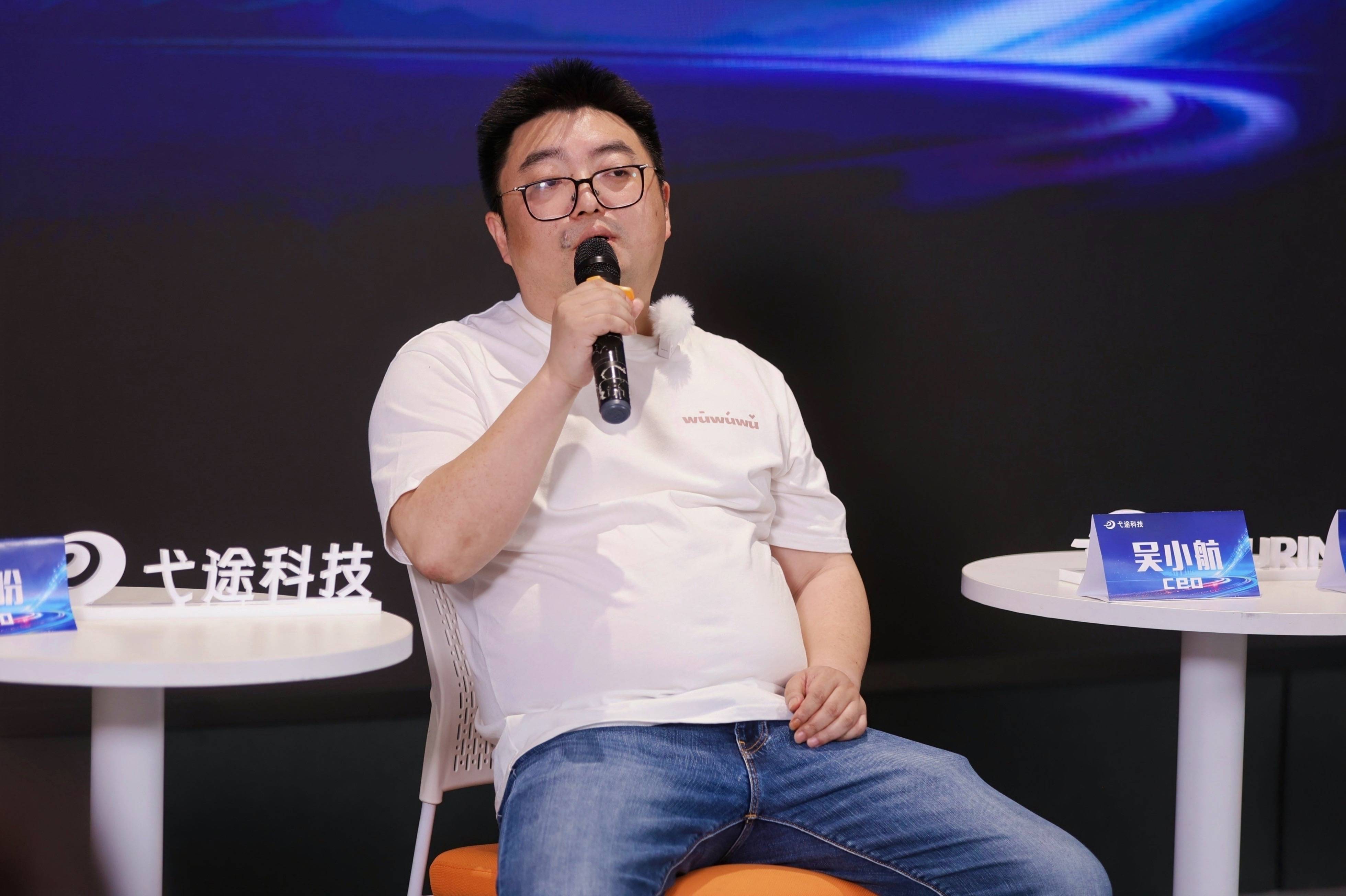
Core Viewpoint - The article discusses the innovative approach of Yitu Technology, led by CEO Wu Xiaohang, in developing an AI-native in-car operating system that emphasizes a "No Touch, No APP" interaction model, aiming to revolutionize the automotive industry through advanced AI integration [4][6][48]. Group 1: Company Background and Vision - Yitu Technology was founded in June 2023, focusing on the intersection of AI and automotive technology, particularly in creating an AI-native operating system for vehicles [9][10]. - Wu Xiaohang, with over a decade of experience in the automotive industry, previously worked at Zhibo Zhixing, a company known for its automotive software solutions [6][12]. - The company aims to address the challenges of traditional in-car interactions, which often rely on touch and app-based controls, by leveraging AI to create a more intuitive user experience [48]. Group 2: Market Context and Challenges - The automotive industry is experiencing a significant transformation driven by AI, with many companies entering the market, leading to increased competition [6][27]. - Wu Xiaohang emphasizes the importance of focusing on niche markets rather than competing in overcrowded sectors, believing that the future of automotive intelligence lies in specialized applications of AI [26][27]. - The article highlights the challenges faced by automotive software companies in China, particularly regarding user willingness to pay for software services [49]. Group 3: Product Development and Strategy - Yitu Technology's product development strategy involves iterative improvements every 2-3 years to stay aligned with technological advancements and user needs [10][63]. - The company prioritizes high-frequency needs in the automotive sector, with an initial focus on AI-enhanced mapping solutions as a core offering [9][55]. - The vision for the second-generation product is to create a truly automotive-centric interaction system that eliminates the need for touch and apps, allowing for a more seamless user experience [48]. Group 4: Financial Outlook and Growth Potential - Wu Xiaohang predicts that the company's revenue will see significant growth by the third quarter of the following year, with a major breakthrough expected in 2027 as the strategic layout and vertical market penetration yield results [75]. - The company has successfully secured initial funding, with investors recognizing the potential for long-term growth in the AI-driven automotive sector [23][24]. Group 5: Industry Trends and Future Directions - The emergence of large language models, such as GPT-3.5, has fundamentally changed the landscape of human-vehicle interaction, enabling more natural language processing capabilities [19][20]. - The article discusses the shift from traditional operating systems to AI-driven solutions, highlighting the need for continuous cloud support and model updates to maintain relevance in the market [49][50]. - Wu Xiaohang believes that the automotive industry will undergo significant changes, with AI becoming a central component of future vehicle interactions and functionalities [8][19].


关于未来的汽车,他认为很多人都想错了
Hu Xiu· 2025-09-26 23:05
Core Insights - The core idea of the articles revolves around the innovative approach of Yitu Technology, led by CEO Wu Xiaohang, in developing an AI-native in-car operating system that emphasizes a "No Touch, No APP" interaction model, aiming to redefine user experience in the automotive industry [1][47]. Company Overview - Yitu Technology was founded in June 2023, focusing on integrating large models with automotive applications, a niche that remains largely unexplored in the current market [6][20]. - The company aims to address the challenges of traditional in-car software by leveraging advancements in AI, particularly through the use of large language models [5][17]. Market Context - The automotive industry is experiencing a significant shift towards smart technologies, with many companies entering the market, but Yitu Technology is strategically choosing a less crowded path by focusing on AI-driven solutions [4][25]. - The emergence of Android in the automotive sector has transformed the landscape, leading to a chain reaction affecting various players in the industry, including chip manufacturers and application developers [11][12]. Product Development - Yitu Technology's product strategy involves a phased approach, with a focus on high-frequency needs such as AI-enhanced mapping solutions, which are seen as critical for connecting the physical and virtual worlds [7][59]. - The company emphasizes the importance of user and client pain points in product development, aiming to create solutions that are not only innovative but also practical and user-friendly [46][47]. Future Outlook - Wu Xiaohang predicts that 2027 will be a pivotal year for Yitu Technology, with expectations of significant growth and market impact as the company's strategic initiatives come to fruition [8][78]. - The company is preparing for a competitive landscape, with a focus on maintaining agility and responsiveness to industry changes, particularly in the areas of chips, applications, and software [80][81]. Investment and Funding - Yitu Technology secured its first investment shortly after its establishment, with investors recognizing the potential for significant advancements in the automotive industry's smart technology landscape through the company's unique approach [22][23]. - The company is not pursuing a broad product line but is instead concentrating on core offerings that address essential market needs, which is expected to facilitate sustainable growth [7][59].
中科创达20250918
2025-09-18 14:41
Summary of Zhongke Chuangda Conference Call Company Overview - Zhongke Chuangda is focused on transforming automotive electronics architecture through an integrated AI framework, enhancing local data processing capabilities with AI Box, and improving human-machine interaction with its AI OS [2][3]. Key Industry Insights - The automotive industry is shifting from software-defined vehicles to AI-defined vehicles, driven by the demand for AI applications and integrated AI solutions [3][4]. - The AI Box platform, developed in collaboration with Geely and NVIDIA, supports real-time operation of a 7 billion parameter model, significantly enhancing AI capabilities in vehicles [2][4]. Core Product Features - **AI Box**: - Utilizes NVIDIA Drive AGX chip, providing 200 TOPS AI computing power and over 200 GB/s bandwidth, enabling the operation of 7 billion parameter models on the vehicle side [2][6]. - Facilitates seamless integration with in-vehicle devices through standardized open protocols, allowing for rapid support of multimodal models and multi-cloud combinations [6]. - **Dish OS**: - Transitioned to an AI-native architecture, enabling dynamic allocation of computing power and flexible model scheduling, which supports deeply integrated AI applications and seamless cloud service connectivity [5][9]. - Designed to reconstruct the interaction and service logic of smart cockpits without altering existing automotive electronic architectures [5]. Strategic Initiatives - Zhongke Chuangda employs a dual-engine strategy centered on Dish OS and AI Box, supporting comprehensive scene expansion and technological innovation [7]. - The company is also focusing on the development of IoT and mobile business sectors, benefiting from the rapid recovery trends in these areas due to the influence of edge AI [7][10]. Future Outlook - The company is optimistic about its future, particularly in domestic and international markets, leveraging its robust technology platform and ecosystem [7][10]. - Plans to expand its presence in 16 countries and regions globally, emphasizing the integration of AI and IoT in its offerings [10][12]. Emerging Technologies - The company is venturing into the robotics sector with Autonomous Mobile Robots (AMR) aimed at factory and warehouse logistics, utilizing multimodal perception technology for precise positioning and complex task handling [8]. - The AIoT platform is rapidly evolving, driven by the integration of AI technologies and the development of new products like AI glasses and AI PCs, which are closely tied to edge computing [11][12][14]. Product Development - The mobile business remains crucial, with ongoing innovations in AI smartphones that can be leveraged across various sectors, including automotive and IoT [17]. - The Turbo X AI glasses, featuring a dual-chip architecture, have significantly reduced power consumption and improved performance, setting a foundation for future developments in AI eyewear [18]. Conclusion - Zhongke Chuangda is positioned at the forefront of the automotive and IoT industries, with a strong focus on AI integration and innovative product development, indicating a promising trajectory for growth and market expansion [7][10].
中科创达:2025年,AI成为汽车行业的主旋律
Ju Chao Zi Xun· 2025-09-01 02:53
Core Insights - The automotive industry is undergoing a profound transformation driven by the rapid development of artificial intelligence (AI), with AI expected to become the main theme by 2025 [2] - AI is evolving from being limited to driving systems to permeating the entire automotive value chain, including design, production, interaction, and operation [2] Group 1: AI Applications and Trends - The automotive sector is evolving towards embodied intelligent robots, with more manufacturers applying AI technologies across various scenarios, transforming vehicles from mere "driving tools" to intelligent entities with perception, decision-making, and execution capabilities [2] - The emergence of AIBox is reshaping automotive computing architecture, as the industry shifts towards an integrated edge-cloud hybrid AI model, combining real-time response advantages of edge computing with the powerful computing capabilities of the cloud [2] - The insufficient computing power for edge AI is becoming a bottleneck for the intelligent development of vehicles, leading to the creation of AIBox as a supporting platform for edge AI operations [2] Group 2: Human-Machine Interaction and Operating Systems - The trend of humanization in AI operating systems (AIOS) is becoming increasingly evident, particularly in human-machine interaction (HMI), with AI-driven voice assistants, predictive navigation, and personalized content making vehicles more like "intelligent partners" [3] - The launch of the AI-native vehicle operating system, Drip OS 1.0 Evo, marks a significant step towards a fully AI-driven era in automotive operating systems, integrating cockpit, intelligent driving, and cabin driving functionalities [3] - Drip OS is gradually embedding AI capabilities throughout the vehicle, exemplified by the AI cockpit solution based on the Qualcomm Ride SA8775 chip platform, which integrates multi-modal AI capabilities and AI Agent technology [3] Group 3: Innovative AI Deployments - The GUI Agent can intelligently recognize various screen components and convert natural language commands into executable interface operations without manual input [4] - The AI-enhanced sentinel utilizes external cameras for visual analysis, distinguishing between false alarms and real threats, providing all-day driving safety alerts and proactive protection [4] - The cabin has achieved intelligent perception and proactive recommendation services for occupants and the external environment through multi-modal technology [4] - The company aims to provide global automakers with diverse application scenarios, including intelligent cockpits, cabin-driving integration, and cabin-parking unification, focusing on core technologies in chip computing architecture and operating systems [4]
光庭信息(301221) - 光庭信息投资者关系管理信息(2025-003)
2025-08-29 08:35
Group 1: Financial Performance - The company achieved a revenue of 27,540.72 million yuan in the first half of 2025, representing a year-on-year growth of 26.88% [3] - The net profit attributable to shareholders was 4,291.52 million yuan [3] - The gross margin increased from 34.88% to 38.99%, a rise of 4.11 percentage points compared to the same period last year [3] Group 2: Business Segments - The smart cockpit business accounted for 46% of total revenue, showing steady growth [3] - The intelligent connected vehicle testing business generated 9,400 million yuan, a significant increase of 70.77% year-on-year, primarily driven by overseas client demand [3][5] - The intelligent driving software development business saw a 9% increase compared to the previous year [3] Group 3: Strategic Initiatives - The company is focusing on "high-quality development" and "internationalization" as part of its market strategy, with "AI+" at its core [3] - The SDW (Software Dreamworks) platform was showcased at the 2025 Shanghai Auto Show, enhancing efficiency across the software development lifecycle [9] - The acquisition of Kaima Technology is expected to enhance overall profitability, with profit commitments of 3,800 million yuan in 2025, 4,500 million yuan in 2026, and 5,200 million yuan in 2027 [11] Group 4: Market Trends and Future Outlook - The intelligent connected vehicle testing is becoming essential in automotive manufacturing, driven by policy support and consumer safety concerns [5][6] - The company is leveraging AI technology to innovate in various areas, including domestic chip replacement solutions and AI cockpit interaction scenarios [12] - The industry is expected to see generative AI as a new productivity driver, with AI cockpit and intelligent driving becoming key competitive differentiators [12]
临港一批重大产业项目签约
Jie Fang Ri Bao· 2025-08-20 01:57
Core Insights - The signing ceremony in Lingang New Area resulted in six major industrial projects, including advanced semiconductor and AI initiatives, with a total investment exceeding 40 billion yuan [1] - The area has seen a robust investment climate, with a total of 85 billion yuan in signed projects in the first half of the year, maintaining a concentration of over 90% in leading industries [1] Investment Projects - Six projects signed include: - Shenghe Jingwei 3D chip integration project - China Heavy Gas Turbine project - Brain-Computer Interface validation platform - Underwater Robot project - Leuven Instrumentation Integrated Circuit Equipment R&D and production base [1] - Total investment for these projects is over 40 billion yuan, contributing to the development of a world-class industrial cluster in Lingang [1] Investment Trends - The Lingang New Area has actively promoted integrated investment services, balancing "going out" investments and expansions of existing enterprises [1] - In the first half of the year, 56 projects were signed through "going out" investments, amounting to 61.2 billion yuan, while 29 reinvestment projects from existing enterprises totaled 23.9 billion yuan [1]
总投资额超400亿元 人工智能等项目落地上海自贸区临港新片区
Zhong Guo Xin Wen Wang· 2025-08-19 12:13
Core Insights - The Shanghai Free Trade Zone Lingang New Area held a major industrial project signing ceremony with a total investment exceeding 40 billion RMB [1] - The signed projects focus on high-level industries such as integrated circuits, high-end equipment, automotive software, and artificial intelligence [1] Investment Projects - The signing included six significant projects: Shenghe Jingwei 3D chip integration project, China Rebirth heavy gas turbine project, brain-computer interface verification platform project, underwater robot project, and Leuven Instruments integrated circuit equipment R&D production base [1] - The Shenghe Jingwei project enhances capabilities in advanced packaging for integrated circuits, while the Leuven Instruments project aims to achieve self-control in lithography auxiliary equipment [1] Economic Development - In the first half of 2025, the Lingang New Area signed frontier industry projects with a total investment of 85 billion RMB [1] - The investment includes 56 projects from "going out" initiatives totaling 61.2 billion RMB and 29 reinvestment projects from existing enterprises amounting to 23.9 billion RMB [1]