清洁家电

Search documents
富佳股份机器人新品发布 推动智慧农业与智能仓储变革
Zheng Quan Shi Bao· 2025-08-28 22:05
Core Insights - The launch of the intelligent grain leveling robot by Fujia Co., Ltd. and Chip禾 Robotics marks a significant advancement in the strategic layout of special robots, indicating a strong move towards automation in the grain storage industry [1][2] - The robot addresses critical industry pain points such as low efficiency, high labor intensity, and safety risks associated with traditional grain storage methods [2][11] - The intelligent grain leveling robot has demonstrated remarkable efficiency, completing tasks that previously required multiple workers over several days in just one hour, achieving an efficiency increase of up to 168 times [6][11] Industry Growth and Market Potential - The robot industry is experiencing explosive growth driven by both policy and market demands, with a projected annual revenue growth of over 20% by 2025 in China's robot industry [1][8] - The market for logistics and special robots, particularly grain storage robots, is poised for unprecedented development opportunities, with a potential market size of hundreds of billions due to the need for equipment upgrades in over a million grain storage facilities [8][15] Technological Innovation - The intelligent grain leveling robot features advanced technology such as a spiral strong power system, enabling it to operate at speeds of 2 meters per second and adapt to various grain types and complex environments [4][5] - The robot is equipped with a self-developed intelligent driving system that supports autonomous navigation and various operational modes, significantly enhancing operational efficiency and safety [5][6] Policy and Market Drivers - National policies and strategic frameworks are accelerating the intelligent transformation of grain storage facilities, with significant support from the government to modernize and upgrade storage capabilities [8][9] - The labor shortage in the grain storage sector, exacerbated by an aging workforce, is creating a pressing need for automation solutions, making "machine substitution" a necessity [11][12] Competitive Advantage and Future Outlook - Fujia Co., Ltd. has established a competitive edge in the intelligent grain storage robot sector through years of investment in research and development, resulting in a robust patent portfolio [7][15] - The company plans to continue expanding its product offerings in the special robot sector while leveraging synergies between its clean home appliance and special robot businesses to enhance innovation and operational efficiency [15][16]

富佳股份机器人新品发布推动智慧农业与智能仓储变革
Zheng Quan Shi Bao· 2025-08-28 17:56
Core Insights - The robot industry is experiencing explosive growth driven by policies and market demands, with China's robot industry expected to achieve an average annual revenue growth of over 20% by 2025 [1] - The logistics and specialty robot segments are particularly prominent, with the grain storage robot sector facing unprecedented development opportunities [1][2] Industry Overview - The introduction of intelligent grain storage robots addresses significant industry pain points such as inefficiency, high labor intensity, and safety risks in grain storage [1][2] - Traditional grain storage methods heavily rely on manual labor, leading to substantial food loss and economic damage, with millions of tons lost annually due to storage inefficiencies [1] Technological Advancements - The newly launched intelligent grain leveling robot features a comprehensive system including a leveling robot, environmental sensing system, AI decision-making system, and visual operation system, enabling fully automated grain storage operations [2][5] - The robot can operate at speeds of 2 meters per second, has a battery life of over two hours, and can adapt to various grain types, significantly improving operational efficiency and safety [5][10] Market Dynamics - The demand for intelligent grain storage solutions is driven by labor shortages, safety concerns, and the need for increased operational efficiency [9][10] - The market for grain storage robots is projected to be substantial, with over a million grain storage facilities in need of equipment upgrades, representing a potential market size of hundreds of billions [10][12] Policy Support - National policies are crucial in promoting the development and application of grain storage robots, with strategic frameworks established to modernize agricultural practices and enhance storage efficiency [7][8] - The government has initiated various programs to support the construction of smart grain storage facilities, ensuring safety and quality in grain management [8] Competitive Landscape - Fuhua Co., Ltd. has made significant strides in the specialty robot sector, marking its strategic entry into the grain storage market with the launch of the intelligent grain leveling robot [4][12] - The company leverages its extensive experience in clean home appliances to enhance its competitive edge in the grain storage robot market, aiming for sustainable growth through innovation and diversification [12][13]

富佳股份: 宁波富佳实业股份有限公司2025年半年度报告
Zheng Quan Zhi Xing· 2025-08-25 17:05
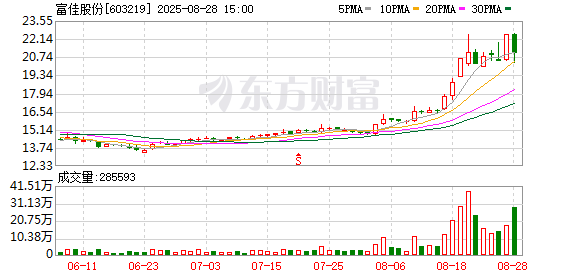
Core Viewpoint - The report highlights the financial performance and strategic direction of Ningbo Fujia Industrial Co., Ltd. for the first half of 2025, emphasizing growth in revenue despite a decline in net profit due to various pressures, including tariffs and increased R&D investments. Financial Performance - The company's operating revenue for the first half of 2025 reached approximately 1.48 billion yuan, representing a year-on-year increase of 45.22% compared to 1.02 billion yuan in the same period last year [2][3] - Total profit for the period was approximately 86.25 million yuan, down 29.22% from 121.86 million yuan in the previous year [2][3] - Net profit attributable to shareholders was approximately 75.42 million yuan, a decrease of 29.70% from 107.29 million yuan year-on-year [2][3] - The net cash flow from operating activities was negative at approximately -83.87 million yuan, compared to a positive 63.77 million yuan in the previous year, marking a significant decline of 231.53% [2][3] Industry Overview - The clean appliance industry in China is experiencing robust growth, with the market size expected to exceed 50 billion yuan in 2025, driven by technological advancements in key products like robotic vacuum cleaners and floor washers [6][7] - Sales of cleaning appliances in the first half of 2025 saw a year-on-year increase of 30% in revenue and 22.1% in volume, with robotic vacuum cleaners leading the growth at 41.1% [6][7] - The penetration rate of cleaning appliances in China remains low, indicating potential for future market expansion as consumer acceptance increases [6][7] Business Strategy - The company is focusing on a "one body, two wings" strategy, with clean small appliances as the core and energy storage and robotics as the growth wings, aiming for high-quality development [18][19] - The energy storage business generated approximately 245 million yuan in revenue during the first half of 2025, reflecting significant growth [19] - The company is actively enhancing its product offerings in the robotics sector, including the development of specialized robots for grain storage, which are expected to improve operational efficiency [17][19] R&D and Innovation - The company invested approximately 59.18 million yuan in R&D during the first half of 2025, an increase of 28.12% year-on-year, to enhance its technological capabilities and product competitiveness [19][22] - The focus on digital transformation and the integration of 5G technology in production processes has improved operational efficiency and reduced costs [22][23] Market Position - The company is recognized as one of the top ten vacuum cleaner exporters in China, with a diverse customer base that includes well-known international brands [15][19] - The company is leveraging its ODM capabilities to strengthen its position in both domestic and international markets, ensuring a competitive edge through quality and innovation [15][19]
石头科技“增收不增利”背后,竟是新版本下的新打法?
市值风云· 2025-08-21 10:35
Core Viewpoint - The logic of "volume" is more important than "price" in the current industry environment, indicating a shift in competitive dynamics within the vacuum cleaner market [4][28]. Industry Environment - The vacuum cleaner industry is undergoing significant changes since 2022, with increased competition and market saturation. From 2019 to 2022, the market share of the top three brands (CR3) increased, but is projected to decline from 67% to 62% in volume and from 76% to 69% in sales revenue from 2022 to 2024 [4][5]. Company Strategy - Stone Technology (688169.SH) has adopted a strategy of "exchanging price for volume," leading to increased revenue but declining profits. In the first half of 2024, the company reported a revenue of 7.903 billion, a 79% increase year-on-year, while net profit fell by 39.5% to 678 million [6][9]. Sales and Marketing Expenses - The increase in sales expenses is a significant factor, with the sales expense ratio reaching 24.84% in 2024 and further increasing to 27.39% in the first half of 2025. This reflects a shift towards brand building and market promotion, as well as a transition from a local distributor model to a direct sales model [9][11]. Market Position and Performance - Despite the competitive environment, Stone Technology has managed to increase its market share in China from 17% to 22% in sales volume and from 21% to 25% in sales revenue between 2022 and 2024. In the first half of 2025, these figures continued to rise [18][19]. Global Market Leadership - Stone Technology achieved a global market share of 16.0% in 2024, further increasing to 19.3% in the first quarter of 2025, solidifying its position as a global leader in the vacuum cleaner market [21][23]. Growth Dynamics - The shift from price-driven growth to volume-driven growth is evident, with sales volume increasing by 32.9% in 2024, while the average selling price saw minimal growth. This trend is mirrored in the performance of competitors like Ecovacs [24][25]. Brand Influence and New Product Lines - Stone Technology's brand influence has led to a significant increase in sales of its new product line, the floor washing machine, which achieved approximately 970 million in retail sales in the first half of 2025, marking a year-on-year increase of over 600% [35][36]. Market Potential - The penetration rate of vacuum cleaners in China remains low at 4.3%, indicating substantial growth potential. The market is expected to grow significantly as it approaches a balanced penetration rate of 20% [39][40]. Industry Growth Indicators - The vacuum cleaner market is still in a rapid growth phase, with retail sales volume reaching approximately 3.15 million units in the first half of 2025, a 40.7% year-on-year increase [41].

洗地机争夺战:谁狂飙?谁掉队?你的体验打几分?
Tai Mei Ti A P P· 2025-08-13 03:16
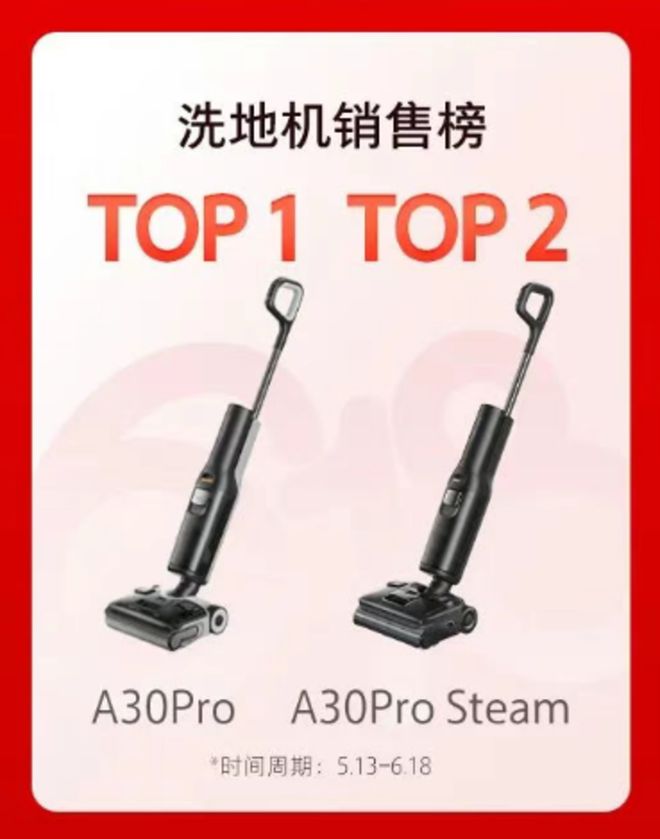
Core Insights - The "lazy economy" and quality of life trends are driving explosive growth in the floor cleaning machine market, with significant contributions from brands like Tineco, Roborock, and others [1][3] - The market for smart home cleaning products, including floor cleaning machines, is projected to reach nearly 300 billion RMB by 2029, with the floor cleaning machine segment experiencing a compound annual growth rate (CAGR) of approximately 192% from 2019 to 2024 [3] - Despite rapid sales growth, user experience issues persist, including difficulties in cleaning wastewater tanks, hair entanglement in brushes, and high costs for consumables [1][13] Market Dynamics - The floor cleaning machine market is expected to see a 30.3% year-on-year sales increase in the first half of 2025, driven by government subsidies, price stabilization, and brand efforts [3] - Tineco has established a strong foothold in the high-end market, achieving a 60% market share in the segment priced above 4000 RMB during the 2025 "618" shopping festival [4] - Roborock's aggressive marketing strategy has led to significant sales, with a total transaction volume of 1.6 billion RMB during the same period [4] Competitive Landscape - The competitive landscape is characterized by a first tier of brands (Tineco, Roborock, and Dreame) and a second tier including traditional appliance giants like Midea and Haier, as well as emerging players like Xiaomi and Yunji [8][9] - Market share data indicates fluctuations, with Tineco's share ranging from 34.67% to 37.87% over a span of weeks in 2025, while Roborock's share increased from 16.20% to 29.41% [8][9] - The second tier is seeing rapid changes, with new entrants like Mido and Westinghouse making significant impacts on market share [9] User Experience Challenges - Users report significant pain points with floor cleaning machines, including cumbersome cleaning processes and inadequate performance compared to traditional methods [13][16] - Complaints about product quality and inadequate after-sales service are common, highlighting a gap between the marketed benefits and actual user experiences [19][22] - The high cost of consumables, such as filters and brushes, adds to the overall expense of ownership, which can deter potential buyers [22] Conclusion - The explosive growth of the floor cleaning machine market is accompanied by intense competition and significant user experience challenges [23] - Companies that prioritize addressing user pain points and delivering genuine value are likely to emerge as leaders in this evolving market landscape [23]
大疆跨界扫地机器人:堆料足但难出头,背后藏着更大的野心
Tai Mei Ti A P P· 2025-08-07 02:01
Core Viewpoint - DJI has entered the vacuum cleaner market with its ROMO series, leveraging its expertise in drone technology, but faces challenges in competing with established brands due to pricing and product performance issues [2][4][12]. Group 1: Market Context - The global smart vacuum cleaner market shipped 5.096 million units, showing a year-on-year growth of 11.9%, with the top five manufacturers holding a 63.4% market share, an increase of 3.5% from the previous year [4]. - The vacuum cleaner market has a low penetration rate compared to traditional home appliances, indicating significant growth potential [12]. - The top five brands in the market, including Ecovacs and Xiaomi, dominate over 90% of the market share, highlighting the competitive landscape [12]. Group 2: Product Features and Performance - The ROMO series features a transparent design that reflects DJI's industrial aesthetics and includes advanced obstacle avoidance technology, utilizing dual fisheye vision sensors and solid-state LiDAR [5][7]. - Despite its strong design and technology, the ROMO series is criticized for its cleaning capabilities, using a disc mop system rather than more advanced options like roller mops, which are common in mid-to-high-end products [9][15]. - Initial sales figures indicate strong consumer interest, with over 2,000 units sold on JD.com and more than 1,000 on Taobao, leading to some versions being sold out [9][20]. Group 3: Strategic Intent and Future Aspirations - DJI's entry into the vacuum cleaner market is seen as a strategic move to diversify its product offerings, with potential future developments in humanoid robots hinted at [3][17]. - The company has been planning this move since 2020, indicating a long-term strategy rather than a spontaneous decision [14]. - The integration of advanced technologies from its drone expertise into household products is viewed as a potential advantage, but the company must overcome significant marketing and competitive challenges in this new sector [15][16].

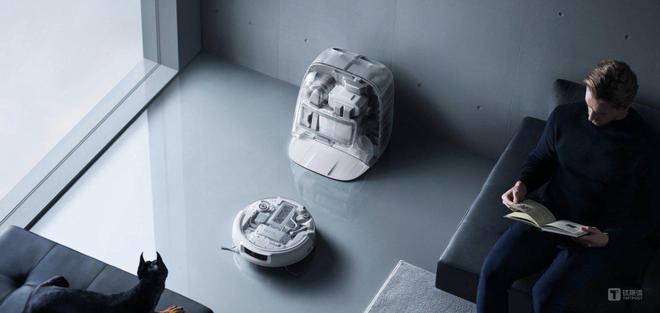
科沃斯进军具身智能,投资2亿建机器人核心部件及本体制造项目
Di Yi Cai Jing· 2025-07-28 11:55
Group 1 - The core point of the article highlights that Ecovacs is making a significant move from cleaning appliances to the robotics sector, emphasizing the need for rapid expansion in the household service robot market due to increasing investments in the field [1][3] - Ecovacs plans to invest 200 million yuan in a manufacturing project for core components and robot bodies in Huzhou, aiming for an annual production of 20 million components and a revenue exceeding 1 billion yuan [3] - The company aims to achieve a net profit of 960 million to 990 million yuan in the first half of 2025, representing a year-on-year increase of 57.64% to 62.57%, with a projected revenue growth of approximately 25% [3] Group 2 - According to IDC, Ecovacs ranked second globally in smart vacuum cleaner shipments in Q1 2025, holding a market share of 13.6%, with a year-on-year increase of 11% in shipments [4] - The company is currently the market leader in domestic vacuum cleaner shipments, indicating its strong position in the industry [4] - The article notes that major home appliance companies like Haier and Midea are also entering the humanoid robot market, suggesting a competitive landscape that Ecovacs must navigate [4]

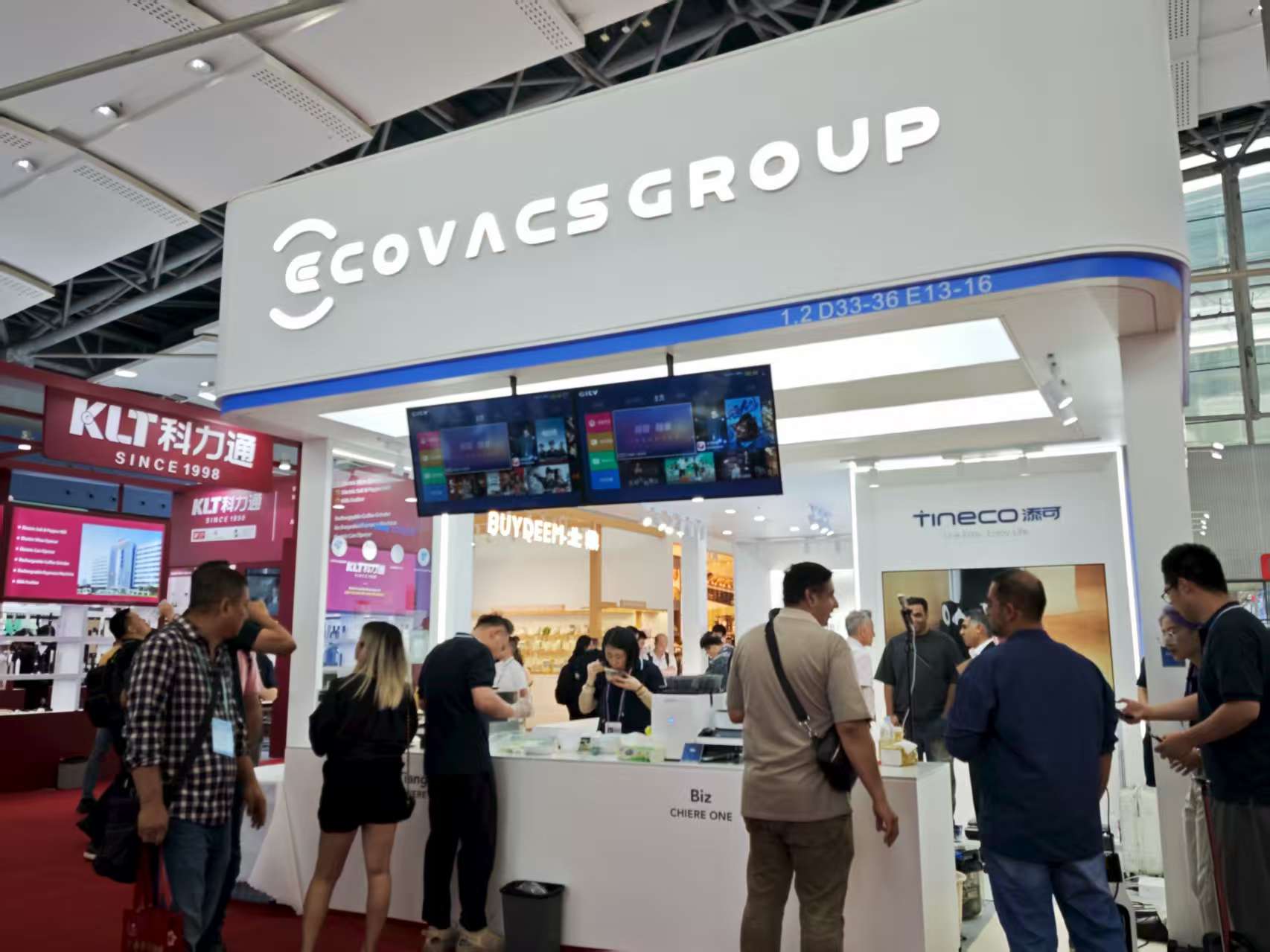
400亿,“扫地茅”又要IPO了
投中网· 2025-07-18 06:10
Core Viewpoint - Stone Technology is set to go public on the Hong Kong Stock Exchange, marking its second IPO after its debut on the STAR Market in 2020. The company has shown significant growth in revenue but faces challenges with profitability and cash flow [4][8][9]. Company Overview - Stone Technology, founded in 2014 by Chang Jing and his partners, initially gained traction as a part of Xiaomi's ecosystem, launching the "Mijia Smart Vacuum Cleaner" in 2016. The company has since evolved into an independent brand [6][7]. - The company achieved a peak stock price of 1494.99 CNY in 2021, making it the second-highest priced stock in A-shares after Kweichow Moutai [4][8]. Financial Performance - Stone Technology's revenue has shown a consistent upward trend, with projected revenues of 66.11 billion CNY in 2022, 86.40 billion CNY in 2023, and 119.19 billion CNY in 2024. The first quarter of 2025 saw a year-on-year revenue increase of 86.22% to 34.28 billion CNY [8]. - The company's smart vacuum cleaner segment is the primary driver of this growth, contributing 63.46 billion CNY, 80.85 billion CNY, and 108.48 billion CNY in sales for the respective years [8]. Profitability Challenges - Despite revenue growth, Stone Technology has encountered a "growth without profit" scenario, with net profits declining significantly in 2024. For instance, the net profit dropped by 45.25% in Q3 2024 despite an 11.91% revenue increase [9]. - The company's operating costs surged, with total costs reaching 31.20 billion CNY in Q1 2025, a year-on-year increase of 118.65%. Sales and R&D expenses have also risen sharply [9]. Market Position and Competition - Stone Technology holds a 23.4% market share by GMV and a 16.7% share by sales volume in the global smart vacuum cleaner market, making it the leading brand [8][12]. - The smart vacuum cleaner market is highly competitive, with the top five brands accounting for over 60% of the market share [11]. Expansion Strategies - The company is diversifying its product line, having launched a washing and drying machine in 2023, and is exploring other cleaning appliances. In 2024, these new products generated 10.70 billion CNY in revenue, a 33% increase [11]. - Stone Technology is also focusing on international expansion, with its products available in over 170 countries and regions, contributing to 63.88 billion CNY in overseas revenue in 2024, which is 53.48% of total revenue [12]. Market Trends - The Hong Kong stock market is seeing a trend of A-share companies seeking dual listings, with notable examples including Haitian Flavoring and Seasoning and Hengrui Medicine [13][14]. - The anticipated influx of companies into the "A+H" listing model is expected to continue as market conditions improve [15].

机器人 AI搭台,人形赋能:如何看扫地机的过去和未来? - 2025年中金公司中期投资策略会
中金· 2025-07-01 00:40
Investment Rating - The report indicates a positive investment outlook for the cleaning appliance industry, particularly for robotic vacuum cleaners, with expectations of continued market growth and increased penetration rates [1][6][7]. Core Insights - The cleaning appliance market in China experienced a significant growth of 35.9% in sales and 20.2% in volume from January to April 2025, driven by national subsidies [1][5]. - The robotic vacuum cleaner market is projected to surpass a 50% market share by 2025, with a sales growth of 54.6% and volume growth of 45.2% in the first four months of 2025 [1][6]. - The competitive landscape shows a strong concentration among top brands, with the top five brands holding approximately 95% of the market share, highlighting a pronounced "Matthew Effect" [1][8]. Summary by Sections Market Performance - The overall home appliance market maintained a growth rate of 4.8% in early 2025, influenced by national subsidies, although a decline is expected in the latter half of the year due to previous overconsumption [2][4]. - Sales of cleaning appliances reached 12.9 billion yuan in the first four months of 2025, with a notable increase in the sales of robotic vacuum cleaners [1][5]. Product Trends - The robotic vacuum cleaner market is seeing a shift towards lower price segments, with models priced below 3,000 yuan capturing a significant share, potentially reaching 50% with the influence of subsidies [7][17]. - The report highlights a trend towards modular design, product integration, and embodied intelligence in robotic vacuum technology, with improvements in height, thickness, and smart recognition capabilities [12][13]. Brand Dynamics - Stone Technology has emerged as a leading player, achieving a market share of 27.2% in early 2025, which increased to 30% during the 618 shopping festival [8][18]. - Other brands are also expanding their product lines beyond cleaning appliances, indicating a diversification strategy among leading companies [8][9]. Sales Channels and Strategies - The report notes the growing influence of platforms like Douyin (TikTok) on sales, with significant investments from leading brands in these channels [18]. - The competitive pricing strategies among leading brands are highlighted, with a focus on maintaining market share in a declining price environment [20][21].

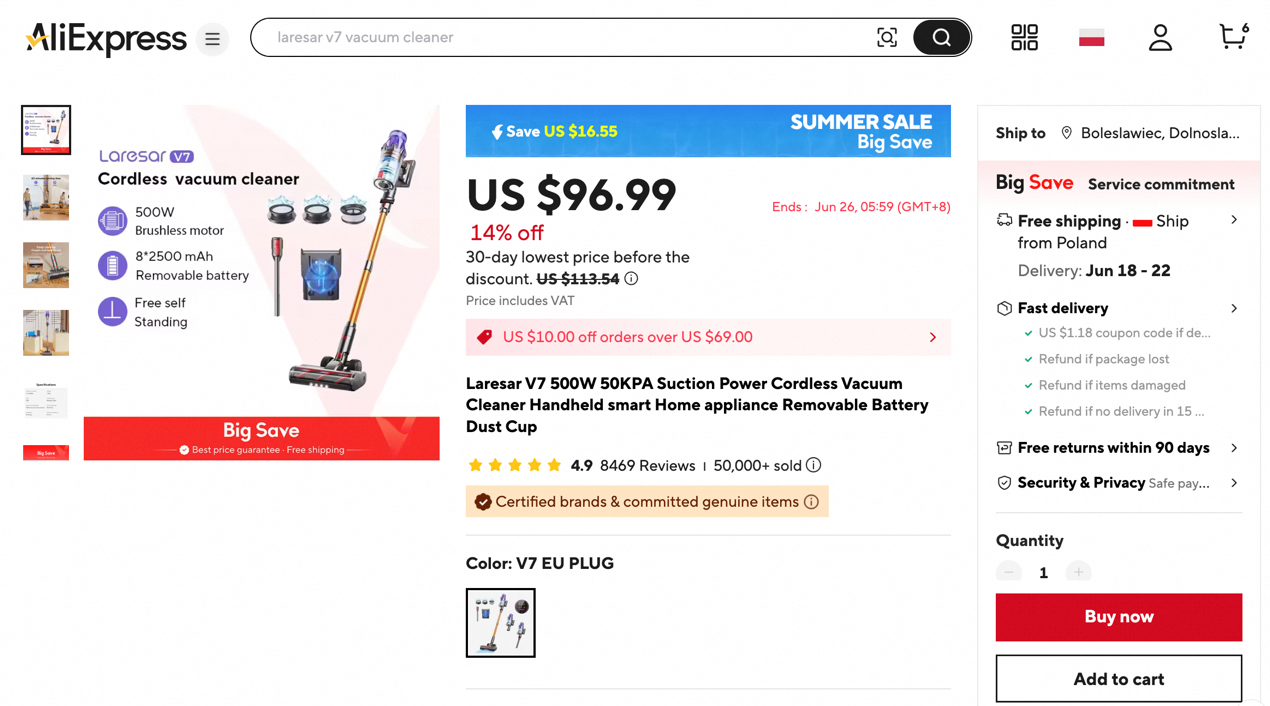
海外618开卖,速卖通吸尘器成波兰家庭新标配
Cai Jing Wang· 2025-06-16 07:20
Core Insights - LARESAR, a rising vacuum cleaner brand from Shenzhen, has rapidly become the top brand in the home appliance category on AliExpress, particularly in Poland, after joining the platform's BigSave subsidy program in June 2024 [1][3] - The brand's sales in Poland have surged over 18 times in the past year, with LARESAR entering the "ten million dollar club" in terms of transaction volume [1][3] Group 1 - LARESAR was established in 2021 and chose to enter the international market through AliExpress to reduce marketing costs and leverage the platform's logistics capabilities [3] - The brand focuses on product development, backed by its status as a national high-tech enterprise, and has developed independent high-speed motor technology and smart algorithms [3] - The V7 model, launched in 2023, is priced at one-seventh of Dyson's mainstream models while being perceived by consumers as having 95% performance similarity [3] Group 2 - LARESAR's sales strategy includes collaboration with AliExpress's BigSave team for influencer marketing and adapting to local shipping methods to enhance fulfillment efficiency [4] - The brand aims to maintain a long-term strategy rather than relying solely on low prices, with a focus on brand strategy and profitability by 2025 [4] - AliExpress has been increasingly focusing on brand development, with significant growth in the sales of smart home appliances, particularly a three-digit percentage increase in Poland [4]