美妆

Search documents
美妆巨头艰难转身,一度陷入困境的雅诗兰黛如何摆脱业绩低迷?|声动早咖啡
声动活泼· 2026-03-25 09:33
Core Viewpoint - Estée Lauder has shown a significant recovery in its financial performance, particularly in the Chinese market, with a revenue of over $4.2 billion in the latest quarter, marking a 6% year-on-year growth and a profit of $160 million, reversing previous losses [3][4]. Group 1: Financial Performance - The latest quarterly revenue of Estée Lauder exceeded $4.2 billion, achieving a 6% year-on-year growth and a profit of $160 million [3]. - In the Chinese market, Estée Lauder experienced a 13% growth, significantly outpacing the overall group performance, and has achieved double-digit growth for two consecutive quarters [3][4]. - The skincare segment remains the core revenue source for the group, with profits in this category increasing by 48% in the latest quarter, driven by high-end brands like La Mer and Estée Lauder [5]. Group 2: Market Trends and Consumer Behavior - The rise of domestic brands and alternative products has challenged Estée Lauder's previous growth strategies, leading to a period of declining performance since 2022 [4]. - The "ingredient-focused" culture among consumers has shifted attention from brands to specific skincare components, with 73% of consumers now paying attention to ingredient ratios [6]. - Consumers are increasingly willing to pay higher prices for scientifically formulated skincare products, reflecting a trend towards valuing research-backed efficacy [7]. Group 3: Competitive Landscape - The luxury beauty market in China is showing signs of recovery, with high-end beauty categories performing strongly, contrasting with the sluggish performance of other luxury segments like leather goods and watches [5]. - Competitors like L'Oréal have also returned to growth in the Chinese market, with significant investments in high-end brands, indicating intensified competition in the luxury beauty sector [12]. Group 4: Challenges and Strategic Adjustments - Estée Lauder's reliance on travel retail has been a critical channel, but the pandemic has severely impacted this segment, leading to inventory buildup and necessitating aggressive discounting strategies [10][11]. - The new CEO has initiated a strategy to reduce dependence on travel retail and manage inventory more effectively, while also responding to the recovery of outbound tourism [11]. - Despite signs of recovery, challenges remain, including potential profit margin impacts from tariff changes and ongoing competition from rivals like L'Oréal [12].



早报|张雪峰因心源性猝死抢救无效去世;Token中文名定了:词元;汽车之家多个平台账号被禁止关注;OpenClaw升级现严重事故
虎嗅APP· 2026-03-25 00:32
Group 1 - Zhang Xuefeng, the founder of Suzhou Fengxue Weilai Education Technology Co., Ltd., passed away on March 24, 2026, due to cardiac arrest [2] - OpenAI has reportedly completed the preliminary development of a new AI model, with Sam Altman shifting focus towards data center construction and fundraising [4] - The U.S. government has proposed a 15-point negotiation plan to Iran, addressing nuclear capabilities and regional issues, with potential sanctions relief as a trade-off [6] - Apple is testing a standalone Siri application for iOS 27, aiming for a significant AI upgrade, with a planned announcement at the WWDC on June 8 [7] - The term "Token" has been officially translated to "词元" in China, highlighting its importance in the AI industry as a billing unit for large model usage [9][10] Group 2 - Automotive platform "Autohome" has faced restrictions on multiple social media accounts due to regulatory violations, following previous criticisms for misleading evaluations [11] - Xiaomi's management acknowledged challenges due to rising memory costs, indicating that while pressure is significant, the company may adapt better than competitors due to its high-end strategy [24] - Estée Lauder has confirmed discussions regarding a potential merger with Spanish beauty company PUIG, although no agreement has been reached yet [20][21] - Nvidia's CEO Jensen Huang predicts a significant increase in the GDP share attributed to AI computing, suggesting that the economic role of computing has fundamentally shifted from storage to production [32][33]

霍尔木兹海峡通航量大跌95%,美联储拉响加息警报 | 财经日日评
吴晓波频道· 2026-03-25 00:30
Group 1: Economic Impact of Oil Prices and Monetary Policy - The Chicago Fed President indicated that rising oil prices may force the Federal Reserve to tighten monetary policy, with all options under consideration, including potential interest rate hikes if inflation remains uncontrolled [2] - GasBuddy reported that the average gasoline price in the U.S. reached $3.95, the highest since August 2022, increasing over 30% since the onset of the U.S.-Iran conflict [2] - Goldman Sachs adjusted the probability of a U.S. recession to 30% over the next 12 months, citing the impact of rising energy prices on economic growth and inflation [4] Group 2: Global Central Bank Trends - The European Central Bank has also hinted at potential interest rate hikes, indicating a shift from a global easing cycle to tightening, increasing the risk of reduced liquidity worldwide [3] Group 3: Shipping and Energy Transport - The shipping traffic through the Strait of Hormuz has plummeted by 95% since the U.S.-Iran conflict began, with only 144 vessels passing through from March 1 to March 23, compared to approximately 138 vessels daily before the conflict [6] - Despite the ongoing conflict, there are signs of a gradual return to limited shipping through the Strait, with both the U.S. and Iran showing willingness to negotiate [6] Group 4: Data Market Developments in China - The National Data Bureau of China announced plans to accelerate the establishment of a unified data property registration system, with daily token usage exceeding 140 trillion, a significant increase from previous years [8] - By the end of 2025, over 100,000 high-quality data sets are expected to be established, vastly surpassing the digital resources of the National Library of China [8] Group 5: Beauty Industry Mergers and Acquisitions - Estée Lauder is in talks to merge with Spanish beauty group PUIG, as it faces declining sales, with net sales projected to drop to $14.33 billion by fiscal year 2025 [10] - The beauty market is shifting towards consolidation, with larger companies relying on acquisitions to strengthen their competitive positions, while smaller brands can still find opportunities in niche markets [11] Group 6: Financial Products and Market Trends - Several banks have reported failures in fundraising for new financial products due to not meeting minimum thresholds, with at least 29 products affected [14] - The average yield of bank wealth management products fell below 2% for the first time, leading to decreased attractiveness and increased competition in the market [14]

3月25日议程|国泰海通“远望又新峰”2026春季策略会
国泰海通证券研究· 2026-03-24 23:53
Core Viewpoint - The article discusses the upcoming 2026 Spring Conference organized by Guotai Junan Securities, focusing on macroeconomic policies, asset allocation strategies, and industry-specific insights, particularly in technology and finance sectors [1][2]. Group 1: Macroeconomic Insights - The conference will feature discussions on global monetary policy changes and asset outlooks, highlighting the evolving international order and its impact on investment strategies [3][5]. - Key sessions will include a roundtable on ETF allocation strategies and macroeconomic forecasts for 2026, emphasizing the importance of adapting to new economic realities [3][4]. Group 2: Industry-Specific Strategies - The telecommunications sector will be a focal point, with sessions dedicated to fiber optic demand analysis and the future of satellite communication technologies [6][7]. - The conference will also explore advancements in AI and its implications for wealth management, showcasing new trends in resident wealth management and non-bank strategies [10][11]. Group 3: Investment Opportunities - The event will address investment opportunities in the beauty industry, using Proya as a case study to illustrate successful strategies in a competitive market [14]. - Discussions will include the exploration of new technologies in the medical field, such as RNAi platforms and brain-machine interfaces, indicating a growing interest in biotech investments [20][21]. Group 4: Global Geopolitical Context - The conference will analyze the current geopolitical landscape, including U.S.-China relations and their implications for global asset allocation [7][8]. - A roundtable will focus on the strategic reassessment of Chinese hard assets in light of international order reconstruction, emphasizing the need for adaptive investment strategies [7][8].


茅台稳增长、李宁领赛道、霸王茶姬上市,毕马威解码 2025 消费零售新变局
Sou Hu Cai Jing· 2026-03-24 02:01
Core Insights - In 2025, China's economy reached a new level with GDP exceeding 140 trillion yuan, growing by 5.0%, and consumer spending became the main driver of economic growth [2] - KPMG's report outlines the development trends in China's retail industry, highlighting "scale expansion, structural optimization, and innovation breakthroughs" as key themes [2] - The retail market is expected to see a dual increase in scale and quality, with total retail sales of consumer goods surpassing 50 trillion yuan, a year-on-year increase of 3.7% [4] Economic Overview - The per capita disposable income of residents reached 43,377 yuan in 2025, with both nominal and real growth rates at 5.0% [7] - The average urban unemployment rate was 5.2%, lower than expected, and consumer confidence index rose to 76.6, up 4.1 from the previous year [7] - CPI remained stable, with core CPI showing a year-on-year increase for four consecutive months, supporting steady market development [7] Sector Performance - The luxury goods sector saw significant growth, with retail sales of gold and silver jewelry increasing by 37.6% year-on-year in October, driven by high gold prices [9] - The apparel and footwear sector experienced a year-on-year retail sales increase of 3.2%, with sportswear leading the market [11] - The health and beauty sector rebounded, with retail sales reaching 4,653 billion yuan, a year-on-year increase of 5.1% [13] - The food and beverage sector saw retail sales grow by 9.3%, with a notable shift towards health-conscious and functional products [15] - The restaurant industry generated 57.982 billion yuan in revenue, a year-on-year increase of 3.2%, with a focus on digital transformation [17] Investment Trends - The investment landscape in the retail sector is improving, with a focus on long-term value and stable returns [18] - The luxury goods sector experienced a strong rebound in IPOs, while health and beauty mergers reached a five-year peak [18] - Policy support, including tax incentives and consumption-boosting measures, is expected to further enhance industry growth [18] Future Outlook - Despite uncertainties, policies aimed at expanding domestic demand and stabilizing employment will continue to unlock consumer potential [19] - Key trends for 2026 include technological empowerment, health and functionality as core demands, market and channel expansion, and a shift towards rational consumption and sustainability [19] - Brands need to align with consumer demands and focus on technology, health, market penetration, and sustainability to achieve long-term growth in a large-scale market [20]


深挖中东美妆的3个真相:为何高增长与高门槛并行?
FBeauty未来迹· 2026-03-23 12:06
Core Viewpoint - The Middle East beauty market is characterized by strong growth potential and consumer resilience despite ongoing geopolitical tensions, necessitating a nuanced understanding of the region's unique market dynamics [2][3]. Market Overview - The beauty and personal care market in the MENA region has surpassed $46 billion, with projections indicating double-digit growth in key segments like fragrance, hair care, and skin care from 2015 to 2027 [3]. - The changing growth logic in the global beauty market highlights the Middle East as a rare area capable of supporting both scale growth and brand premium [3]. International Beauty Groups in the Middle East - Major beauty groups are increasingly recognizing the Middle East's strategic importance, with companies like L'Oréal, Procter & Gamble, and Amorepacific reporting significant growth in the region [4][5]. - L'Oréal's market share in the Middle East has grown by 10.9%, while Amorepacific's brands have seen a remarkable 41.5% increase [4]. - Procter & Gamble's sales in the IMEA region, which includes the Middle East, contributed 5% to its annual net sales, indicating strong performance [4]. Competitive Landscape - The Middle East beauty market features four main competitors: Western brands, Korean beauty brands, local Middle Eastern brands, and emerging Chinese brands [9]. - Western brands dominate the market due to their established distribution networks and brand recognition, while Korean brands excel through product detail and localization [9][10]. - Local brands leverage cultural relevance and social media influence to connect with consumers, exemplified by brands like Huda Beauty and Moonglaze [13][15]. Challenges for Chinese Brands - Chinese beauty brands are still in the exploratory phase in the Middle East, facing challenges related to brand recognition and consumer trust [18][21]. - Successful entry into the market requires not only product quality but also effective consumer education and localized marketing strategies [21][25]. - The regulatory landscape is complex, with varying compliance requirements across different countries, making it essential for brands to navigate these regulations effectively [22][23]. Consumer Preferences and Market Dynamics - Middle Eastern consumers exhibit a strong preference for high-quality, culturally relevant products, with sensitivity to product details such as scent and texture [26]. - The market's complexity necessitates a deep understanding of local consumer behavior, which differs significantly from other regions [26]. - Brands must establish trust and credibility through compliance, effective communication, and a genuine understanding of local culture to succeed in this market [24][26].




RNW如薇:把毛孔护理这件小事做成深赛道
FBeauty未来迹· 2026-03-23 12:06AI Processing
当爆款退潮,"专研"才是品牌最深的护城河。 2 0 2 6年开年,美妆行业"细分赛道"竞争持续升温。在流量红利见顶、爆款生命周期缩短的当 下,一个更本质的问题浮出水面:品牌凭什么被持续识别、被长期记住? 《FBe a u t y未来迹》注意到,一批新锐国货品牌的突围逻辑正在发生转向——不再依赖单一爆 品的短期爆发,而是以技术体系为核心,从"产品驱动"走向"品牌驱动"。RNW如薇正是其中 的典型样本。 它的特别之处在于:选择了一条更"窄"也更"深"的路——以"国人毛孔专研"为核心定位,用自 研技术清肌茶素构建科研壁垒,用RNW去黑头鼻贴、抛光洗面奶等明星产品验证市场认可, 用奶噗噗联名传递品牌温度,用2 0 0 0 0+线下终端夯实渠道根基。 3月,如薇携RNW×奶噗噗联名系列首次亮相2 0 2 6CiE美妆创新展,将这套"专研"逻辑带到行 业面前。 偏油皮消费者的护肤困扰,往往绕不开三个字:油、堵、粗。 美修大数据显示,毛孔粗大和频繁出油是油皮、混油皮人群最核心的肌肤问题,尤其是T区, 油脂分泌旺盛,黑头、粉刺反复滋生。如薇在精准洞察国人肤质后发现,油性肌肤除了油脂旺 盛,还会衍生角质堆积、氧化暗沉、敏感泛红 ...

欧莱雅勇闯二次元?公益破圈的“中国样本”出现
FBeauty未来迹· 2026-03-21 09:02
Core Viewpoint - The article highlights L'Oréal's initiative in Guangzhou, focusing on the "Beauty for a Better Life" (BFBL) program, which aims to empower women through vocational training in the cosplay makeup industry, aligning with local cultural and economic trends [3][21]. Group 1: Program Overview - The BFBL program has been active in China for twelve years and recently launched a specialized class in Guangzhou, targeting the cosplay makeup sector [3][5]. - The program aims to address the professional talent gap in the cosplay makeup industry, which is experiencing increasing market demand and a shift towards professionalization [8][6]. Group 2: Market Context - The Chinese animation and gaming market is projected to grow significantly, with the peripheral market expected to reach 652.1 billion yuan by 2025 and 834.4 billion yuan by 2029 [6]. - Guangzhou's animation industry generates over 300 billion yuan, accounting for about one-fifth of the national total, making it a key player in the sector [6]. Group 3: Training and Curriculum - The training program includes courses on basic makeup skills, character makeup, special effects makeup, and digital skills such as e-commerce and AI tool application [10][13]. - The curriculum is designed to provide a comprehensive skill set that enables participants to transition from traditional makeup artistry to digital and online business models [13][11]. Group 4: Employment and Community Impact - The "Beauty Station" serves as an employment incubator, providing facilities for graduates to take on orders immediately after completion of the program, thus facilitating "employment upon graduation" [16][14]. - The program encourages graduates to volunteer and provide makeup services to underprivileged communities, fostering a cycle of support and empowerment [16][20]. Group 5: Long-term Vision and Sustainability - The BFBL program is evolving to address demographic changes and is exploring connections with the "silver economy" to support older women [27]. - The initiative has been recognized for its ability to create a sustainable ecosystem that not only addresses individual employment but also contributes to regional economic development [29][30]. Group 6: Conclusion - The BFBL program exemplifies a strategic approach to corporate social responsibility, integrating professional expertise with community needs, and demonstrating high effectiveness with an employment rate exceeding 80% among participants [30][21].

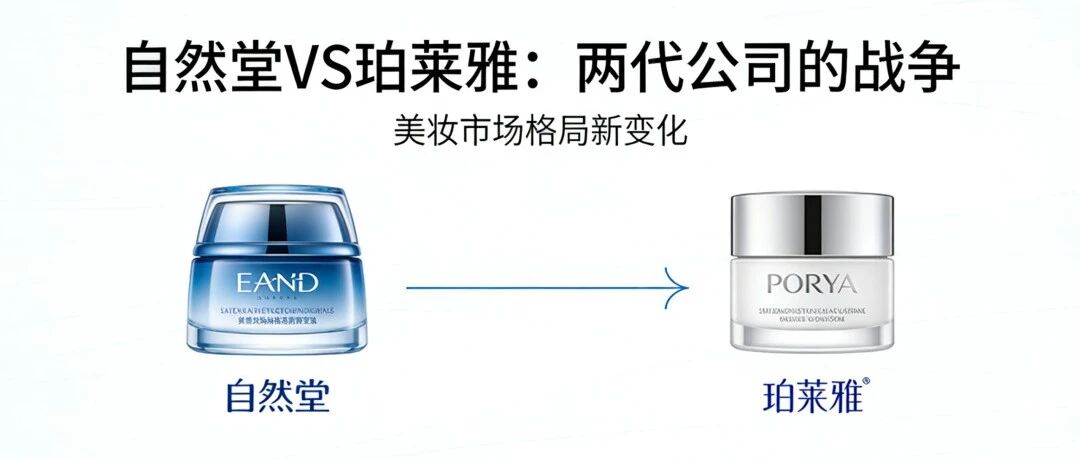
自然堂输给珀莱雅,是两代公司的战争
新消费智库· 2026-03-18 14:24
Core Viewpoint - The competition between brands like Chando and Proya is not merely a brand rivalry but represents a generational shift in the Chinese beauty industry, where first-generation companies are being outperformed by second and third-generation companies that adapt to new consumer behaviors and market dynamics [2][34]. Group 1: First-Generation Companies - First-generation companies like Chando, Pechoin, and Shanghai Jahwa thrived in an era focused on distribution and brand management, leveraging traditional retail channels to control sales [4][10]. - These companies built their success on a solid foundation of distribution networks and advertising, which are now becoming less effective in the current market landscape [8][10]. - Chando was perceived as a high-end domestic brand, particularly in lower-tier cities, but struggles to adapt to the new content-driven consumer environment [8][28]. Group 2: Second-Generation Companies - Second-generation companies such as Proya, Han Shu, and Winona emerged in the e-commerce and content era, focusing on user-driven strategies and rapid product iteration [11][15]. - Proya's success is attributed not just to effective marketing but to its organizational structure that aligns with modern content distribution systems, making it more agile and responsive to consumer needs [19][20]. - The shift from channel control to content platform control has fundamentally changed how brands grow, with visibility becoming more critical than mere shelf presence [13][14]. Group 3: Third-Generation Companies - Third-generation companies like Kefu Mei and Juzi Biotech are defining a new narrative by focusing on efficacy, ingredients, and medical storytelling to build consumer trust [2][31]. - These companies are not just competing for shelf space or online visibility but are creating new standards for consumer engagement and product relevance [31][34]. Group 4: Market Dynamics and Challenges - As online growth opportunities plateau and platform costs rise, first-generation companies like Chando are returning to their strengths in offline retail, indicating a recognition of their limitations in the new market [2][38]. - The challenge for Chando is not merely about whether to focus on online or offline strategies but whether it can rekindle strong consumer demand among a new generation [37][40]. - The beauty industry is evolving, and first-generation companies must confront the reality that their established advantages are diminishing in the face of new consumer expectations and competitive models [29][33].

华泰证券今日早参-20260318
HTSC· 2026-03-18 03:18
Macro Insights - The Federal Reserve is expected to maintain interest rates during the March meeting, with a downward adjustment in growth and upward adjustment in inflation forecasts, while keeping the rate cut guidance unchanged [2][3] - The geopolitical situation in the Middle East has led to rising oil prices, but it is not anticipated to significantly alter the Fed's guidance [2] Policy Insights - The recent "Two Sessions" in China have focused on modernizing the industrial system, technological innovation, and expanding domestic demand, with no explicit GDP growth target set in the 14th Five-Year Plan [2] - The State Council has outlined key tasks for 2026, emphasizing the need to respond better to external shocks and challenges [2] Technology Sector - At the GTC 2026 conference, NVIDIA's CEO announced the release of Groq 3 LPU and highlighted the unexpected demand for OpenClaw, which is expected to boost demand for devices like Mac Mini and x86 laptops [4] - The data center revenue forecast for 2025-2027 is projected to exceed $1 trillion, enhancing confidence in the growth prospects for companies like TSMC and Hon Hai [4] Consumer Sector - In January-February, China's retail sales increased by 2.8% year-on-year to 8.6 trillion yuan, driven by the long Spring Festival holiday and consumption promotion policies [5] - The government has introduced special bonds to support the replacement of consumer goods, indicating a focus on quality improvement and category upgrades [5] Transportation Sector - In January-February, domestic airlines experienced a rise in both volume and price, with passenger load factors increasing to 85.3% [6] - The industry is expected to see improved profitability as supply-demand fundamentals remain favorable, despite short-term oil price fluctuations [6] Media and Gaming Sector - Apple has reduced the commission rate for in-app purchases from 30% to 25%, which is expected to enhance profit margins for game developers [7] - This change is part of a broader trend towards lowering channel fees, benefiting the gaming industry's sustainable growth [7] Company-Specific Insights - Midea Group has been rated "Buy" with a target price of 109.42 HKD, focusing on its transformation into a technology-driven growth company [11] - Datang Power has also been rated "Buy," with a target price of 5.06 CNY, benefiting from its diversified energy operations [12] - The performance of China Light and Power is stable, with a projected dividend yield of 4.7% and a focus on capital expenditure to enhance profitability [13] - The performance of Yueda Group is under pressure, but its core IP business remains resilient, maintaining a "Buy" rating [14]