美容美发

Search documents
“丰铃行动”提速维权 美容预付卡退费3天协调追回
Xin Lang Cai Jing· 2026-01-13 17:46
Group 1 - The core viewpoint of the article highlights the successful resolution of a consumer dispute involving a prepaid card refund, showcasing the effectiveness of the "Fengling Action" initiative by the Fengtai District Market Supervision Bureau [1][2] - A woman prepaid 15,000 yuan for beauty services but faced delays in refund despite completing all services, prompting her to contact the local market supervision office [1] - The market supervision office quickly initiated a response mechanism, documented the case, and facilitated communication between the consumer and the business, leading to a refund within three days [1] Group 2 - The "Fengling Action" aims to create a safe and trustworthy consumer environment, with the resolution of this dispute serving as a catalyst for further optimization of consumer rights protection mechanisms [2] - The market supervision office has established standards for on-site inspections and timely resolutions, focusing on high-risk industries such as beauty and fitness for dynamic regulation [2] - Regular legal education and training sessions for business operators are conducted to prevent and reduce consumer disputes, enhancing public confidence and satisfaction in consumer safety [2]
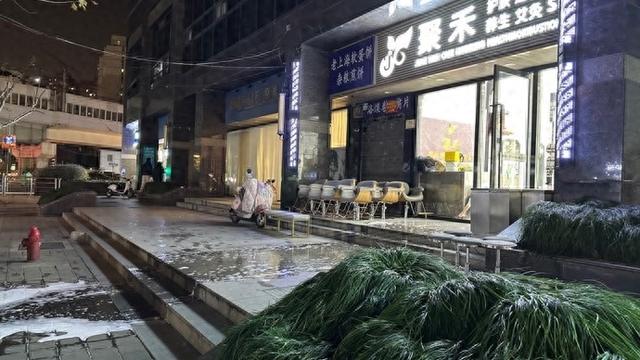
美容院“门前洗街”惹民忧 污水横流行人“步步惊心”
Xin Lang Cai Jing· 2026-01-11 13:10
Group 1 - The incident involves a beauty salon, "聚禾SALON SPA," which has been reported for cleaning its premises in a manner that spills wastewater onto the public sidewalk, causing inconvenience and safety hazards for pedestrians [4][6][10] - The cleaning process includes moving furniture outside and using mops and buckets, resulting in foam-laden wastewater flowing onto the street, affecting both pedestrian and non-motorized vehicle pathways [6][8] - Local residents express frustration over the situation, highlighting the dangers posed by the slippery conditions created by the salon's cleaning practices, which force pedestrians to navigate dangerously close to moving vehicles [8][10] Group 2 - The salon staff claim they are following procedures for cleaning after business hours, but they fail to provide a reasonable explanation for discharging wastewater into public areas [8][10] - There is a call from the community for regulatory intervention to ensure public safety and cleanliness, emphasizing the need for responsible waste management practices by local businesses [10]

浙江杭州预付式消费综合治理成效明显
Zhong Guo Zhi Liang Xin Wen Wang· 2026-01-08 07:15
Core Insights - Hangzhou has achieved significant results in the comprehensive governance of prepaid consumption, launching a social co-governance action for integrity in business and a market-oriented reform plan for promotion across the province [1] Group 1: Government Initiatives - Hangzhou is the first city in China to define administrative departments involved in prepaid consumption management by industry supervision, comprehensive regulation, and law enforcement [1] - The city has strengthened inter-departmental collaboration and improved the risk warning and disposal mechanism, incorporating prepaid consumption into industry credit governance [1] - By the end of November 2025, the city received and handled 19,000 complaints related to closed prepaid consumption businesses, a year-on-year decrease of 19.23%, with the largest declines in education and training (59.37%) and sports fitness (29.36%) [1] Group 2: Market Developments - Hangzhou has actively developed a new model of platform economy, supporting the launch of market-oriented products such as Ant Group's "Anxin Pay" and Meituan's "Anxin Study" [1] - By the end of November 2025, the city had secured 562 million yuan in funds for consumer safety through these platforms [1] - The Gongshu District has implemented market-oriented reforms in prepaid consumption, covering 6,256 merchants across 21 sub-sectors, ensuring the safety of 110 million yuan in funds [2] Group 3: New Policies and Incentives - Three new policy measures were announced, allowing prepaid payments through compliant third-party platforms to be exempt from card issuance registration and to exceed the 5,000 yuan limit [2] - Businesses participating in the new prepaid consumption safety management model can receive up to 200,000 yuan in support for high-quality development from the city [2] - The first batch of 99 one-star stores in the beauty and hairdressing industry was announced, along with 13 stores in the "credit + sports consumption" application scenarios [2] Group 4: Collaborative Efforts - Ant Group announced the upgrade of "Anxin Pay 2.0," while Meituan launched the "Anxin Study Credit List" [3] - Representatives from government, consumers, and industry associations initiated a provincial promotion map for market-oriented reforms, marking the transition of the "Hangzhou experience" from pilot exploration to provincial deepening [3]
合肥高新区大力推进“预付宝” 为“品质主城区”建设注入信任动能
Xin Lang Cai Jing· 2025-12-28 01:56
Core Viewpoint - The launch of the "Prepaid Treasure" platform in Hefei High-tech Zone aims to enhance consumer confidence in prepaid services by providing a secure and regulated environment for prepaid transactions, addressing issues related to consumer disputes and merchant insolvency [1][2]. Group 1: Platform Overview - The "Prepaid Treasure" platform was officially launched on November 13, 2025, and has since integrated over 200 businesses across various sectors, including retail, fitness, beauty, education, healthcare, and automotive maintenance [1]. - The platform allows consumers to recharge for services while ensuring that funds are regulated, thus reducing concerns about merchant bankruptcy and misuse of prepaid funds [1][2]. Group 2: Consumer Benefits - Consumers can easily check if a merchant is registered on the "Prepaid Treasure" platform before making a recharge, enhancing their confidence in the transaction [1]. - The platform offers a streamlined process for refund requests in case of merchant insolvency, allowing consumers to initiate a refund with a single click, thus alleviating concerns about recovering prepaid funds [2]. Group 3: Merchant Participation - A chain pharmacy with 51 stores in Hefei has fully adopted the "Prepaid Treasure" platform, reflecting a commitment to standardized operations and consumer trust [2]. - The platform provides low-interest and interest-free loans to compliant merchants, thereby increasing financing options for small and micro enterprises [2]. Group 4: Regulatory and Supportive Measures - Hefei High-tech Zone has implemented comprehensive strategies, including training and departmental collaboration, to promote the "Prepaid Treasure" platform and mitigate consumer disputes related to prepaid services [2]. - The initiative aims to create a sustainable prepaid consumption ecosystem, enhancing the overall business environment and consumer confidence in Hefei [2].
起底“职业闭店人”
Xin Lang Cai Jing· 2025-12-25 17:24
Core Viewpoint - The rise of "professional store closers" has led to an increase in fraudulent activities within the prepaid consumption sector, particularly in industries like education and fitness, where businesses close suddenly, leaving consumers with financial losses [1][2][4]. Group 1: Fraudulent Activities - Many businesses, especially in the education and fitness sectors, have been reported to close suddenly after changing ownership and conducting promotional activities, leading to significant consumer losses [1][2]. - A recent case in Shanghai involved a group of individuals who operated under the guise of managing educational institutions, ultimately defrauding consumers of over 1 million yuan [2][3]. Group 2: Mechanisms of Operation - "Professional store closers" assist struggling businesses in planning their closure and evading responsibilities, often by changing the legal representatives to individuals with no financial capability [4][6]. - These individuals typically lure consumers into prepaying for services through aggressive promotional tactics, only to close the business shortly after [5][10]. Group 3: Legal Implications - The actions of "professional store closers" violate consumer rights and disrupt market order, leading to potential civil liabilities for damages incurred by consumers [8][9]. - Legal risks for these individuals include civil compensation responsibilities and potential criminal charges for fraud, especially under new consumer protection laws [9][10]. Group 4: Consumer Awareness - Consumers are advised to exercise caution with prepaid services, ensuring they understand the terms and conditions, and to keep records of transactions to protect their rights [10].
北京美业峰会落幕 发布三大创新举措 破解预付费痛点筑牢诚信根基
Sou Hu Cai Jing· 2025-12-25 09:37
Core Insights - The summit focused on "standardized operations and boosting consumption" as its core theme, addressing industry pain points such as prepaid card regulations and outlining a clear path for the integrity-driven development of the beauty industry in Beijing [2][6]. Group 1: Summit Overview - The summit was organized by the Beijing Beauty, Hairdressing, and Cosmetics Chamber of Commerce, attended by government officials, industry representatives, and over a hundred practitioners [4]. - The president of the chamber emphasized that 2025 is a critical year for the industry's standardized transformation, aiming to build consumer protection service stations and establish a professional team for legal consultation [4]. Group 2: Key Initiatives - Three major initiatives were introduced focusing on "source regulation, full-process supervision, and capability enhancement" [6]. - The first initiative is the creation of an "industry integrity exposure platform" to regularly update lists of integrity models and warning lists, promoting a mechanism of "positive incentives and negative constraints" to ensure companies adhere to integrity standards [6]. - The second initiative involves the introduction of customized "prepaid card contract templates" developed by legal experts and industry leaders to mitigate common legal risks in the prepaid sector [8]. - The third initiative is the regular implementation of "consumer service coordination training" aimed at enhancing complaint handling capabilities in stores, thereby improving service quality in the industry [8].

杭州创新预付式消费综合治理模式
Mei Ri Shang Bao· 2025-12-24 23:44
Group 1 - The core viewpoint of the article is that Hangzhou has implemented innovative practices to address the challenges of prepaid consumption, such as refund difficulties and business closures, through "credit empowerment and social co-governance" [1] - Hangzhou has been recognized as a national pioneer in this area, with its practices being rated as the best in the province and promoted throughout the province [1] - The city has clarified the responsibilities of administrative departments involved in prepaid consumption management, enhancing departmental collaboration and risk warning mechanisms, resulting in a significant decrease of 19.23% in consumer complaints related to business closures by November 2025 [1] Group 2 - Credit construction is central to the governance model, with the first batch of credit star ratings for the beauty and hairdressing industry being released, providing clear guidance for consumers and establishing benchmarks for honest businesses [2] - Hangzhou has introduced incentive measures for businesses that collect prepaid payments through compliant third-party platforms, including exemptions from card issuance registration and financial support of up to 200,000 yuan for those exploring fund safety management [2] - The Hangzhou Market Supervision Administration has developed a public service platform, "Hangqi Hui," which has provided financing support to thousands of individual operators, with several banks offering special credit based on this platform and credit evaluation results [2]
浙江出台 预付式消费首个省级合同示范文本
Mei Ri Shang Bao· 2025-12-24 23:37
Core Viewpoint - Zhejiang Province has taken the lead in addressing issues related to prepaid consumption by issuing the first provincial-level model contract for beauty and hairdressing prepaid consumption services, aiming to enhance industry regulation and consumer protection [1][2]. Group 1: Regulatory Framework - The Zhejiang Provincial Government has issued a notice to promote comprehensive governance of prepaid consumption, emphasizing the need for a clear division of responsibilities, improved industry management, and a collaborative governance mechanism involving government guidance and market leadership [1]. - The model contract aims to standardize and regulate contractual behavior in the beauty and hairdressing industry, which is a key area for prepaid consumption, thereby enhancing the awareness of compliance among operators and protecting consumer rights [2]. Group 2: Implementation and Features - The model contract includes provisions on various aspects such as rights and obligations of both parties, contract modification and transfer, contract termination and refunds, breach of contract liability, punitive damages, force majeure, and dispute resolution [2][3]. - The contract is designed to be used by operators and consumers when signing prepaid consumption agreements, and an electronic version is available for use on e-commerce platforms [2]. Group 3: Promotion and Compliance - Regulatory authorities in Zhejiang will increase efforts to promote the model contract and strengthen oversight of standardized contracts in the prepaid consumption industry to protect consumer rights and create a fair market environment [3]. - Consumers are advised to carefully read the contract content before signing, especially clauses that are optional, supplementary, or subject to modification [3].
AI咨询、线上预约……数字赋能基层治理 民生服务更贴心
Yang Shi Xin Wen Ke Hu Duan· 2025-12-24 13:23
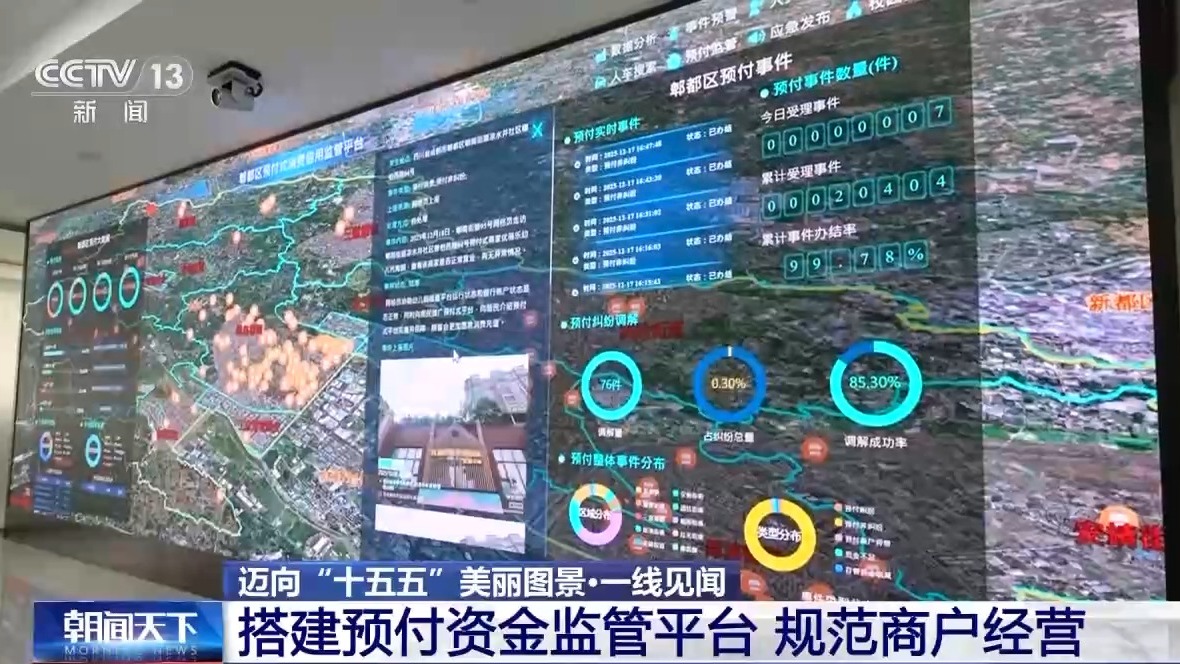
Core Viewpoint - The article discusses the implementation of a digital empowerment platform in Chengdu's Pidu District aimed at enhancing grassroots governance and resolving conflicts through a combination of online and offline strategies [2][4][22]. Group 1: Digital Empowerment in Governance - The Pidu District has established a credit supervision platform for prepaid consumption, particularly targeting high-risk industries such as fitness, beauty, and education, to prevent businesses from misappropriating consumer funds [4][8]. - Over 400 merchants have joined the platform, with more than 100,000 transactions recorded, leading to a significant decrease in disputes and complaints, thereby promoting consumption and improving the legal business environment [8]. Group 2: Conflict Resolution Mechanisms - The platform dynamically locks 20% to 35% of prepaid funds based on the merchant's risk level, and any significant fund transfer triggers an alert for regulatory intervention [6][4]. - The integration of data from various departments, including courts and public security, allows for real-time monitoring of conflict hotspots, shifting governance from experience-based to data-driven decision-making [9][13]. Group 3: Community Engagement and Accessibility - The district has developed online appointment mediation, AI consultations, and digital platforms to facilitate conflict resolution, allowing residents to address issues without extensive travel [14][20]. - Local community leaders act as first mediators, and the system has successfully resolved neighborhood disputes through direct engagement, exemplifying the effectiveness of localized conflict resolution [18][16]. Group 4: Infrastructure and Support - A comprehensive governance center has been established, housing 17 permanent departments, with additional support from specialized mediation teams for complex cases, ensuring that residents have access to necessary resources [22].
广西举办美容美发行业职业技能竞赛 助推高技能人才培养
Xin Lang Cai Jing· 2025-12-20 09:50
Group 1 - The Guangxi Beauty, Hairdressing, and Cosmetics Industry Association, along with the Guangxi Vocational Skills Appraisal Center, organized a vocational skills competition for the beauty and hairdressing industry from December 19 to 20 at the Guilin International Convention and Exhibition Center [2] - The competition featured four categories: beauty, hairdressing, nail art, and image design, divided into employee and student groups [2] - The event aims to promote craftsmanship and demonstrate the role of skills competitions in talent selection and evaluation [2] Group 2 - Outstanding participants may advance in their vocational skill levels according to regulations [2]