金融数据服务

Search documents
银行间市场数据报告库(上海)股份有限公司设立
Bei Jing Shang Bao· 2025-12-16 08:41
Core Viewpoint - The establishment of the Interbank Market Data Reporting Library (Shanghai) Co., Ltd. aims to enhance the collection and analysis of financial market transaction data, supporting financial institutions and regulatory oversight [1][2] Group 1: Company Establishment - The Interbank Market Data Reporting Library (Shanghai) Co., Ltd. was established on December 13 with a registered capital of 600 million yuan [1] - The company is located at 15-1 Zhongshan East Road, Huangpu District, Shanghai, and its business scope includes data processing services, IT consulting, and software development [1] - Key management includes Xu Zhong as Chairman and Tang Yingwei as Financial Officer, with Xu also serving as Vice President of the China Interbank Market Dealers Association [1] Group 2: Regulatory Context - The establishment aligns with the announcement made by the Governor of the People's Bank of China, Pan Gongsheng, at the 2025 Lujiazui Forum, emphasizing the need for a comprehensive interbank market transaction reporting library [1] - The library will focus on high-frequency collection and systematic analysis of transaction data across various financial sub-markets, including bonds, currency, derivatives, gold, and bills [1] - Pan Gongsheng highlighted the importance of strengthening the monitoring and assessment system for systemic financial risks, indicating the library's role in this framework [2]
彭博扩展基金数据解决方案,覆盖2007年以来ETP资金流、历史和修订数据
彭博Bloomberg· 2025-12-15 07:34
Core Insights - Bloomberg has expanded its fund data solutions to include a comprehensive view of exchange-traded products (ETP) fund flows, providing nearly two decades of historical data to support backtesting and market cycle analysis [1][2] - The enhanced fund data will support portfolio management, product strategy, quantitative research, and risk and compliance monitoring, addressing the growing reliance on data-driven tools by investors [1][2] Group 1 - The global ETP fund flow data solution covers all ETP fund flows, including over 80,000 active trading codes from more than 90 exchanges, with total assets under management (AUM) exceeding $19.7 trillion by December 2025 [1][2] - Bloomberg's fund flow data tracks investor flows by monitoring changes in net asset value (NAV) and circulating shares, covering 95% of daily NAV and 90% of circulating shares [2] - Historical analysis is supported with comprehensive fund flow and revision history data available since 2007, aiding clients in adjusting analyses and optimizing investment strategies [2][3] Group 2 - The ETP fund flow data can be integrated with Bloomberg's dividend forecasting to estimate ETF dividends for income planning, risk assessment, and derivative pricing [3] - The data is accessible through Bloomberg terminals, static data set products, and enterprise-level products, with delivery options including SFTP, REST API, or designated cloud environments [3]


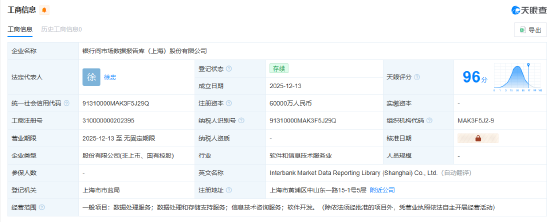
银行间市场数据报告库公司登记成立 注册资本6亿元
Xin Lang Cai Jing· 2025-12-15 05:31
Core Points - The Interbank Market Data Reporting Library (Shanghai) Co., Ltd. has been established with a registered capital of 600 million RMB [1][3] - The legal representative of the company is Xu Zhong [1][3] - The company will provide data processing services, data processing and storage support services, information technology consulting services, and software development [1][3] Company Information - The company was founded on December 13, 2025 [2][4] - The registered address is located at 15-1 Zhongshan East Road, Huangpu District, Shanghai [2][4] - The shareholders include Shanghai Commercial Paper Exchange Co., Ltd., China Interbank Market Dealers Association, Zhonghui Information Technology (Shanghai) Co., Ltd., and China Bond Rating Co., Ltd. [1][3][5]
告别与重启
Sou Hu Cai Jing· 2025-12-11 11:03
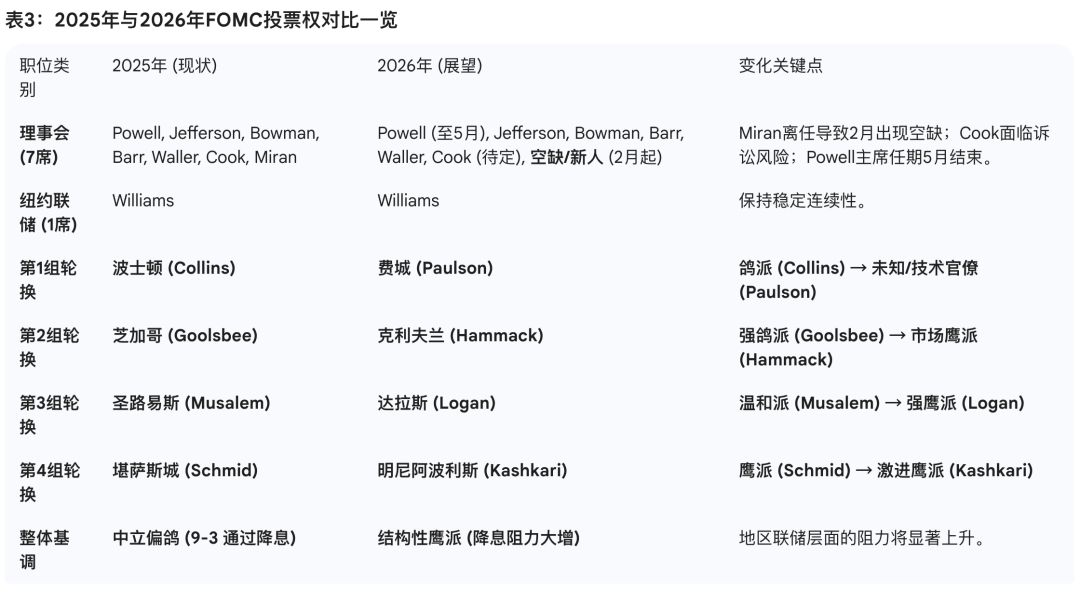
Core Viewpoint - The article discusses the transition from Wind's API to new data solutions, highlighting the challenges and opportunities this change presents for data-driven investment analysis. Group 1: API Transition - Wind's API trial policy is being discontinued, prompting the need for the company to seek alternative API solutions for data analysis [4][6]. - The transition involves not only migrating existing processes but also potentially rewriting code to improve structure and functionality [7][11]. Group 2: Market Analysis - The Federal Reserve's recent interest rate cut, supported by 9 votes to 3, indicates a shift towards a more hawkish stance in the future, which may hinder further rate cuts [15][16]. - The A-share market is experiencing a downturn, with the Wind Micro Index dropping by 2.88% and a cumulative decline of 4.95% this month, contrasting with a slight increase in the CSI 300 [17][18]. Group 3: Sector Performance - Most sectors are facing declines, with notable drops in communication equipment and technology stocks, while only the banking sector shows some resilience [18][19]. - The overall market sentiment is low, with a decrease in premium rates for previously high-demand ETFs, indicating a cautious approach among investors as year-end approaches [20].
MSCI宣布推出MSCI全球上市股票及私募股权指数
Zhi Tong Cai Jing· 2025-12-09 06:30
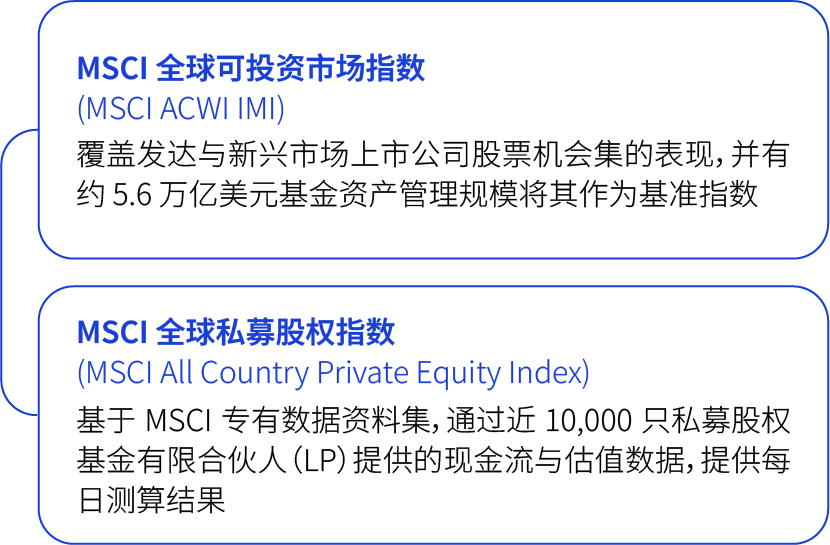
Core Insights - MSCI has launched the MSCI All Country Public + Private Equity Index, integrating public equity and private equity market performance into a single framework, marking a significant change for investors assessing total equity exposure and overall portfolio performance [1][3] - The new index combines MSCI's flagship MSCI ACWI IMI and the newly created MSCI All Country Private Equity Index, allowing it to reflect the performance of investable listed companies and model-derived private equity exposure within a unified global framework [1] Group 1 - The launch of the index is a milestone in MSCI's mission to enhance transparency and participation in the private equity market, showcasing MSCI's unique ability to combine high-quality data, world-class research, and index issuance [3] - The index improves cross-market transparency and comparability, enabling investors to effectively integrate private equity insights into decision-making, benchmarking, and overall portfolio management [3]

谁能重构买方机构的Alpha价值链?
Wind万得· 2025-12-06 00:00
Core Insights - The financial market landscape is evolving, with the underlying logic of value creation being reconstructed as traditional information becomes fully priced in [4] - The information gap has shifted, with clients' research teams facing an overload of data but lacking insights, leading to a demand for unique value sources that penetrate traditional information boundaries [6] - The role of sales professionals is transforming from mere data providers to becoming essential "external data decision hubs" for clients, emphasizing the need for a strategic shift in how value is delivered [7] Group 1: Transformation of Value Creation - The true excess returns (Alpha) are migrating towards alternative data, real-time behavioral traces, and deep industry chain topologies [4] - Sales professionals must evolve their capabilities to become indispensable in the restructured Alpha value chain, acting as chief data catchers and value architects [7][12] - The transition involves moving from being "information brokers" to "Alpha signal architects," mastering the collection, cleaning, and integration of alternative data [9] Group 2: Strategic Insights and Decision-Making - The era of passively responding to client demands is over; proactive insights into clients' unspoken strategic blind spots are now essential [10] - The value of single data sources is limited; the real barrier lies in the cross-validation and ecological coupling of diverse data [11] - Each insight or solution provided by the company becomes a critical marker on the client's strategic map, enhancing their business trajectory [13] Group 3: Professional Development and Opportunities - The company offers systematic elite training, realistic business simulations, and one-on-one mentorship from senior executives to rapidly develop core competencies [14] - Opportunities for global exposure through rotations in top financial centers are available, allowing professionals to refine their skills on a world-class stage [15] - The company seeks individuals with a strong educational background, relevant sales experience, and the ability to discern clients' core strategic needs and unspoken pain points [17]

Wind ESG携手嘉实基金联合发布《A股上市公司股东大会投票趋势观察》白皮书
Wind万得· 2025-12-04 08:46
Core Insights - The white paper titled "Observation on Voting Trends of Shareholders' Meetings of A-share Listed Companies: Insights on Institutional Shareholders' Participation in Governance" was jointly released by Harvest Fund and Wind ESG, analyzing shareholder voting behaviors and institutional investor governance practices based on data from 2023 [2] Group 1: Shareholder Participation Trends - Higher institutional ownership correlates with increased shareholder meeting participation, with voting rights participation rates of 58.7%, 52.7%, and 51.6% for the CSI 300, CSI 500, and heavily held fund stocks respectively, significantly above the average participation rate of 48.8% for all A-shares [5] - The average voting rights participation rate for small shareholders in the three samples is 8.3%, 6.5%, and 8.7%, while the overall average for all A-share small shareholders is only 3.5% [12] Group 2: Rising Dissent in Proposals - The dissent rate for proposals across the market has been increasing, with 5.2% of proposals in the first three quarters of 2025 having dissent rates exceeding 5%, particularly in asset purchases and sales, as well as related party transactions [6] - Small shareholders and Hong Kong shareholders show a more pronounced tendency to dissent, with small shareholders dissenting over 12% on proposals related to rule establishment and amendments, guarantees, and financial support, while Hong Kong shareholders dissent over 20% on proposals regarding mergers and guarantees [6] Group 3: Future Directions and ESG Integration - The white paper aims to systematically outline the evolution of corporate governance in A-shares and clarify the core value and practical paths for institutional shareholders' participation in governance [8] - Wind ESG plans to continuously optimize its ESG rating system and data services to support institutional investors in managing responsibilities through diverse methods such as voting, communication, and proposals, promoting capital towards companies with strong governance and sustainable development capabilities [8]

【隆重推出】理柏数据携手Snowflake平台:顶尖基金数据云端赋能
Refinitiv路孚特· 2025-11-24 06:03
Core Insights - LSEG has launched "LSEG Lipper on Snowflake" service to meet the growing demand for fund information among asset management firms, investment advisors, and individual investors [1] - The service provides comprehensive global data coverage, including over 350,000 collective investment products across 80 registered sales markets [1] - LSEG Lipper has over 50 years of experience and is trusted by global investment professionals for its expertise and market insights [2] Comprehensive Coverage - The service covers a wide range of investment products, including mutual funds, closed-end funds, exchange-traded funds, hedge funds, domestic retirement funds, pension funds, and insurance products [1] - It offers access to a historical database of over 500,000 securities, including merged or liquidated funds [2] Customizable Solutions - LSEG provides highly customizable and flexible services that support all major cloud service providers and their regional deployment combinations [2] - The platform integrates ESG and climate metrics into client solutions, making it a reliable source for complex fixed-income analysis [12] AI-Driven Analysis Solutions - The company offers a range of AI-driven analytical tools and models supported by a robust open and scalable infrastructure [8] - These tools help automate complex analysis tasks and provide actionable insights, enhancing competitive advantages for clients [8] Client Interaction and Solutions - LSEG maintains strong relationships with major financial institutions, providing solutions for buy-side and sell-side clients across various functions [16] - The solutions are designed to improve portfolio performance and capture excess returns through automation [17] Risk Management - The company’s data and models assist in identifying interest rate and credit risks at both corporate and portfolio levels, which is crucial for achieving robust financial performance [20]

白名单失守!AI路演纪要“黑市”现形
Guo Ji Jin Rong Bao· 2025-11-20 15:21
Core Viewpoint - The legal dispute between Shenzhen Jinmen Finance Technology Co., Ltd. and Xunru Technology (Shanghai) Co., Ltd. centers around allegations of unfair competition, where Xunru is accused of unlawfully using Jinmen's online meeting data without permission, violating market competition order and damaging Jinmen's legitimate competitive interests [1][4][6]. Group 1: Legal Proceedings - The Shanghai Pudong New District People's Court ruled in favor of Jinmen, stating that Xunru's actions constituted unfair competition by exceeding the whitelist mechanism and using meeting data without authorization [1][7]. - The court ordered Xunru to cease the unfair competition behavior, pay Jinmen 4 million yuan in economic damages, and publish a statement to mitigate the negative impact of its actions [8][19]. - The case is currently in the second instance of trial [3]. Group 2: Company Backgrounds - Jinmen, established in 2013, is a leading AI investment research platform that collaborates with 74 brokerage research institutes, focusing on compliance and efficient communication in the financial market [8][12]. - Xunru, founded in 2021, is an AI-driven financial data service provider that aims to enhance the efficiency of institutional investors through AI technology [9][10]. Group 3: Industry Context - The dispute highlights the challenges of using emerging technologies in the financial sector, particularly regarding compliance with regulations and the ethical use of data [10][21]. - The "whitelist" mechanism is crucial for ensuring that only qualified investors access sensitive meeting content, and violations of this mechanism can undermine market integrity [10][22]. - The rise of AI-generated content has led to concerns about the potential for unauthorized dissemination of non-public information, which could disrupt the market ecosystem [10][21]. Group 4: Implications and Reactions - Jinmen's founder expressed frustration over the unauthorized use of their data, likening the situation to "stealing peaches" from a hard-earned investment [1][14]. - The court's ruling is seen as a critical step in protecting the rights of companies in the financial sector against unauthorized data usage [19]. - Jinmen is committed to legal action to safeguard its interests and maintain the integrity of the financial information ecosystem [21][22].
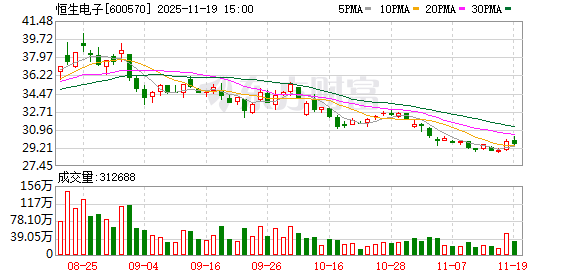
恒生电子成功入选国家数据局2025年高质量数据集建设先行先试入围名单
Zheng Quan Ri Bao· 2025-11-19 12:15
Core Insights - The National Bureau of Statistics has officially released the list of pilot projects for high-quality data set construction for 2025, with the project "Multi-modal High-Quality Data Set Construction for Financial Industry Large Models" successfully selected, co-applied by Hang Seng Electronics and Zheshang Securities [2][3] Group 1: Project Overview - The selected project addresses core challenges in financial vertical large models, including data quality inconsistencies, insufficient interpretability, and difficulties in practical application [3] - The construction path involves data fusion, standardized processing, knowledge modeling, scenario application, and ecological empowerment, aiming to create a high-quality financial data set with high accuracy, timeliness, and coverage [3] Group 2: Company Background - Hang Seng Electronics has over 30 years of experience in capital market information technology, providing top-tier technology and product services to various financial institutions [3][4] - Hang Seng Data Service, a subsidiary, has extensive experience in financial data collection, cleaning, structured processing, and deep mining, serving nearly a thousand institutions [4] Group 3: Future Plans - Moving forward, Hang Seng Electronics and Hang Seng Data Service will leverage this pilot project to focus on high-quality data set construction for the financial industry, supporting the integration of large model technology into financial business scenarios [5]