
水利工程

Search documents
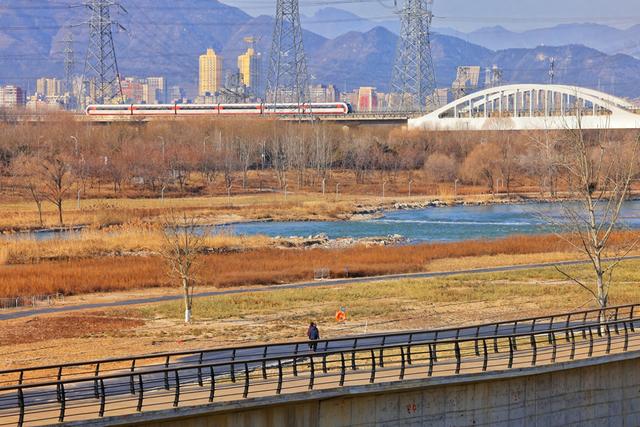
打造“平急两用”滨水空间,永定河卢三段综合提升工程主体完工
Bei Jing Ri Bao Ke Hu Duan· 2025-12-05 09:56
Core Viewpoint - The Yongding River Lusan Section Comprehensive Improvement Project has recently completed its main structure, significantly enhancing flood control capabilities and creating a new leisure landmark for citizens [1][3]. Group 1: Project Overview - The project is part of the Haihe "23·7" flood disaster recovery and reconstruction efforts, featuring the construction of underground reinforced concrete anti-erosion walls to improve flood protection on the left bank of the Yongding River [1][3]. - The Yongding River Lusan Section, which stretches 17.4 kilometers from Sanjiadian to Lugou Bridge, has not been reinforced since 1983, indicating a significant need for upgrades due to aging infrastructure [3][9]. - The improvements will enable the levee to withstand floods of up to 16,000 cubic meters per second, greatly enhancing flood safety levels on the left bank [3][9]. Group 2: Innovative Features - The project includes the innovative development of a vertical protective structure for the anti-erosion wall, which is 0.8 meters thick and designed to shield the levee from high-velocity water flow [5]. - The design incorporates a "dual-use" concept, allowing the levee top to serve both as a flood response route and a recreational space for the public [5]. Group 3: Community Impact - The area has transformed into a popular leisure destination, with the Shougang Park section attracting up to 10,000 visitors daily since its opening [6][8]. - Future plans include expanding the recreational space to 60,000 square meters for winter activities and enhancing family-friendly features [8]. - The project emphasizes historical preservation, integrating elements like the historical irrigation canal into the design [8]. Group 4: Future Developments - A 9-kilometer pedestrian path along the Yongding River is planned to connect various parks and scenic spots, enhancing public access to the river [9]. - The overall progress of the Yongding River Lusan Section Comprehensive Improvement Project has reached 80%, with full completion expected by April 2026 [9].

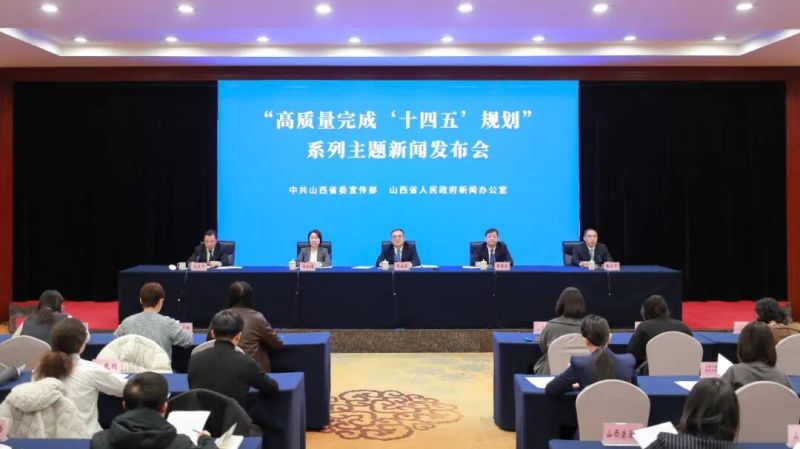
山西水利“十四五”交出亮眼答卷:古贤开工 晋泉复流 水网贯通 生态向好
Zhong Guo Fa Zhan Wang· 2025-12-05 08:09
Core Viewpoint - Shanxi Province is making significant progress in high-quality water conservancy development during the "14th Five-Year Plan" period, focusing on water resource management and infrastructure improvements [1][3]. Investment Growth - Water conservancy construction investment in Shanxi Province reached 98.6 billion yuan, a 73.3% increase compared to the "13th Five-Year Plan" [3]. - Average annual investment is expected to exceed 20 billion yuan in 2023 and 2024, indicating a sustained growth trend in water conservancy investment [3]. Key Achievements - The Huanghe Guxian Water Conservancy Hub project, which has been under discussion for 70 years, has officially commenced construction [3]. - The Jinci Spring, which had been dry for 30 years, has resumed stable flow, restoring its historical beauty [3]. - The main framework of Shanxi's modern water network, consisting of "three verticals and nine horizontals" and eight river connections, is now largely established [3]. Water Resource Management - The "Four Waters and Four Determinations" initiative is being effectively implemented, with a leadership group established to oversee its execution [4]. - By the end of 2024, water consumption per unit of GDP is projected to decrease by 21.5% compared to the end of the "13th Five-Year Plan" [4]. - The annual water supply capacity of the provincial water network has increased to 4.487 billion cubic meters, with coverage reaching 82% and benefiting over 28 million people [4]. Environmental Restoration - The area of soil erosion management has reached 28.8 million acres, with a target of achieving a soil conservation rate of 65.51% by the end of 2024 [4]. - Groundwater levels have risen by an average of 2.51 meters since 2019, with the Jinci Spring flowing continuously for 458 days [4]. Disaster Resilience - The flood control standard rate of the Fen River main embankment has improved from 65% to 95%, enhancing the province's ability to respond to extreme weather events [4]. - The total water storage in reservoirs has reached 2.068 billion cubic meters, the highest in history, ensuring a solid water supply for the upcoming year [4]. Rural Water Supply Improvement - The standardized rural water supply rate has increased to 57.9%, with tap water coverage reaching 98.6%, benefiting 22.2 million rural residents [7]. - Future plans include a comprehensive approach to water resource allocation, focusing on conservation and sustainable use of various water sources [7].
长江干流首套水利测雨雷达系统完成部署
Zhong Guo Xin Wen Wang· 2025-12-05 07:51
Core Viewpoint - The first set of hydrological rain measurement radar systems along the Yangtze River has been successfully deployed, enhancing the rainwater monitoring and forecasting capabilities of the Three Gorges Project [1] Group 1: System Deployment and Functionality - The new radar system overcomes the limitations of traditional rain gauges, which are affected by environmental factors and have restricted monitoring ranges [1] - The radar system provides a comprehensive three-dimensional scan of liquid water in the near-surface atmosphere, improving rainfall monitoring from a "point" to a "surface" perspective [1] - It enables precise monitoring and forecasting of rainfall over an area of approximately 13,000 square kilometers near the Three Gorges Dam [1] Group 2: Impact and Future Plans - The system is designed to effectively warn against extreme rainfall events, contributing to the safe operation of the Three Gorges Project and flood prevention efforts along the Yangtze River [1] - As part of the "14th Five-Year Plan," the Ministry of Water Resources is accelerating the establishment of a three-tiered rainwater monitoring and forecasting system, with the Three Gorges Project being a key pilot project [1] - The radar system is expected to enter formal operation by the end of 2026, with ongoing efforts to enhance data quality control, platform functionality, and intelligent applications [1]

青龙管业(002457.SZ):公司大项目部负责跟踪雅江水电站相关项目,力争取得更多订单
Ge Long Hui· 2025-12-05 07:33
Core Viewpoint - The company is actively focusing on the Yajiang Hydropower Station project and has conducted research and strategic planning regarding this initiative [1] Group 1 - The company has a dedicated project team that is responsible for tracking the Yajiang Hydropower Station-related projects [1] - The management aims to secure more orders related to the Yajiang Hydropower Station [1] - The company will disclose any project orders exceeding 50 million yuan if they win related bids in the future [1]

摩洛哥和中国将加强农业和水资源领域合作
Shang Wu Bu Wang Zhan· 2025-12-05 03:30
Core Insights - Morocco's Agriculture Minister Ahmed Bouali and China's Minister of Water Resources Li Guoying discussed enhancing multi-dimensional cooperation in agriculture and water resources during the World Water Resources Conference [1] - The two countries emphasized the need to jointly address climate challenges and increasing pressure on natural resources, focusing on the role of water resources in economic stability and sustainable development [1] - Bouali welcomed collaboration in agricultural research, technology transfer, agricultural modernization, human resources, and institutional capacity building, highlighting the importance of investment in renewable energy and modern agriculture [1] Cooperation Areas - The discussions included strengthening expertise and technical exchanges in irrigation, water resource management, and seawater desalination [1] - There is a focus on ensuring fair and efficient distribution of water resources between the two nations [1] - Bouali expressed interest in leveraging China's expertise in drip irrigation, water filtration, and inter-basin water transfer [1]
深挖佛子岭水库档案资源 当好红色文化传承“火炬手”
Shui Li Bu Wang Zhan· 2025-12-03 03:39
Core Viewpoint - The article highlights the significance of the Foziling Reservoir as a historical and cultural landmark in China's water conservancy efforts, emphasizing its role in preserving red culture and promoting education through various initiatives [1][2][3] Group 1: Historical Significance - The Foziling Reservoir, built in 1952, is recognized as the first reinforced concrete arch dam in New China, symbolizing a milestone in China's water conservancy history [1] - The management has focused on protecting and showcasing the rich red archives and water conservancy culture accumulated over 70 years [1] Group 2: Cultural Initiatives - The management has implemented a series of measures, including compiling the "Foziling Reservoir Group Chronicle," to enhance the foundation of red archives culture [1] - A cultural museum has been established to serve as a platform for red education, utilizing modern methods like scene restoration and multimedia presentations [2] - The management has registered the "Foziling" trademark to strengthen brand protection and promote red culture through cultural and educational products [2] Group 3: Archive Utilization - The management has digitized over 700,000 pages of archival materials and established an information management system to improve archive utilization efficiency [3] - A series of events, including a painting and photography exhibition, has been organized to celebrate the 70th anniversary of the reservoir, showcasing its development and achievements [3]
数量面积占比均居全国前列!山东共有大中型灌区401处,设计灌溉面积5118万亩
Feng Huang Wang Cai Jing· 2025-12-03 00:00
下一步,山东省将以此次灌区名录印发为契机,进一步强化灌区功能发挥,以用水需求为导向,夯实现 代化灌区建设管理工程基础,加强标准化、信息化运行管理,积极探索农业节水增效制度体系建设,加 强灌溉水节约集约利用,持续提升灌溉服务保障水平,全力推进具有山东特色的灌区高质量发展。 据山东省水利厅12月1日消息,近期,水利部印发全国大中型灌区名录,认定山东省共有大中型灌区401 处,设计灌溉面积5118万亩,其中,大型灌区42处、设计灌溉面积3085万亩,5万亩以上重点中型灌区 125处、设计灌溉面积1555万亩,一般中型灌区234处、设计灌溉面积478万亩。数量和面积占比均位居 全国前列。 灌区名录是灌区建设管理的基础性工作。2021年水利部部署开展大中型灌区名录调整工作以来,我省高 度重视,成立工作专班,委托技术支撑单位全面调查复核灌区实际管理运行情况,省水利厅分管厅长亲 自主持召开专家咨询会,厅党组会专题研究名录调整工作。经对各市上报名录及支撑材料审核确认,并 经相关流域管理机构复核,最终确定全省名录,同步绘制完成灌区"一张图"。 (新黄河) ...
平陆运河土石方开挖量突破3亿立方米
Xin Hua She· 2025-12-02 13:34
新华社音视频部制作 记者:赵欢 记者近日从平陆运河集团获悉,开工建设三年多来,西部陆海新通道骨干工程——平陆运河土石方开挖 量突破3亿立方米,所涉土石方基本实现合理消纳与综合利用,广泛用于工程回填、园区建设、抬填造 地、矿坑修复和复垦造地等领域,有效提升资源利用效率。 ...
黄河水利委员会圆满完成“十四五”期间水利援藏工作
Shui Li Bu Wang Zhan· 2025-12-02 08:57
下一步,黄委将坚持精准援藏、系统援藏、长期援藏,细化工作措施,高质量完成各项任务,为水利援 藏工作贡献黄河力量。 五年来,黄委累计选派援藏干部41人次,组织培训32批次、培训西藏干部400余人次,积极发挥"传帮 带"作用,带动当地水利人才成长,增强发展内生动力;派出专家指导编制《日喀则市水网规划》《拉 洛灌区工程运行管理方案》等规划方案,参与在藏国家基本水文站提档升级、灌区续建配套等62个项 目,一大批水利项目在雪域高原"落地生根、开花结果";筹措资金用于支持提升西藏自治区机动抢险 队、日喀则市水利局基础设施建设,有效提升当地水利工作信息化、智慧化水平。 本站讯 "十四五"期间,在水利部党组坚强领导下,黄河水利委员会围绕服务"稳定、发展、生态、强 边"四件大事,通过人才援藏、技术援藏、经济援藏等方式,全面完成各项援助任务,共同推动日喀则 水利工作取得新成效。 ...
我国水资源现状如何 面临哪些挑战?
Yang Shi Xin Wen· 2025-12-02 01:09
Core Viewpoint - The 19th World Water Resources Conference in Marrakech, Morocco, focuses on "Water in a Changing World: Innovation and Adaptation," with China emphasizing its three flood management models: flood control, flood utilization, and flood shaping [1] Group 1: Water Resource Challenges in China - China's total water resources amount to 28 trillion cubic meters, but the country faces severe water resource challenges [1] - The demand for water in China is immense, driven by the needs of 1.4 billion people, nearly 10 million square kilometers of ecosystems, 1.8 billion acres of farmland, and the industrial and service sectors of the world's second-largest economy [1] - In terms of per capita water resources, China ranks 106th globally, with an average of approximately 1,400 cubic meters of water per acre of farmland, which is less than half the world average [1] - The spatial distribution of water resources is uneven, with the south holding 81% of the resources while the north only has 19%, despite the north accounting for 46% of the land area, 44% of the population, 40% of the farmland, and 56% of the GDP [1] Group 2: Water Resource Management Initiatives - During the 14th Five-Year Plan, China established the world's largest and most comprehensive water infrastructure system, facilitating a "south-north allocation and east-west mutual assistance" water resource distribution pattern [2] - The South-to-North Water Diversion Project's East and Middle Lines have cumulatively diverted over 83 billion cubic meters of water, benefiting 195 million people [2] - By the end of the 14th Five-Year Plan, the national water network coverage is expected to reach 80.3%, supporting high-quality economic and social development while maintaining zero growth in total water usage despite an average annual economic growth rate of 5.5% [2]