
传感器

Search documents
东华测试(300354):2025Q3收入恢复高增长,人形机器人业务拓展有望提速
Changjiang Securities· 2025-10-27 14:42
Investment Rating - The investment rating for the company is "Buy" and is maintained [9]. Core Insights - The company reported a significant revenue increase in Q3 2025, primarily benefiting from order acceptance and a low base from the previous year. The revenue for the first three quarters of 2025 reached 385 million, a year-on-year increase of 8.70%. In Q3 2025 alone, revenue was 102 million, up 30.75% year-on-year [2][6]. - The company is actively promoting domestic substitution of mechanical products and is building a high-end scientific research instrument platform. It is also expanding into the sensor industry and accelerating its layout in the humanoid robot sector through strategic partnerships [2][6]. Summary by Sections Financial Performance - For the first three quarters of 2025, the company achieved a net profit of 101 million, a year-on-year increase of 2.23%. The net profit for Q3 2025 was 25 million, up 0.50% year-on-year. The net profit excluding non-recurring items for the same period was 99 million, a slight increase of 0.11% [6]. - The gross profit margin for the first three quarters of 2025 was 67.46%, an increase of 0.91 percentage points year-on-year, while the net profit margin was 26.10%, a decrease of 1.71 percentage points year-on-year [12]. Business Development - The company is focusing on the domestic substitution of mechanical products and is developing new products such as customized measurement and control analysis systems. It is also enhancing its sensor product line, which includes various types of sensors suitable for harsh environments [12]. - The company has accelerated its entry into the humanoid robot industry, signing a strategic cooperation agreement with Nantong Zhenkang and engaging in strategic discussions with Nidec to collaborate on testing and verification in the field of precision transmission products [12]. Future Outlook - The company is expected to achieve a net profit of 159 million and 206 million in 2025 and 2026, respectively, corresponding to price-to-earnings ratios of 39x and 30x. The "Buy" rating is maintained based on these projections [12].

华工科技20251024
2025-10-27 00:31
Summary of Huagong Technology Conference Call Company Overview - **Company**: Huagong Technology - **Industry**: Laser and Intelligent Manufacturing, Sensor Technology, 3D Printing, and Smart Factory Solutions Key Financial Highlights - **Net Profit**: 4.1 billion CNY in Q3 2025, up 31.15% YoY [2][4] - **Net Profit (Excluding Non-recurring Items)**: 3.7 billion CNY in Q3 2025, up 40.2% YoY [2][4] - **Operating Cash Flow**: Positive at 3.13 billion CNY, compared to a negative 10.55 million CNY in the same period last year [2][5] - **Earnings Per Share**: 1.31 CNY, up 40.86% YoY [2][5] - **Return on Equity**: 12.55%, an increase of 2.69 percentage points YoY [2][5] - **Total Assets**: 226.5 billion CNY, up 14.86% YoY [5] Business Segment Performance - **Laser and Intelligent Manufacturing**: Revenue of 26.5 billion CNY, up 6% YoY; net profit of 3.27 billion CNY, with a gross margin of 33.06% [2][7] - **Intelligent Equipment**: Revenue of 12 billion CNY, up 22% YoY, driven by demand from the new energy vehicle and shipbuilding industries [2][7] - **Zhengyuan Company**: Revenue of 50 billion CNY, up 52% YoY; net profit increased by 541% [2][7] - **Sensor Business**: Revenue of 28 billion CNY, up 14% YoY; net profit growth of 13% [2][8] Research and Development - **R&D Investment**: 6.79 billion CNY in the first three quarters, up 26.6% YoY [2][6] - **Focus Areas**: Optical connectivity, laser and intelligent manufacturing, sensing, and industrial software [2][9] - **Future Projects**: Plans to initiate 100 sub-projects next year to ensure business growth [2][9] International Expansion - **Strategic Focus**: Internationalization is a core strategy, with ongoing overseas business development [2][10] - **800G LPO Product**: Already delivered in Thailand, with a major order expected in October [2][11] - **US Market Outlook**: Strong demand anticipated, with expectations of 20% market share for LPO and LO products next year [3][12][13] Market Demand and Production Plans - **2026 US Market Demand**: Expected demand for optical modules between 40 to 50 million units [4][13] - **Production Scale Expansion**: Plans to increase production capacity to meet growing orders [4][13] - **AI Market**: Optical module gross margin exceeded 20% in H1 2025, reaching 27% in Q3 [4][21] Cost Management and Profitability - **Cost Control**: Continued focus on managing costs and expenses [2][9] - **Gross Margin Improvement**: Driven by product structure optimization and market demand shifts [4][30] Future Outlook - **2026 Revenue Forecast**: Anticipated revenue of around 18 billion CNY for the year [2][9] - **H Share Issuance**: Preparations underway for H share issuance to support overseas expansion and optimize shareholder structure [2][26][27] - **Expected Delivery**: Anticipated delivery of over one million optical modules overseas in 2026 [2][29] Additional Insights - **3D Printing Business**: Collaboration with Luxshare Precision progressing well, with 2 million orders on hand [4][16] - **Smart Factory Solutions**: Significant progress in laser equipment applications, with expected orders of 15 to 16 billion CNY in the industry [4][18] - **Shipbuilding Orders**: Approximately 4 billion CNY in orders received in Q3, with more expected [4][17]

华工科技(000988) - 2025年10月24日投资者关系活动记录表
2025-10-26 06:14
Group 1: Financial Performance - The company achieved a revenue of 11.038 billion CNY, representing a year-on-year growth of 22.62% [7] - The net profit attributable to the parent company was 1.321 billion CNY, with a year-on-year increase of 40.92% [7] - The connection business generated a revenue of 5.089 billion CNY, showing a significant growth of 52% [8] Group 2: Business Segments - The perception business focused on the automotive sensor market, achieving a revenue of 3.174 billion CNY, a 13% increase [8] - The laser and intelligent manufacturing business generated a revenue of 2.653 billion CNY, with notable growth in high-power laser equipment [10] - The connection business's revenue from data communication products saw a rapid increase, contributing to the overall growth [11] Group 3: Market Expansion and Strategy - The company is actively expanding its global business and accelerating the construction of overseas production bases [7] - The company plans to issue H shares to support overseas production base construction and attract long-term foreign investment [19] - The company has established stable partnerships with core chip manufacturers to ensure material supply for future growth [14] Group 4: Future Outlook - The company anticipates a strong demand for optical modules in both domestic and overseas markets, with an expected demand of 40-50 million units [12] - The shipbuilding industry is experiencing a high boom cycle, with sufficient orders in hand, indicating a promising growth trajectory [15] - The company aims to enhance its 3D printing business, with plans to expand its scale significantly by 2026 [16]
【研选行业+公司】全球传感器赛道爆发在即,这些国产厂商有望分羹百亿蓝海
第一财经· 2025-10-25 13:13
Group 1 - The article highlights the emergence of a robot perception revolution, indicating that the global sensor market is on the verge of a significant explosion, with domestic manufacturers poised to capture a share of the billion-dollar blue ocean market [1] - It mentions that a company has achieved the world's first production of a thousand-ton level of rubidium cesium salt, which possesses a technology barrier of 36-54 months, leading analysts to be optimistic about the value chain reconstruction of scarce elements and the company's growth and valuation attributes, with its PE ratio dropping from 79 times to 3 times [1]


公司问答丨四方光电:公司已有部分气体传感器可为机器人提供环境感知解决方案
Ge Long Hui A P P· 2025-10-24 09:46
Core Viewpoint - The company has developed its own MOX gas sensor MEMS production line and other gas sensors for olfactory applications, indicating readiness to provide environmental perception solutions for humanoid robots [1] Group 1 - The company has the capability to produce autonomous MOX gas sensors [1] - The company possesses additional gas sensor capabilities for olfactory applications [1] - Some of the gas sensors are already available to offer environmental perception solutions for robots [1]

四方光电:储能电池热失控监测传感器等产品已批量供货
Xin Lang Cai Jing· 2025-10-24 08:37
Core Viewpoint - The company emphasizes the importance of safety in the energy storage sector and has developed monitoring sensors for thermal runaway in energy storage batteries, which are now being supplied in bulk to major clients [1] Group 1: Product Development - The company has launched thermal runaway monitoring sensors for energy storage batteries, leveraging its advanced gas sensor technology platform [1] - The sensors are designed to meet national safety standards, ensuring "no fire, no explosion" and providing early warnings for thermal runaway [1] Group 2: Market Engagement - The company is actively collaborating with leading energy storage clients to expand its market presence [1] - Bulk supply of the monitoring sensors has already been achieved, indicating strong demand and successful market entry [1]
人形机器人“感官”,国产替代蓄势待发 | 投研报告
Zhong Guo Neng Yuan Wang· 2025-10-24 01:41
Core Insights - The sensor industry is identified as a crucial sector, serving as a bridge between the physical and virtual worlds, essential for AI development and robotics [2][3] - The global sensor market is projected to reach approximately $226.9 billion in 2023, with a future annual growth rate of about 8%, while China's sensor market is expected to reach around 364.5 billion yuan, growing at an annual rate of approximately 15% [1][2] Group 1: Market Overview - The sensor market is considered one of the three pillars of modern information technology, alongside communication and computing [2] - The high profit margins of sensor products, particularly in robotics, are highlighted, with manufacturers typically achieving gross margins of 30-50%, compared to 20-30% for ordinary components [2] Group 2: Opportunities for Domestic Manufacturers - Despite the dominance of foreign manufacturers, there are significant opportunities for domestic companies, especially in emerging sectors like robotics, where there is potential for rapid advancement and market share capture [3] - The automotive industry has shown a clear trend of domestic substitution, indicating a favorable environment for local manufacturers in the sensor market [3] Group 3: Technical Considerations - The industry faces challenges related to the diversity of sensor types and the uncertainty in technology paths, but there is potential to focus on areas with shared foundational technologies [4]

速腾聚创与导远科技达成战略合作
Xin Lang Cai Jing· 2025-10-23 12:24
Core Insights - RoboSense and ASENSING have officially announced a strategic partnership to develop multimodal sensor fusion solutions for fields such as embodied intelligence and industrial robotics [1] Company Collaboration - The collaboration aims to leverage the strengths of both companies in creating advanced sensor technologies [1] - The focus will be on enhancing capabilities in embodied intelligence and industrial robotics through innovative sensor solutions [1]
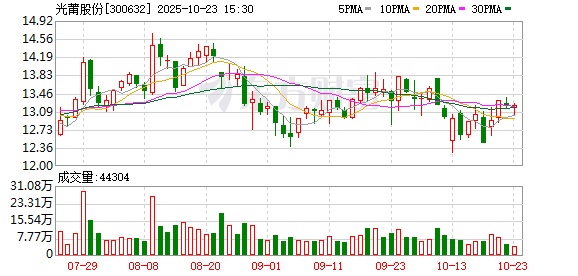
光莆股份:公司的激光雷达探测传感器件及TOF传感器件可高效适配无人机悬停控制等核心应用场景
Zheng Quan Ri Bao· 2025-10-23 09:40
Core Viewpoint - Guangpu Co., Ltd. announced on October 23 that its laser radar detection sensors and TOF sensors are effectively adaptable for core applications such as drone hovering control and obstacle avoidance [2] Group 1 - The company's products have already been applied in well-known domestic drone brands [2] - Guangpu is providing sample testing to more customers [2]

光莆股份:激光雷达及TOF传感器已应用于知名无人机品牌
2 1 Shi Ji Jing Ji Bao Dao· 2025-10-23 09:14
Core Viewpoint - The company, Guangpu Co., has highlighted its laser radar detection sensors and TOF sensors, which are suitable for core scenarios such as drone hovering control and obstacle avoidance, indicating a strategic focus on expanding its business in the drone sector [1] Group 1 - The company's laser radar detection sensors and TOF sensors are being applied in well-known domestic drone brands [1] - The company is providing sample testing to more clients, indicating an effort to broaden its customer base in the drone industry [1] - The ongoing expansion in the drone sector reflects the company's commitment to enhancing its product offerings and market presence [1]