电池制造

Search documents
比亚迪:公司成功开发了多款圆柱电池以及软包电池
Zheng Quan Ri Bao Wang· 2026-01-19 13:42
Core Viewpoint - BYD has successfully developed multiple cylindrical and soft-pack batteries to meet the increasing demand for small power batteries in various applications [1] Group 1: Company Developments - The company has responded to investor inquiries regarding the growing demand for small power batteries [1] - BYD's small power batteries can be applied in various fields, including electric two-wheelers, electric three-wheelers, and micro electric vehicles [1] Group 2: Market Trends - There is an increasing market demand for small power batteries, prompting the company to focus on technological innovation [1]

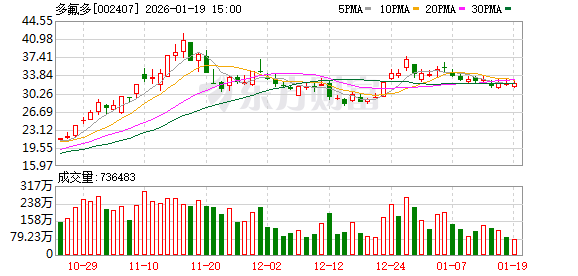
多氟多:司大圆柱电池订单饱满,目前正按照订单情况,满负荷运行以满足市场需求
Mei Ri Jing Ji Xin Wen· 2026-01-19 10:06
(文章来源:每日经济新闻) 多氟多(002407.SZ)1月19日在投资者互动平台表示,公司大圆柱电池订单饱满,目前正按照订单情 况,满负荷运行以满足市场需求。 每经AI快讯,有投资者在投资者互动平台提问:公司的产品圆柱电池有在手订单吗? ...


宁德时代1月19日现2笔大宗交易 总成交金额5896.71万元 溢价率为1.85%
Xin Lang Cai Jing· 2026-01-19 09:44
炒股就看金麒麟分析师研报,权威,专业,及时,全面,助您挖掘潜力主题机会! 第1笔成交价格为355.34元,成交1.00万股,成交金额355.34万元,溢价率为1.85%,买方营业部为光大 证券股份有限公司宁波柳汀街证券营业部,卖方营业部为光大证券股份有限公司宁波柳汀街证券营业 部。 第2笔成交价格为281.86元,成交19.66万股,成交金额5,541.37万元,溢价率为-19.21%,买方营业部为 金元证券股份有限公司四川分公司,卖方营业部为中信证券股份有限公司北京建外大街证券营业部。 进一步统计,近3个月内该股累计发生32笔大宗交易,合计成交金额为80亿元。该股近5个交易日累计下 跌3.53%,主力资金合计净流出49.75亿元。 责任编辑:小浪快报 1月19日,宁德时代收跌0.97%,收盘价为348.90元,发生2笔大宗交易,合计成交量20.66万股,成交金 额5896.71万元。 ...

万里股份:预计2025年度净利润为-4500万元左右
Mei Ri Jing Ji Xin Wen· 2026-01-19 09:30
Group 1 - The company, Wanli Co., expects to report a net profit attributable to shareholders of approximately -45 million yuan for 2025, compared to a loss of about 39.41 million yuan in the same period last year [1] - The net profit attributable to shareholders, excluding non-recurring gains and losses, is projected to be a loss of about 38.77 million yuan, with earnings per share estimated at a loss of 0.26 yuan [1] - The primary reason for the performance change is the decline in the company's main business revenue due to intense market competition, although management has taken measures to control operating costs, resulting in a reduced loss in the lead-acid battery business compared to last year [1]

万里股份:2025年预计亏损4500万元,新能源投入致亏损扩大
Xin Lang Cai Jing· 2026-01-19 08:38
Core Viewpoint - The company expects a net profit attributable to shareholders of approximately -45 million yuan for 2025, with a non-recurring net profit of around -44.5 million yuan [1] Financial Performance - For 2024, the company reported a net profit of -39.407 million yuan and a non-recurring net profit of -38.7715 million yuan [1] - The overall loss has widened due to increased R&D investment in the new energy business, despite a reduction in losses from the lead-acid battery segment [1] Market Conditions - The decline in main operating revenue is attributed to market competition [1]
安孚科技:预计2025年净利润同比增加28.55%到50.91%
Xin Lang Cai Jing· 2026-01-19 08:28
安孚科技公告,预计2025年度实现归属于母公司所有者的净利润2.16亿元到2.54亿元,与上年同期相 比,将增加4801.8万元到8561.8万元,同比增加28.55%到50.91%。公司预计2025年度实现归属于母公司 所有者的扣除非经常性损益的净利润2.04亿元到2.4亿元,与上年同期相比,将增加3962.92万元到 7514.92万元,同比增加24.07%到45.65%。2025年,公司控股子公司福建南平南孚电池有限公司持续通 过多措并举,加强营销、降本增效以及积极拓展海外业务,与海外重点客户达成战略合作,公司整体取 得了较好的经营成果。 ...

宁德时代股价连续6天下跌累计跌幅5.51%,财通证券资管旗下1只基金持1500股,浮亏损失3.05万元
Xin Lang Cai Jing· 2026-01-19 07:32
Group 1 - The core point of the news is that CATL's stock has been declining for six consecutive days, with a total drop of 5.51% during this period, closing at 348.90 CNY per share on January 19, with a market capitalization of 1,592.31 billion CNY [1] - CATL is primarily engaged in the research, production, and sales of power batteries and energy storage batteries, with its main business revenue composition being 73.55% from power battery systems, 15.88% from energy storage battery systems, and 4.41% from battery materials and recycling [1] - The company operates in both domestic and international markets, with applications in various fields including passenger vehicles, commercial vehicles, and energy storage systems [1] Group 2 - According to data, one fund under Caitong Securities Asset Management has a significant holding in CATL, specifically the Caitong Asset Management Xinyi Mixed A fund, which increased its holdings by 400 shares in the third quarter [2] - The fund's current holdings amount to 1,500 shares, representing 1.48% of the fund's net value, with a floating loss of approximately 5,130 CNY on the day of reporting and a total floating loss of 30,500 CNY during the six-day decline [2] - The Caitong Asset Management Xinyi Mixed A fund has a total scale of 25.37 million CNY, with a year-to-date return of 2.1% and a one-year return of 30.96% [2]

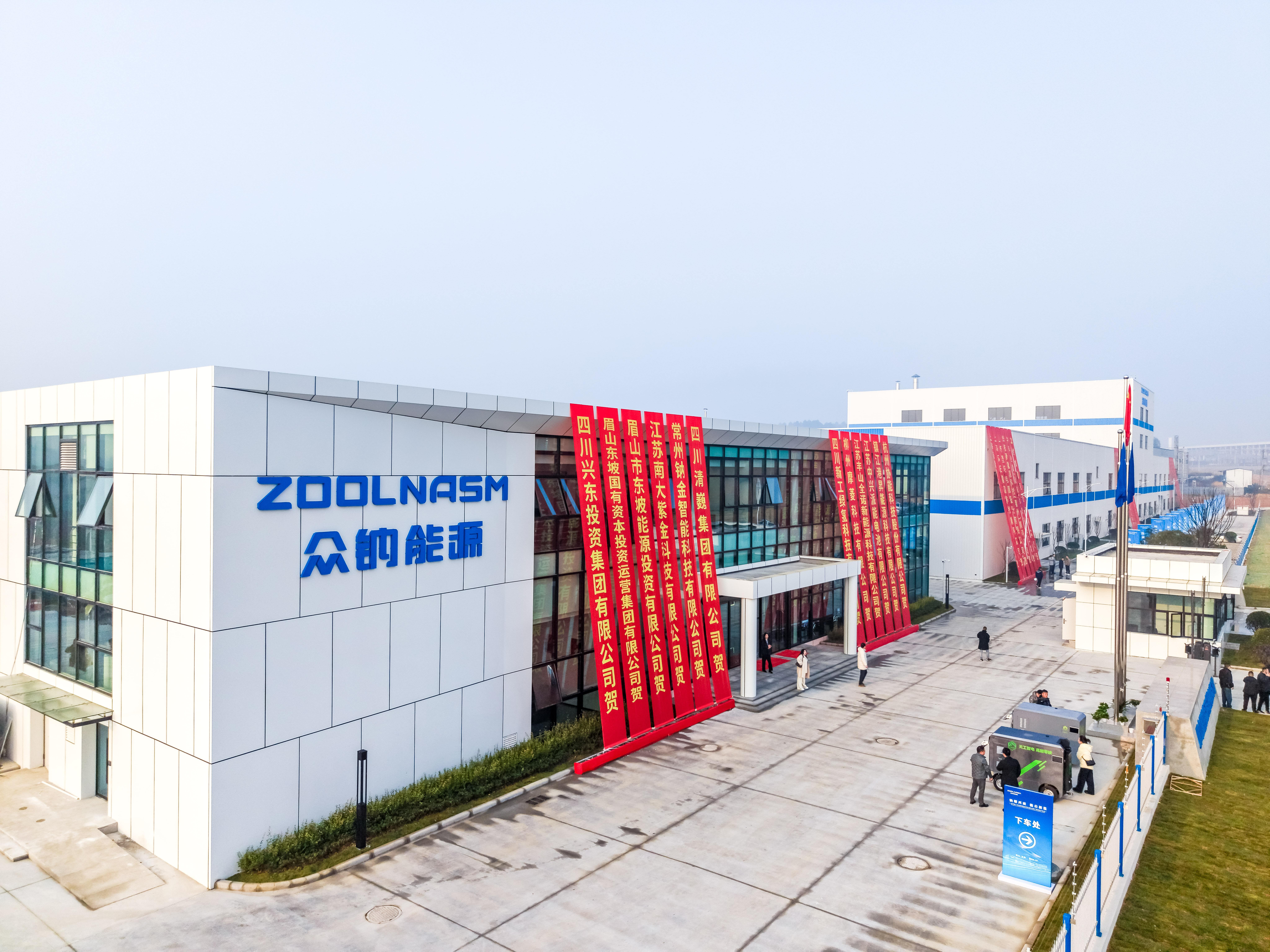
众钠能源启用全球首个万吨级硫酸铁钠正极材料工厂,钠电材料价格有望下探至“1万+”区间
3 6 Ke· 2026-01-19 07:18
Core Insights - The production base of sodium iron sulfate cathode materials by Zhongna Energy in Meishan, Sichuan, has officially commenced operations, marking the world's first production project with a capacity of over 10,000 tons, breaking the long-standing dilemma in the sodium battery industry regarding whether to prioritize market or material availability [1][6][9] Group 1: Cost Breakthrough - The sodium-ion battery industry is experiencing a pivotal turning point, with the cathode material significantly influencing battery performance and cost structure [5] - The price of sodium iron sulfate cathode materials is expected to drop to the "10,000+/ton" range, offering a cost advantage of over 50% compared to mainstream lithium iron phosphate materials [6][9] - The inherent resource advantages of sodium, which is more abundant in the earth's crust than lithium, contribute to this cost reduction, enabling a more autonomous and controllable supply chain [6][9] Group 2: Supply Chain Resolution - The release of the Meishan base's 10,000-ton capacity has resolved the long-standing "chicken-and-egg" dilemma in the sodium battery industry, providing stable and reliable core material supply to downstream battery manufacturers [9][12] - The base's production capabilities will facilitate the planning of at least 5GWh of sodium battery capacity, ensuring a seamless industrial chain [9][12] Group 3: Expanding Applications - Sodium batteries offer advantages beyond just low-cost alternatives, including superior low-temperature performance in cold regions and high discharge rates in specific applications [12] - The Meishan base is not only producing cathode materials but also unlocking new energy application scenarios, such as two-wheeled vehicle battery swap networks and large-scale energy storage systems [12][20] Group 4: Local Empowerment - The Meishan base achieved rapid establishment within 28 days, showcasing effective collaboration between local government and corporate execution, with an expected annual output value exceeding 4 billion yuan [15] - This facility is a strategic component of Zhongna Energy's national production network, enhancing service efficiency and stability for customers across China and potentially globally [15][20] Group 5: Market Potential - The sodium-ion battery market is projected to exceed 1,000GWh by 2030, driven by the ongoing carbon neutrality initiatives [18][19] - The timely launch of the Meishan base positions Zhongna Energy favorably within this trillion-yuan market, facilitating collaboration with downstream partners to develop tailored solutions [20][22]
获全球首个圆柱电池灯塔工厂认证 亿纬锂能树立智能制造新标杆
Zheng Quan Ri Bao Wang· 2026-01-19 06:47
Core Insights - The World Economic Forum (WEF) and McKinsey have recognized EVE Energy Co., Ltd. as the world's first "lighthouse factory" for cylindrical battery manufacturing, highlighting its integration of advanced technologies such as AIoT, physical simulation, and large language models [1] Group 1: Smart Manufacturing - EVE Energy has established a highly efficient digital system that spans the entire research, production, and sales chain, featuring a domestic first 300ppm high-speed production line capable of producing 300 cylindrical battery cells per minute, averaging nearly 27 cells per second [2] - The integration of physical simulation and AI process models has led to a 75% reduction in the number of R&D experiments, significantly shortening the time from R&D to mass production [2] - The automation rate in key production processes has reached 100%, with an AIoT-driven equipment health prediction system enhancing overall equipment efficiency to 95% [2] - EVE Energy's quality control system boasts a first-pass yield rate of over 97%, with AI production quality prediction models improving voltage consistency by 70% [2] Group 2: Green Innovation - EVE Energy aims to reduce unit carbon emissions by over 60% and unit energy consumption by over 55% from 2022 to 2025, leveraging digital technologies for sustainable development [3] - The company has implemented an "electricity passport" system, assigning a unique digital ID to each battery, which supports accurate recycling and reuse across over 200,000 data nodes in the supply chain [3] - EVE Energy is committed to reducing the carbon footprint of its products by 15% through renewable energy utilization, recycled material application, and energy-saving technology upgrades [3] Group 3: Future Outlook - The practices of EVE Energy demonstrate a viable path for achieving breakthroughs in manufacturing efficiency and green performance through the integration of AIoT, physical simulation, and other advanced technologies [4] - The company's innovations in automation, AI optimization, and battery passports serve as replicable models for high-quality and low-carbon development in the new energy sector [4] - As digital technologies and clean energy manufacturing continue to converge, Chinese new energy companies are expected to play a crucial role in global energy transition and contribute to a zero-carbon future [4]

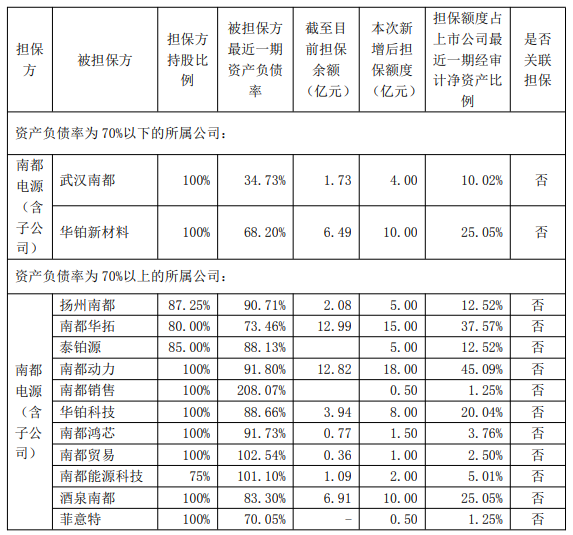
高担保、高负债!南都电源易主谋划刚告吹
Shen Zhen Shang Bao· 2026-01-19 06:14
Core Viewpoint - Nandu Power (300068) announced that it will provide guarantees exceeding 100% of its latest audited net assets for its subsidiaries and that the total guarantee amount for subsidiaries will not exceed 8.05 billion yuan for the fiscal year 2026 [1][2] Group 1: Guarantee Details - The total guarantee amount for subsidiaries is set at a maximum of 8.05 billion yuan, with 1.4 billion yuan allocated for companies with a debt-to-asset ratio below 70% and 6.65 billion yuan for those above 70% [1] - The guarantees cover various financial instruments, including comprehensive credit applications, loans, bills of exchange, letters of credit, factoring, guarantees, leasing, and trade supply chain businesses [1] - The cumulative approved guarantee amount after this announcement will be 8.05 billion yuan, which represents approximately 201.65% of the company's audited net assets for the fiscal year 2024 [2] Group 2: Financial Performance - As of the announcement date, the actual guarantee balance for subsidiaries and controlled subsidiaries was 4.918 billion yuan, accounting for approximately 123.19% of the company's audited net assets for the fiscal year 2024 [3] - Nandu Power reported a record annual loss in 2024, with revenue of 7.984 billion yuan, a year-on-year decrease of 45.56%, and a net profit loss of 1.497 billion yuan, a decline of 4260.62% [4] - For the first three quarters of 2025, the company achieved revenue of 5.911 billion yuan, down 24.80% year-on-year, with a net profit loss of 220 million yuan compared to a profit of 247 million yuan in the same period last year [4] Group 3: Company Background - Nandu Power specializes in the research, development, manufacturing, and sales of communication power supplies and green environmental storage application products, with key products including AGM batteries and gel batteries [3] - The company was listed on the Shenzhen Stock Exchange's Growth Enterprise Market in April 2010 [3] - The company has experienced high debt-to-asset ratios, fluctuating around 70%, and reached 79.14% at the end of 2024, slightly decreasing to 79.01% by the end of the third quarter of 2025 [4]