支付

Search documents
乐刷支付被罚款369.5万元 相关责任人年内再次被罚
Xi Niu Cai Jing· 2025-12-03 03:55
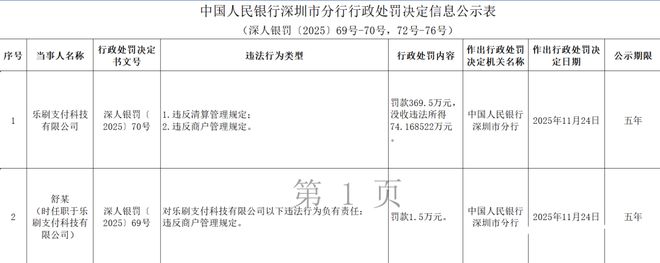
Core Points - LeShua Payment Technology Co., Ltd. has been fined 3.695 million yuan for violating clearing management regulations and merchant management regulations, with an additional confiscation of illegal gains amounting to 741,685.22 yuan [2] - An individual named Shu, who was the risk control director at LeShua Payment, has been fined 15,000 yuan for being responsible for the company's violations of merchant management regulations [2] - In March, LeShua Payment received a significant penalty totaling 4.45011406 million yuan for multiple violations, including failure to conduct due diligence on outsourced service providers [1][2] Summary by Category Administrative Penalties - LeShua Payment was penalized with a fine of 3.695 million yuan and the confiscation of 741,685.22 yuan in illegal gains [2] - Shu, the risk control director, was fined 15,000 yuan for his responsibility in the violations [2] Previous Violations - In March, LeShua Payment faced a total penalty of 4.45011406 million yuan for various infractions, including violations of institutional management and merchant management regulations, as well as failing to conduct due diligence on outsourced service providers [1][2]


以新“四方模式”共建世界级支付互联网络 中国银联召开全球合作伙伴大会——开放支付的创新实践暨互联互通成果发布会
Jin Rong Shi Bao· 2025-12-03 03:23
Core Insights - The signing of 11 multilateral cooperation memorandums for cross-border payment collaboration in Shanghai marks a significant step towards enhancing global payment connectivity and collaboration among various financial institutions [1][2][4] Group 1: Cross-Border Payment Cooperation - China UnionPay has established partnerships with 11 key institutions, including banks and payment networks from countries such as Malaysia, Uzbekistan, and Brazil, to facilitate cross-border payment cooperation [1] - The cooperation aims to create a new blueprint for a globally interconnected payment industry, enhancing economic fluidity and collaboration [1][2] Group 2: Global Payment Network Development - China UnionPay is expanding its cross-border payment network, having already collaborated with around 50 countries, including those in Asia and South America, to build a world-class payment interconnectivity network [2] - This network is expected to benefit millions of small and medium-sized enterprises by providing them access to global purchasing power, thereby stimulating economic recovery and growth [2][6] Group 3: New "Four-Party Model" - A new "four-party model" has been proposed by China UnionPay, incorporating wallet institutions and mobile manufacturers to create a more inclusive and open payment ecosystem [3] - The collaboration between China UnionPay and various banks, such as the Industrial and Commercial Bank of China, exemplifies successful cross-border payment initiatives, including the mutual recognition of QR code standards between China and Vietnam [3][4] Group 4: AI Integration in Payment Systems - The integration of artificial intelligence (AI) is being emphasized to enhance the efficiency and security of cross-border payments, with AI models improving transaction monitoring and fraud detection [5] - AI is expected to significantly reduce the time required to address cross-border fraud cases, enhancing overall transaction security [5] Group 5: Principles of Cooperation - The principles of mutual benefit and equality are highlighted in cross-border cooperation, with a focus on cost-saving through local currency settlement models [6] - The commitment to building a world-class payment interconnectivity network is aimed at ensuring efficient, secure, and accessible payment services for the global economy [6]
号称取代微信支付宝的数字人民币,为啥现在无人问津了,背后原因很真实
Sou Hu Cai Jing· 2025-12-02 23:14
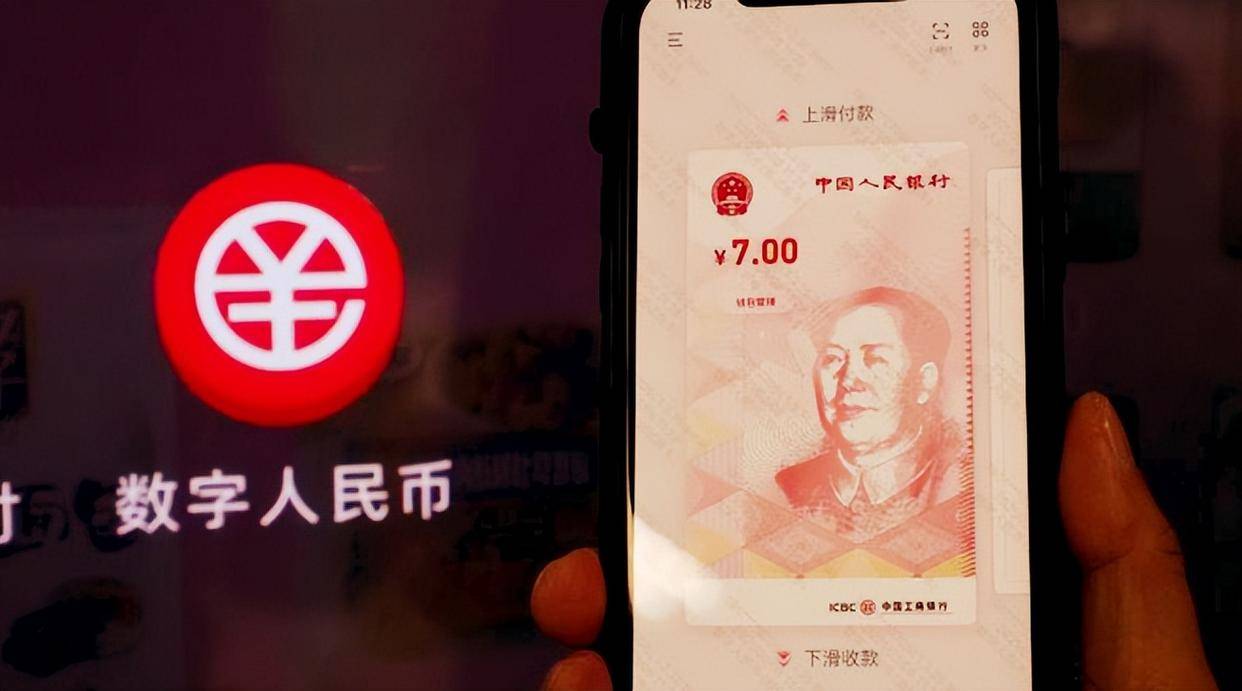
Core Viewpoint - The digital RMB, or DCEP, is a state-issued digital currency that aims to modernize payment systems but faces challenges in user adoption and market penetration [1][4][7]. Group 1: Definition and Features - Digital RMB is a digital version of the Chinese yuan, allowing users to make payments via a mobile app or a chip on a bank card [1]. - It is a legal tender issued by the state, offering higher security compared to private payment platforms like WeChat Pay and Alipay [3]. - Digital RMB can be used offline, providing a unique advantage in situations where internet access is unavailable [3]. Group 2: User and Merchant Perspectives - Users lack motivation to adopt digital RMB due to the convenience of existing platforms like WeChat Pay and Alipay, which offer faster payment processes [4]. - Digital RMB does not provide significant incentives or rewards for users, unlike its competitors that offer cashback and points [4]. - Merchants are hesitant to support digital RMB due to the additional costs of new payment equipment and employee training, especially when existing systems are already in place [4][5]. Group 3: Technical and Usage Limitations - The payment network for digital RMB is not fully developed, leading to slower transaction speeds and less stability compared to established platforms [5]. - The limited acceptance of digital RMB in various retail environments restricts its practical use, as many merchants do not support it [5]. - Users are accustomed to existing payment methods, making it difficult to shift their habits even if digital RMB has advantages [5]. Group 4: Initial Expectations vs. Reality - Initial media coverage created high expectations for digital RMB, suggesting it would replace WeChat Pay and Alipay, which has not materialized [7]. - The gap between expectations and actual adoption has led to decreased interest in digital RMB [7]. Group 5: Future Outlook - Digital RMB is expected to coexist with existing payment systems rather than replace them, serving as a supplementary tool in the payment ecosystem [14]. - Its primary value may lie in enhancing national financial management and policy implementation rather than everyday transactions [14][15].

Block (NYSE:SQ) 2025 Conference Transcript
2025-12-02 18:57
Summary of Block (NYSE:SQ) 2025 Conference Call Company Overview - **Company**: Block, Inc. (NYSE: SQ) - **Key Products**: Square, Cash App, Afterpay Industry Context - **Industry**: Payment processing and financial technology - **Focus Areas**: E-commerce, consumer finance, and banking services Key Points and Arguments Financial Performance and Guidance - **GPV Growth**: Expected to grow in the low double-digit range, around 10% due to tough comparisons from last year and weather events in October [6][7] - **Gross Profit Growth**: Anticipated at approximately 19% with adjusted operating income growth of 39% [6][7] - **Long-term Outlook**: Projected acceleration in GPV and gross profit growth through 2028, driven by product enhancements and go-to-market strategies [12][26] Cash App Developments - **Cash App Green**: A new feature aimed at enhancing primary banking activities, expected to drive user engagement [8][30] - **Buy Now, Pay Later (BNPL)**: Launching pre-purchase BNPL functionality in early 2026, targeting younger demographics [34] - **User Engagement**: Focus on increasing active users and inflows per active user through enhanced features and marketing strategies [29][30] Product Innovations - **ManagerBot and Neighborhoods**: Tools designed to automate seller operations and connect buyers with sellers, respectively [10][24] - **SaaS Opportunities**: Plans to increase software attach rates through new pricing and packaging strategies [12][27] Competitive Positioning - **Food and Beverage Sector**: Notable growth in GPV for food and beverage, with a reported 17% year-over-year growth [20][21] - **Market Penetration**: Successful movement into the upmarket segment, with a focus on larger merchants and quick-service restaurants [19][22] Neighborhoods Initiative - **Strategic Importance**: Seen as a critical growth driver for the next five years, integrating Square and Cash App ecosystems [44][46] - **Value Proposition**: Offers sellers enterprise-grade tools and consumers rewards, enhancing local economic engagement [45][46] Incremental Margins and Guidance Philosophy - **Incremental Margins**: Expected to exceed 50% by 2028, driven by product innovations and operational efficiencies [47][49] - **Guidance Approach**: Emphasizes a prudent methodology without speculative economic scenarios, focusing on core business performance [48][49] Unique Underwriting Model - **Consumer Credit Model**: Aims to address inefficiencies in traditional credit scoring by utilizing real-time data from Cash App and Afterpay [38][39] - **Real-time Adjustments**: Ability to update credit scores based on immediate consumer behavior, enhancing credit access and risk assessment [41][42] Additional Important Insights - **Sales Strategy Evolution**: Transitioning from a self-onboarding model to a more balanced approach with increased sales team involvement [14][17] - **Market Differentiation**: Cash App's unique position in the market, particularly among younger users, with significant monthly active users [34][35] This summary encapsulates the key insights and strategic directions discussed during the Block conference call, highlighting the company's growth trajectory, product innovations, and competitive positioning within the financial technology sector.

Visa (NYSE:V) 2025 Conference Transcript
2025-12-02 16:57
Summary of Visa's 2025 Conference Call Company Overview - **Company**: Visa Inc. (NYSE: V) - **Event**: 2025 Conference Call - **Date**: December 02, 2025 Key Industry Insights Q4 Trends - Visa reported stable and strong growth in Q4, with U.S. payment volume growth at **8%** and international growth at **10%** [4][5] - Cross-border payment volume growth was approximately **11%-12%** [4] - For the first three weeks of October, U.S. growth was **7%-8%** and cross-border growth was about **11%** [5] MDL Settlement - Visa reached an agreement in the MDL settlement, providing financial relief and flexibility for merchants [8] - Effective average interchange rates in the U.S. will see a **10 basis point reduction** for five years, with caps on rates for standard consumer credit cards at **125 basis points** [9] - Merchants will have increased flexibility regarding surcharging and card acceptance [10] Agentic Commerce - Visa is optimistic about agentic commerce, which allows consumers to use AI to shop on their behalf [13] - The introduction of Visa Intelligent Commerce aims to enhance consumer experience through secure, tokenized transactions [14][15] - Visa is developing protocols to differentiate between good agents and bad bots in the digital commerce space [18] Tokenization - Visa has seen significant growth in tokenization, reaching **16 billion tokens**, with a goal of achieving **100% tokenization** [21] - Tokenization increases approval rates by **5 percentage points** and reduces fraud by over **35%** [21] - Visa is focusing on monetizing tokenization through value-added services and lifecycle management [22][23] Value-Added Services (VAS) - VAS has grown from **20%** of revenue to nearly **30%**, with growth rates in various segments reaching **20%-40%** [25][28] - Visa is positioned to help clients with their payment-related projects, enhancing partnerships and driving demand for VAS [27][29] Value-in-Kind (VIK) Incentives - VIK converts a portion of cash incentives into coupons for clients to purchase services from Visa, fostering deeper partnerships [32][33] - VIK ensures clients have resources to invest in their business, leading to more substantive conversations and exploration of new services [33][34] Market Models - Visa operates using four market models: cash-rich, high potential, high potential challenger, and digitally mature [43][44] - High potential markets like Japan, Germany, and Mexico are seen as having significant growth opportunities due to high cash transaction volumes [46][47] Cross-Border Capability - Visa's cross-border payment system is considered a significant competitive advantage, built over decades [48][49] - The complexity of establishing a similar system through partnerships highlights Visa's unique position in the market [50][51] Additional Insights - Visa's focus on maintaining strong relationships with clients through incentives is crucial for aligning interests and ensuring long-term partnerships [38][41] - The company is committed to continuous improvement and innovation in the payments ecosystem, welcoming competition as a means to enhance its offerings [52] This summary encapsulates the key points discussed during Visa's 2025 conference call, highlighting the company's performance, strategic initiatives, and market positioning.

以新“四方模式” 共建世界级支付互联网络
和讯· 2025-12-02 07:57
Core Viewpoint - The signing of 11 multilateral cooperation memorandums for cross-border payment by China UnionPay and various international institutions marks a significant step towards building a world-class payment interconnected network, enhancing global economic collaboration and payment industry synergy [1][2]. Group 1: Cross-Border Payment Cooperation - China UnionPay has established cross-border payment cooperation with 11 key institutions, including banks and payment networks from countries like Malaysia, Uzbekistan, and Brazil, under a new "four-party model" [1]. - The cooperation aims to break down payment barriers, allowing millions of small and micro merchants to access vast purchasing power globally, thus revitalizing the global economy [2]. Group 2: New "Four-Party Model" - The new "four-party model" incorporates wallet institutions and mobile manufacturers, creating a more inclusive and open payment ecosystem [3]. - The collaboration between China UnionPay and the Industrial and Commercial Bank of China has led to successful projects like the mutual recognition of QR codes between China and Vietnam, exemplifying the "Belt and Road" initiative in payment [3]. Group 3: AI in Payment Practices - Artificial intelligence is being leveraged to enhance efficiency and security in cross-border payments, significantly improving transaction monitoring and fraud detection [5]. - AI technologies can reduce the processing time for identifying fraudulent transactions from 2-3 days to approximately 1 day, showcasing the potential for smarter payment solutions [5]. Group 4: Principles of Cooperation - The principles of reciprocity and equality in cross-border cooperation, such as the use of local currency settlement, help reduce transaction costs and currency fluctuation risks [6]. - The emphasis on convenience and benefits for cardholders reflects the value of mutual trust and interconnectedness at various levels, including national and industrial [6].

乐刷支付年内收央行第三张罚单
Nan Fang Du Shi Bao· 2025-12-01 23:07
Core Points - LeShua Payment Technology Co., Ltd. has been fined for violating clearing and merchant management regulations, totaling over 4.43 million yuan [1][2] - The company has received three penalties from the People's Bank of China in 2025, accumulating nearly 10 million yuan in fines this year [2] - LeShua was established in 2013 and received investment from Tencent and other notable institutions, obtaining a payment business license in 2014 [3] Summary by Sections - **Penalties and Violations** - LeShua Payment was fined 3.695 million yuan and had illegal gains of 741,685.22 yuan confiscated for violating clearing and merchant management regulations [1] - The company has faced penalties three times in 2025, with a total of 4.45 million yuan in fines earlier this year for various violations, including failure to conduct due diligence on outsourcing service providers [2] - In August, LeShua's Hubei branch was fined 500,000 yuan for not fulfilling due diligence obligations and risk management measures [2] - **Company Background** - LeShua Payment Technology Co., Ltd. was founded in 2013 and received early investment from Tencent and other institutions [3] - The company obtained a payment business license from the People's Bank of China in 2014, allowing it to operate nationwide in card acquiring and mobile payment services [3] - LeShua focuses on mobile payment as its core service, providing payment platforms, merchant operation SaaS services, data marketing, fintech, and AI products [3]
数字人民币试点范围持续扩大
Sou Hu Cai Jing· 2025-12-01 07:07
Core Insights - The pilot expansion of digital RMB reflects the steady progress of digital financial innovation in China and signifies a profound transformation in payment methods in the digital economy era [1][6] - Digital RMB is designed to provide a safe, convenient, and efficient payment option for the public, maintaining its equivalence to physical RMB and ensuring its legal tender status [1][5] Pilot Strategy and Application - The promotion of digital RMB follows a cautious "pilot first, then promote" strategy, with early pilot regions like Shenzhen and Suzhou allowing the public to experience its unique advantages through various initiatives [3][5] - The application scenarios for digital RMB have expanded from retail consumption to various sectors including wholesale retail, dining, education, and public services, enhancing payment efficiency and supporting the healthy development of the digital economy [3][5] User-Centric Design - Digital RMB is designed with a user-centric approach, featuring "controllable anonymity" to protect user privacy while preventing illegal activities, and "dual offline payment" capabilities to facilitate transactions in areas without internet access [5][6] - The widespread adoption of digital RMB is expected to lower payment costs for merchants and provide a faster payment experience for users, promoting financial inclusivity for remote areas and elderly populations [5] Long-Term Outlook - The promotion of digital RMB is a long-term process that requires collaboration across technology, application scenarios, and user habits, but it is anticipated to play an increasingly important role in the future payment system [5][6] - Digital RMB represents a significant milestone in China's digital economy development and offers a "Chinese solution" for the global digital currency landscape [5]

深圳乐刷支付今年第三次收央行罚单!年内累计罚没近千万
Nan Fang Du Shi Bao· 2025-12-01 03:28
Core Points - LeShua Payment Technology Co., Ltd. has been fined for violating clearing and merchant management regulations, totaling over 4.43 million yuan [1][3] - This marks the third penalty received by LeShua Payment in 2025, with total fines approaching 10 million yuan for the year [3] Summary by Category Regulatory Actions - The People's Bank of China, Shenzhen Branch, imposed a fine of 3.695 million yuan on LeShua Payment for violations related to clearing management and merchant management, along with the confiscation of illegal gains amounting to 741,685.22 yuan [1][2] - An individual, identified as Shu, who was employed at LeShua Payment, was fined 15,000 yuan for his responsibility in the merchant management violations [1][2] Historical Context - In 2025, LeShua Payment has received three penalties from the People's Bank of China, with the first penalty on March 28 amounting to 4.45 million yuan for various violations including management and due diligence failures [3] - On August 8, the Hubei branch of the People's Bank of China fined LeShua Payment's Hubei subsidiary 500,000 yuan for failing to fulfill due diligence obligations and risk management measures [4] Company Background - LeShua Payment Technology Co., Ltd. was established in 2013 and received investment from notable institutions like Tencent. It obtained a payment business license from the People's Bank of China in 2014, allowing it to operate nationwide in card acquiring and mobile payment services [7] - The company is a wholly-owned subsidiary of Shenzhen Yika Technology Co., Ltd., and is based in Nanshan District, Shenzhen [7]
又一支付龙头冲刺港股IPO
2 1 Shi Ji Jing Ji Bao Dao· 2025-12-01 01:39
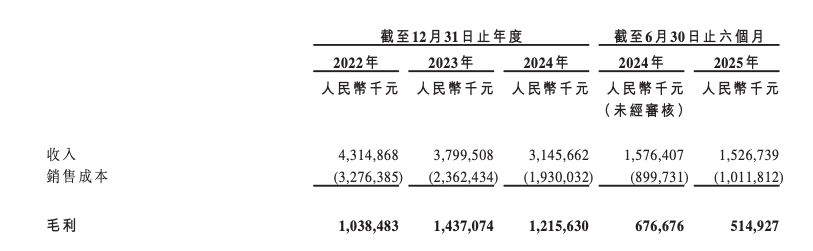
Core Viewpoint - New Guodu (300130) has submitted an application for an IPO in Hong Kong to enhance its global strategy and expand overseas business, following the trend of Chinese payment companies going international [1][2]. Group 1: Company Overview - New Guodu, established in July 2001, is a payment technology service provider with over 1,000 employees and operations in more than 100 countries [2]. - The company aims to deepen its global strategy and enhance its international market competitiveness through the IPO [1]. Group 2: Financial Performance - In 2024, New Guodu reported a net profit of 234 million yuan, a decrease of 68.98% year-on-year, primarily due to tax adjustments and goodwill impairment [4]. - For the first half of 2025, the company achieved revenue of 1.527 billion yuan, down 3.17% year-on-year, and a net profit of 275 million yuan, down 38.61% year-on-year [4]. - In the first three quarters of 2025, revenue was 2.343 billion yuan, a decline of 4.15%, while net profit increased by 37.10% to 407 million yuan [5]. Group 3: Business Segments - The revenue from the acquiring and value-added services segment has been declining, accounting for 67.2% of total revenue in 2024, down from 70.9% in 2022 [5]. - The electronic payment products segment is gradually increasing its share, with revenues of 982 million yuan, 994 million yuan, and 941 million yuan from 2022 to 2024 [6]. Group 4: International Expansion - New Guodu is implementing a dual overseas strategy, focusing on cross-border payment and local acquiring services, and has established a marketing network in India and expanded into Europe and Japan [8][9]. - The company has obtained various international payment licenses, including those from Luxembourg, Hong Kong, and the United States, to support its cross-border payment initiatives [9]. - Revenue from outside mainland China has been increasing, accounting for 21.1%, 26.0%, and 29.0% from 2022 to 2024 [9].