
铁路

Search documents
国办出台13项政策举措 进一步激发民间投资活力
Shang Hai Zheng Quan Bao· 2025-11-10 17:59
Core Points - The State Council has issued measures to stimulate private investment, introducing 13 targeted policies to enhance the participation of private capital in various sectors, including low-altitude economy and commercial aerospace [1][4] - The measures aim to promote high-quality development of private investment by expanding market access, fostering fair competition, and optimizing investment financing support [1][2] Group 1: Expanding Market Access - The measures encourage private capital participation in key sectors such as railways and nuclear power, specifying shareholding requirements for projects requiring national approval [2] - Local governments are encouraged to involve private capital in new urban infrastructure projects with profit potential [2] - The government aims to eliminate unreasonable restrictions on service industry access and enhance public-private partnership mechanisms [2] Group 2: Addressing Bottlenecks - The measures ensure the legal rights of private enterprises in areas like electricity grid access and oil and gas pipeline usage [3] - Support is provided for private enterprises to establish major pilot platforms and for state-owned enterprises and research institutions to offer market-oriented pilot services [3] - The initiative promotes digital transformation for small and medium-sized enterprises through comprehensive digital empowerment platforms [3] Group 3: Strengthening Support - Increased support for eligible private investment projects through central budget investments and new policy financial tools is emphasized [3] - Financial institutions are urged to set annual service goals for private enterprises to meet their reasonable credit needs [3] - The measures include a "green channel" policy for technology companies to facilitate public offerings and mergers [3] Group 4: Overall Impact - The introduction of these measures is expected to significantly enhance private sector participation in infrastructure and public facility construction, as well as in emerging industries and productive services [4] - The 13 measures reflect the government's commitment to deepening reforms and supporting the development of the private economy [4]
民间资本可参与低空经济领域基建
Bei Jing Shang Bao· 2025-11-10 16:09
Core Viewpoint - The Chinese government has introduced a series of measures to stimulate private investment, particularly in infrastructure projects, signaling a significant policy shift to enhance the role of private capital in various sectors [1][4]. Group 1: Policy Measures - The government has released 13 targeted policy measures aimed at promoting private investment, focusing on expanding access, addressing bottlenecks, and strengthening support [1]. - Specific measures include allowing private capital to participate in sectors traditionally dominated by state-owned enterprises, such as railways and nuclear power, with a minimum shareholding requirement of 10% [4][5]. - The measures also emphasize the need for feasibility studies to assess private capital participation in projects requiring state approval [4]. Group 2: Sectoral Focus - The policies encourage private investment in low-altitude economy infrastructure, satellite communication, and various service industries by removing unreasonable entry barriers [7]. - The government aims to enhance the participation of private capital in urban infrastructure projects, particularly in smaller cities with profit potential [4][6]. Group 3: Financial Support - The government plans to increase central budget investments in qualifying private projects and utilize new policy financial tools to support key sectors [8][9]. - A total of 500 billion yuan in new policy financial tools has been allocated to support over 2,300 projects, with a total investment of approximately 7 trillion yuan, focusing on digital economy and urban renewal [9]. Group 4: Economic Impact - The measures are expected to boost private investment, which is seen as a crucial indicator of economic vitality and stability, contributing to employment and overall economic growth [9]. - The government emphasizes the importance of ongoing communication with private enterprises to address their concerns and facilitate a healthy development of the private economy [9].

利好!国办重磅发布!
Zhong Guo Ji Jin Bao· 2025-11-10 14:21
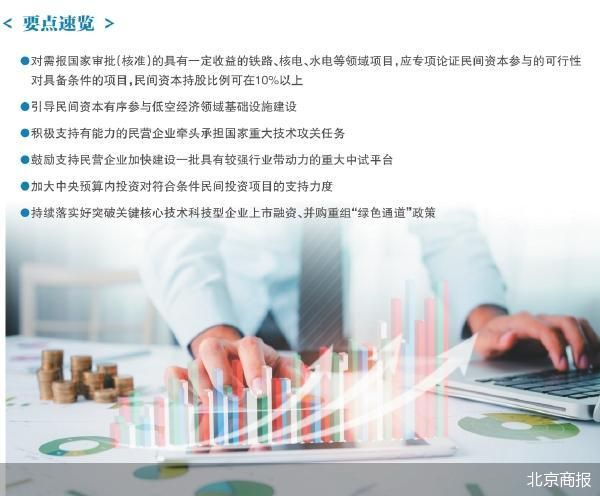
【导读】国务院办公厅印发《关于进一步促进民间投资发展的若干措施》 盘后又有大利好! 11月10日,中国政府网显示,国务院办公厅印发《关于进一步促进民间投资发展的若干措施》(以下简称《若干措施》),提出13项针对性政策举措,意 在进一步激发民间投资活力、促进民间投资发展。 扩大准入方面,《若干措施》提出,对需报国家审批(核准)的具有一定收益的铁路、核电等重点领域项目,鼓励支持民间资本参与并明确持股比例等要 求;对具备条件的项目,民间资本持股比例可在10%以上。 《若干措施》要求,对各地方规模较小、具有盈利空间的城市基础设施领域新建项目,鼓励民间资本参与建设运营。引导民间资本有序参与低空经济领域 基础设施建设,积极支持有能力的民营企业牵头承担国家重大技术攻关任务。 《若干措施》提到,清理不合理的服务业经营主体准入限制;规范实施政府和社会资本合作新机制,修订分类支持民营企业参与的特许经营项目清单;坚 决取消招标投标领域对民营企业单独设置的不合理要求。进一步加大政府采购支持中小企业力度。 打通堵点方面,《若干措施》要求,保障民营企业在电力并网运行、油气管网设施使用、运力资源调配等方面的合法权益;鼓励支持民营企业加快建 ...
利好!国办重磅发布!
中国基金报· 2025-11-10 14:14
【导读】国务院办公厅印发《关于进一步促进民间投资发展的若干措施》 中国基金报记者 晨曦 盘后又有大利好! 11月10日,中国政府网显示,国务院办公厅印发《关于进一步促进民间投资发展的若干措 施》(以下简称《若干措施》),提出13项针对性政策举措,意在进一步激发民间投资活 力、促进民间投资发展。 扩大准入方面,《若干措施》提出,对需报国家审批(核准)的具有一定收益的铁路、核电 等重点领域项目,鼓励支持民间资本参与并明确持股比例等要求;对具备条件的项目,民间 资本持股比例可在10%以上。 《若干措施》要求,对各地方规模较小、具有盈利空间的城市基础设施领域新建项目,鼓励 民间资本参与建设运营。引导民间资本有序参与低空经济领域基础设施建设,积极支持有能 力的民营企业牵头承担国家重大技术攻关任务。 《若干措施》提到,清理不合理的服务业经营主体准入限制;规范实施政府和社会资本合作 新机制,修订分类支持民营企业参与的特许经营项目清单;坚决取消招标投标领域对民营企 业单独设置的不合理要求。进一步加大政府采购支持中小企业力度。 打通堵点方面,《若干措施》要求,保障民营企业在电力并网运行、油气管网设施使用、运 力资源调配等方面的 ...

干货满满!扩范围、清障碍 促进民间投资13条来了
2 1 Shi Ji Jing Ji Bao Dao· 2025-11-10 13:24
11月10日,国务院办公厅对外发布《关于进一步促进民间投资发展的若干措施》(下文简称《若干措施》)。 《若干措施》行文简洁明快,共计出台13条支持措施。"促进民间投资13条"重点围绕扩大市场准入、促进公平竞争、强化资源 支持、优化投融资服务等民企核心关切展开,干货满满。 "促进民间投资13条"进一步拓宽了民间投资空间,支持民间资本加大新质生产力、新兴服务业、新型基础设施等领域投资;要 求严格落实招标投标领域相关制度规定,保障中小企业政府采购预留份额,加大中央预算内投资等对民间投资项目的支持力度 等;还致力于营造公平竞争市场环境,破除限制民间投资的各种隐性壁垒,加强创新支撑和融资支持,完善服务体系,让民营 企业敢投资、有回报。 支持民企入股铁路、核电等 《若干措施》有多条举措涉及扩大市场准入,旨在进一步拓宽民间资本的投资范围,包括支持民企入股铁路、核电等重大项 目,参与城市基础设施领域新建项目,参与低空经济、商业航天、卫星通信等领域,支持民企投向生产性服务业等。 《若干措施》指出,对需报国家审批(核准)的具有一定收益的铁路、核电、水电、跨省跨区直流输电通道、油气管道、进口 液化天然气接收和储运设施、供水等领域项 ...
鼓励支持民资参与铁路、核电等项目,13条新举措扩大民资准入
Di Yi Cai Jing· 2025-11-10 12:29
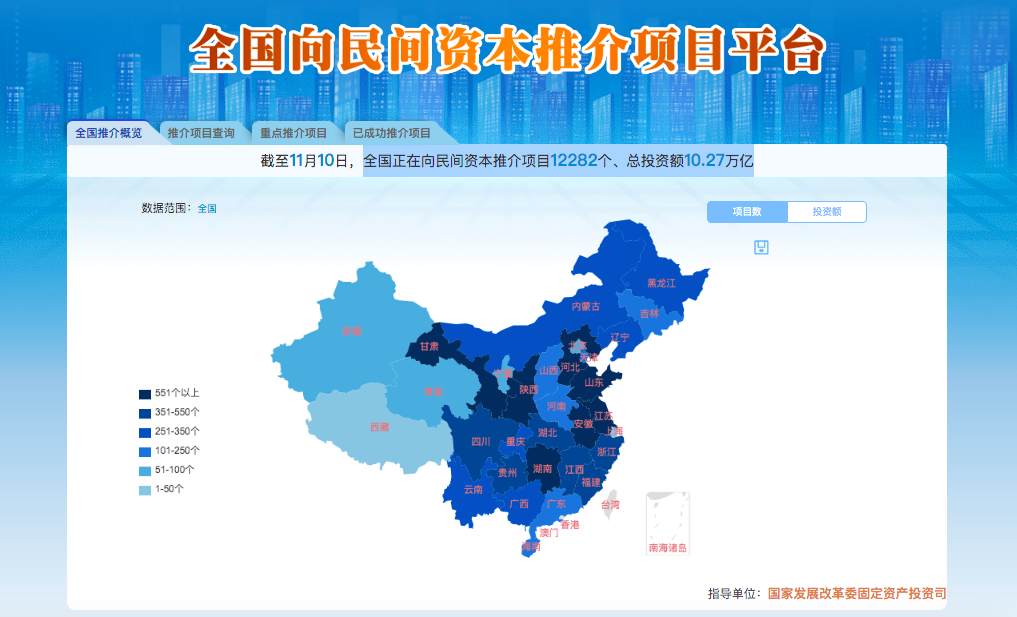
Core Viewpoint - The Chinese government has introduced a series of measures to stimulate private investment, particularly in key sectors such as railways, nuclear power, and low-altitude economy, aiming to enhance the participation of private capital in these areas [2][3]. Group 1: Policy Measures - The State Council has released 13 targeted policy measures to invigorate private investment, focusing on expanding access, addressing bottlenecks, and strengthening support [2]. - The measures encourage private capital participation in state-approved projects, particularly in profitable sectors like railways and nuclear power, with specified shareholding requirements [2][3]. - Private investment is being directed towards low-altitude economy and commercial aerospace, with support for capable private enterprises to lead major technological initiatives [2][3]. Group 2: Investment Environment - Historically, sectors like railways and nuclear power have been dominated by state-owned capital, but new policies are designed to open these sectors to private investment, allowing for a more active role [3]. - The introduction of a minimum shareholding requirement for private capital in nuclear projects has already seen participation from 10 private enterprises in five projects, with ownership stakes exceeding 10% [3]. Group 3: Addressing Challenges - The measures aim to safeguard the rights of private enterprises in areas such as electricity grid access and resource allocation, while also promoting the establishment of significant pilot platforms for innovation [3][4]. - Financial institutions are encouraged to set annual service targets for private enterprises, ensuring their reasonable credit needs are met [4]. Group 4: Financial Support - The government is increasing support for eligible private investment projects through central budget investments and new policy financial tools, with a total of 500 billion yuan allocated to support over 2,300 projects [4]. - A project database has been established to promote private investment, with over 12,282 projects currently being recommended to private capital, amounting to a total investment of 10.27 trillion yuan [4]. Group 5: Current Investment Trends - Recent statistics indicate a decline in private investment, with a 3.1% year-on-year decrease in private fixed asset investment during the first three quarters of the year [6]. - Despite the challenges posed by international conditions and the real estate market, the long-term outlook for private investment remains positive, supported by ongoing government efforts to enhance the investment environment [7].
新华财经晚报:国务院办公厅印发《关于进一步促进民间投资发展的若干措施》 引导民间资本有序参与低空经济、商业航天等领域建设
Xin Hua Cai Jing· 2025-11-10 12:22
【重点关注】 ·商务部:暂停对韩华海洋株式会社5家美国相关子公司实施反制措施一年 ·国务院办公厅:引导民间资本有序参与低空经济、商业航天等领域建设 【国内要闻】 ·国务院办公厅日前印发《关于进一步促进民间投资发展的若干措施》,提出13项针对性政策举措。其 中提到,在扩大准入方面,对需报国家审批(核准)的具有一定收益的铁路、核电等重点领域项目,鼓 励支持民间资本参与并明确持股比例等要求;对各地方规模较小、具有盈利空间的城市基础设施领域新 建项目,鼓励民间资本参与建设运营;引导民间资本有序参与低空经济、商业航天等领域建设,积极支 持有能力的民营企业牵头承担国家重大技术攻关任务。 ·国家发展改革委等部门印发《关于推动物流数据开放互联有效降低全社会物流成本的实施方案》。方 案提出,深化物流行业数字化转型和智能化改造,推动物流基础业务线上化、可视化、数据化。拓展物 联网、云计算、大数据、人工智能、区块链等技术在物流领域的规模化应用,实现物流数据实时采集、 广泛连接和高效汇聚。支持物流骨干企业、平台企业强化物流数据治理,遵循"共享协同、多源校核、 动态更新"原则,推动跨主体、跨行业、跨领域数据互联互通。 ·据国家发展改革 ...
国办发文!促进民间投资,利好来了
Zhong Guo Zheng Quan Bao· 2025-11-10 11:18
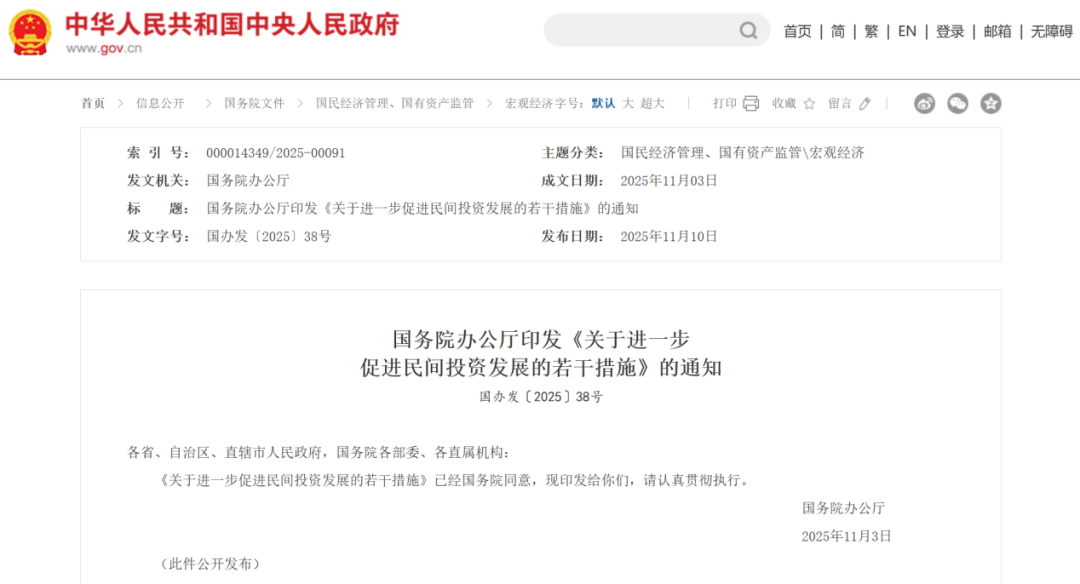
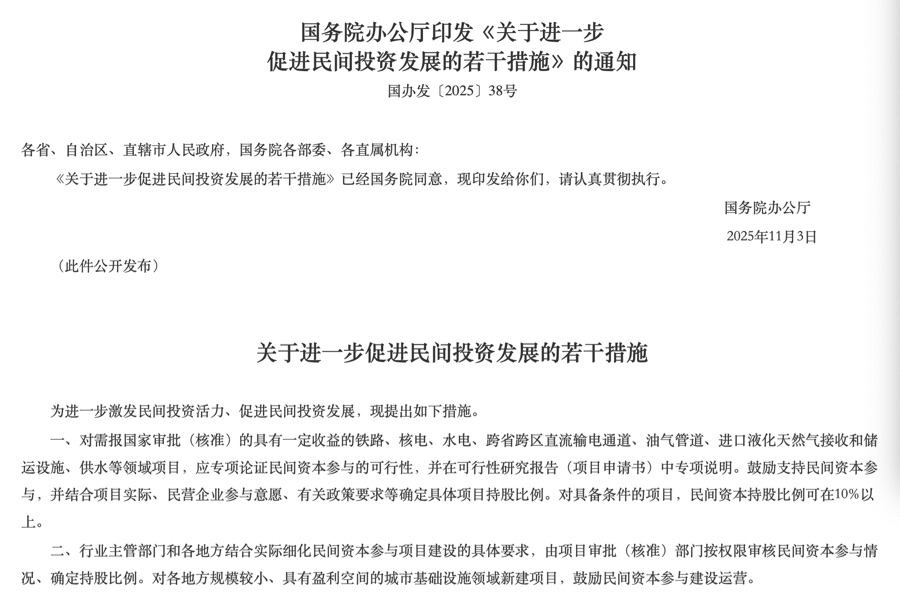
中国政府网11月10日消息,为进一步激发民间投资活力、促进民间投资发展,国务院办公厅日前印发 《关于进一步促进民间投资发展的若干措施》,提出13项针对性政策举措。 积极支持有能力的民营企业牵头承担国家重大技术攻关任务 鼓励支持民营企业加快建设一批具有较强行业带动力的重大中试平台 加大中央预算内投资对符合条件民间投资项目的支持力度 持续落实好突破关键核心技术科技型企业上市融资、并购重组"绿色通道"政策 保障民间资本顺畅参与重大项目 《若干措施》提出,对需报国家审批(核准)的具有一定收益的铁路、核电、水电、跨省跨区直流输电 通道、油气管道、进口液化天然气接收和储运设施、供水等领域项目,应专项论证民间资本参与的可行 性,并在可行性研究报告(项目申请书)中专项说明。鼓励支持民间资本参与,并结合项目实际、民营 企业参与意愿、有关政策要求等确定具体项目持股比例。对具备条件的项目,民间资本持股比例可在 10%以上。 《若干措施》明确,行业主管部门和各地方结合实际细化民间资本参与项目建设的具体要求,由项目审 批(核准)部门按权限审核民间资本参与情况、确定持股比例。对各地方规模较小、具有盈利空间的城 市基础设施领域新建项目,鼓 ...
永贵电器:控股子公司与中车株洲签订货物买卖合同
Zheng Quan Shi Bao Wang· 2025-11-10 10:32
Core Viewpoint - Yonggui Electric (300351) announced a significant contract with CRRC Zhuzhou Electric Locomotive Co., Ltd., which is expected to positively impact the company's operating performance in 2025 and beyond [1] Group 1: Contract Details - The contract signed between CRRC Zhuzhou and Yonggui's subsidiary, Zhejiang Yonggui Bode Transportation Equipment Co., Ltd., amounts to 15.8652 million yuan (including tax) [1] - The contract involves the supply of door assembly and mechanism assembly [1] Group 2: Future Impact - Successful execution of the order is anticipated to have a positive effect on the company's financial results for 2025 and subsequent years [1]

永贵电器:控股子公司签订1586.52万元货物买卖合同
Xin Lang Cai Jing· 2025-11-10 10:22
Core Viewpoint - The company has signed a sales contract worth 15.8652 million yuan (including tax) with CRRC Zhuzhou Electric Locomotive Co., Ltd., which is expected to positively impact the company's operating performance in 2025 and future years [1] Group 1 - The contract is related to the supply of door assembly and mechanism assembly for the Wuhan Rail Transit project [1] - The contract will take effect upon signing and stamping by both parties [1]