供热

Search documents
共探低碳应用新路径,共话市场多元新未来——第十九届中国新能源国际论坛暨展示(NEX2025)在京盛大开幕
Zhong Guo Jin Rong Xin Xi Wang· 2025-09-18 07:21
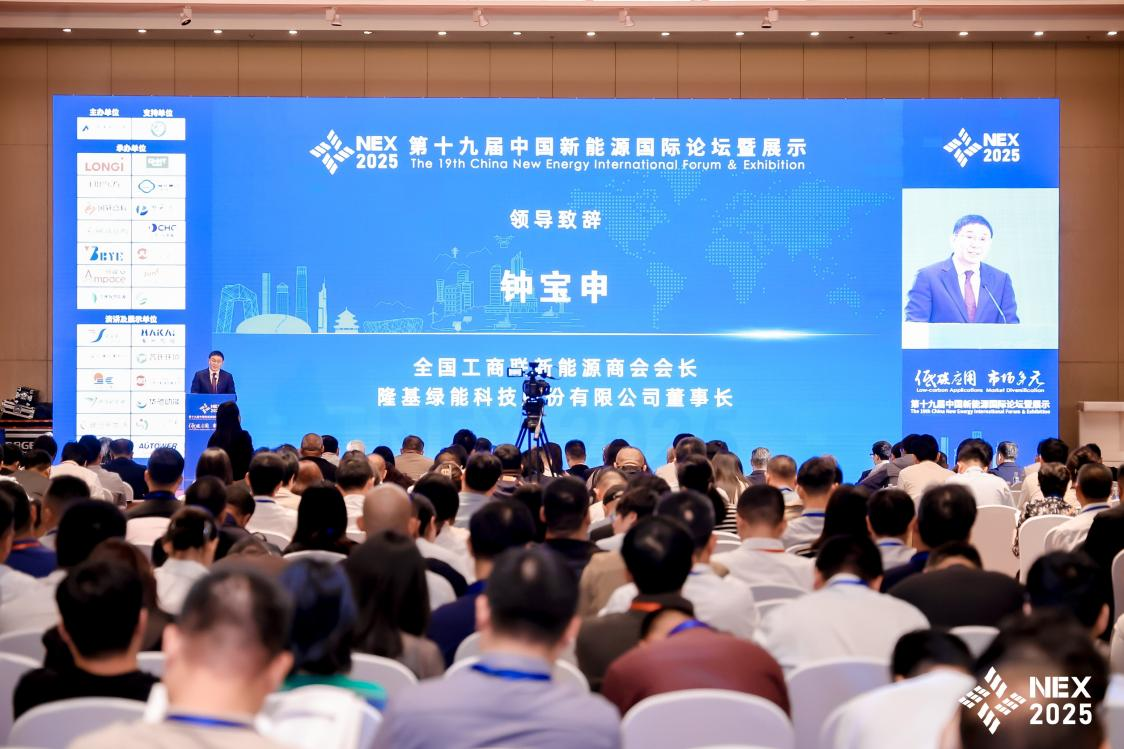
Core Viewpoint - The "19th China New Energy International Forum and Exhibition (NEX 2025)" commenced on September 17, focusing on "Low Carbon Applications, Market Diversity," and aims to explore high-quality development paths in the new energy sector [1][2]. Group 1: Event Overview - The forum is organized by the All-China Federation of Industry and Commerce New Energy Chamber and supported by the National Federation of Industry and Commerce Talent Exchange Service Center, featuring prominent companies like Longi Green Energy, Zhejiang Chint New Energy, and others [2][3]. - Key figures including Li Bing, Zhang Yuqing, and other industry leaders delivered speeches, emphasizing the importance of cross-regional and cross-sector collaboration to drive resource integration and innovation in the new energy industry [3][4]. Group 2: Expert Discussions - Industry experts, including academicians and researchers, gathered to discuss trends, technological directions, market dynamics, and future prospects of the new energy sector, providing insights for the "14th Five-Year Plan" of China's new energy development [4]. - A dialogue among leading figures from various new energy companies focused on pathways for high-quality development under new circumstances, aiming to consolidate industry wisdom and consensus [4]. Group 3: Forum Activities - The forum included multiple specialized sub-forums covering core areas like photovoltaics, energy storage, and hydrogen energy, as well as new segments such as AI in new energy, offshore energy, and sustainable fuels, promoting collaboration across the new energy industry chain [5]. - Various activities such as policy communication, academic exchanges, and project cooperation were organized to create a comprehensive platform for domestic and international representatives in the new energy field [5]. Group 4: Future Outlook - The Secretary-General of the All-China Federation of Industry and Commerce New Energy Chamber highlighted the forum's evolution into a top platform for industry-wide exchange and cooperation, with plans for the 20th anniversary and NEX 2026 already underway [6].



瑞纳智能股价跌5%,国寿安保基金旗下1只基金位居十大流通股东,持有141.95万股浮亏损失227.12万元
Xin Lang Cai Jing· 2025-09-18 06:06
Core Points - The stock of Ruina Intelligent dropped by 5% on September 18, closing at 30.37 CNY per share, with a trading volume of 130 million CNY and a turnover rate of 11.14%, resulting in a total market capitalization of 4.128 billion CNY [1] - Ruina Intelligent Equipment Co., Ltd. is based in Changfeng, Anhui, and was established on April 9, 2008, with its IPO on November 2, 2021. The company focuses on intelligent research and application of core heating products and equipment, full information metering data production and management, big data system construction, smart platform services, and AI data application services, positioning itself as a one-stop low-carbon smart heating solution provider in China [1] - The revenue composition of Ruina Intelligent includes 79.59% from heating energy-saving services, 17.01% from sales of energy-saving products, 3.19% from energy-saving system engineering, and 0.21% from other services [1] Shareholder Information - Among the top ten circulating shareholders of Ruina Intelligent, Guoshou Anbao Fund holds a fund named Guoshou Anbao Smart Life Stock A (001672), which maintained its holding of 1.4195 million shares in the second quarter, accounting for 3.93% of the circulating shares. The estimated floating loss today is approximately 2.2712 million CNY [2] - Guoshou Anbao Smart Life Stock A was established on September 1, 2015, with a current scale of 1.828 billion CNY. Year-to-date returns are 41.52%, ranking 929 out of 4222 in its category; the one-year return is 96.65%, ranking 646 out of 3804; and since inception, the return is 232.3% [2] Fund Management - The fund manager of Guoshou Anbao Smart Life Stock A is Zhang Qi, who has a cumulative tenure of 15 years and 77 days. The total asset size of the fund is 2.317 billion CNY, with the best fund return during his tenure being 232.63% and the worst being -19.09% [3]
中科环保(301175) - 2025年9月17日投资者关系活动记录表
2025-09-17 23:44
Group 1: Company Performance - The company achieved a net profit of 196 million yuan in the first half of 2025, representing a year-on-year growth of 19.83% [2] - The net cash flow from operating activities reached 298 million yuan, an increase of 24.52% compared to the previous year [2] - The weighted average return on equity was 5.37% as of June 30, 2025 [2] - The asset-liability ratio stood at 50.68% [2] Group 2: Heating Supply Focus - The company's heating users are primarily industrial enterprises, with a stable and long-term demand [2] - The Shijiazhuang project focuses on industrial heating, while the Haicheng project will utilize self-developed low-temperature heating technology for residential heating [2] Group 3: Cost and Technology Insights - The main cost increase for heating transformation from waste incineration is the investment in heating pipeline infrastructure [4] - The company’s Shijiazhuang project uses a condensing turbine, which is currently undergoing modifications to enhance thermal energy utilization efficiency [5] Group 4: Mergers and Acquisitions Strategy - The company prioritizes projects with good fundamentals and regional synergy for mergers and acquisitions [6] - The Shijiazhuang project saw a net profit increase of approximately 50 million yuan in its first year post-acquisition [6] Group 5: Project Development and National Subsidies - The Yuxi project commenced production in May 2025, while the Hengyang project has fully started construction [7] - The company has received two batches of national subsidy payments recently, indicating an improvement in subsidy recovery [7]
瑞纳智能9月15日获融资买入1690.22万元,融资余额6604.40万元
Xin Lang Cai Jing· 2025-09-16 01:35
Core Viewpoint - 瑞纳智能's stock experienced a decline of 2.58% on September 15, with a trading volume of 173 million yuan, indicating market volatility and investor sentiment towards the company [1]. Financing Summary - On September 15, 瑞纳智能 had a financing buy-in amount of 16.90 million yuan, with a net financing purchase of 4.44 million yuan after 12.46 million yuan in financing repayments [1]. - The total financing and securities balance for 瑞纳智能 reached 66.04 million yuan, accounting for 4.80% of its market capitalization, which is above the 80th percentile of the past year, indicating a high level of financing activity [1]. - In terms of securities lending, 瑞纳智能 had no shares sold or repaid on September 15, with a securities lending balance of 0.00 yuan, also reflecting a high position relative to the past year [1]. Company Overview - 瑞纳智能, established on April 9, 2008, and listed on November 2, 2021, is based in Anhui and specializes in intelligent research and application of heating core products and equipment, as well as providing comprehensive low-carbon smart heating solutions [2]. - The company's revenue composition includes 79.59% from energy-saving services, 17.01% from energy-saving product sales, 3.19% from energy-saving system engineering, and 0.21% from other sources [2]. - As of June 30, 2025, 瑞纳智能 reported a revenue of 92.59 million yuan, reflecting a year-on-year growth of 27.20%, while the net profit attributable to shareholders was -6.93 million yuan, showing a significant year-on-year improvement of 59.63% [2]. Dividend Information - Since its A-share listing, 瑞纳智能 has distributed a total of 154 million yuan in dividends, with 103 million yuan distributed over the past three years [3]. Shareholder Information - As of June 30, 2025, 瑞纳智能 had 9,049 shareholders, a slight increase of 0.81% from the previous period, with an average of 3,993 circulating shares per person, a decrease of 0.20% [2][3].
九洲集团:9月15日召开董事会会议
Mei Ri Jing Ji Xin Wen· 2025-09-15 13:14
Group 1 - The company, Jiuzhou Group, held a temporary board meeting on September 15, 2025, to discuss the proposal for early redemption of Jiuzhou Convertible Bonds [1] - For the first half of 2025, Jiuzhou Group's revenue composition was as follows: heating revenue accounted for 43.58%, intelligent assembly manufacturing business for 28.61%, power generation revenue for 26.89%, and other businesses for 0.92% [1] - As of the report date, Jiuzhou Group's market capitalization was 4.4 billion yuan [1]

供热面积增长,热价改革持续推进
Xinda Securities· 2025-09-14 12:31
Investment Rating - The investment rating for the environmental sector is "Positive" [2] Core Insights - The report highlights the continuous growth of centralized heating area in China, with a total of 11.549 billion square meters in 2023, maintaining a compound annual growth rate (CAGR) of 7.8% from 2010 to 2023 [18] - The report emphasizes the ongoing reform of heating prices, which is expected to trend upwards, potentially improving profitability for heating companies [37] Summary by Sections Market Performance - As of September 12, the environmental sector increased by 1.00%, underperforming the broader market, which rose by 1.52% [4][11] - The water treatment sector saw a rise of 4.31%, while the solid waste management sector showed mixed results with some sub-sectors declining [12] Industry Dynamics - The report discusses the release of the "National Industrial Resource Comprehensive Utilization Advanced Applicable Process Technology Equipment Catalog (2025 Edition)" aimed at promoting industrial solid waste reduction and resource utilization [39] - It also mentions the implementation of policies to integrate artificial intelligence with energy development, focusing on clean energy [40][41] Centralized Heating Analysis - The report details that in 2023, residential heating accounted for 76% of the total heating area, with Shandong province being the largest heating area [18] - The main heating method is combined heat and power (CHP), which constitutes 45% of the heating sources, while coal remains the dominant fuel source [22][24] - The report indicates that heating prices are determined by government regulations, and recent reforms are expected to lead to price increases, enhancing the profitability of heating companies [33][37] Investment Recommendations - The report suggests that the "14th Five-Year Plan" will maintain high demand for energy conservation and environmental protection, with specific recommendations for companies such as Huanlan Environment, Xingrong Environment, and Hongcheng Environment [56]


山东省供热行业低碳高质量发展路径研究报告发布会在济宁召开
Qi Lu Wan Bao· 2025-09-13 08:27
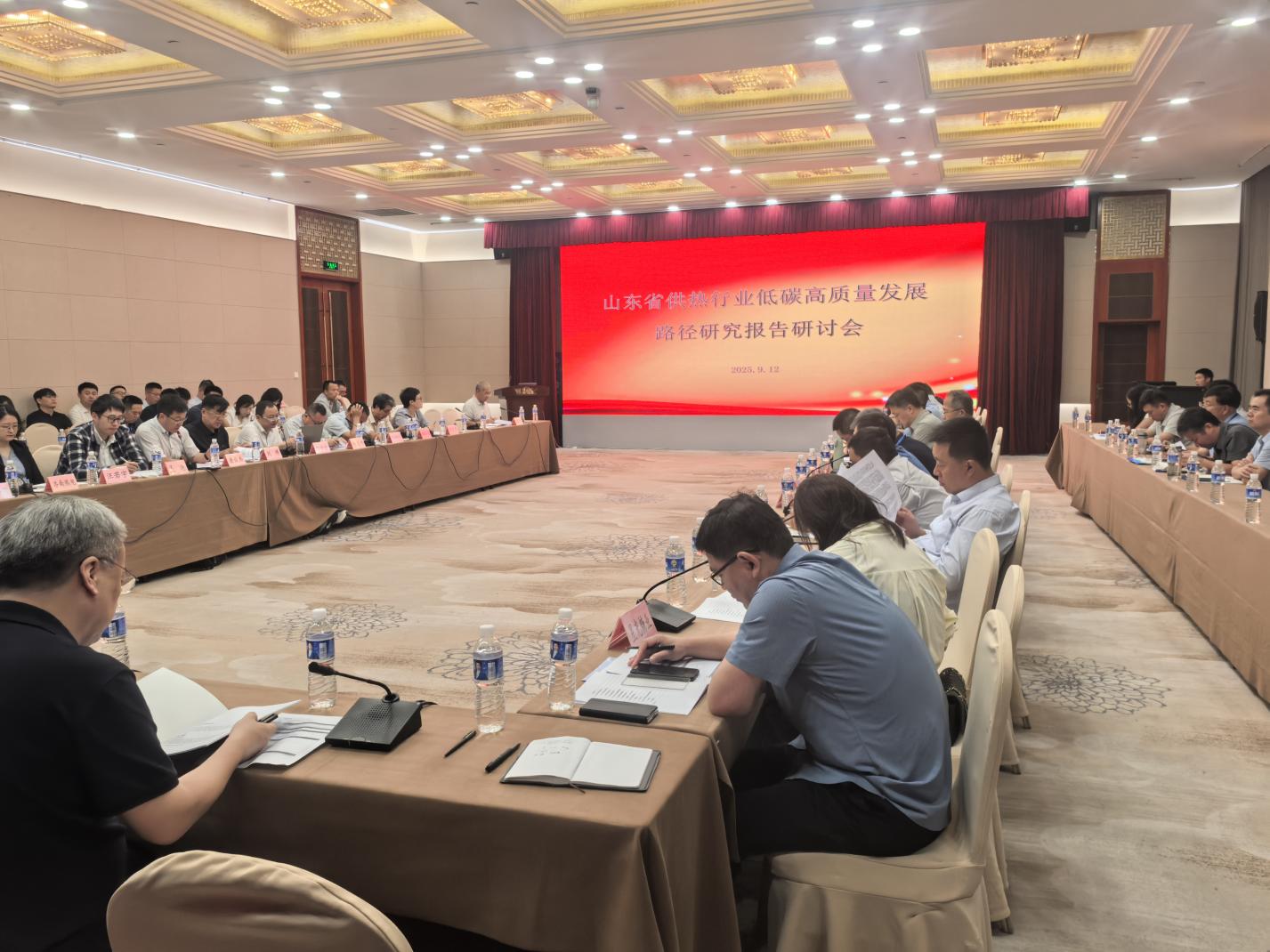
Core Insights - The report emphasizes the need for low-carbon and high-quality development in Shandong's heating industry, addressing current challenges and proposing policy recommendations for sustainable growth [1][4][6] Group 1: Current Industry Status - The report identifies that Shandong's heating industry is heavily reliant on coal, with a high proportion of coal-fired heating systems, which poses environmental and sustainability challenges [6][8] - It highlights the necessity for a transition towards cleaner energy sources, including biomass, geothermal, and nuclear energy, to reduce dependence on fossil fuels [4][6] Group 2: Future Projections - By 2035, the report predicts that residential heating network coverage will reach approximately 2.604 billion square meters, with industrial heating demand estimated at 63,947 tons/hour [3] - The report suggests a phased elimination of coal-fired heating boilers by 2027 and 2035, while also reducing the capacity of smaller coal-fired power units [3][4] Group 3: Policy Recommendations - The report advocates for enhancing the capacity of large heating units and promoting the development of natural gas, nuclear, renewable energy, and waste heat utilization [3][4] - It recommends a balanced approach to meet both energy efficiency and stability requirements under the dual carbon goals, suggesting a combination of flexible and efficient generation methods [3][4] Group 4: Industry Challenges - Key challenges include high costs of clean energy utilization, significant reliance on coal, and the need for improved management systems within the heating sector [6][8] - The report stresses the importance of addressing the heating supply-demand imbalance and ensuring energy security during the transition to low-carbon solutions [8]
惠天热电:关于煤炭仓储及运输关联交易的公告
Zheng Quan Ri Bao· 2025-09-12 12:40
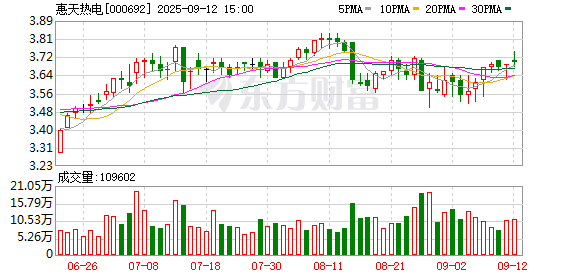
Core Viewpoint - The company Huaitian Thermal Power announced a significant transaction involving coal storage and transportation services to ensure heating supply for the years 2025-2027, with an estimated total transaction amount of approximately 71.3 million yuan [2]. Group 1: Transaction Details - The company plans to entrust Shenyang International Land Port Group Co., Ltd. to provide integrated storage and transportation services for a total estimated coal usage of 1.15 million tons over two years [2]. - The estimated total amount for this transaction is around 71.3 million yuan, including a fixed storage service fee of 25 yuan per ton (totaling approximately 28.75 million yuan) and a fixed transportation service fee of 37 yuan per ton (totaling approximately 42.55 million yuan) [2]. - The settlement will be based on the actual storage and transportation volume incurred [2]. Group 2: Related Transactions - This transaction constitutes a related party transaction, with the transaction amount accounting for 38.85% of the company's most recent audited net assets for the fiscal year 2024 [2]. - The company's board of directors convened a temporary meeting on September 12, 2025, to review and approve the proposal regarding the coal storage and transportation related party transaction [2].

又个采暖季即将来临,供热收费开始啦
Qi Lu Wan Bao· 2025-09-12 11:04
通讯员 赵雨 2025-2026年采暖季即将来临,济南能投集团济南市济阳新城供热有限公司为方便用户交纳采暖费,开通微 信、支付宝、手机银行等线上交费渠道,足不出户即可轻松交纳采暖费。此外,提前交纳采暖费还有好礼 相送! 一、收费时间 未按时交费者视为放弃本采暖季用热,否则按热费额每日加收万分之二的滞纳金后方可予以供热。 四、交费方式: 1、济阳新城供热公司交费方式: 即日起至2025年11月15日 二、优惠活动 2025年10月31日前交纳采暖费但未享受减免的用户,可前往济阳新城热力客户服务中心(济阳区经二路26 号沿街)领取精美礼品一份,数量有限,先到先得!(本次活动仅限于济南市济阳新城供热有限公司辖区打散 用户) 三、收费标准 根据济阳发改发〔2024〕12号文件规定,2025-2026年采暖季具体收费标准为: 1、居民供热价格为套内面积24元/平方米,其中享受城市最低生活保障、持有《特困职工优待证》的居 民供热价格为套内面积18元/平方米。 2、非居民供热价格为建筑面积38.4元/平方米,其中列入国民教育序列的中小学、托幼园所,社会组织或 者个人兴办的敬老院、老年公寓、老年康复医疗中心、老年文化体育活动 ...
惠农“税费通”|支持乡村振兴系列税费优惠政策(6)供热企业采暖费收入免征增值税
蓝色柳林财税室· 2025-09-06 07:15
Core Viewpoint - The article discusses the tax exemption policy for heating service companies in the "Three North" regions of China, specifically regarding the VAT exemption on heating fees collected from individual residents until the end of the 2027 heating season [5][6]. Group 1: Tax Exemption Details - Heating service companies in the "Three North" regions can enjoy VAT exemption on heating fees collected from individual residents [5][6]. - The exemption applies to heating fees collected directly from residents, through other units, or paid by organizations on behalf of residents [4][6]. - The specific regions included in the "Three North" areas are listed, which encompass several provinces and municipalities [6]. Group 2: Policy Implementation - The policy is effective until the end of the 2027 heating season, allowing for continued support for heating service providers [4][5]. - The heating service companies must separately account for the VAT-exempt income according to the relevant tax regulations [6]. - The calculation of the exempt VAT for heating fees collected through operating companies is based on the proportion of fees received from residents [6].