养老服务

Search documents
银发蓝海
Shang Hai Zheng Quan Bao· 2026-01-13 18:34
Core Viewpoint - The Ministry of Civil Affairs and seven other departments have jointly issued measures to cultivate the elderly care service sector and promote the silver economy, focusing on brand development, supply-demand platform construction, and optimizing the development environment [1] Group 1: Policy Measures - The new measures include 14 specific initiatives aimed at further cultivating elderly care service operators and promoting the development of the silver economy [1] Group 2: Market Potential - The silver economy in China has significant growth potential, with the elderly population aged 60 and above expected to reach 310 million by the end of 2024, and projected to exceed 400 million by 2035 [1] - The scale of the silver economy is anticipated to surpass 30 trillion yuan [1] - As the silver economy develops, elderly care services are expected to become more accessible, convenient, and intelligent, better meeting the diverse needs of millions of elderly individuals [1]
八部门发文促银发经济发展 14项举措培育养老服务经营主体 鼓励养老服务机器人产业发展
Shang Hai Zheng Quan Bao· 2026-01-13 18:34
Core Insights - The Ministry of Civil Affairs and seven other departments have jointly issued measures to cultivate the elderly care service sector and promote the silver economy, focusing on brand development and technological innovation [2][3][4] Group 1: Policy Measures - The measures include 14 specific initiatives aimed at enhancing the operational vitality of elderly care service providers and promoting structural reforms in supply [2] - Emphasis is placed on brand building, with support for brand creation, protection, and promotion to foster well-known brands in the elderly care sector [2] Group 2: Market Optimization - The measures aim to optimize the supply of elderly care services and age-friendly products, encouraging community-based home care through chain operations [3] - Support is provided for e-commerce platforms and large supermarkets to enhance the connection between supply and demand in elderly care services [3] Group 3: Technological Empowerment - The initiative promotes the integration of big data, artificial intelligence, and other technologies into elderly health monitoring and personalized services [3][4] - Development of elderly care robots and smart devices is encouraged, with a focus on improving the service experience for the elderly [3][4] Group 4: Industry Development - The Ministry of Industry and Information Technology will focus on the deep integration of new information technologies with elderly care services, addressing the pain points of elderly living [4] - Key areas for development include elderly care robots, age-friendly clothing, and easy-to-swallow food products [4] Group 5: Business Development - The Ministry of Commerce will focus on five areas, including the development of home care services for the elderly and creating platforms for supply-demand matching in elderly care [5] - Efforts will be made to create new consumption scenarios for elderly care and foster an open cooperative environment [5]


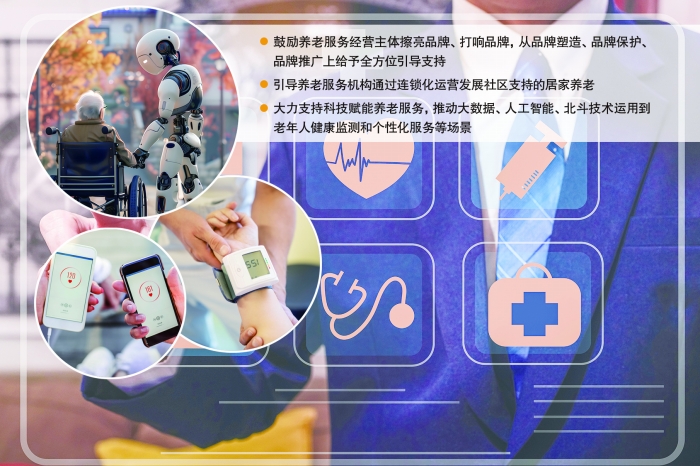
促进银发经济发展 八部门发文培育养老服务经营主体 推动大数据、人工智能、北斗技术运用到老年人健康监测和个性化服务等场景
Zheng Quan Shi Bao· 2026-01-13 18:10
Core Viewpoint - The Ministry of Civil Affairs and eight other departments issued measures to cultivate the elderly care service industry and promote the silver economy, proposing 14 specific initiatives to enhance the elderly care system in China and address the challenges of an aging population [1][2]. Group 1: Policy Measures - The measures focus on brand development, supply-demand platform construction, and optimizing the development environment for elderly care services [1]. - By the end of 2024, the elderly population aged 60 and above in China is expected to exceed 310 million, highlighting the urgency of developing a suitable elderly care system [1]. - The measures aim to optimize the supply of elderly care services and age-friendly products, encouraging community-supported home care through chain operations [1]. Group 2: Consumer Protection and Regulation - The measures emphasize enhancing elderly individuals' risk recognition and self-protection capabilities while addressing issues of elder abuse and misleading marketing practices [2]. - There is a focus on regulating administrative oversight to minimize disruptions to normal operations of elderly care institutions, promoting a "double random, one public" regulatory approach [2]. Group 3: Technological Innovation - Technological innovation and supply optimization are identified as key drivers to address labor shortages in elderly care and improve service efficiency and quality [2]. - The measures promote the application of big data, artificial intelligence, and Beidou technology in health monitoring and personalized services for the elderly [2]. - Support for the development of elderly care robots and smart devices is encouraged to enhance the quality of elderly care services [3].
八部门发文促进银发经济发展 这些赛道迎来风口
Mei Ri Jing Ji Xin Wen· 2026-01-13 16:17
Core Viewpoint - The Ministry of Civil Affairs and eight other departments have jointly issued measures to stimulate the vitality of various elderly care service providers, create a favorable investment environment, and promote the development of the silver economy to better meet the diverse needs of the elderly [1][3] Group 1: Policy Measures - The measures aim to optimize the supply of elderly care services and age-friendly products, encouraging community-based operations and integration of resources to enhance service delivery [4] - The initiative supports the development of home care services for the elderly, including professional medical accompaniment and mobile bathing services [4] - There is a focus on promoting smart rehabilitation aids and age-appropriate food and clothing products, enhancing the living environment for the elderly [4] Group 2: Market Dynamics - By the end of 2025, there will be 41,700 elderly care institutions in China, with 722,000 employees, reflecting a 12.2% year-on-year increase, and 52.2% of these institutions will be privately owned [5] - Social forces are becoming the main contributors to the diversified supply of elderly care services, indicating a shift in the service landscape [5] Group 3: Technological Support - The measures encourage technological advancements in elderly care, integrating big data, AI, and other technologies for health monitoring and personalized services [6] - There is a push for the development of elderly care robots and smart home technologies to meet the daily care and emotional support needs of the elderly [6] - The market is expected to see new opportunities driven by the integration of technology in elderly care, with a focus on smart home products and AI solutions [7]
政策春风吹暖银发经济:养老变享老 机器人、智能设备站上风口
2 1 Shi Ji Jing Ji Bao Dao· 2026-01-13 15:48
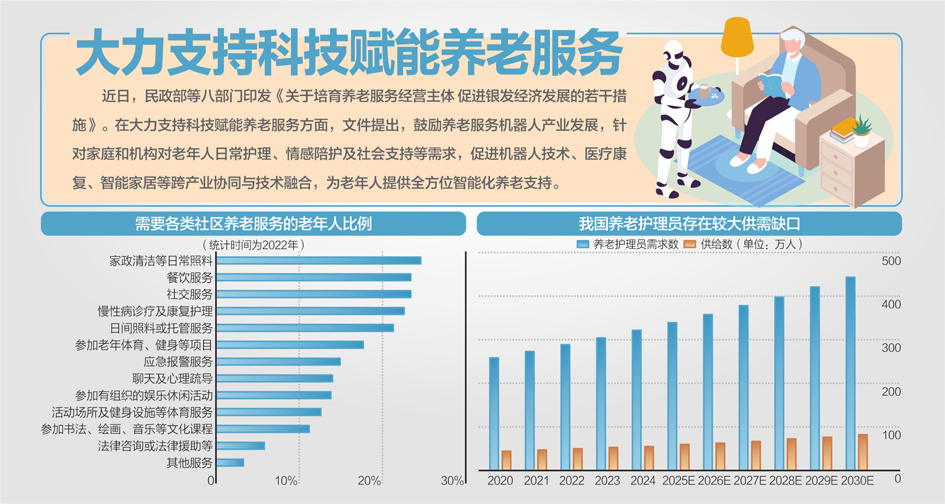
Core Insights - China has the largest elderly population globally, with over 310 million people aged 60 and above, accounting for approximately 22% of the total population, and this figure is expected to rise further by the end of 2024 [1] - The Ministry of Civil Affairs introduced measures to foster the elderly care service industry, focusing on brand development, market supply-demand alignment, and technological empowerment [1][2] - The measures include 14 specific initiatives, emphasizing the development of elderly care robots and smart devices to meet the daily care and emotional support needs of the elderly [2][3] Group 1: Policy Measures and Industry Support - The measures aim to create a conducive environment for the elderly care service industry, enhancing the competitiveness of service brands and leading enterprises [1][6] - The government is encouraging the development of elderly care robots, integrating technology from various sectors to provide comprehensive support for elderly care [2][3] - The Ministry of Industry and Information Technology plans to focus on addressing the pain points of elderly living and accelerate the development of smart devices and community services [6] Group 2: Market Demand and Growth Potential - The elderly care robot and smart device sectors are experiencing strong growth momentum due to supportive policies and increasing market demand [2][3] - The measures highlight the need for specialized services such as medical accompaniment and mobile bathing services, indicating a shift towards more personalized elderly care solutions [7] - The elderly population, particularly those aged 60 and above, is increasingly capable of self-care, suggesting that the explosive growth opportunities lie in niche elderly consumer sectors rather than traditional home care [9] Group 3: Technological Integration and Innovation - The measures promote the integration of advanced technologies such as embodied intelligence, new materials, and rehabilitation aids to enhance elderly care services [2][4] - The pilot project list for intelligent elderly care robots includes various categories addressing emotional support, rehabilitation, and daily living assistance, indicating a comprehensive approach to technology application in elderly care [3][4] - Companies are focusing on optimizing general capabilities of robots for elderly care, aiming for rapid deployment and continuous improvement in service delivery [5] Group 4: Economic Implications and Consumer Behavior - The silver economy is expected to grow significantly as the post-60s generation, benefiting from economic reforms, enters retirement with disposable income and leisure time [8] - Data from Meituan indicates a substantial increase in demand for elderly care services, with transaction user numbers and transaction scale expected to grow significantly by the end of 2025 [7] - The establishment of efficient supply-demand platforms is crucial for connecting elderly consumers with quality products and services, thereby unlocking the potential of the silver economy [9]
促进银发经济发展 养老服务扩容提质
Bei Jing Shang Bao· 2026-01-13 14:05
Core Viewpoint - The Ministry of Civil Affairs introduced measures to cultivate the elderly care service industry and promote the silver economy through systematic and targeted policy support, aiming to optimize the development environment and stimulate operational vitality [2] Group 1: Brand Development - The measures emphasize strengthening brand creation for elderly care services, encouraging the establishment of distinctive signage and trademarks to enhance brand recognition [3] - Provincial civil affairs departments are encouraged to standardize the names and signage of various elderly care service providers to improve brand identification [3] - The initiative aims to promote high-quality elderly care service brands and leading enterprises through various activities, including the "Respect for the Elderly Civilization" campaign [3] Group 2: Market Supply and Demand - The measures propose optimizing the supply of elderly care services and age-friendly products, promoting community-based service integration through chain operations [4] - The National Intellectual Property Administration will collaborate with the Ministry of Civil Affairs to implement the measures and enhance brand strategy in the elderly care sector [4] - The goal is to improve accessibility, convenience, and intelligence in elderly care services to meet diverse needs [4] Group 3: Technological Empowerment - Technological innovation is identified as a key driver for addressing labor shortages and enhancing service quality in elderly care [5] - The Ministry of Industry and Information Technology is focused on promoting high-quality development in the elderly products industry and the application of smart health services [5] - The measures encourage the development of elderly care technology, including the use of big data, AI, and robotics to provide comprehensive support for the elderly [5][6] Group 4: Development Environment - The measures aim to create a fair competitive environment for elderly care institutions, optimizing support policies and preventing restrictive clauses in government procurement [7] - There is a focus on protecting the rights of service providers by reducing administrative inspections and addressing issues of arbitrary charges and inspections [7] - The initiative includes promoting public awareness of elderly care services through various media channels [7] Group 5: Operational Support - The measures provide support in terms of land, operational stability, and funding for elderly care facilities [8] - There is an emphasis on ensuring land availability for elderly care projects and stabilizing operational timelines for market entities [8] - Financial support policies are to be optimized to alleviate the financial pressure on service providers [8] Group 6: Industry Outlook - The policy is expected to drive upgrades in existing elderly care services and foster new segments such as brand operations, community services, and elderly care technology [8] - This comprehensive approach aims to attract more enterprises, capital, and talent into the silver economy, creating a new ecosystem of "service-technology-industry" collaboration [8]

1月13日重要资讯一览
Zheng Quan Shi Bao Wang· 2026-01-13 13:59
Group 1 - New stock offering: Guoliang New Materials has an offering code of 920076, with an issue price of 10.76 yuan per share and a subscription limit of 812,000 shares [1] - The Ministry of Commerce announced the continuation of anti-subsidy measures on imported solar-grade polysilicon from the United States, effective January 14, 2026, for a period of five years [2] - The Ministry of Industry and Information Technology issued an action plan for the high-quality development of industrial internet platforms, aiming for over 450 influential platforms by 2028 and a connection of over 120 million industrial devices [3] Group 2 - The Ministry of Civil Affairs and eight other departments released measures to promote the silver economy, focusing on optimizing elderly care services and encouraging community-based operations [4] - Guangzhou's draft policy for integrated circuit industry development aims to support major projects through financial institutions and encourage venture capital participation [5] - Sichuan Province's action plan for a green manufacturing system aims to establish a comprehensive green manufacturing framework by 2030, with significant reductions in energy consumption and carbon emissions [6] Group 3 - Kweichow Moutai's board approved a market-oriented operation plan for 2026, establishing a dynamic adjustment mechanism for retail prices [7] - TCL Technology expects a net profit increase of 169% to 191% year-on-year for 2025 [9] - Baiwei Storage anticipates a net profit increase of 427.19% to 520.22% year-on-year for 2025 [10] - Morning Light Bio forecasts a net profit increase of 272.14% to 330.62% year-on-year for 2025 [11]


苏州参加民政部《关于培育养老服务经营主体 促进银发经济发展的若干措施》专题新闻发布会
Yang Zi Wan Bao Wang· 2026-01-13 13:44
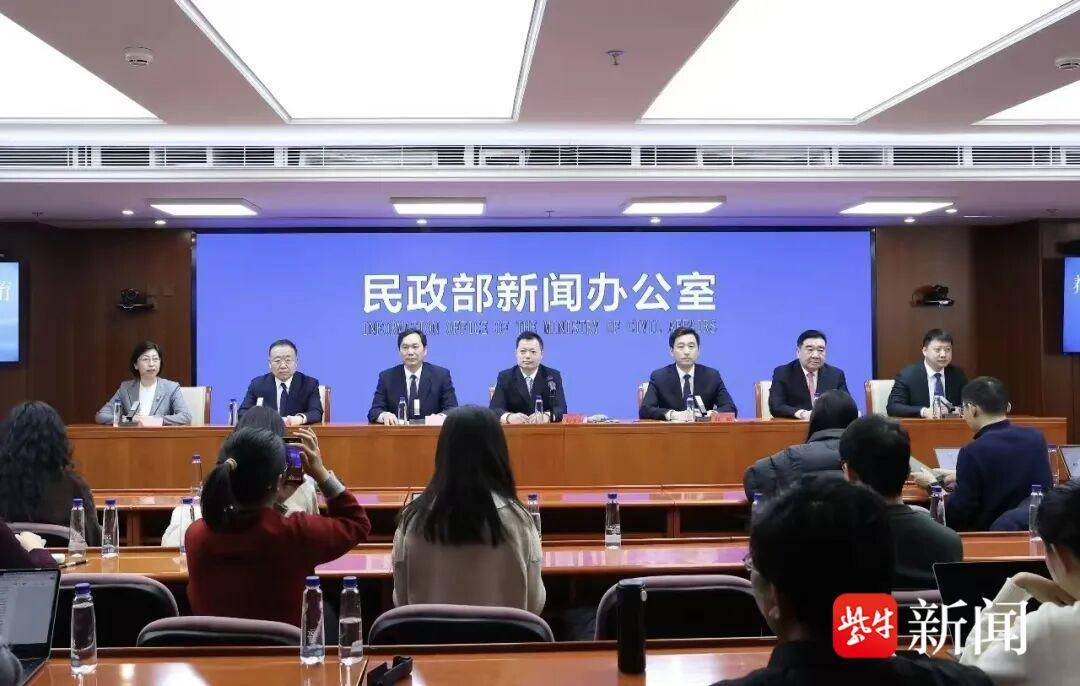
Core Viewpoint - The Ministry of Civil Affairs has introduced measures to cultivate elderly care service operators and promote the silver economy, aiming for high-quality development in this sector by optimizing the development environment and stimulating operational vitality [3]. Group 1: Policy Measures - The measures consist of 14 specific initiatives across five areas: promoting brand development, facilitating market supply-demand matching, supporting technology in elderly care, optimizing the development environment, and increasing resource support [3]. - The implementation of these measures is set to begin on December 29, 2025, following extensive research and consultation with various stakeholders [3]. Group 2: Technological Integration in Elderly Care - Suzhou has been actively integrating technology with elderly care services, focusing on four key areas: platform, scenario, product, and talent [4]. - A comprehensive smart elderly care system has been established in Suzhou, which integrates public data to enhance service efficiency, achieving 472,000 home care service orders in 2025 with 100% coverage for vulnerable elderly individuals [5]. Group 3: Service Scenarios - Suzhou has developed three main scenarios for smart elderly care: demonstration centers, smart institutions, and community-based services, allowing for practical application of technology in real-life settings [6]. - The city has created a "Silver Technology and Humanistic Care Demonstration Center" to facilitate product testing and data collection, with nearly 20 smart care and rehabilitation technology products currently in use [6]. Group 4: Product Development - Suzhou promotes a closed-loop model of "Suzhou manufacturing—Suzhou branding—Suzhou standards" to ensure that quality elderly care technology products reach the elderly population [7]. - The city has integrated resources from nearly 20,000 key enterprises and established nine silver technology laboratories, while also launching various consumer promotion activities to enhance product accessibility [7]. Group 5: Talent Development - The city emphasizes the cultivation of composite talents who understand both elderly care and technology, establishing a collaborative mechanism among 27 departments and creating a 1 billion yuan elderly care industry fund [8]. - Suzhou has initiated a talent recruitment platform specifically for elderly care, facilitating a comprehensive human resource management system for care institutions [8]. Group 6: Future Directions - Suzhou aims to deepen the integration of elderly care services with digital and intelligent technologies, providing robust technological support for the elderly to enjoy a happy and secure later life [9][10].
中国首个跨境居家社区养老服务标准体系正式发布
Zhong Guo Xin Wen Wang· 2026-01-13 13:07
来源:中国新闻网 编辑:张澍楠 据了解,"广东横琴粤澳深度合作区琴澳融合居家社区养老服务标准化试点"于2024年1月获国家标准化 管理委员会批准立项,是合作区探索琴澳规则衔接、深化民生领域融合的重要抓手。 试点建设期间,标准化赋能成效显著。合作区4处居家养老服务中心完成服务升级,2025年累计服务超 22.6万人次,其中澳门长者服务超1.7万人次,让澳门长者在合作区真切享受到"服务无界、关爱无间"的 暖心体验。 合作区民生事务局局长冯方丹表示,合作区联合澳门构建起一套融合琴澳两地经验的跨境居家社区养老 服务标准体系,实现两地服务"同标准、同流程",让琴澳长者享受高品质养老服务。下一步合作区将推 动体系全面落地、持续优化,推动琴澳养老服务融合走深走实,打造粤港澳大湾区跨境养老服务的标杆 样本。 澳门社会工作局局长韩卫表示,澳门特区政府高度重视养老服务琴澳融合工作,充分肯定标准在横 琴"澳门新街坊"长者服务中心的实施成效,澳门特区政府将持续深化标准的应用实施,与合作区共建琴 澳融合的居家社区养老服务。(完) 中国首个跨境居家社区养老服务标准体系正式发布 中新社珠海1月13日电 (记者 邓媛雯)横琴粤澳深度合作区( ...
政策春风吹暖银发经济:养老变享老,机器人、智能设备站上风口
2 1 Shi Ji Jing Ji Bao Dao· 2026-01-13 12:47
Group 1 - China has the largest elderly population globally, with over 310 million people aged 60 and above by the end of 2024, accounting for approximately 22% of the total population [1] - The Ministry of Civil Affairs introduced measures to foster the elderly care service industry, focusing on brand development, market supply-demand matching, and technological empowerment [1][2] - The measures include 14 specific initiatives, emphasizing the development of elderly care robots and smart devices to meet the needs of elderly individuals in daily care and emotional support [3][7] Group 2 - The government aims to address the supply-demand mismatch in the silver economy by optimizing elderly care services and promoting specialized institutions for medical accompaniment and bathing services [8][9] - The elderly population is increasingly recognized as a consumer group with significant spending power, particularly in sectors like tourism and specialized elderly services [9] - Internet platforms and local governments are actively working to enhance supply-demand matching, exemplified by a strategic partnership between Beijing's Civil Affairs Bureau and Meituan to explore online elderly care services [9]