北斗技术

Search documents
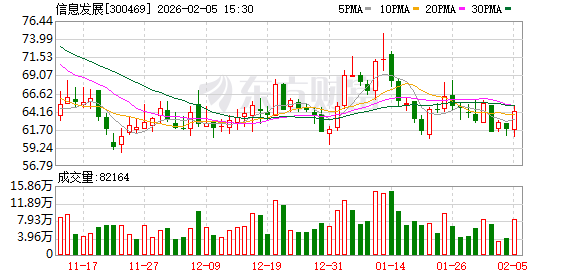
信息发展:公司涉及北斗技术在交通领域的规模化应用,包括不限于运用有关技术提高物流行业安全等
Mei Ri Jing Ji Xin Wen· 2026-02-05 13:36
Group 1 - The company, Information Development (300469.SZ), is involved in the large-scale application of Beidou technology in the transportation sector [2] - The applications include enhancing safety in the logistics industry and vehicle-road collaboration [2]


财政部等部委明确:杜绝“玻璃门”排斥这类主体
Xin Lang Cai Jing· 2026-02-02 14:56
Core Viewpoint - The joint measures issued by multiple government departments aim to cultivate the elderly care service industry and promote the silver economy, ensuring fair competition and market vitality in the sector [1][3]. Group 1: Brand Development - Support for the establishment of distinctive branding for chain elderly care service providers to enhance brand recognition [4]. - Encouragement for elderly care service providers to implement trademark strategies and protect their brands [4]. - Promotion of quality elderly care brands through various initiatives to create leading enterprises in the sector [4]. Group 2: Market Supply and Demand - Optimization of elderly care services and products to meet community needs, including home care services and specialized medical assistance [6]. - Development of platforms for supply and demand matching in the elderly care market, enhancing resource utilization and facilitating connections among stakeholders [6]. Group 3: Technological Empowerment - Encouragement for technological advancements in elderly care, including the use of AI, big data, and robotics to enhance service delivery [7]. - Support for the application and testing of smart elderly care products within service institutions to improve user experience [7]. Group 4: Development Environment Optimization - Creation of a fair competitive environment by prohibiting restrictive clauses in government procurement processes for elderly care services [8]. - Establishment of standards and certification systems for elderly care products and services to ensure quality and safety [8]. Group 5: Support Measures - Improvement of government services for elderly care providers, including streamlined licensing processes and access to information on policies and resources [11]. - Provision of land and operational support for elderly care facilities, prioritizing areas based on local aging population needs [11].
大力支持科技赋能养老服务
Ke Ji Ri Bao· 2026-01-15 13:13
Core Insights - The Ministry of Civil Affairs and seven other departments have jointly issued measures to promote the development of the silver economy and support the cultivation of elderly care service operators [1] Group 1: Key Measures - The measures propose 14 specific initiatives across five areas, emphasizing the integration of technology in elderly care services, including the use of big data, artificial intelligence, and Beidou technology for health monitoring and personalized services [1] - There is a strong encouragement for the development of elderly care robots and support for companies developing smart devices to pilot their applications in elderly care institutions [1] - The focus is on transforming the elderly care service system from a "traditional care model" to a "smart quality enhancement model," driven by technological innovation and supply optimization [1] Group 2: Industry Development Focus - The Ministry of Industry and Information Technology aims to enhance the quality of elderly products and promote the widespread application of smart health and elderly care services, focusing on increasing variety, improving quality, strengthening technology, and enforcing standards [2] - Key areas for technological support include the development of humanoid robots, health monitoring devices, and rehabilitation aids for large-scale application in homes, communities, and elderly care institutions [2] - The measures also include building a supply-demand matching platform to address barriers in the silver consumption market, enhancing the shopping experience for the elderly [2]
人民财评:以品牌化、标准化推动养老服务跃升
Ren Min Wang· 2026-01-14 08:29
Core Viewpoint - The Ministry of Civil Affairs and seven other departments have jointly issued measures to promote the branding of elderly care services, aiming to elevate the sector from fragmentation and low standards to branding and standardization, thereby enhancing the silver economy [1][2]. Group 1: Market Potential and Demographics - The silver economy in China has significant growth potential, with the elderly population aged 60 and above expected to reach 310 million by the end of 2024 and over 400 million by 2035, leading to a market scale projected to exceed 30 trillion yuan [1]. - The branding of elderly care services is essential for the development of the silver economy, ensuring that the elderly can enjoy better care and services [1]. Group 2: Branding and Standardization - The current elderly care market suffers from fragmentation, with a lack of standardized services and low consumer trust, which the new measures aim to address by supporting chain-operated care services and encouraging trademark registration [1]. - The measures propose the establishment of distinctive signage for care service providers and the inclusion of brands in the "China Consumer Famous Products" list, transforming service providers from "general stores" to "flagship stores" [1]. Group 3: Technological Integration - The future of elderly care will require technological empowerment, with a projected increase in the care-dependent population to over 40 million in the next five years, creating a demand for over 5 million additional caregivers [2]. - The measures advocate for the integration of big data, cloud computing, artificial intelligence, and Beidou technology in health monitoring, safety alerts, and personalized services for the elderly, enhancing service quality [2]. Group 4: Sustainable Development and Market Dynamics - The branding initiative is expected to foster a fair competitive environment, driving market development and creating a sustainable cycle of improved services, increased consumption, and a more vibrant industry [2]. - The policy aims to transition elderly care services from quantity expansion to quality improvement, laying the groundwork for high-quality, large-scale, and professional development in the silver economy [2].
民政部等八部门联合印发《若干措施》 大力支持科技赋能养老服务
Ke Ji Ri Bao· 2026-01-14 07:24
Core Insights - The Ministry of Civil Affairs and seven other departments have jointly issued measures to cultivate the elderly care service sector and promote the silver economy, highlighting the importance of technology in enhancing service efficiency and quality [1][2] Group 1: Key Measures - The measures propose 14 specific initiatives across five areas, emphasizing the integration of technology in elderly care services, including the use of big data, artificial intelligence, and Beidou technology for health monitoring and personalized services [1] - There is a strong encouragement for the development of elderly care robots and smart devices, with pilot testing in care institutions to improve service experiences for the elderly [1] - The focus is on transforming the elderly care system from a traditional care model to a smart quality-enhancing model, driven by technological innovation and supply optimization [1] Group 2: Industry Development - The Ministry of Industry and Information Technology aims to enhance the elderly goods industry by focusing on increasing product variety, improving quality, strengthening technology, and enforcing standards [1] - Key areas for technological empowerment include the development of humanoid robots, health monitoring devices, and rehabilitation aids for large-scale application in homes, communities, and care institutions [2] - The measures also include the establishment of a supply-demand matching platform to address barriers in the silver consumption market, enhancing the purchasing experience for the elderly [2]
光伏出口退税将取消,谷歌为苹果AI提供支持 | 财经日日评
吴晓波频道· 2026-01-14 00:29
Group 1: Photovoltaic Industry - The export tax rebate for photovoltaic products will be fully canceled starting April 1, 2026, increasing export costs for companies [2] - The export tax rebate for photovoltaic silicon wafers, batteries, and modules was previously reduced from 13% to 9% in December 2024, indicating a trend of declining export tax rates [2] - The Chinese photovoltaic industry has seen a decrease in export prices since 2024, leading to a "volume increase, price decrease" situation, with some companies passing on rebate amounts to foreign buyers, resulting in profit loss [2][3] - The cancellation of export tax rebates aims to promote rational competition in the photovoltaic industry and curb excessive price declines [3] Group 2: Elderly Care Robotics - Eight departments, including the Ministry of Civil Affairs, have issued measures to encourage the development of the elderly care robotics industry, promoting technological integration across various sectors [4] - The initiative aims to provide comprehensive intelligent support for the elderly, leveraging technologies such as embodied intelligence and new materials [4][5] - The market for elderly care technology products and services is expected to expand rapidly, although current technology maturity remains insufficient [5] Group 3: Real Estate Market in Tianjin - Tianjin will tighten control over new housing prices, limiting price changes to within 10% of the registered price for new sales permits [6] - The city has previously implemented price control measures to stabilize housing prices, with over 20 cities having introduced similar "price drop limits" [6][7] - The new management approach aims to control both price increases and decreases, although enforcing price decreases may face challenges [6] Group 4: AI and Technology Collaborations - Google and Apple have entered a strategic partnership, with Google's Gemini model being used to support Apple's AI developments, including Siri [8] - Apple is expected to pay approximately $1 billion annually to Google for technology licensing, indicating a significant investment in AI capabilities [8] - Nvidia and Eli Lilly have announced a $1 billion collaboration to establish a research lab focused on AI applications in the pharmaceutical industry, highlighting the growing intersection of AI and healthcare [10][11] Group 5: ByteDance's Stock Options - ByteDance's stock option price has increased from $44 in 2019 to $226.07 in January 2024, representing a rise of over 4 times [14] - The company is reportedly raising its valuation to between $350 billion and $370 billion as it continues to enhance employee compensation and stock option incentives [14][15] - ByteDance's strong financial performance and aggressive AI application strategy position it as a leading player in the tech industry, despite facing increasing policy risks in overseas markets [15]




促进银发经济发展 八部门发文培育养老服务经营主体 推动大数据、人工智能、北斗技术运用到老年人健康监测和个性化服务等场景
Zheng Quan Shi Bao· 2026-01-13 18:10
Core Viewpoint - The Ministry of Civil Affairs and eight other departments issued measures to cultivate the elderly care service industry and promote the silver economy, proposing 14 specific initiatives to enhance the elderly care system in China and address the challenges of an aging population [1][2]. Group 1: Policy Measures - The measures focus on brand development, supply-demand platform construction, and optimizing the development environment for elderly care services [1]. - By the end of 2024, the elderly population aged 60 and above in China is expected to exceed 310 million, highlighting the urgency of developing a suitable elderly care system [1]. - The measures aim to optimize the supply of elderly care services and age-friendly products, encouraging community-supported home care through chain operations [1]. Group 2: Consumer Protection and Regulation - The measures emphasize enhancing elderly individuals' risk recognition and self-protection capabilities while addressing issues of elder abuse and misleading marketing practices [2]. - There is a focus on regulating administrative oversight to minimize disruptions to normal operations of elderly care institutions, promoting a "double random, one public" regulatory approach [2]. Group 3: Technological Innovation - Technological innovation and supply optimization are identified as key drivers to address labor shortages in elderly care and improve service efficiency and quality [2]. - The measures promote the application of big data, artificial intelligence, and Beidou technology in health monitoring and personalized services for the elderly [2]. - Support for the development of elderly care robots and smart devices is encouraged to enhance the quality of elderly care services [3].
民政部等八部门:大力支持科技赋能养老服务
Xin Lang Cai Jing· 2026-01-13 01:56
Core Viewpoint - The Ministry of Civil Affairs and seven other departments have introduced measures to foster the elderly care service sector and promote the silver economy through technological advancements and product development [1] Group 1: Encouragement of Technological Development - The measures encourage breakthroughs in elderly care technology and product research and development [1] - There is a focus on the digital transformation of elderly care services, utilizing big data, cloud computing, artificial intelligence, and Beidou technology for health monitoring and personalized services [1] Group 2: Support for Robotics and Cross-Industry Collaboration - The initiative promotes the development of elderly care robots to meet the daily care, emotional support, and social needs of the elderly [1] - It aims to facilitate collaboration and technological integration across industries, including robotics, medical rehabilitation, and smart home technologies [1] Group 3: Product Development and Application - The measures advocate for the acceleration of research and development in embodied intelligence technology, new materials, genetic technology, and rehabilitation aids [1] - There is an emphasis on exploring advanced technologies such as brain-machine interfaces, exoskeleton robots, and muscle exosuits to support elderly individuals with declining physical functions [1] Group 4: Enhancing User Experience - Support is provided for the integration of smart elderly care devices and rehabilitation robots into care institutions, enhancing user experience through shared services, equipment leasing, and pilot testing [1] - The initiative encourages collaboration between various elderly care institutions and smart product developers to create demonstration and experience areas for elderly-friendly technology [1]
民政部:鼓励养老服务机器人产业发展,支持智能设备开发企业嵌入养老机构试点试用
Xin Lang Cai Jing· 2026-01-13 01:56
Core Viewpoint - The Ministry of Civil Affairs introduced measures to foster the development of the elderly care service industry, emphasizing the integration of technology to enhance service delivery and improve the experience for senior citizens [1] Group 1: Policy Initiatives - The new measures aim to significantly support the application of technology in elderly care services [1] - There is a focus on utilizing big data, artificial intelligence, and Beidou technology for health monitoring and personalized services for the elderly [1] - The initiative encourages the development of the elderly care robotics industry and supports the trial use of smart devices in pilot elderly care institutions [1] Group 2: Industry Implications - The measures provide a clear direction for the intelligent development of elderly care services [1] - The integration of technology is expected to enhance the service experience for elderly individuals [1]

“中国星”指引“中国车” 东风全球首款独立北斗量产乘用车交付
Chang Jiang Ri Bao· 2025-12-21 00:53
Core Insights - Dongfeng has achieved a significant breakthrough in the "Beidou + automotive" application field, marking a transition from "functional integration" to "independent safety" in China's smart automotive industry [2] Group 1: Product Launch and Delivery - The Dongfeng Fengshen SKY EV01, the world's first mass-produced passenger vehicle equipped with an independent Beidou intelligent communication and positioning terminal, was officially launched and the first batch of 500 vehicles was delivered [1][4] - Dongfeng's independent Beidou models have surpassed sales of 100,000 units, with a cumulative total of 2.7 million vehicles equipped with the Beidou system, including 131,000 units exported [2] Group 2: Technological Advancements - Dongfeng has achieved full-stack autonomy in core Beidou application technologies, enhancing the localization rate of independent Beidou intelligent terminals to 90%, thus reducing reliance on foreign positioning systems [2] - The SKY EV01 has undergone successful real-vehicle verification of satellite navigation safety capabilities, demonstrating excellent resilience against common signal interference and attacks, ensuring stable operation of smart driving functions [3] Group 3: Future Directions - Dongfeng plans to continue deepening the iteration of Beidou technology and expanding application scenarios, collaborating with industry partners to promote the large-scale and in-depth application of Beidou technology in the automotive sector [3]