
Breweries

Search documents
为何青岛啤酒千元产品火爆,茅台却越来越不好卖?
Sou Hu Cai Jing· 2025-07-08 00:00
Core Insights - The Chinese beverage market is witnessing a contrasting trend where premium beer sales are surging while traditional liquor, particularly baijiu, is facing significant sales declines [2][8][12] Beer Industry Trends - The Chinese beer market is undergoing a high-end transformation, with brands like Tsingtao and China Resources Snow Beer launching premium products priced over 1,000 yuan, such as Tsingtao's "Legend of a Century" priced at 1,399 yuan per bottle [2][3] - In Q1 2023, Tsingtao's three premium products sold nearly 200,000 bottles, indicating strong demand despite high prices [3] - The shift from price wars to value wars is evident, with companies increasing product prices by 5%-13% since 2018 and focusing on premium product development [3][4] - The rise of high-end beer is supported by a growing middle-income group willing to pay for quality, with premium products becoming cultural symbols and social currencies [4][6] - The high-end beer segment's sales share increased from 29% in 2015 to 36% in 2019, with projections to reach 41% by 2025, indicating a structural upgrade in the market [7] Baijiu Industry Challenges - The baijiu industry is experiencing unprecedented sales challenges, with some regions seeing year-on-year declines of 40%-50% in 2023 [8][9] - National baijiu production fell by 7.2% in Q1 2023, with over half of the surveyed companies reporting decreased profits and revenues [8][9] - The implementation of strict regulations against high-end alcohol consumption in government settings has exacerbated the sales decline, particularly affecting brands reliant on government purchases [9][11] - Younger consumers are increasingly turning away from traditional high-proof baijiu, with a 22% decline in consumption frequency among the 25-35 age group [11][12] - The baijiu market is facing high inventory pressures, with total inventory reaching 167.8 billion yuan by the end of 2024, and some brands experiencing significant price drops [11][12] Market Dynamics and Future Outlook - The beverage market is undergoing a significant transformation characterized by the blurring of category boundaries, with beer and baijiu increasingly competing for the same consumer base [15][16] - The fragmentation of consumption scenarios is leading to a demand for more flexible product forms and packaging, as consumers seek diverse drinking experiences [15][16] - Health consciousness and personalization are becoming key drivers in product development, with low-alcohol and low-calorie options gaining popularity [16] - The market is expected to polarize further, with a clear divide between ultra-premium products and high-value mass-market offerings, necessitating companies to define their market positioning [16][17]





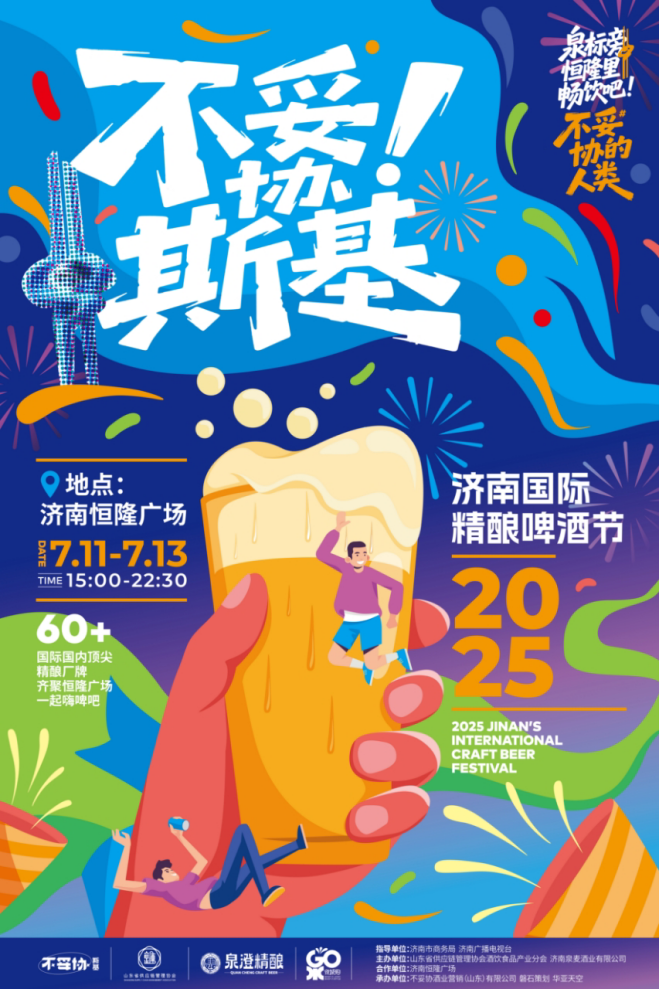
汇聚世界顶级精酿,2025济南精酿啤酒节下周将在恒隆广场启幕
Qi Lu Wan Bao· 2025-07-07 03:32
Core Viewpoint - The "Uncompromising Ski·2025 Jinan Craft Beer Festival" will take place from July 11 to 13 in Jinan, featuring nearly 50 domestic and international craft beer brands and over 400 craft beer varieties, aiming to enhance Jinan's nightlife and economy [1][3]. Group 1: Event Overview - The festival is organized by the Jinan Municipal Bureau of Commerce and various local companies, and it will be held at the central shopping area of Henglong Plaza in Jinan [1][3]. - The event is free of charge, allowing attendees to enjoy craft beer without any ticket or voucher sales, promoting an open and social drinking experience [6]. Group 2: Participating Brands and Cultural Significance - Nearly 50 top craft beer brands, including local favorites and international names, will participate, showcasing a diverse range of craft beers [5]. - The festival aims to integrate Jinan's unique spring water culture into the craft beer experience, creating a cultural and culinary journey for attendees [3][5]. Group 3: Entertainment and Experience - A large music stage will be set up at the festival, featuring professional bands to enhance the atmosphere and provide a complete sensory experience [6]. - The event will also include interactions with nearly 100 renowned bar owners, emphasizing the cultural aspect of craft beer beyond just the beverages themselves [5].
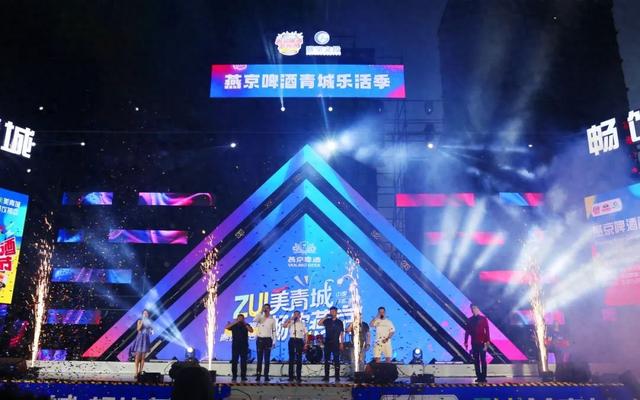
今日顶流,赛罕区燕京啤酒音乐节璀璨启幕
Nei Meng Gu Ri Bao· 2025-07-06 04:05
Core Points - The "ZUI美青城,畅饮燕京——燕京啤酒青城乐活季" beer music festival was launched on July 5, 2025, in Saihan District, aiming to boost the local economy and attract visitors [1][11] - The festival will last for 30 days, featuring a variety of activities including music performances, food stalls, and interactive games [11] Group 1: Event Highlights - The opening ceremony was marked by a vibrant atmosphere with a large turnout of citizens and tourists, celebrating the start of the summer festival [1] - Performances by various artists, including the band Zhongzuo and singer Guo Jing, captivated the audience, showcasing a mix of musical genres from folk to rock [4][8] - A spectacular drone show created visual displays in the night sky, enhancing the festive experience [4] Group 2: Festival Features - The festival integrates food, music, culture, and leisure, aiming to create a high-quality urban carnival experience [8] - Yanjing Beer is prominently featured, offering a range of classic and innovative beer options to cater to diverse tastes [8] - Traditional Mongolian cuisine and local delicacies are available, providing a one-stop "food paradise" for attendees [8] Group 3: Safety and Logistics - The Saihan District government has implemented safety measures, including the presence of police, fire, and medical services to ensure a secure environment [8] - Facilities such as restrooms and parking at the government building are made available for free to the public [8]

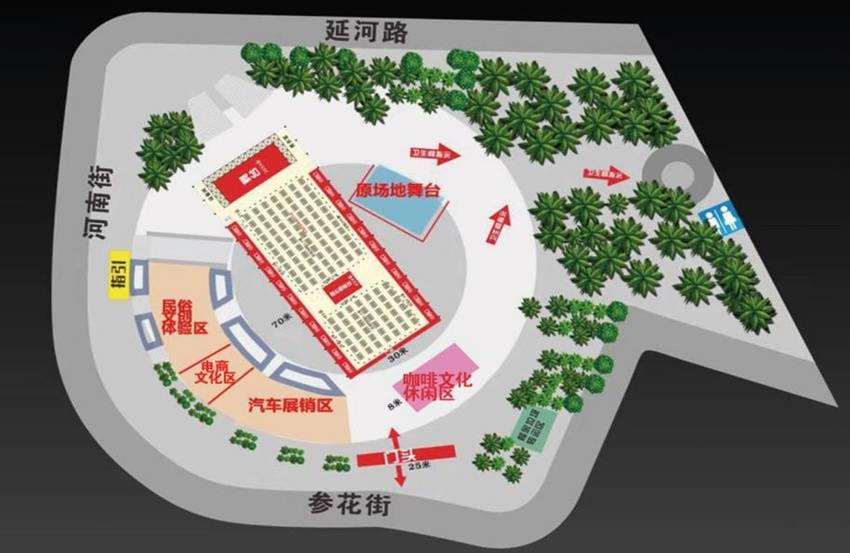
第十五届延吉百威啤酒美食节暨第二届电商文化节将于7月11日开幕
Sou Hu Cai Jing· 2025-07-04 07:05
Core Points - The 15th Yanji Budweiser Beer Food Festival and the 2nd E-commerce Cultural Festival will commence on July 11 at 18:00 [1] - The event will run from July 11 to July 27, daily from 18:00 to 21:30 [7] Event Layout - The festival features five distinct areas: Beer Food Festival Area, Auto Exhibition Area, Folk Cultural Experience Area, Coffee Culture Leisure Area, and E-commerce Cultural Festival Area [7] - The Beer Food Festival Area will include a 2,100 square meter beer pavilion with a stage and dining area, accommodating 1,000 people [7] - The Auto Exhibition Area will showcase products from six companies, including Audi and Volkswagen, in a 340 square meter space [7] - The Folk Cultural Experience Area will display local cultural products and heritage, covering approximately 400 square meters [7] - The Coffee Culture Leisure Area will provide a public space of 1,000 square meters for outdoor relaxation and coffee culture experiences [7] - The E-commerce Cultural Festival Area will include various interactive spaces for AI e-commerce and live streaming [7] Participating Enterprises - A total of 26 enterprises have been selected to participate in the food and e-commerce areas, offering a variety of food options including barbecue, seafood, and local specialties [8] - Daily cultural performances, themed days, and food competitions will be organized throughout the festival [8]

年轻化迫在眉睫!古越龙山用破亿金额“杀入”威士忌领域
Nan Fang Du Shi Bao· 2025-07-03 14:07
Core Viewpoint - The domestic whiskey market is witnessing new entrants, with Gu Yue Long Shan making a significant investment in whiskey production to attract younger consumers amid stagnant growth and competitive pressure from peers [2][3]. Group 1: Company Strategy - Gu Yue Long Shan has signed an agreement to secure over 4,000 barrels of glutinous rice whiskey from Zhejiang Chuan Yan Shi Jiu Ye Co., with an order value exceeding 100 million yuan [2]. - The company has been developing its whiskey line for nearly six years, collaborating with Jiangnan University and Hong Kong Phoenix Group for product development and marketing [3]. - The company aims to enhance its brand appeal to younger consumers, focusing on product optimization and launching a "3+1" product matrix to drive sales [4][5]. Group 2: Market Context - The domestic whiskey sector is becoming increasingly competitive, with various brands like Da Qin and Qingdao Beer entering the market, and established players like Bai Run and Guo Tai also launching their products [6]. - The pricing strategy for domestic whiskey is under pressure, with many brands adjusting their prices downward to remain competitive against imported options [7][8]. - The market share of domestic brands is still limited, with the top five global whiskey brands holding a combined market share of 67.30%, indicating a challenging environment for domestic producers to gain traction [9].


千亿精酿市场,装着年轻人夜晚的灵魂!
Sou Hu Cai Jing· 2025-07-02 09:37
Core Insights - The craft beer market in China is experiencing significant growth, with a projected penetration rate of 6.3% and a market size reaching 130 billion yuan by the end of 2025 [1] - Young consumers are increasingly drawn to craft beer for its unique flavors and social aspects, as it offers a more affordable alternative to cocktails while being more diverse in taste compared to industrial beer [5][6] Market Trends - Craft beer is becoming a popular choice among young people, who seek to unwind after work, with nearly 58.82% of consumers indicating that relaxation is their primary reason for drinking beer [7] - The drinking habits of different age groups vary, with older generations preferring heavier drinking, while younger consumers tend to enjoy a lighter, more casual drinking experience [9] Industry Dynamics - The craft beer industry is facing increased competition, leading to a phenomenon of "involution," where smaller brands struggle to differentiate themselves against established players [13] - Many independent craft breweries are focusing on creating more accessible products to attract a broader audience, such as fruit-flavored sour beers, which appeal to younger consumers [16] Marketing and Distribution Challenges - Craft beer brands are exploring new marketing strategies and distribution channels, as traditional bar settings limit their reach [17] - The industry is characterized by a low customer loyalty due to the nature of craft beer consumption, which often involves trying different brands and flavors [17]

Samuel Adams’ Summer Ale Census Uncovers the Truth: Summer = Beer
GlobeNewswire· 2025-07-01 13:02
Core Insights - Samuel Adams' Summer Ale Census reveals that 90% of beer drinkers enjoy beer more frequently in summer, with July being the peak month for beer consumption [2][3] - The survey indicates that a cold brew is essential for maximizing summer enjoyment, highlighting the cultural significance of beer during the season [2][3] Survey Findings - The Samuel Adams Beers of Summer Variety Pack includes four beers: Summer Ale, Porch Rocker, American Light, and a new Blueberry Lager, available nationwide through July [4] - The survey shows that 63% of drinkers pair beer with burgers, 57% with BBQ chicken or ribs, and 48% with hot dogs during summer BBQs [6] - A majority of weekend drinkers start consuming beer before happy hour, with 24% beginning between noon and 2 p.m. and 33% between 2 p.m. and 5 p.m. [6] - Over half of drinkers feel that completing household chores, like mowing the lawn, justifies enjoying a cold beer [6] - One-third of respondents consider their partner as their primary drinking companion, while another third prefers to drink with friends [6] - Nearly one-third of beer drinkers opt for crisp and clean beers in summer, while fruity, tropical, and citrusy options are also popular [6] Company Background - Samuel Adams, founded in 1984, is a leading independent American craft brewer known for its role in the craft beer revolution [5] - The Boston Beer Company, which brews Samuel Adams, has expanded its portfolio to include hard cider, hard seltzer, and hard tea, with a commitment to quality and innovation [7]
天佑德酒: 关于子公司获得政府补助的公告
Zheng Quan Zhi Xing· 2025-06-30 16:44
Group 1 - The company received a government subsidy of 7,592,883.00 yuan on June 27, 2025, which is cash-based and related to revenue, accounting for 18.02% of the latest audited net profit attributable to shareholders [1][2] - The subsidy is sustainable and directly related to the company's daily operations, as confirmed by the subsidiary, Tibet Alajabao Liquor Co., Ltd. [1] - According to accounting standards, the subsidy will be recorded as other income since it is related to the company's daily activities [2] Group 2 - The accounting treatment of the disclosed government subsidy will be subject to the audit results from the accounting firm [2]

今世缘: 江苏今世缘酒业股份有限公司关于控股股东增持公司股份计划实施进展暨增持时间过半的公告
Zheng Quan Zhi Xing· 2025-06-30 16:32
Core Viewpoint - The announcement details the progress of the share buyback plan by Jiangsu Jinshiyuan Liquor Co., Ltd.'s controlling shareholder, Jinshiyuan Group, which aims to enhance shareholder value and demonstrate confidence in the company's future growth [1][2]. Summary by Sections 1. Buyback Plan Overview - The buyback plan was first disclosed on December 31, 2024, with a proposed investment range of RMB 270 million to RMB 540 million, and a maximum purchase price of RMB 46 per share [1][3]. - The funding for the buyback will come from the controlling shareholder's own and self-raised funds [1]. 2. Progress of the Buyback Plan - As of the announcement date, over half of the buyback period has elapsed, with Jinshiyuan Group having acquired 8,755,895 shares, representing 0.7023% of the total share capital [2][3]. - The total amount spent on the buyback so far is RMB 386,850,064.89, which has reached the lower limit of the proposed investment range [2][3]. 3. Implementation Timeline - The buyback plan is set to be executed from December 31, 2024, to December 30, 2025, with the current implementation period running until June 30, 2025 [3]. 4. Compliance and Future Actions - The buyback actions comply with relevant laws and regulations, and will not result in a change of control for the company [4]. - The company will continue to monitor the progress of the buyback plan and fulfill its disclosure obligations as required [4].

中信证券:未来啤酒厂商在精酿行业的布局值得关注
news flash· 2025-06-30 00:15
Core Viewpoint - The beer industry is entering a high-end phase, with increasing demand for personalized and diversified products, making the craft beer sector a focal point for future investments [1] Industry Summary - The craft beer industry is expanding due to rising quality demands, leading to the emergence of two business models [1] - Notable brands like Fulu Family and Fresh Beer 30km are expanding nationally due to high store standardization [1] - The franchise expansion model for craft beer brands is expected to continue its growth [1] - Major beer manufacturers are increasingly focusing on the craft beer sector, with a trend of acquiring high-quality craft beer brands observed in recent years [1]
