黄酒年轻化

Search documents
黄酒破圈记:会稽山换帅“挖角”啤酒,老酒种试新路
Hua Xia Shi Bao· 2026-02-12 03:46
Core Viewpoint - The leadership change at Kuaijishan, a leading Huangjiu producer, aims to leverage the marketing expertise of its new general manager, Tang Guijiang, from the beer industry to address the challenges of regional consumption limitations and to attract younger consumers [3][4][5]. Group 1: Leadership Change - Kuaijishan appointed Tang Guijiang as the new general manager, replacing Yang Gang, with a term of three years [4]. - Tang Guijiang has extensive marketing experience in the beer industry, having held various senior positions at major companies like Budweiser and China Resources Snow Beer [4]. - The appointment is seen as a strategic move to enhance Kuaijishan's market presence and operational capabilities [4][6]. Group 2: Industry Challenges - Huangjiu, represented by Shaoxing Huangjiu, has a long history of about 2,500 years but faces significant regional consumption limitations, with 83% of Kuaijishan's revenue coming from the Jiangsu, Zhejiang, and Shanghai regions as of the first three quarters of 2025 [5][6]. - The industry is characterized by a need for modernization and a shift towards younger demographics, which has become a critical focus for Huangjiu companies [6][7]. Group 3: Strategic Initiatives - Kuaijishan's strategy includes high-end, youth-oriented, and nationwide expansion, addressing the traditional challenges of the Huangjiu market [4][6]. - The company has engaged in cross-industry collaborations, such as partnering with popular influencers and launching new products to attract younger consumers [6][7]. - Despite these efforts, Kuaijishan's revenue growth remains slow, with a revenue of approximately 12.12 billion yuan in the first three quarters of 2025, reflecting a year-on-year increase of 14.12% [6][7]. Group 4: Comparative Analysis - Kuaijishan and another leading Huangjiu producer, Guyue Longshan, are both attempting to leverage beer industry expertise to overcome similar market challenges, albeit through different strategies [7]. - Kuaijishan focuses on internal transformation by integrating beer industry marketing practices, while Guyue Longshan opts for external partnerships to innovate products and reach new consumer segments [7].


「一城一酒」黄酒破圈记:会稽山换帅“挖角”啤酒,老酒种试新路
Hua Xia Shi Bao· 2026-02-11 12:33
Core Viewpoint - The leadership change at Kuaijishan, a leading Huangjiu producer, aims to leverage the experience of new General Manager Tang Guijiang from the beer industry to address the challenges of regional consumption limitations and to attract younger consumers [2][3] Group 1: Leadership Change - Kuaijishan appointed Tang Guijiang as the new General Manager, replacing Yang Gang, with a three-year term starting from February 9 [3] - Tang Guijiang has extensive marketing experience in the beer industry, having held various senior positions at companies like Budweiser and China Resources Snow Beer [3] Group 2: Industry Challenges - Huangjiu, a traditional liquor with a history of about 2,500 years, faces significant regional consumption limitations, primarily concentrated in the Jiangsu, Zhejiang, and Shanghai areas [5] - In the first three quarters of 2025, 83% of Kuaijishan's revenue came from the Jiangsu, Zhejiang, and Shanghai regions [5] Group 3: Strategic Directions - The core strategy for Kuaijishan includes high-end positioning, youth engagement, and national expansion, addressing the traditional challenges of the Huangjiu industry [3][6] - Kuaijishan's marketing expenses have significantly increased, with sales expenses reaching 3.32 billion yuan in 2024, a 60.2% year-on-year increase, and 3.34 billion yuan in the first three quarters of 2025, a 54.7% increase [5] Group 4: Market Response - Kuaijishan's attempts to attract younger consumers through collaborations and product innovations have gained some visibility but have not yet resulted in a decisive market breakthrough [6] - The company's revenue growth remains slow, with a less than 20% increase in both revenue and net profit in 2024, and a revenue of 12.12 billion yuan in the first three quarters of 2025, a 14.12% year-on-year increase [6] Group 5: Comparative Strategies - Kuaijishan and Guyue Longshan are both exploring ways to leverage beer industry expertise to overcome Huangjiu's challenges, but they are taking different approaches: Kuaijishan focuses on internal management transformation, while Guyue Longshan emphasizes external product innovation and partnerships [7]
封面观酒丨推黄酒年轻化全国化,会稽山聘啤酒高管唐桂江为总经理
Sou Hu Cai Jing· 2026-02-10 13:37
Group 1 - The core point of the article is the appointment of Tang Guijiang as the new general manager of Kuaijishan, which aligns with the company's strategy of youthfulness and national expansion [1][5][7] - Kuaijishan held its first temporary shareholders' meeting in 2026 on February 9, where the seventh board of directors was elected, including key members such as Chairman Fang Chaoyang and Vice Chairman Fu Zukang [1][5] - Tang Guijiang has extensive experience in the beer industry, having held various managerial positions at Budweiser and China Resources Snow Beer, which is expected to benefit Kuaijishan's marketing and management strategies [4][5] Group 2 - Kuaijishan, a leading company in China's yellow wine industry, reported a revenue of 1.631 billion yuan and a net profit of 196 million yuan in 2024, with a 14.12% year-on-year revenue growth in the first three quarters of 2025 [5][7] - The yellow wine industry is facing challenges related to aging consumer demographics and limited market scenarios, prompting Kuaijishan to innovate with products like sparkling yellow wine aimed at younger consumers [5][7] - The appointment of Tang Guijiang is seen as a strategic move to leverage his experience in channel management and marketing from the beer industry to accelerate Kuaijishan's national market expansion [5][7]

行业点评报告:黄酒复兴趋势持续,期待2026年有新突破
KAIYUAN SECURITIES· 2026-01-30 11:44
Investment Rating - The industry investment rating is "Overweight" (maintained) [1] Core Insights - The report highlights the ongoing revival of the yellow wine industry, with a clear growth logic and significant price increases for premium products [3][4] - The trend of product premiumization is effectively taking shape, with leading companies optimizing their structures and upgrading their offerings [4] - The yellow wine sector is making strides towards national expansion, although it still faces challenges in breaking regional perceptions [6] - The report anticipates sustained growth in the yellow wine industry, driven by product, channel, and marketing upgrades [7] Summary by Sections Industry Overview - The yellow wine sector has shown a remarkable price increase, with stocks like Kuaijishan rising approximately 90% in 2025, significantly outperforming other alcoholic beverages [3] - The market is expected to benefit from the upcoming national standards for prepared dishes, which may enhance market concentration [3] Product Development - The high-end product strategy is yielding results, with successful transitions from "meal wine" to "social/banquet wine" [4] - Young consumers are becoming a core growth segment, with innovative products like "one day one smoke" sparkling yellow wine gaining popularity [5] Market Expansion - The current market share of yellow wine in regions outside Jiangsu, Zhejiang, and Shanghai is low, indicating potential for growth as companies push for national penetration [6] - Leading firms are adopting a multi-faceted approach to overcome regional barriers, focusing on product innovation and cultural empowerment [6] Future Trends - The report identifies three key trends that will continue to support the yellow wine industry's revival: stable growth among leading companies, conversion of short-term hits into long-term loyalty, and cultural value integration into consumer habits [7]

观酒|气泡黄酒爆火后“泡沫”散去,黄酒年轻化路在何方?
Nan Fang Du Shi Bao· 2025-12-26 06:25
Core Insights - The Chinese liquor industry is undergoing significant transformation in 2025, facing challenges such as high channel inventory and weak terminal sales, while also experiencing new opportunities driven by changing policies, consumption patterns, and scenarios [1] - The rise of "sparkling yellow wine" has captured attention, with Kuaijishan achieving over 10 million yuan in sales within 12 hours during a live stream, highlighting the potential for product innovation targeting younger consumers [1][2] - However, the initial success of "sparkling yellow wine" has not been sustained, raising questions about the long-term viability of such marketing-driven strategies and the need for deeper market penetration [3][7] Industry Trends - The yellow wine sector has seen increased capital market interest, with Kuaijishan and Guyuelongshan experiencing significant stock price fluctuations and market capitalization changes, reflecting a reassessment of the industry's transformation potential [4][6] - Kuaijishan reported a revenue of 1.212 billion yuan in the first three quarters of 2025, a year-on-year increase of 14.12%, while Guyuelongshan's revenue decreased by 8.11% during the same period, indicating divergent performance strategies [5] - Both companies are pursuing product innovation to attract younger consumers, with Kuaijishan focusing on a "sparkling series" and Guyuelongshan expanding its product matrix to include diverse offerings [5][6] Marketing and Channel Strategies - Kuaijishan emphasizes online marketing and influencer partnerships to drive rapid sales growth, while Guyuelongshan focuses on traditional channel upgrades and cross-industry collaborations to enhance offline penetration [6] - The need for a national distribution network is critical for the success of younger-targeted products, as current sales are heavily concentrated in the Yangtze River Delta region [8][9] Future Directions for Yellow Wine - The yellow wine industry must innovate beyond mere imitation, focusing on flavor essence and health benefits to meet consumer preferences [8] - A comprehensive approach is required to integrate product development, channel construction, and cultural narratives, moving from traditional storytelling to contemporary lifestyle connections [9] - The success of yellow wine's youth-oriented strategies will depend on the industry's ability to create a synergistic ecosystem encompassing products, channels, culture, and consumer engagement [10]
观酒 气泡黄酒爆火后“泡沫”散去,黄酒年轻化路在何方?
Nan Fang Du Shi Bao· 2025-12-26 06:25
Core Insights - The Chinese liquor industry is undergoing significant transformation in 2025, facing challenges such as high channel inventory and weak terminal sales, while also experiencing new opportunities driven by policy, consumption, and scenario changes [1] - The trend of product innovation targeting younger consumers is emerging, with low-alcohol beverages, fruit wines, and sparkling yellow wines becoming key connections to Generation Z [1] - The industry is witnessing a shift towards international markets as domestic growth slows, with liquor companies accelerating their global expansion efforts [1] Group 1: Industry Trends - The yellow wine sector is unexpectedly gaining attention, with Kuaijishan's "sparkling yellow wine" achieving over 10 million yuan in sales within 12 hours during a live stream event, leading to a surge in its stock price and market capitalization [3] - Despite initial success, the popularity of "sparkling yellow wine" has declined rapidly, highlighting the challenges traditional yellow wine companies face in appealing to younger consumers [5] - The competition between Kuaijishan and Guyuelongshan reflects a renewed market interest in the yellow wine industry, with both companies experiencing significant stock price fluctuations and market capitalization changes [6] Group 2: Company Performance - Kuaijishan reported a revenue of 1.212 billion yuan in the first three quarters of 2025, a year-on-year increase of 14.12%, while its net profit grew by 3.32% [6] - In contrast, Guyuelongshan's revenue for the same period was 1.186 billion yuan, a decline of 8.11%, although its net profit saw a slight increase of 0.17% [6] - Both companies are pursuing different strategies for product innovation, with Kuaijishan focusing on a "sparkling" series and Guyuelongshan expanding its product matrix to include diverse offerings [7] Group 3: Marketing and Channel Strategies - Kuaijishan emphasizes online marketing and influencer-driven sales, while Guyuelongshan focuses on upgrading traditional channels and forming cross-industry alliances to enhance offline penetration [9] - The rapid stock buyback plan initiated by Guyuelongshan indicates its confidence in the capital market and strategic stability in response to Kuaijishan's market capitalization lead [9] - The yellow wine industry's competition is not only about immediate marketing results but also reflects long-term transformation expectations, indicating a shift towards a more sustainable approach to young consumer engagement [9] Group 4: Future Directions for Yellow Wine - The yellow wine industry must innovate beyond mere imitation, focusing on flavor essence and health value to meet modern consumer preferences [11] - A nationwide channel network is essential for the success of young-oriented products, requiring a blend of online and offline strategies to cultivate consumer habits [12] - Cultural narratives surrounding yellow wine need to evolve from traditional storytelling to contemporary lifestyle integration, making it relevant to younger demographics [12]
古越龙山人事变动引发市场热议,“父辈的酒”如何打动年轻人的心 换个董秘90后,能让黄酒成潮饮?
Shen Zhen Shang Bao· 2025-12-24 23:19
Core Viewpoint - The goal of the Huangjiu industry is to transform Huangjiu from a "drink of the older generation" to a "trendy drink for young people" Group 1: Management Changes - Gu Yue Long Shan appointed 90s-born Zhang Leiguang as the company secretary, aiming to bring fresh financial thinking and communication methods to engage with a new generation of investors [1] - The appointment has sparked debate among shareholders, with some expressing skepticism about whether a young executive can attract younger consumers [1] Group 2: Financial Performance - In the first three quarters of 2025, Gu Yue Long Shan reported revenue of 1.186 billion yuan, a year-on-year decline of 8.10%, while net profit grew only 0.17% to 135 million yuan [2] - Competitor Kuaijishan surpassed Gu Yue Long Shan with revenue of 1.212 billion yuan, marking a year-on-year increase of 14.12% [2] Group 3: Product Innovation - Gu Yue Long Shan launched innovative products like coffee Huangjiu and low-sugar variants, targeting young consumers' preferences for novelty and social drinking [3] - The "No High Low" product sold over 3.3 million bottles and topped sales charts on Douyin, although consumer reviews were polarized [3] - A strategic partnership with China Resources Beer led to the co-launch of "Yue Xiao Pi," a product aimed at young consumers, although its availability on major platforms was not found [3] Group 4: Industry Challenges - Industry experts noted that Gu Yue Long Shan faces challenges such as a lack of standout products, stagnant brand recognition, and delayed market impact [4] - The company must balance scale expansion with refined operations to overcome these hurdles and establish a strong market presence [4] Group 5: Competitive Landscape - Kuaijishan successfully marketed its sparkling Huangjiu, achieving sales of 50 million yuan during the 618 shopping festival and diversifying its presence across various social and entertainment platforms [5][6] - Kuaijishan's dual strategy of "premiumization + youthfulness" aims to reshape the Huangjiu industry, focusing on cultural branding and quality enhancement [6] Group 6: Learning from International Examples - The success of Japan's Dassai sake brand offers insights for Huangjiu's youth-oriented development, emphasizing the importance of brand storytelling and long-term strategic commitment [7] - Analysts suggest that the Huangjiu industry should focus on enhancing brand recognition and creating distinctive narratives, similar to Dassai's approach [7]
换个董秘90后,能让黄酒成潮饮?
Shen Zhen Shang Bao· 2025-12-24 17:27
Group 1 - The core objective of the Huangjiu industry is to transform Huangjiu from a "drink of the older generation" to a "trendy drink for young people" [2] - The appointment of 90s-born Zhang Leiguang as the secretary of the board at Guyue Longshan has sparked discussions, with some investors skeptical about whether a younger executive can attract young consumers [2][3] - Guyue Longshan's revenue for the first three quarters of 2025 was 1.186 billion yuan, a decrease of 8.10% year-on-year, while its net profit only grew by 0.17% to 135 million yuan [3] Group 2 - Guyue Longshan has launched innovative products like coffee Huangjiu and bubble ice sculpture, targeting young consumers' preferences for novelty and social drinking [4] - The "Wugao Di" product has sold over 3.3 million bottles and topped the Douyin sales charts, indicating a positive reception among young consumers [4][5] - However, consumer feedback on the "Wugao Di" product is polarized, with some praising its quality while others find it unpalatable [5] Group 3 - Competitor Kuaijishan has successfully marketed its sparkling Huangjiu, achieving sales of 50 million yuan during the 618 shopping festival and implementing a dual strategy of high-end and youth-oriented products [6] - Kuaijishan's approach includes cultural empowerment and quality upgrades, aiming to establish itself as a leader in the high-end Huangjiu market [6] Group 4 - The experience of Japan's Dassai sake brand offers insights for the Huangjiu industry, highlighting the importance of brand storytelling and long-term strategic development [7] - Dassai's sales increased from 4.6 billion yen in 2014 to 19.5 billion yen by 2024, demonstrating the potential for growth through strategic branding and market positioning [7]
古越龙山有点“啤”,跨界混搭会是突围正解吗?
Xin Lang Cai Jing· 2025-11-14 02:55
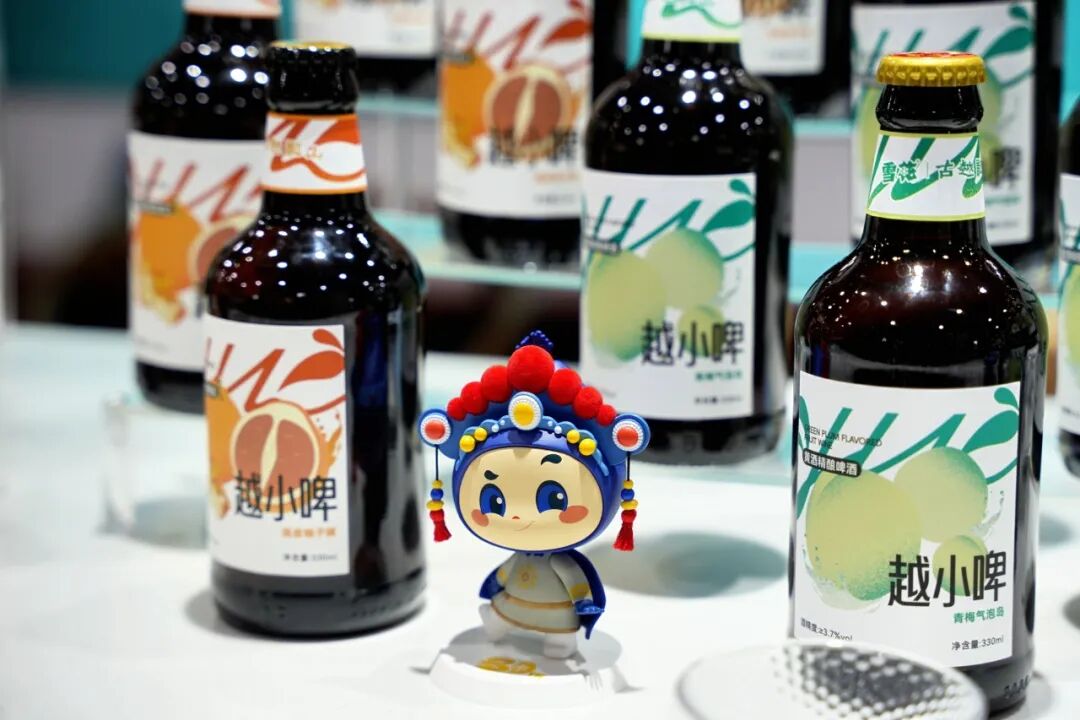
Core Viewpoint - The collaboration between Guyue Longshan and China Resources Beer to launch "Yue Xiao Pi" represents a strategic attempt to innovate and attract younger consumers in the face of declining performance and increasing competition in the yellow wine market [1][8]. Group 1: Product Launch and Features - "Yue Xiao Pi" is a cross-category product that combines elements of yellow wine and beer, featuring two flavors: Qingmei Sparkling Island and Chenpi Pomelo Shop, with an alcohol content of ≥3.7% vol [3][4]. - The product aims to appeal to younger consumers by adopting a lighter drinking style and modern packaging similar to beer bottles, moving away from the traditional heavy perception of yellow wine [4][10]. - Previous attempts at product innovation include the launch of a craft yellow beer that generated over 10 million yuan in orders within the first month, although it has since become less visible on major e-commerce platforms [4][7]. Group 2: Market Performance and Competition - Guyue Longshan's recent financial performance shows a decline, with a revenue drop of 8.11% and a net profit decrease of 34.07% in the first three quarters of the year, leading to a loss of its position as the leading yellow wine brand to Kuaijishan [8][10]. - Over the past decade, Kuaijishan has outpaced Guyue Longshan in growth, with Kuaijishan's revenue increasing from 859 million yuan to 1.631 billion yuan, a growth rate of approximately 8.99%, compared to Guyue Longshan's 4.47% [8][10]. - The competitive landscape is intensifying, with Kuaijishan launching innovative products like sparkling yellow wine and leveraging social media for marketing, prompting Guyue Longshan to follow suit with its own new offerings [10][11]. Group 3: Strategic Partnerships and Future Outlook - The partnership with China Resources Beer is seen as a strategic move for Guyue Longshan to leverage the latter's extensive distribution network and operational expertise to expand its market reach beyond its traditional base in Jiangsu, Zhejiang, and Shanghai [10][11]. - The collaboration has generated positive market reactions, with Guyue Longshan's stock price rising following the announcement, indicating investor optimism about the potential success of the cross-category product [10][11]. - Industry analysts emphasize that the success of "Yue Xiao Pi" will depend on effective channel management and whether the partnership can translate the beer channel's advantages into increased sales for yellow wine [10][15].

新酒饮/新消费/新场景/新品类爆款案例揭秘,三大智库同台献技
Sou Hu Cai Jing· 2025-11-06 09:43
Core Insights - The Chinese liquor industry is undergoing significant structural adjustments, with the white liquor market experiencing slowed growth and changing consumer demands, leading to traditional marketing and product models facing bottlenecks [2][5] - Consulting firms are becoming crucial advisors for liquor companies in their transformation and upgrading processes, especially at this pivotal moment in the industry [2][5] Market Trends - The new liquor market is rapidly developing, with low-alcohol and diversified products like low-alcohol fruit wine, pre-mixed drinks, and tea wine emerging as core directions [4] - The new liquor market is projected to exceed 74 billion yuan by 2025, representing a significant growth area for the liquor industry amidst existing competition [4] Consumption Changes - In the first half of 2025, white liquor production was 1.9159 million kiloliters, marking a 5.8% year-on-year decline, indicating the industry is in a phase of stock competition [7] - Changes in consumer demographics and preferences are reshaping demand, with new consumption scenarios such as solo drinking, small gatherings, and outdoor leisure providing opportunities for market segmentation [7] Strategic Insights - The upcoming AIIC2025 Liquor Innovation and Investment Conference will feature insights from three consulting firms on new liquor consumption trends, demographic shifts, and the youth-oriented transformation of yellow wine [5][14] - The conference will include discussions on how to balance tradition and innovation in liquor branding to attract younger consumers, which is essential for future growth [10]