显示面板

Search documents
昆山龙腾光电股份有限公司关于召开2025年第三季度业绩说明会的公告
Shang Hai Zheng Quan Bao· 2025-11-17 20:42
Core Viewpoint - The company, Kunshan Longteng Optoelectronics Co., Ltd., is set to hold a Q3 2025 performance briefing on November 25, 2025, to discuss its operational results and financial status with investors [2][5]. Group 1: Event Details - The performance briefing will take place on November 25, 2025, from 15:00 to 16:00 [5]. - The event will be conducted in an interactive online format via the Shanghai Stock Exchange Roadshow Center [3][5]. - Investors can submit questions from November 18 to November 24, 2025, through the designated online platform or via the company's investor relations email [2][6]. Group 2: Participants - Key participants in the briefing will include the company's Vice General Manager and Board Secretary, Mr. Cai Zhicheng, along with other senior management members [4]. - The company has indicated that participant adjustments may occur due to special circumstances [4]. Group 3: Contact Information - Investors can reach the company’s Board Secretary Office for inquiries at the phone number 0512-57278888 or via the email address Ltdmb@ivo.com.cn [6]. - Post-event, the details and main content of the briefing will be available on the Shanghai Stock Exchange Roadshow Center [6].


三星第五工厂将于2028年投入运营,满足中长期存储芯片需求
Ju Chao Zi Xun· 2025-11-17 13:40
Core Viewpoint - Samsung Electronics has decided to initiate the construction of the fifth production line at the Pyeongtaek plant to meet the increasing long-term demand for storage chips driven by the surge in global AI infrastructure investment [1] Group 1: Investment and Expansion Plans - The fifth factory is expected to be operational by 2028 [1] - Samsung Group plans to increase investments in local cities to promote regional balanced development [1] - Samsung SDS aims to establish a large-scale AI data center in South Jeolla Province, targeting to secure 15,000 GPUs by 2028 [1] Group 2: Production and Manufacturing Developments - Samsung Electronics is considering establishing a domestic production line for the recently acquired German HVAC company Fläkt Group in Gwangju [1] - Samsung SDI is contemplating building a next-generation battery production base in Ulsan [1] - Samsung Display is constructing an 8.6-generation OLED production line in the Asan plant in South Chungcheong Province, with mass production expected to start in mid-next year [1]
并跑→领跑,印刷OLED时代到来?
Guan Cha Zhe Wang· 2025-11-17 13:21
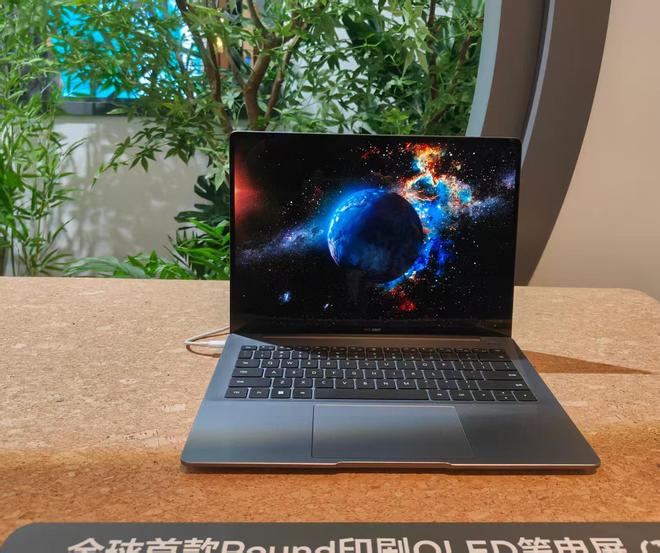
Core Viewpoint - The Chinese display industry has transitioned from catching up to running ahead, with printed OLED technology being a key focus for leading the market [1] Group 1: Technology and Innovation - TCL Technology's CEO highlighted the breakthrough of the world's first small-sized OLED product using high-precision printing technology, achieving a physical resolution of 390 PPI and a visual equivalent of 490 PPI [1] - The traditional evaporation process used by competitors like Samsung and BOE has significant cost and efficiency drawbacks, with equipment costs being approximately double that of printing technology [4][11] - Printed OLED technology offers a material utilization rate of over 90%, significantly reducing raw material costs by nearly 40% compared to evaporation methods [11] Group 2: Market Dynamics - The introduction of printed OLED technology is expected to intensify competition with established players like Samsung and BOE, who have historically dominated the high-end display market [1][4] - TCL's new G8.6 generation printed OLED production line is designed to process approximately 22,500 glass substrates per month, aiming to accelerate the technology's market adoption [12] - The printed OLED technology is anticipated to expand into various high-value display applications, including mobile devices, potentially disrupting the current market share held by traditional OLED manufacturers [12][18] Group 3: Challenges and Considerations - Despite the advantages of printed OLED, challenges remain in achieving comparable power efficiency and yield rates to established evaporation technologies, particularly in high-end applications [15][17] - The industry still prioritizes display quality and stability, where evaporation technology currently holds a significant edge due to its ability to produce uniform and dense film layers [16] - Market entry barriers exist as existing products designed around evaporation screens may require significant redesign to accommodate printed OLED technology, posing a challenge for TCL in gaining traction with manufacturers [18]


京东方A大宗交易成交55.00万股 成交额198.00万元
Zheng Quan Shi Bao Wang· 2025-11-17 10:01
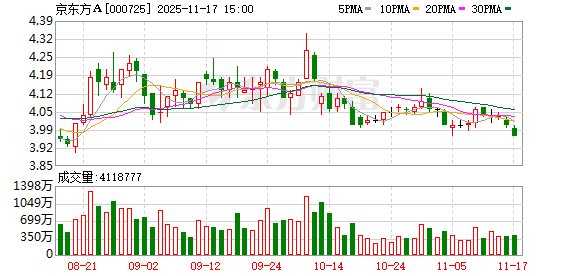
Group 1 - The core transaction on November 17 involved a block trade of 550,000 shares of BOE Technology Group Co., Ltd. (京东方A) at a price of 3.60 CNY, representing a discount of 9.09% compared to the closing price of 3.96 CNY on the same day [2][3][4] - In the last three months, BOE Technology has recorded a total of three block trades, with a cumulative transaction amount of 138 million CNY [3] - The stock experienced a net outflow of 247 million CNY in principal funds on the trading day, with a total decline of 2.46% over the past five days [3] Group 2 - The latest margin financing balance for BOE Technology is 7.452 billion CNY, which has increased by 249 million CNY, reflecting a growth rate of 3.45% over the past five days [4] - The company was established on April 9, 1993, with a registered capital of approximately 3.74 billion CNY [4]

合肥国资再次出手新型显示产业 拟入主维信诺赋能OLED发展
Cai Jing Wang· 2025-11-17 08:05
Group 1 - Hefei Guozi is set to gain control of OLED panel manufacturer Visionox by subscribing to a private placement of 419 million shares at a price of 7.01 yuan per share, raising up to 2.937 billion yuan [1] - If the transaction is completed, Hefei Guozi will hold 31.89% of Visionox, enhancing the development of the OLED industry [1] - Hefei's strategic emerging industries are rapidly growing, with the output value of these industries expected to account for 55.8% of the city's industrial output in 2024, an increase of 24.8 percentage points since 2015 [1] Group 2 - The "chip-screen-vehicle integration" strategy is considered a key factor in Hefei's industrial growth, with significant investments in display technology, semiconductors, and electric vehicles [2] - Hefei has become a core city for China's display industry and a significant global display manufacturing base, ranking first in the high-quality development index for the display industry in 2024-2025 [2] - Visionox, a leader in OLED technology and a key player in the OLED international standards group, has established a strong partnership with Hefei's display industry [2] Group 3 - The 8.6-generation AMOLED production line is seen as crucial for future competition in the mid-size AMOLED market, with Visionox's line nearing completion, second only to Samsung and BOE in progress [3] - The control of Visionox by Hefei Guozi is expected to shift the local display industry from a "multi-point layout" to a "holistic collaboration" phase, enhancing the industrial cluster and supporting local economic development [3] - Visionox's AMOLED production lines are anticipated to benefit from improved resource collaboration following Hefei Guozi's acquisition [3]

TCL华星:t12项目明年印刷OLED出货量可达百万级
WitsView睿智显示· 2025-11-17 04:38
Core Viewpoint - TCL Technology is advancing in the OLED market with its printing technology, aiming for significant production milestones in the coming years, including a projected shipment of one million units from its 5.5-generation printing OLED panel production line in 2024 and the first mass production of its 8.6-generation line by Q4 2027 [1][4]. Group 1: Production and Capacity - The 5.5-generation printing OLED panel production line (T12 project) is expected to achieve a shipment volume of one million units in 2024 [1]. - By the end of 2024, T12 has already achieved small-scale production of 21-inch medical products [4]. - The monthly production capacity of T12 is set to increase from 3,000 large panels to 9,000 large panels [4]. Group 2: Technological Advancements - TCL Huaxing is positioning itself as a global leader in the inkjet printing OLED field, focusing on breakthroughs in resolution, materials, and production yield [4]. - The company has developed a high-resolution technology for inkjet printing OLED applicable to high-end smartphones, achieving a pixel density of 390 PPI for a 5.65-inch display [4]. - TCL Huaxing has restructured its material suppliers and device systems, improving performance by two to three times compared to existing systems [4]. Group 3: Production Yield - The production yield of the T12 line has exceeded 70%, with a target to reach 90% for inkjet printing OLEDs [4]. - The improvement in T12's yield is expected to provide a solid foundation for the mass production of the T8 project [4]. Group 4: Industry Response - Samsung Electronics acknowledged the advantages of inkjet printing OLED in high resolution and low power consumption but noted its lack of in-house panel technology development capabilities [6]. - LG Electronics is currently sourcing LCD panels from multiple manufacturers and is closely monitoring market trends [6].

三星未来5年计划在韩国总计投入450万亿韩元 包括扩大半导体投资
Ju Chao Zi Xun· 2025-11-16 09:33
Group 1 - Samsung Group plans to invest a total of 450 trillion won (approximately 310 billion USD) domestically over the next five years, focusing on R&D and expanding semiconductor investments [1] - The fifth line of the new Pyeongtaek plant is expected to be fully operational by 2028 [1] - Samsung Electronics aims to build a production line in Korea through the acquisition of PlactGroup, targeting the AI data center market [1] Group 2 - Samsung SDI is advancing plans to establish a next-generation battery production base in Korea, including solid-state batteries referred to as "dream batteries," with the Ulsan plant being a strong candidate [1] - Samsung Display plans to start mass production of products at the 8.6-generation OLED IT production facility in Asan, Chungcheongnam-do, beginning next year [1] - Samsung has decided to hire 60,000 new employees over the next five years [1]
近1700亿元投入OLED高世代产线:技术竞争开启,明年起集中释放产能
第一财经· 2025-11-16 06:21
Core Viewpoint - The recent capital increase and control change at Visionox have highlighted the pressures faced by the panel industry, which is characterized by heavy investment, long cycles, and high costs. Companies are seeking to balance revenue generation with substantial investments in production lines [3][4]. Investment and Financial Performance - Significant investments in high-generation OLED production lines have become a focal point, with major domestic manufacturers like Visionox, TCL Huaxing, and BOE collectively investing over 1.4 trillion yuan (approximately 200 billion USD) in 8.6-generation OLED production lines [3][4]. - Visionox and BOE reported revenues of approximately 7.9 billion yuan (about 1.1 billion USD) and 198.4 billion yuan (around 28.1 billion USD) respectively, with net profits of -2.5 billion yuan and 5.3 billion yuan [4]. Competitive Landscape - The ability of these new production lines to translate into revenue and competitiveness is a critical concern. The industry is expected to see a surge in production capacity from 2024 to 2028, leading to intensified competition [5][6]. - Different technical routes for OLED production are competing, including evaporation, LGD's white OLED, Samsung's QD-OLED, and printed OLED technologies. Each has its own characteristics and applications [6][7]. Technological Advancements - Companies are focusing on improving production line metrics to prepare for the upcoming OLED capacity increase. For instance, TCL Huaxing's printed OLED technology has made significant progress in commercial viability, with yield rates improving from single digits to 70% over the past year [6][7]. - Visionox has developed the ViP technology to overcome traditional AMOLED production challenges, although it faces issues related to yield and material development [7]. Market Outlook - The OLED market is experiencing fierce competition, with some manufacturers yet to achieve profitability. Market demand is also evolving, leading to a stagnation in AMOLED revenue growth this year, with a slight recovery expected next year [8]. - Omdia forecasts a 5% revenue growth for AMOLED in the coming year, despite anticipated price and specification competition intensifying as more 8.6-generation OLED production lines come online [8].
近1700亿元投入OLED高世代产线:技术竞争开启,明年起集中释放产能
Di Yi Cai Jing Zi Xun· 2025-11-16 05:37
Core Insights - The recent capital increase and control change at Visionox have drawn attention to the pressures faced by the panel industry, characterized by heavy investment, long cycles, and high costs [1] - High-generation OLED production line investments are significant, with major domestic manufacturers collectively investing over 1.4 trillion yuan, and the total investment from four key players nearing 1.7 trillion yuan [1][3] - The competition in the OLED market is intensifying, with various technology routes being pursued, and the ability to convert investments into revenue and competitiveness is a critical concern for industry players [3][4] Investment and Financial Performance - Visionox and BOE reported revenues of approximately 7.9 billion yuan and 198.4 billion yuan respectively, with net profits of -2.5 billion yuan and 5.3 billion yuan last year, raising questions about future revenue generation from new production lines [3] - The OLED market is experiencing a stagnation in revenue growth due to declining display prices, with a slight recovery expected next year [6] Technology and Production Capacity - There are five main technology routes in OLED production, including evaporation, white OLED, QD-OLED, printed OLED, and maskless technologies, each with distinct characteristics [4] - TCL Huaxing is focusing on printed OLED technology, which has shown improvements in yield rates, but challenges remain in achieving efficiency comparable to traditional methods [4][5] - Visionox's ViP technology aims to overcome traditional AMOLED production limitations, although it faces challenges related to yield and material development [5] Market Dynamics - The OLED market is highly competitive, with many manufacturers yet to achieve profitability, and the demand for displays continues to evolve [6] - As more 8.6-generation OLED production lines come online, price and specification competition is expected to intensify [6]
和辉光电:研发副部长郝海燕离职,其系核心技术人员
Ju Chao Zi Xun· 2025-11-14 16:09
Core Insights - The company announced the resignation of core technical personnel, Vice Minister of R&D, Hao Haiyan, due to personal reasons, effective immediately [1] - The company appointed Zhu Qifeng and Ma Shaodong as new core technical personnel to ensure stability and continuity in the R&D and production management teams [1][3] - The management emphasized that the personnel changes will not adversely affect daily operations or ongoing R&D capabilities [3] Personnel Changes - Hao Haiyan, born in 1972, was a senior engineer with a PhD in electronics from Xi'an Jiaotong University and had significant roles in R&D since joining the company in 2018 [1] - Zhu Qifeng, born in 1978, holds a master's degree in engineering and has extensive experience in production operations and yield management, having joined the company in 2012 [3] - Ma Shaodong, born in 1985, has a PhD in engineering and has been with the company since 2013, currently serving as the R&D Minister [3] Financial Performance - For the first three quarters of 2025, the company reported revenue of approximately 4.002 billion yuan, an increase of 8.25% year-on-year [4] - The net profit attributable to shareholders was a loss of approximately 1.37 billion yuan, with Q3 revenue at 1.332 billion yuan, up 2.25% year-on-year, and a net loss of 530 million yuan [4] - The company faces pressures from industry fluctuations and profitability recovery, with personnel adjustments needing to be evaluated in the context of future operational performance [4]