渔业

Search documents
渔业板块12月22日涨0.34%,国联水产领涨,主力资金净流出3021.16万元
Zheng Xing Xing Ye Ri Bao· 2025-12-22 09:03
证券之星消息,12月22日渔业板块较上一交易日上涨0.34%,国联水产领涨。当日上证指数报收于 3917.36,上涨0.69%。深证成指报收于13332.73,上涨1.47%。渔业板块个股涨跌见下表: 以上内容为证券之星据公开信息整理,由AI算法生成(网信算备310104345710301240019号),不构成投资建议。 从资金流向上来看,当日渔业板块主力资金净流出3021.16万元,游资资金净流入1708.45万元,散户资 金净流入1312.71万元。渔业板块个股资金流向见下表: ...


天马科技:控股股东陈庆堂质押724万股补充流动资金
Xin Lang Cai Jing· 2025-12-22 08:39
Group 1 - The controlling shareholder and actual controller of Tianma Technology, Chen Qingtang, pledged 7.24 million shares to Zhongyuan Trust, accounting for 7.51% of his holdings and 1.43% of the total share capital [1] - After this pledge, Chen Qingtang has a total of 53.91 million shares pledged, which represents 55.95% of his holdings and 10.66% of the total share capital [1] - As of the announcement date, Chen Qingtang and his concerted parties hold a total of 163 million shares, accounting for 32.31% of the total share capital, with a cumulative pledge of 72.91 million shares, representing 44.63% of their total holdings and 14.42% of the total share capital [1] Group 2 - The purpose of the pledge is to supplement working capital [1] - The company assesses that the pledge risk is controllable and does not affect its operations or control [1]

大连旅顺口:一港一策 筑牢渔港气象安全防线
Xin Lang Cai Jing· 2025-12-22 06:58
12月15日至16日,辽宁省大连市旅顺口区气象局成立专项工作组,聚焦渔港管控核心需求,针对辖区11 个渔港开展全覆盖实地调研,并以郭家沟渔港为试点,制定差异化气象服务方案,推动渔港气象防灾减 灾服务精准落地。 通过调研,工作组梳理了从预警发布到渔船召回的全链条响应流程。各渔港以属地渔业部门或渔港公司 为调度主体,调度核心依据为各级气象部门发布的灾害预警信号,为后续服务方案制定奠定基础。 作为试点的郭家沟渔港,气象保障方案紧扣"监测精密、预报精准、服务精细"要求,通过布设10米风 杆、能见度仪,探索为渔船配备便携传感器,弥补海上数据空白;预报环节建立"近岸-近海-外海"分区 模型,提供6小时至72小时精准预报,重点强化西北大风预警;响应机制上,将大风、能见度等预警与 管控指令直接挂钩,通过多渠道确保信息直达每艘渔船。 下一步,旅顺口区气象局将根据各渔港功能定位和海域气象风险特征,制定差异化服务方案,并将郭家 沟渔港试点经验逐步向全区推广,最终构建全覆盖、智能化的渔港气象防灾减灾体系,为大连海洋经济 高质量发展提供坚实气象保障。 (作者:李倩 李晓文 责任编辑:郭曼如) ...
苏丹动物和渔业资源部计划推动重建项目
Shang Wu Bu Wang Zhan· 2025-12-22 06:35
Core Viewpoint - The Sudanese government plans to implement 37 reconstruction projects in the livestock and fisheries sectors to enhance self-sufficiency and export capacity [1] Group 1: Government Initiatives - The projects include the establishment of a livestock product park [1] - The government aims to partner with the private sector and Arab investment institutions [1] Group 2: International Cooperation - The government seeks to expand cooperation with friendly countries such as Egypt, Saudi Arabia, Qatar, Kuwait, Bahrain, and Oman [1]
从创新能力提升到应用场景拓宽 智慧赋能让农业生产更“聪明”焕发蓬勃生机
Yang Shi Wang· 2025-12-22 02:47
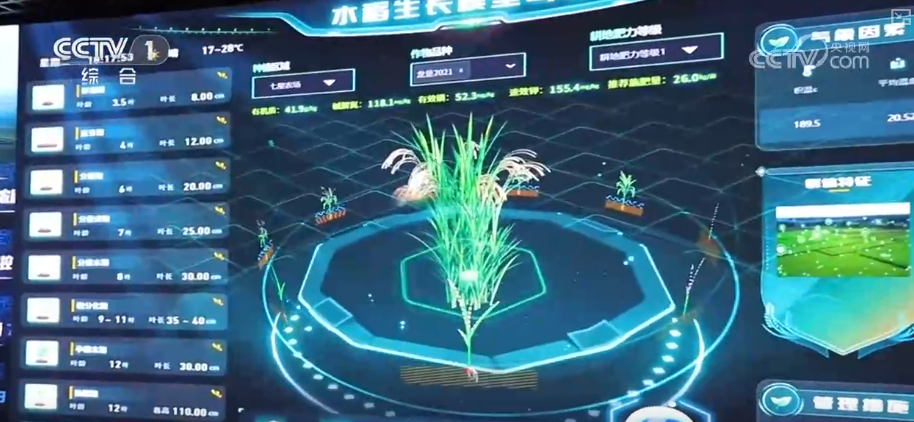
Core Insights - Since 2025, China's smart agriculture construction has accelerated, enhancing innovation capabilities and expanding application scenarios, leading to a vibrant agricultural sector empowered by technology [1][5]. Group 1: Smart Agriculture Innovations - The innovation capabilities in smart agriculture have been continuously improving, making production smarter from orchards to pastures and fish ponds [5]. - In Fujian's Shunchang County, 100,000 acres of citrus have seen a harvest boost, with rail transport vehicles and heavy-duty drones replacing traditional methods, significantly improving harvesting and transportation efficiency [9]. - In Inner Mongolia's Dongwuzhumuqin Banner, smart collars are used for cattle, allowing real-time monitoring of activity levels and health status via mobile devices [13]. - In Jiangsu's Pukou, smart aquaculture has enabled remote monitoring and precise feeding of shrimp, with expected production increases of 20% year-on-year and significant quality improvements [15]. Group 2: Technological Empowerment in Apple Industry - In Shaanxi's Yulin City, the local government is focusing on technological empowerment to transform small apple production into a large industry, introducing 13 intelligent sorting lines that classify apples into 10 grades, achieving a daily sorting capacity of 40,000 kilograms with over 98% accuracy [19]. - The county has built a 20,000-ton cold storage facility and equipped it with smart sorting lines, creating a comprehensive industry chain that integrates production, storage, processing, and sales [22]. - Currently, the apple planting area in Suide County has reached 236,000 acres, with a production volume exceeding 240,000 tons and an annual output value nearing 1 billion yuan [24].
烟台深远海养殖装备打破渔业养殖海域壁垒,重塑全国海鲜版图
Da Zhong Ri Bao· 2025-12-22 02:25
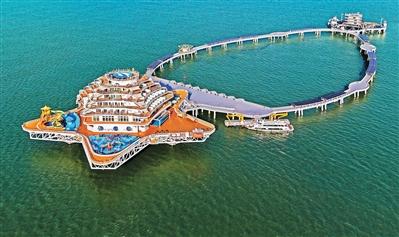
Core Viewpoint - The development of large-scale deep-sea aquaculture equipment is breaking the geographical barriers of fish farming and reshaping the national seafood landscape in China [1][3]. Group 1: Deep-Sea Aquaculture Equipment - The "Jinghai 002" deep-sea intelligent net cage measures 68 meters in length and width, and 40 meters in height, enclosing 94,000 cubic meters of water, allowing for the cultivation of salmon in suitable winter conditions [2]. - The intelligent monitoring, feeding, and harvesting systems enable a small team of three to four people to manage the equivalent of what would traditionally require 200 people on land [2]. Group 2: Innovative Aquaculture Practices - The company has successfully implemented a "land-sea relay" model for salmon farming, achieving a total production of 2,000 tons in 2023, with 1,500 tons from seawater and 500 tons from land-based recirculating aquaculture [1][3]. - Various fish species are being cultivated using innovative methods, such as the "relay" farming of species like the yellow croaker and southern sea bream, which optimizes growth cycles and reduces environmental pressure on coastal areas [3]. Group 3: Future Development Plans - The company aims to expand its aquaculture scale and contribute to national initiatives like the "Marine Granary" project, while also exploring marine breeding, island tourism, and recreational fishing to achieve integrated development across industries [3].
烟台|烟台深远海养殖装备打破渔业养殖海域壁垒,重塑全国海鲜版图
Da Zhong Ri Bao· 2025-12-22 01:04
Core Viewpoint - Yantai's deep-sea aquaculture equipment is breaking barriers in fish farming, reshaping the national seafood landscape by enabling the cultivation of seafood in a manner similar to greenhouse vegetable farming [1] Group 1: Deep-Sea Aquaculture Innovations - The introduction of the "Jinghai 002" deep-sea intelligent net cage allows for the cultivation of salmon in suitable winter sea conditions, with the potential for fish weights to double by June or July next year, reaching over 4 kilograms [2] - Yantai Jinghai Marine Fisheries has successfully implemented a new "land-sea relay" model for salmon farming, achieving a total salmon production of 2,000 tons this year, including 1,500 tons from seawater and 500 tons from land-based recirculating aquaculture [2][4] - The "Jinghai 002" net cage measures 68 meters in length and width, and 40 meters in height, enclosing 94,000 cubic meters of water, thus overcoming spatial limitations for wintering salmon [2] Group 2: Operational Efficiency and Technology - The use of intelligent monitoring, feeding, and harvesting systems allows a small team of three to four people to manage the equivalent of what would traditionally require 200 people on land [3] - Eight such intelligent net cages have already been deployed by Yantai Jinghai Marine Fisheries, enhancing operational efficiency in deep-sea aquaculture [3] Group 3: Broader Aquaculture Strategies - The company is also innovating with other fish species, such as the breeding of "Yushi Pingyu" and "Zhen Diao," to shorten farming cycles and alleviate nearshore environmental pressures [4] - Seasonal and geographical barriers in aquaculture are being dismantled, with practices like "land-sea relay" and "fish species rotation" being implemented to meet market demands across different regions [4] - The Shandong Province's 14th Five-Year Plan emphasizes the acceleration of deep-sea development, aiming to integrate marine breeding, tourism, and recreational fishing into a cohesive development strategy [4]
海洋牧场科技范儿(“融”观中国)
Ren Min Ri Bao Hai Wai Ban· 2025-12-21 23:25
Core Viewpoint - Shandong Province is accelerating the development of a modern fishing industry through technological innovation and integration of land and sea, leading to high-quality growth in fisheries [4][12]. Group 1: Technological Advancements in Fisheries - The introduction of smart fish farming technologies, such as deep-sea intelligent cages, allows for efficient management with minimal manpower, reducing feed waste by over 40% and stabilizing fish survival rates at over 90% [6][5]. - The "Yenghai 1" marine ranch complex utilizes a "5G + marine ranch" model for comprehensive smart management, enhancing operational efficiency and reducing costs [7]. Group 2: Economic Impact on Local Fishermen - The "big fish leads small fish" model enables traditional fishermen to benefit from technology and market advantages, improving their income stability and reducing financial risks [8]. - The development of leisure fishing industries in coastal areas has led to significant economic growth, with annual revenues exceeding 200 million yuan [8]. Group 3: Value Chain Enhancement - Automation in processing has allowed for the production of over 30 types of processed seafood, significantly increasing the value of marine products [9]. - E-commerce platforms have facilitated market access, enabling local cooperatives to connect with consumers and enhance income for surrounding villages [9]. Group 4: Ecological Restoration Efforts - The shift towards deep-sea aquaculture and technological solutions aims to restore marine ecosystems, with initiatives leading to the resurgence of various marine species [10][11]. - The establishment of national marine ranches and the implementation of ecological measures have improved fishery resources and environmental conditions across Shandong [11][12]. Group 5: Future Development Plans - The Shandong provincial government plans to strengthen marine ecological protection and develop a modern marine economy, focusing on sustainable growth and advanced fishing systems [12].
“贵水黔鱼”端上省外市民餐桌
Xin Lang Cai Jing· 2025-12-21 22:46
Core Insights - The establishment of the Guizhou Water Investment Group's "Gui Shui Qian Yu" operation center in Changsha marks a significant step in promoting Guizhou's ecological fish products in the central China market [1][2] - The operation center aims to create a comprehensive platform for brand promotion, market sales, and supply chain services, facilitating the "Qian Goods Out of the Mountains" strategy [1][2] - The center has already partnered with over 30 mid-to-high-end restaurants in Changsha, providing approximately 2,000 pounds of Guizhou ecological fish daily to local consumers [1] Company Developments - "Gui Shui Qian Yu" is a provincial-level green ecological fishery public brand that Guizhou is actively developing [2] - The province has been promoting the ecological fishery industry, attracting social capital, and forming a collaborative network involving various stakeholders [2] - As of the end of 2024, Guizhou will have 1,626 aquaculture operating entities and over 50 fishing-related trademarks, with several ecological fishery brands entering supermarkets [2] Industry Trends - The ecological fishery industry in Guizhou is focusing on quality improvement, standardization of production, and the establishment of green and organic product bases [2] - More than 10 quality distributors of "Gui Shui Qian Yu" are collaborating to create over 20 brand image stores and counters across various regions, including the Yangtze River Delta and the Guangdong-Hong Kong-Macao Greater Bay Area [2] - The supply chain for "Gui Shui Qian Yu" is becoming shorter and more efficient, ensuring stable quality and professional service for consumers nationwide [3]
好水养好鱼 丰产又增收
Xin Lang Cai Jing· 2025-12-21 22:46
Core Viewpoint - Guizhou province is focusing on ecological fishery development, adhering to the "ecology first, green development" principle, and implementing the "ten-year fishing ban" policy in the Yangtze River basin to promote high-quality ecological fishery development and transform water resource advantages into economic benefits [5][6][11]. Group 1: Ecological Fishery Development - Guizhou has implemented a comprehensive ban on net cage farming since 2018 to address environmental degradation and promote "zero net cage, ecological fish" development [5][6]. - The province has established 32 national-level healthy aquaculture demonstration farms and 78 provincial-level ecological fishery demonstration bases, with ecological fishery output value maintaining over 20% growth for three consecutive years [7]. - The government has issued multiple guidelines and plans to support the development of ecological fisheries, including the "Guizhou Province '14th Five-Year' Water and Water Industry Development Plan" [6][7]. Group 2: Technological Support - The integration of technology in fish farming has led to significant improvements, such as real-time monitoring of water quality and automated feeding systems, resulting in doubled yields and improved fish survival rates [9]. - Guizhou has developed over 7.2 billion fish fry and 14,400 tons of fish species, including local varieties and unique species, supported by a comprehensive data platform for resource monitoring [9][10]. Group 3: Diverse Business Models - The province has adopted various ecological farming models, including "no feeding, no fertilization, natural breeding" in large reservoirs, and has established 37 large-scale reservoirs for fish farming [10]. - In rice-growing areas, integrated farming models such as "rice + black-spotted frog" and "rice + big-mouth catfish" have been promoted, benefiting over 700,000 households [10]. - The sturgeon industry has developed a complete industrial chain, with the "Guizhou Sturgeon" brand valued at over 960 million yuan, leading the nation in production for two consecutive years [10]. Group 4: Economic Impact - By the end of 2024, Guizhou's aquatic product output is projected to reach 295,000 tons, with a total fishery economic output value of 9.29 billion yuan, reflecting growth of 18.7% and 26.7% respectively compared to the end of the 13th Five-Year Plan [11]. - The province has successfully achieved a virtuous cycle of "fishing for water and using fish to purify water," with over 98.3% of monitored water quality in good condition [11].