低空物流

Search documents
2025年中国低空物流行业区域竞争分析:深圳低空物流领域成绩斐然
Qian Zhan Wang· 2025-06-16 07:24
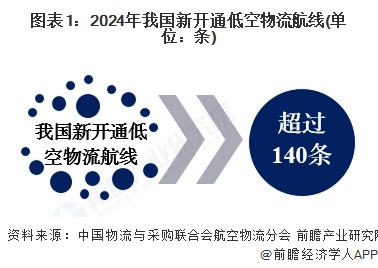
Core Insights - The article highlights the rapid development of low-altitude logistics in China, particularly in Shenzhen, which is becoming a leader in the low-altitude economy with significant advancements in logistics infrastructure and policy support. Group 1: Low-altitude Logistics Development - In 2024, over 140 new low-altitude logistics routes will be opened in China, with urban routes making up 90% of the total, primarily for last-mile delivery services [1] - Shenzhen has established a total of 250 drone logistics routes as of 2024, with a 27% year-on-year increase in drone cargo flights, reaching 776,000 flights [2] Group 2: Policy and Standards - Shenzhen is leading in the construction of a policy standard system for low-altitude economy, having introduced the first local legislation on low-altitude economy and a framework for standardization [4][5] - The city has initiated the compilation of 18 local standards for low-altitude economy, focusing on practical applications to drive high-quality development [5] Group 3: Smart Logistics Centers - The first "air-ground collaborative" smart logistics center in the country, located in Shenzhen, integrates drone delivery with ground logistics, significantly enhancing delivery efficiency [8] - This logistics center can deliver local packages within 2 hours and cross-city packages within 3 hours, showcasing the effectiveness of the air-ground integration model [9] Group 4: Future Goals and Initiatives - Shenzhen's 2024-2026 work measures aim to promote high-quality development in modern logistics, including the establishment of a national-level air traffic management pilot city and support for "air-ground combined" logistics models [10][11] - The goal is to create a low-altitude economic industrial cluster, with plans to exceed 420 logistics take-off and landing points by 2025 [11]

重磅!2025年中国及31省市低空物流行业政策汇总及解读(全)“政策助推行业快速发展”
Qian Zhan Wang· 2025-06-11 05:21
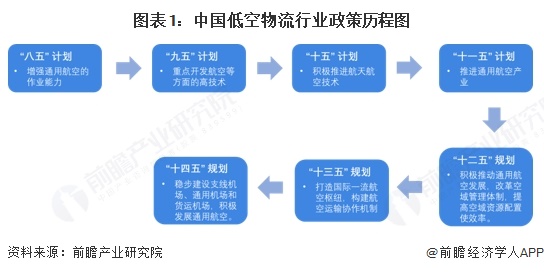
Core Viewpoint - The article discusses the development and policy framework of China's low-altitude logistics industry, highlighting its significance as part of the low-altitude economy and the strategic support from the government to foster growth in this sector [1][3]. Policy Development History - The low-altitude logistics sector is part of the broader low-altitude economy, which has evolved alongside macro policies related to low-altitude economic activities. Key plans such as the "Eighth Five-Year Plan" and the "Fourteenth Five-Year Plan" emphasize enhancing air transport capabilities and developing general aviation infrastructure [1]. National Policy Summary and Interpretation - The low-altitude economy relies on both manned and unmanned aerial vehicles, with the drone industry identified as a strategic emerging industry during the "Fourteenth Five-Year Plan." The government has introduced multiple policies to support and regulate the drone sector, marking low-altitude economy as a new growth engine in the 2024 government work report [3][4]. Policy Impact on Low-Altitude Logistics - The "Fourteenth Five-Year Plan" aims to deepen reforms in the low-altitude economy, enhance air traffic management, and optimize air route networks, which will provide strategic support for the low-altitude logistics industry [9]. - The "Regulations on the Management of Unmanned Aerial Vehicle Flights" establish a comprehensive framework for the operation of drones, promoting a safer and more efficient logistics environment [10][11]. Local Government Initiatives - Various provinces are actively promoting low-altitude logistics development, with initiatives such as building smart logistics systems and exploring drone transportation routes. For instance, Guangdong aims to create a leading low-altitude economic hub, while Beijing plans to establish innovation platforms in the sector [12][13][14]. Development Goals - Local governments have set specific targets for the low-altitude economy, including the establishment of infrastructure and the growth of industry scale. For example, by 2027, Hubei aims to achieve a low-altitude industry scale exceeding 100 billion yuan [15].
场景频上新 “越江送咖啡”突破应用“天堑”
Nan Jing Ri Bao· 2025-06-03 02:15
Core Insights - The article highlights the rapid development and expansion of low-altitude logistics in Nanjing, with a total of 174 approved flight routes, including 19 new routes this year, significantly enhancing urban logistics and public services [1][3][8] Group 1: Low-altitude Logistics Applications - Nanjing has successfully tested its first drone delivery route, significantly reducing delivery time and costs, such as delivering coffee in 8 minutes over 14 kilometers [2][3] - Various applications of low-altitude logistics have emerged, including medical deliveries, traffic management, and agricultural product distribution, showcasing a diverse range of use cases [2][3] - The city has established a comprehensive framework for low-altitude applications, categorizing them into four main areas: public services, production operations, low-altitude transportation, and aviation consumption, with a total of 80 sub-items [3][8] Group 2: Safety and Operational Efficiency - The low-altitude logistics system ensures safety through strict route planning and regulatory compliance, requiring companies to meet specific operational criteria [4][5][6] - The city has implemented a fast-track approval system for flight plans, significantly improving operational efficiency and supporting over 90 operational units [7][8] - The logistics drones are designed for point-to-point delivery, with a focus on optimizing flight processes and reducing costs [5][6] Group 3: Future Prospects and Economic Impact - Nanjing's low-altitude economy is projected to exceed 50 billion yuan by 2026, with plans to establish over 240 takeoff and landing sites and more than 120 flight routes [8] - The city aims to foster innovation in low-altitude applications, with future projects including drone-assisted building cleaning and eVTOL tourism [7][8] - The rapid growth of low-altitude logistics is expected to significantly enhance urban management and improve the quality of life for residents [7][8]
【干货】2025年低空物流行业产业链全景梳理及区域热力地图
Qian Zhan Wang· 2025-05-31 03:10
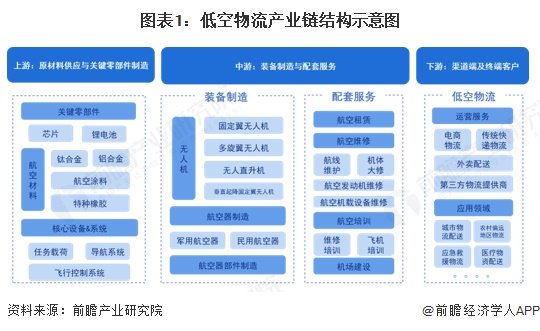
Industry Overview - The low-altitude logistics industry in China consists of a comprehensive supply chain, including upstream raw materials and core components, midstream low-altitude manufacturing, and downstream operational services and applications [1][2] - Upstream materials include metals, special rubber, and polymer materials, while midstream encompasses low-altitude manufacturing, flight operations, and comprehensive services [1][2] - Downstream services cover e-commerce logistics, traditional express delivery, takeaway delivery, and third-party logistics providers, with applications in urban logistics, rural logistics, emergency rescue, and medical supplies delivery [1] Key Players and Their Business Layout - Major companies in the low-altitude logistics sector include Hongdu Aviation, AVIC Helicopter, and DJI, with a focus on various aspects of the supply chain [2][10] - Hongdu Aviation specializes in the design, manufacturing, and maintenance of trainer aircraft, with over 8,000 pieces of equipment [11] - AVIC Helicopter is the largest player in China's helicopter manufacturing industry, with a comprehensive product range [11] - DJI and other drone manufacturers are pivotal in the midstream segment, while logistics companies like SF Express, Meituan, and JD.com are key players in the downstream segment [2][10][12] Regional Development - The low-altitude logistics industry is primarily concentrated in Beijing and Guangdong, where the development of the supply chain is more robust [4][6] - As of April 2025, there are 16 drone industrial parks across China, with notable concentrations in Zhejiang and Jiangsu [8] Recent Developments and Trends - Companies are diversifying their operations, with SF Express, Meituan, and JD.com expanding their business through digital logistics solutions and technological innovations [13][14] - The industry is witnessing advancements in drone technology, including battery life improvements and enhanced obstacle avoidance capabilities [14] - Collaboration among companies is increasing to explore new application scenarios and business models in low-altitude logistics [14] Representative Companies' Latest Developments - SF Express has established a three-segment air transport network and operates a significant number of drone flights daily [12][15] - Meituan has launched multiple drone delivery routes and is expanding its operations internationally, including in the UAE [15] - JD.com is focusing on last-mile delivery in remote areas and has introduced a new generation of logistics drones [15] - China Post is developing a low-altitude logistics network and has signed strategic agreements to enhance its infrastructure [15] - Xunyi Technology is collaborating with China Mobile to promote low-altitude logistics and smart city initiatives [15]



【行业前瞻】2025-2030年全球及中国低空物流行业发展分析
Sou Hu Cai Jing· 2025-05-30 11:49
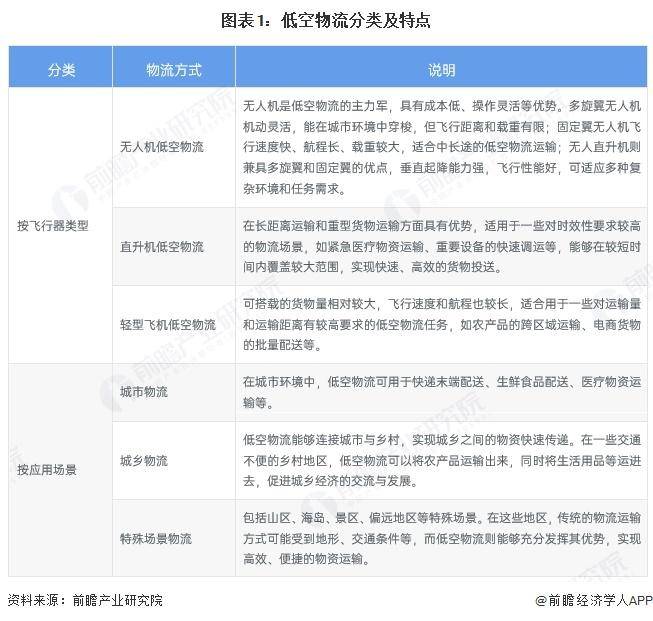
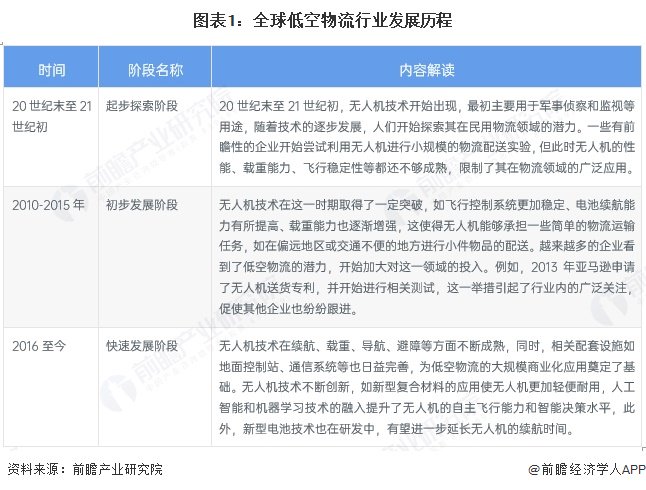
Core Viewpoint - The low-altitude economy, driven by both manned and unmanned aerial vehicles, is emerging as a significant sector in China, supported by government policies aimed at fostering its development [2][4]. Group 1: Definition and Industry Overview - The low-altitude economy encompasses a series of economic activities primarily utilizing aviation equipment and technologies, focusing on low-altitude airspace and low-altitude flight activities [1]. - The low-altitude logistics industry is a segment of the low-altitude economy, involving cargo transportation and related economic activities, primarily using manned and unmanned aerial vehicles [1]. Group 2: Policy Direction - The Chinese government has introduced multiple policies to support and regulate the drone industry, which is a key driver of the low-altitude economy's high-quality development [2]. - In 2024, the Chinese Premier highlighted the importance of developing the low-altitude economy in the government work report, marking its first inclusion in such a document [2]. Group 3: Policy Details - Various policies have been enacted, including the Civil Aviation Administration's roadmap for smart civil aviation, which aims to establish a management system for unmanned aerial vehicles by 2025 and a fully integrated operation system by 2030 [3]. - The Ministry of Industry and Information Technology has set guidelines for the development of civil unmanned aerial vehicles, emphasizing safety and regulatory compliance [4]. Group 4: Global Development Trends - The global low-altitude logistics industry is rapidly evolving, driven by increasing traffic congestion and advancements in drone technology, leading to significant market growth [5]. - The development stages of the global low-altitude logistics industry include an initial exploration phase, a preliminary development phase, and a current rapid development phase characterized by technological advancements and increased commercial applications [7]. Group 5: eVTOL Market Insights - The eVTOL (Electric Vertical Take-off and Landing) market has seen over 1000 concept products developed globally, with significant interest from various design institutions, although only a few companies have reached the certification stage [8].
2025年中国低空物流行业龙头企业分析:顺丰是低空物流行业的头部玩家
Qian Zhan Wang· 2025-05-27 08:14
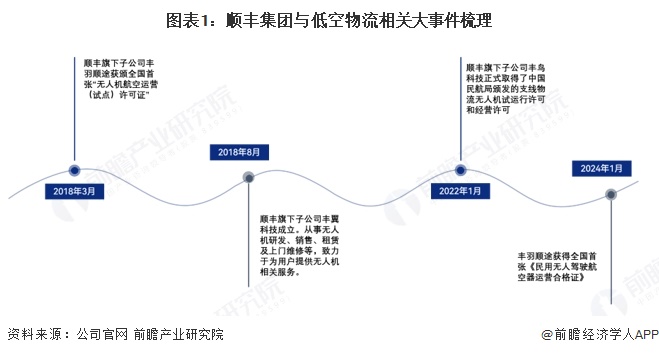
Group 1 - SF Express is a leading player in the low-altitude logistics industry, having initiated its drone logistics exploration in 2012 and conducted its first trial in 2013 [1] - The company received the first national "Drone Aviation Operation (Pilot) License" in March 2018 and the first "Civil Unmanned Aircraft Operation Qualification Certificate" in January 2024, indicating strong regulatory support [1] Group 2 - The core competitiveness of SF Express's drone operations lies in its scenario-based technology adaptation, featuring models like the Ark 40 for same-city delivery and PW.Orca for intercity transport [2] - The self-developed flight control system and low-altitude flight management service system enhance operational stability and regulatory compliance [2] Group 3 - The first "Air-Ground Collaborative" smart logistics operation center, the Fengyi Baoan Low-altitude Smart Logistics Operation Center, was inaugurated in February 2025, capable of processing over 2000 packages daily [6] - The center integrates traditional and low-altitude logistics, achieving average delivery times of 2 hours for same-city packages and 3 hours for intercity packages [6] Group 4 - As of November 30, 2024, SF Express's drone operations have opened over 600 routes, completed more than 1.1 million flights, and transported over 6.2 million packages, covering a total distance exceeding 5.7 million kilometers [7][8] - The operations include rural delivery, specialty economy, island transport, and intercity logistics, with a daily volume of 20,000 packages in the Greater Bay Area [7] Group 5 - SF Express has engaged in multiple collaborations to advance low-altitude logistics, including a strategic agreement with Qianfang Technology to develop diverse operational scenarios [8] - In February 2025, SF Express signed an agreement with Zhongke Low-altitude Economic Development Group to explore scalable applications of low-altitude economy in Henan Province [9] - A significant partnership was established with Yifei Aviation Technology for the purchase of 100 ES1000 large short-distance takeoff and landing unmanned transport aircraft, enhancing logistics efficiency [9]
洪雅县入选全省首批低空飞行试点 低空经济蓄势高飞
Zhong Guo Jing Ji Wang· 2025-05-20 14:54
Core Viewpoint - The Sichuan Province is actively promoting the development of the low-altitude economy, with the launch of supportive policies and the establishment of various low-altitude applications, creating new opportunities for tourism and economic growth in the region [1][2]. Group 1: Policy and Development Initiatives - The Sichuan Province has introduced several policy measures to support the development of the low-altitude economy, including the establishment of low-altitude flight management pilot programs [1]. - The Wawushan Paragliding Flight Camp has been selected as one of the first 11 low-altitude flight pilot projects, indicating a significant opportunity for low-altitude economic development [1]. - The construction of the first A1-level general airport in Meishan City, located in Hongya, has been approved and is expected to be completed by December 2026, which will enhance the development of new business models combining general aviation and tourism [4]. Group 2: Low-altitude Applications and Innovations - Hongya County is leveraging its advantageous transportation and airspace conditions to develop various low-altitude applications, including general aviation, low-altitude tourism, and logistics [2]. - The introduction of drone technology has transformed agricultural practices, allowing for efficient transportation of bamboo and wood, with drones capable of carrying 70-85 kilograms and transporting up to 1 ton of materials in one hour [2][3]. - The launch of the first drone express delivery route in Meishan City has significantly improved delivery efficiency, reducing the time from 20-30 minutes to just 7 minutes, representing an efficiency increase of over 180% [4]. Group 3: Events and Community Engagement - The third Sichuan-Chongqing Paragliding Competition and the eighth Sichuan Paragliding Championship attracted approximately 12,000 spectators, showcasing the region's commitment to low-altitude sports and tourism [4]. - A low-altitude sightseeing project named "Meishan Cultural Tourism? Cloud Tour Wawushan" has successfully conducted its first test flight, marking a breakthrough in low-altitude economic applications [5].
先行先试抢占低空经济新赛道
Hai Nan Ri Bao· 2025-05-18 01:30
Core Viewpoint - The establishment of the China Low Altitude Economy Industry Development Alliance in Hainan aims to promote the development of low altitude economy, focusing on drone logistics, urban air mobility (UAM), and low altitude tourism, with a target to exceed 100 billion yuan in scale [1][5] Group 1: Advantages of Hainan - Hainan's unique advantages include over 300 days suitable for low altitude flying annually, numerous tourist attractions, and favorable climate conditions, which provide significant traction for low altitude economic development [3] - Hainan is one of the first regions in China to implement low altitude airspace management reforms, establishing a provincial-level air traffic management service demonstration area and dual certification for civil and military aviation [3] - The free trade port policies, including zero tariffs and low tax rates, serve as important incentives for low altitude economy enterprises to establish operations in Hainan [3] Group 2: Development Potential of Hainan - Hainan has already planned for low altitude economy development, incorporating it as a key component of its "Skyward Strategy" [4] - A three-year action plan for low altitude economy development was introduced last year, leading to a systematic deployment of initiatives [4] - As of 2024, over 200 enterprises are engaged in low altitude economic activities in Hainan, indicating a growing and diversified landscape of applications [4] Group 3: Alliance's Role and Future Outlook - The alliance will focus on three core scenarios: low altitude logistics, urban air transportation, and low altitude tourism, bringing together various stakeholders including aviation companies, research institutions, and financial organizations [5] - The establishment of the alliance signifies a shift from fragmented efforts to collaborative operations in the low altitude economy sector [5] - Hainan is positioned as an innovative testing ground, aiming to create a comprehensive ecosystem encompassing research, manufacturing, operation, and services within the low altitude economy [5]
2025年全球低空物流发展现状分析:2024年全球低空物流行业市场规模达145.70亿美元
Qian Zhan Wang· 2025-05-15 06:14
转自:前瞻产业研究院 本文核心数据:全球低空物流;发展历程;市场规模;通用飞机交付量;eVTOL产品 1、当前全球低空物流行业快速发展 伴随地面交通拥堵问题日益显著、无人机技术逐步成熟,全球正积极探索培育低空经济产业。全球低空 物流行业发展历程经历起步探索阶段、初步发展阶段和快速发展阶段。20世纪末至21世纪初无人机技术 萌芽,企业初步尝试,但此时技术限制了应用。随着无人机技术在续航、载重、导航、避障等方面不断 成熟,政策支持力度加大,应用领域深度融合,市场高速增长。 | 时间 | 阶段名称 | 内容解读 | | --- | --- | --- | | 20 世纪末至 21 起步探索阶段 | | 20 世纪末至 21世纪初. 无人机技术开始出现. 最初主要用于军事侦察和监视等 | | 世纪初 | | 用途,随着技术的逐步发展,人们开始探索其在民用物流领域的潜力。一些有前 | | | | 瞻性的企业开始尝试利用无人机进行小规模的物流配送实验,但此时无人机的性 | | | | 能、载重能力、飞行稳定性等都还不够成熟,限制了其在物流领域的广泛应用。 | | 2010-2015年 | 初步发展阶段 | 无人机技术在这 ...
绿动创芯CEO沈剑飞:以创业为笔 做强人才“引力场”
Sou Hu Cai Jing· 2025-05-04 06:20
t 2017-01-11 当互联网大厂软件工程师和新能源大厂产品工程师来黔实地论证商业可行性时,看到的是沈剑飞和团队就地方多种出行成本测算下用户的痛点比较,以及 企业在不同制胜策略下的生存概率。"这是通过精密计算展示产业终局。"这位原来的金融科技专家,经过产业深度沉淀后,用数据模型论证了"电动贵 阳"在诸多场景的不可替代性:相比一线城市过饱和和重复建设充电网络,在贵阳构建充换一体的补能网络的运营效率会比传统充电高出3倍。 提及为什么选择在贵阳发展,沈剑飞说,贵阳新能源产业雏形已成,数字经济加快发展,文旅市场井喷,都给创新带来新的机会。 绿动创芯围绕新能源车和电池会在多个细分赛道做大量创新,会接触到城配物流、末端外卖配送、网约车等大量灵活就业人员,需要从用户角度出发,为 灵活就业群体设计更好的职业生涯发展路径,以追求更好的收入,匹配更好的产品和服务。目前,这套由绿动创芯设计的系统,已帮助500多名灵活就业 者完成技能跃迁。 "用科技的解法,为人才赋能是技术创新和模式创新的关键。"沈剑飞说。如今,他的团队正将"贵阳产业赋能模式"复制到氢能无人机低空物流等新领域, 这条西部城市"以投资聚集人才,以产业赋能人才,以场 ...