医保服务

Search documents
省内医保关系“免申即转”惠民新方案落地
Xin Hua Ri Bao· 2025-09-10 23:35
Core Viewpoint - The article highlights the efficient reform in Jiangsu's medical insurance system, which has transformed the process of transferring medical insurance relationships from a cumbersome task to an automated and seamless experience for citizens [1][3]. Group 1: Reform Implementation - Jiangsu has implemented a "no-feel transfer" system for medical insurance relationships, allowing automatic processing of transfers without the need for citizen applications [3][5]. - Since the new model was introduced, over 62,000 transfer cases have been automatically processed, with more than 74 million yuan in personal account funds transferred to new accounts [3][4]. Group 2: Challenges Addressed - Previously, transferring medical insurance relationships was a significant challenge for workers moving across cities, often leading to unclaimed funds and fragmented payment records [2][5]. - The reform addresses these issues by ensuring that payment years and personal account funds are seamlessly transferred, thus eliminating barriers for labor mobility [2][5]. Group 3: Technological Advancements - The reform relies on a provincial medical insurance information platform and a big data system that automatically updates and processes insurance transfers based on real-time data [3][4]. - The system can now automatically verify conditions, initiate applications, and complete the review process, significantly reducing the workload for local insurance agencies [4][5]. Group 4: Service Philosophy Shift - The new service model reflects a shift in the philosophy of medical insurance services from a reactive approach to a proactive one, focusing on meeting the needs of citizens [5]. - This transformation is seen as a way to enhance the overall business environment and facilitate the free flow of labor by addressing the pain points faced by citizens in the employment process [5].
决胜“十四五” 打好收官战|织密医疗保障网——我国基本医保制度不断完善
Xin Hua She· 2025-08-24 07:18
Core Insights - The article emphasizes the continuous improvement of China's basic medical insurance system, aiming to alleviate the medical financial burden on citizens and ensure access to healthcare services [1] Group 1: National Insurance Coverage - During the "14th Five-Year Plan" period, the national basic medical insurance coverage rate has stabilized at around 95%, with nearly 20 billion instances of insurance reimbursement from 2021 to 2024 [2] - The introduction of measures such as allowing newborns to enroll in insurance using birth certificates and expanding the coverage of maternity insurance aims to enhance accessibility [2] - By June 2025, approximately 253 million people are expected to participate in maternity insurance, with cumulative expenditures reaching 438.3 billion yuan, benefiting over 96.14 million individuals [2] Group 2: Medical Assistance and Support - The medical assistance policies during the "14th Five-Year Plan" have benefited 673 million rural low-income individuals, reducing their financial burden by over 650 billion yuan [2] - Full funding for insurance coverage for vulnerable groups, including orphans and those on minimum living allowances, is being implemented to ensure comprehensive medical coverage [2] Group 3: Expansion of Benefits - The introduction of the "medical insurance wallet" allows insured individuals to transfer personal account funds to family members for medical expenses, breaking provincial limitations [4] - The establishment of a comprehensive outpatient mutual aid mechanism and the inclusion of assisted reproductive services in insurance reimbursement are part of the ongoing expansion of medical benefits [4] Group 4: Service Upgrades - The national medical insurance information platform has achieved millisecond-level response times, with 644,000 cross-provincial designated medical institutions [6] - The integration of big data and artificial intelligence technologies is enhancing the accessibility and convenience of medical insurance services for citizens [6] Group 5: Fund Management and Oversight - The medical insurance fund regulatory system has been fully established, recovering over 100 billion yuan in misused funds [8] - Continuous efforts are being made to combat fraud and illegal activities within the medical insurance system, including the implementation of tracking codes [8] Group 6: Economic Impact - Cumulatively, the medical insurance fund has disbursed 12.13 trillion yuan, providing financial support for both healthcare and the pharmaceutical industry [9] - The management of the medical insurance fund is aimed at safeguarding public health while simultaneously supporting the development of related industries [9]
深圳医保“一码付”上线,就医结算再快一步!
Nan Fang Du Shi Bao· 2025-08-15 15:17
Core Points - The launch of the "One Code Payment" service in Guangdong Province significantly enhances the medical experience for insured individuals by allowing them to complete medical reimbursements and out-of-pocket payments with a single scan or facial recognition, eliminating the need for multiple platforms and scans [1][2] - The "One Code Payment" integrates third-party payment channels with existing medical insurance code functionalities, streamlining the entire medical process from registration to payment [1] - The service employs advanced security measures, including facial recognition and real-name verification, to protect personal information and prevent fraudulent activities related to medical insurance [1] Industry Developments - Shenzhen's Medical Insurance Bureau has been actively promoting reforms in medical insurance services, transitioning from a "card era" to a "code era" and "face era" through the implementation of electronic medical insurance credentials and mobile payment options [2] - Over 18.98 million medical insurance codes have been activated in Shenzhen, with more than 99% of designated medical institutions supporting full-process applications of the medical insurance code [2] - The Medical Insurance Bureau aims to further develop smart medical insurance services and expand the application of "One Code Payment" and facial recognition in medical services, enhancing the overall experience for insured individuals [2]
医疗保障领域的首项国家标准发布 2026年1月1日起实施
Xin Hua Cai Jing· 2025-08-09 04:51
Core Points - The National Medical Insurance Administration has developed the first national standard for medical insurance, titled "Technical Specifications for Convenient Services of Medical Insurance Information Platform," which will be implemented on January 1, 2026 [1] - This standard marks a significant milestone in the standardization of medical insurance in China, ensuring scientific, practical, and universal applicability across various institutions [1] Group 1 - The standard includes requirements for medical insurance codes, mobile payments, electronic prescriptions, and personal medical insurance information queries, detailing access methods, functional requirements, performance, and security [1] - The development of medical insurance information technology has significantly enhanced convenient services, allowing users to easily manage various medical processes through mobile verification or facial recognition [2] - As of July this year, over 930,000 designated medical institutions have connected to the medical insurance code, with more than 120 billion transactions processed [2] Group 2 - The number of institutions connected to medical insurance mobile payments has reached 47,000, while over 350,000 institutions are linked to electronic prescriptions, with more than 63 million prescriptions issued [2] - The National Medical Insurance Administration and the State Administration for Market Regulation will jointly promote the standard's implementation to enhance the efficiency and convenience of medical insurance services [2]
挖好医保数据“富矿” 激发医药产业活力
Zheng Quan Ri Bao· 2025-08-06 16:26
Core Insights - The 2025 National Smart Medical Insurance Competition has been officially launched, featuring an open model that does not set specific tracks but divides by fields, and for the first time attempts cross-regional integration of medical insurance data [1] Group 1: Medical Insurance Data Utilization - Medical insurance data encompasses critical information such as disease patterns and clinical medication needs, characterized by large volume, broad dimensions, and strong continuity, representing a "data goldmine" [1] - The competition aims to extend the value of medical insurance data beyond reimbursement and fund supervision to broader applications, accelerating the potential for empowering the pharmaceutical industry [1] Group 2: Innovation in Drug Development - The entire lifecycle of innovative drugs includes target screening, clinical trials, and post-market real-world studies, where analyzing vast amounts of treatment and medication data can help identify disease trends and unmet clinical needs [2] - Real-world data can significantly enhance trial efficiency and success rates by assisting in patient recruitment and establishing more reasonable control groups [2] - Post-launch, larger-scale medical insurance data allows for comprehensive evaluations of drug efficacy, safety, and economic viability in real medical environments, providing solid evidence for insurance negotiations and clinical guidelines [2] Group 3: Challenges in Data Integration - The "medical insurance data island" phenomenon needs to be addressed, as vast amounts of healthcare information are fragmented due to technical barriers, institutional obstacles, and security concerns, hindering effective integration and value release [3] - The competition's attempt at cross-regional integration of medical insurance data aims to create a new paradigm for open data utilization, which could pave the way for broader applications [3] Group 4: Data Security and Compliance - Ensuring data security and compliance is fundamental for empowering the industry with medical insurance data, as it involves sensitive personal information [3] - The competition employs technologies such as blockchain, data encryption, and artificial intelligence, ensuring data is anonymized and secure while unlocking its value [4] - Continuous investment in privacy computing and blockchain technologies is necessary to safely utilize data while fostering a skilled workforce proficient in both pharmaceutical and data technologies [4] Group 5: Future Directions - The transition from pilot competitions to comprehensive empowerment of the industry through medical insurance data requires collaborative efforts from government, enterprises, and research institutions, while maintaining strict safety standards [4] - The potential activation effect of safely and efficiently "mining" the medical insurance data goldmine on the pharmaceutical industry is expected to accelerate [4]
烟台市在全省范围内率先打通参保地与就医地之间的“双向通道”
Da Zhong Ri Bao· 2025-08-01 02:15
Core Insights - Yantai City has become the first in Shandong Province to establish a "two-way channel" for medical insurance reimbursement between the insured location and the medical treatment location, facilitating direct reimbursement for childbirth expenses for residents from other cities [1][2] - The first inter-city childbirth reimbursement settlement slip in Shandong Province was issued, marking a significant advancement in the province's healthcare system [1] - The initiative aims to address the challenges of inconsistent policies across different regions, ensuring that Yantai's insured individuals can enjoy enhanced benefits without reductions when seeking medical services elsewhere [1][2] Group 1 - Yantai has opened 34 designated medical institutions for childbirth reimbursement, allowing for seamless inter-city medical expense settlements [1] - The city has standardized reimbursement codes for various childbirth methods, ensuring smooth processing of claims [1] - The implementation of a "one-stop" settlement process eliminates the need for additional paperwork and reduces the burden on families [2] Group 2 - Yantai's healthcare department has undergone significant system upgrades to support inter-city reimbursement, enhancing both the insured and treatment provider roles [2][3] - The city has conducted extensive testing with neighboring cities to ensure accurate and efficient reimbursement processes across different insurance types and policies [3] - A comprehensive network of services has been established, with all 34 hospitals fully operational and ready to provide the new reimbursement services [2]
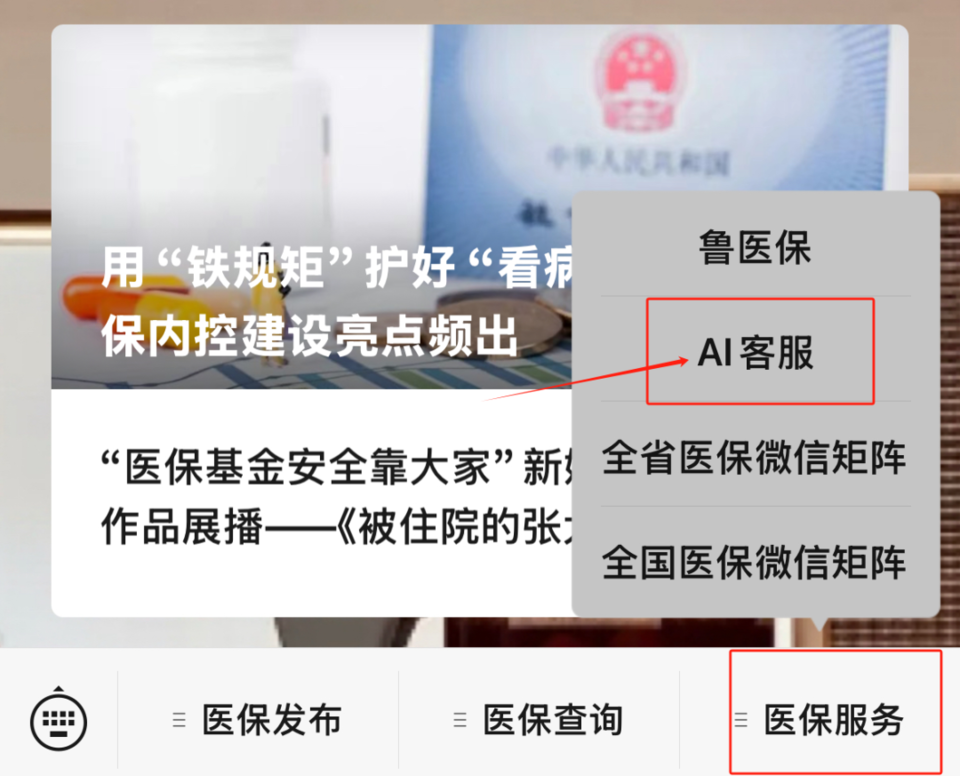
山东医保 AI ,来了
Qi Lu Wan Bao Wang· 2025-07-30 12:04
Core Viewpoint - The Shandong Provincial Medical Insurance Bureau has launched an "AI Customer Service" feature on its WeChat public account and official website to enhance the efficiency of medical insurance consultation services for insured individuals, medical institutions, and pharmaceutical companies [1]. Group 1: Service Features - The "AI Customer Service" can be accessed through the "Medical Insurance Service" section on the WeChat public account or by clicking the "Yibaoer" avatar on the official website [1][6][8]. - The service provides real-time responses to inquiries about medical insurance policies, business processing guidance, and answers to frequently asked questions across 16 cities in Shandong Province, available 24/7 [1]. Group 2: User Guidance - Users are encouraged to provide specific information such as their insured location and business scenarios to improve the accuracy of the AI responses [1]. - The AI assistant, Yibaoer, can assist users in checking their medical insurance balance and consumption details, as well as providing information on required materials for various applications [5].

晶采观察·解码“十四五”丨便民又贴心!数字化赋能医保服务
Yang Guang Wang· 2025-07-28 01:55
Group 1 - The core viewpoint of the articles highlights the significant advancements in healthcare services through digitalization during the "14th Five-Year Plan" period, emphasizing the convenience and efficiency brought to the public [1][2][3] - As of June 2025, over 1.236 billion people in China are expected to have activated and be using the medical insurance code, facilitating direct settlement for medical services across various scenarios [1] - The introduction of the "drug price comparison" mini-program aims to help citizens find reasonably priced medications easily, enhancing consumer choice and transparency in drug pricing [2] Group 2 - The number of people utilizing cross-provincial medical insurance direct settlement has surged from 5.37 million in 2020 to 238 million in 2024, marking a 44-fold increase, with over 90% of hospitalization costs settled directly [2] - Digitalization in healthcare services is not only about efficiency but also about enhancing the warmth of service, as seen in the implementation of bilingual voice broadcasting in healthcare facilities in Pingxiang, Jiangxi, catering to the elderly [3] - The balance between efficiency and warmth in healthcare services is a key aspect of the digital transformation, aiming to ensure that every insured individual feels valued and recognized in the digital age [3]
全国数智医保示范城建设在杭启动
Hang Zhou Ri Bao· 2025-07-11 02:35
Group 1 - The core objective is to establish Hangzhou as a national model city for smart medical insurance, focusing on a health-centered approach and creating a new governance paradigm driven by intelligence, comprehensive coverage, multi-dimensional collaboration, and security [1][2] - The blueprint for the smart medical insurance initiative includes a total of 1 overall goal, 3 phased implementations, and 6 major smart projects, aiming for the realization of multiple landmark achievements [1][2] - The implementation of six major projects, including "Smart Integration for Common Prosperity" and "Smart Service," is expected to yield quantifiable results such as the "Yibaoer" AI agent and various innovative applications [2] Group 2 - The initiative aims to enhance public health and welfare by transforming the smart medical insurance blueprint into practical applications, contributing to a smarter and more intelligent urban landscape in Hangzhou [3]
全国医保“一盘棋”:异地就医免垫付首季减负469亿元
Hua Xia Shi Bao· 2025-06-12 08:58
Core Viewpoint - The cross-provincial medical treatment direct settlement policy has significantly improved the reimbursement process for patients, reducing the financial burden and streamlining the healthcare experience [2][4][11]. Group 1: Policy Impact - As of the first quarter of 2025, the cross-provincial direct settlement system has benefited 70.75 million insured individuals, reducing out-of-pocket expenses by 46.992 billion yuan, marking increases of 37.97% and 11.44% respectively compared to the same period in 2024 [2][7]. - The number of cross-provincial designated medical institutions reached 651,600, an increase of 0.77 million or 1.19% from the end of 2024 [7][8]. - The direct settlement for inpatient services accounted for 3.6389 million cases, reducing personal payments by 36.537 billion yuan, with growth rates of 11.92% and 5.68% respectively [7][8]. Group 2: Technological Advancements - The establishment of a unified national medical insurance information platform has facilitated seamless cross-provincial medical treatment settlements, ending the previous fragmented system [3][8]. - Patients can now complete the reimbursement process using electronic medical insurance credentials or social security cards, significantly reducing the need for physical paperwork and in-person visits [8][9]. Group 3: Regional Innovations - Various provinces have implemented innovative service models, such as automatic registration and immediate settlement for cross-provincial medical treatment, enhancing accessibility for patients [9][10]. - In Yunnan, the "Medical Insurance Market Day" initiative has improved access to services in remote areas, leading to a more than 40% increase in cross-provincial outpatient settlements in the first quarter of 2025 [10]. Group 4: Future Implications - The reforms in cross-provincial medical treatment not only alleviate financial burdens but also promote the free movement of labor and resources across regions, supporting the construction of a unified national market [11].