
医养结合

Search documents
五部门联合开展医养结合促进行动,满足健康养老服务需求
Huan Qiu Wang· 2025-10-30 01:08
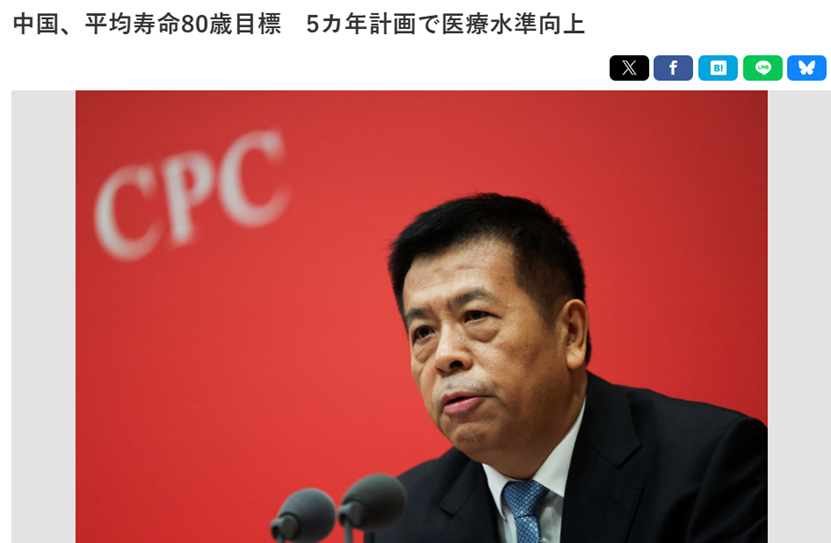
Core Points - The Chinese government has launched a three-year initiative to promote the integration of medical and elderly care services, with 25 specific tasks outlined to enhance service delivery and capacity by the end of 2027 [1] - The initiative aims to better meet the health and elderly care needs of the aging population, with a focus on improving the sharing of medical and elderly care resources [1] - Japan's media reported that China plans to improve healthcare levels during the 15th Five-Year Plan (2026-2030), targeting an average life expectancy of 80 years [1] Summary by Sections Policy and Initiative - The initiative is a collaborative effort involving multiple government departments, including the National Health Commission and the Ministry of Civil Affairs, aimed at enhancing the integration of medical and elderly care services [1] - By the end of 2027, the goal is to have a more comprehensive policy framework and improved service systems to support the elderly [1] Demographic Trends - Historical data shows that China's average life expectancy has steadily increased from 67.7 years in 1981 to 77.9 years in 2020, with a target of reaching 79 years by 2024 as part of the 14th Five-Year Plan [4] - The government is also considering raising the retirement age and promoting employment among the elderly to support the "silver economy" [1]

守护“夕阳红”!我国开展为期3年的医养结合促进行动
Xin Hua Wang· 2025-10-29 14:09
Core Points - The Chinese government has launched a three-year initiative to promote the integration of medical and elderly care services, aiming to enhance service quality and supply by the end of 2027 [1][2] Group 1: Policy Objectives - By the end of 2027, the initiative aims to improve the medical-elderly care policy framework, enhance service systems, increase service supply, and better meet the health and elderly care needs of senior citizens [1] - The initiative focuses on seven key areas, including resource layout, talent development, home and community services, service supply expansion, support for disabled and cognitively impaired elderly, quality management, and safety production [1] Group 2: Talent Development - The initiative encourages local higher education institutions and vocational schools to establish programs related to medical care and management, elderly service management, and smart health elderly services, with a target of adding at least 30 new programs by the end of 2027 [2] Group 3: Support for Disabled Elderly - The initiative emphasizes the need to provide health services for disabled elderly individuals, support economically disadvantaged disabled elderly care needs, promote specialized services for cognitively impaired elderly, and implement long-term care insurance systems [2]
《关于开展医养结合促进行动的通知》印发
Ren Min Wang· 2025-10-29 11:02
Core Viewpoint - The National Health Commission, along with other governmental bodies, has issued a notification to promote the integration of medical and elderly care services, aiming for significant improvements by the end of 2027 [1][2]. Group 1: Policy Goals - By the end of 2027, the integration policy will be continuously improved, with a more robust service system and increased service capacity to better meet the health and elderly care needs of senior citizens [1]. Group 2: Specific Tasks - The notification outlines 25 specific tasks across seven areas, including: - Improving service resource layout, enhancing the medical-elderly care service system, and deepening collaboration within medical alliances [2]. - Strengthening the talent pool by expanding professional training and improving the skill levels of personnel [2]. - Developing home and community services, focusing on health management for the elderly and enhancing family doctor services [2]. - Expanding service supply through better integration of medical and elderly care institutions and increasing support for mental health [2]. - Strengthening support for elderly individuals with disabilities or dementia, including health service actions and promoting long-term care insurance [2]. - Enhancing quality management through assessment systems and quality control measures [2]. - Establishing safety production measures, including industry regulation and emergency drills for infectious disease prevention [2].
部署25项具体任务 五部门开展医养结合促进行动
Yang Shi Xin Wen· 2025-10-29 09:56
Core Viewpoint - The National Health Commission and four other departments have launched a three-year initiative to promote the integration of medical and elderly care services, aiming for improved policies and service systems by the end of 2027 [1] Group 1: Service Resource Layout - The initiative includes enhancing the service system for integrated medical and elderly care, supporting the expansion of care functions, and deepening collaboration within medical alliances [1] Group 2: Talent Development - The plan emphasizes expanding the training of professional personnel, improving the professional skills of staff, and providing health education and caregiving skills training [1] Group 3: Home and Community Services - The initiative aims to strengthen health management for the elderly, enhance the effectiveness of family doctor contracts, and provide embedded community services [1] Group 4: Service Supply Expansion - It includes deepening the effective connection of services in care institutions, promoting integrated traditional Chinese medicine services, popularizing mental health knowledge, increasing insurance support, and enhancing information technology support [1] Group 5: Support for Disabled and Dementia Patients - The plan focuses on health service actions for disabled elderly individuals, ensuring care for economically disadvantaged disabled elderly, encouraging specialized services for dementia patients, and promoting the implementation of long-term care insurance [1] Group 6: Quality Management - The initiative includes implementing assessment systems for elderly admissions, strengthening quality control, promoting multidisciplinary continuous services, and standardizing the management of personal medications [2] Group 7: Safety Production - It emphasizes strengthening industry supervision, ensuring institutional accountability, and conducting emergency drills for infectious disease prevention [3]
截至2024年底,山东有60岁及以上人口2482万
Da Zhong Ri Bao· 2025-10-29 00:51
Core Insights - Shandong province has the highest elderly population in China, with 24.62% of its population aged 60 and above, totaling 24.82 million by the end of 2024 [2] - The province is actively working to create an elderly-friendly society and improve services for the aging population, leading the nation in addressing population aging [2] Summary by Categories Elderly Population Statistics - By the end of 2024, Shandong will have 24.82 million people aged 60 and above, representing 24.62% of the total population [2] Pension and Social Security - Shandong is enhancing its social security system, implementing nationwide enterprise pension insurance, and expanding basic pension insurance coverage [2] - The province has included 59.1 million elderly individuals in minimum living security and 29.2 million in special hardship assistance [2] Elderly Care Services - Shandong has established a multi-tiered elderly care service system, with 1,631 recognized inclusive elderly care institutions, accounting for 60% of the total [3] - By September 2025, the total number of elderly care institutions is expected to reach 2,731, with nursing beds making up 76.4% [3] - The province has developed 24,000 community elderly care facilities and 86,000 family elderly care beds [3] Health Support for the Elderly - A comprehensive elderly health service system is being built, with 96.5% of public hospitals above the secondary level having geriatric departments [4] - There are 1,125 integrated medical and elderly care institutions in the province, with over 330,000 beds [4] - The province has implemented home modifications for 15.8 million elderly individuals to support those with disabilities or dementia [4] Promotion of Elderly-Friendly Environment - Shandong has created 160 national model elderly-friendly communities and registered over 3.6 million elderly volunteers [4] - The province conducts annual "Respect for the Elderly Month" activities to promote awareness and engagement [4] Support for Silver Economy - The province is prioritizing the medical and health industry as part of its "Ten Strong Industries," with 98 projects totaling 68.5 billion yuan included in the 2025 development plan [5] - Shandong is one of the first provinces to issue subsidies for elderly care services, distributing 277,000 service vouchers and 135 million yuan in subsidies, benefiting 224,400 individuals [5]
2025会议明牌:未来5年钱往哪流,都在这13个领域
Sou Hu Cai Jing· 2025-10-25 18:33
Core Viewpoint - The era of land finance is officially over, and the next five years will see a shift in wealth towards technology and green innovation, with a target to increase per capita GDP from $13,000 to $20,000 by 2035 [1][3] Group 1: Economic Transition - The focus of economic growth has shifted from investment and real estate to high-quality development, emphasizing self-controlled industrial chains, particularly in chips and artificial intelligence [3][5] - Significant investments are expected in high-end manufacturing, aerospace, and comprehensive transportation networks, indicating a strong capital flow into these sectors [5] Group 2: Emerging Opportunities - The AI sector is moving from concept to practical integration across various industries, while quantum technology is being pushed from laboratories to applications [5] - The domestic market is identified as a new growth area, with sectors like specialty dining, healthcare, and cultural entertainment poised for rapid development, especially in central and rural regions [5][6] Group 3: Policy Support and Market Trends - The "Three Guarantees" policy aims to support employment, consumption, and livelihood, benefiting businesses related to basic living needs, such as community services and affordable consumption [6] - The silver economy is projected to reach ¥30 trillion by 2035, creating a vast industry around elderly care and related services [8] Group 4: Infrastructure and Digital Trade - Urban development will shift from expansion to internal renewal, with over 700,000 kilometers of underground pipeline renovations expected, generating nearly ¥5 trillion in new investment demand [6] - The digital trade sector is expanding, with a current scale exceeding ¥3 trillion and 165 cross-border e-commerce pilot zones, allowing even small companies to engage in global trade [6] Group 5: Regional Development and Financial Market - Key regional developments are focused on the Yangtze River Delta and the Guangdong-Hong Kong-Macao Greater Bay Area, with specific attention to integrated circuits and biomedicine [10] - Financial market reforms are optimizing channels for long-term funds, enhancing market stability and potentially increasing foreign investment in A-shares [10]
远洋椿萱茂“医养结合示范基地”再加码,让“老有所医、老有所养”照进现实
Xin Lang Zheng Quan· 2025-08-20 10:08
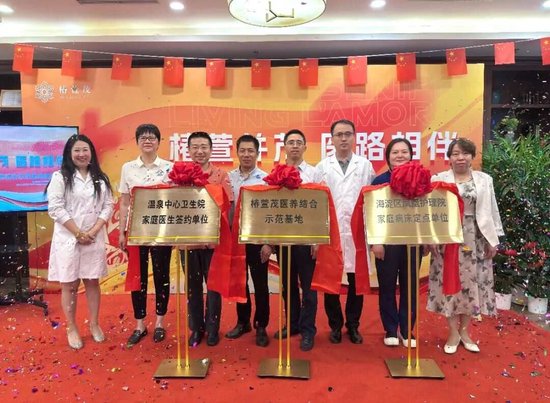
Core Viewpoint - Chuanxuanmao (Beijing Xishan) Elderly Apartment has been recognized as a "demonstration base for integrated medical and elderly care," marking a significant advancement in providing a comprehensive health service system that integrates prevention, diagnosis, rehabilitation, and care [1][4][11] Group 1: Recognition and Achievements - On August 19, during China's Physician Day, Chuanxuanmao was awarded the status of "designated unit for family beds at the Phoenix Nursing Home" and "family doctor signing unit at the Hot Spring Center Health Hospital" in Haidian District, Beijing [1][4] - The recognition signifies a major achievement in the practical implementation of integrated medical and elderly care, allowing residents to enjoy a one-stop medical and elderly care experience, including in-apartment diagnosis, bedside services, and medical insurance reimbursement [1][4][13] Group 2: Service System Upgrade - The service system of Chuanxuanmao has been comprehensively upgraded, incorporating "family beds + family doctors" into its existing professional elderly care services, creating a unique service system that includes prevention, diagnosis, rehabilitation, and care [4][7] - The family doctor team offers 13 routine medical services, including basic examinations and chronic disease management, enabling residents to address daily health issues without leaving the facility [4][7] - Family bed services allow residents to receive inpatient-level treatment within the elderly apartment, with all compliant medical services covered by medical insurance [4][7] Group 3: Community and Professional Support - A professional medical team attended the award ceremony, providing free medical consultations to residents, embodying the spirit of the Physician Day theme [3][4] - The establishment of a medical and elderly care joint system in Haidian District, supported by local government and multiple medical institutions, aims to provide high-quality medical and elderly care services [9][11] Group 4: Resident Feedback and Future Plans - Residents expressed high satisfaction with the integrated services, highlighting the ease of accessing hospital-level medical care within the elderly apartment, which addresses common challenges such as appointment difficulties [13][15] - The management of Chuanxuanmao emphasized that this milestone represents a commitment to future development and the continuous enhancement of integrated medical and elderly care services [11][15]
激发医养结合需求 释放养老服务消费潜力
Xin Hua Ri Bao· 2025-08-14 22:00
Core Viewpoint - The integration of medical and elderly care services is essential for unlocking the potential of elderly care consumption, especially in the context of an aging population and consumption upgrades [1] Constraints on Consumption Willingness - Cognitive factors: Many elderly individuals have low awareness of integrated medical and elderly care services, often preferring home care due to traditional family values, which hinders the promotion of these services [2] - Economic burden: Over 40% of consumers perceive the pricing of elderly care institutions as reasonable, with a satisfaction rate of only 62.03% regarding service quality. Limited income makes it difficult for many elderly individuals to afford integrated services, compounded by an underdeveloped long-term care insurance system [2] - Service quality: Issues such as an imbalanced supply structure and lack of personalized services in many regions lead to a mismatch between service offerings and consumer needs, affecting willingness to consume [2] Administrative Management Issues - Despite supportive policies for integrated medical and elderly care, challenges such as inadequate policy implementation and fragmented management hinder effective coordination among relevant departments, affecting the participation of private entities in service provision [3] Demand Activation and Consumption Potential Release - Policy-driven framework: The government should leverage guiding opinions to integrate medical and elderly care into urban and rural development plans, enhance resource allocation, and improve service capabilities at the grassroots level [4] - Service innovation: With 90% of elderly individuals preferring home care, innovative models like "home hospital beds + home services" are being explored, alongside partnerships between medical and elderly care institutions [5] - Consumption environment: Strengthening market regulation and establishing a quality evaluation system can enhance trust in elderly care services, while expanding service facilities will create a more comfortable consumption space [5] Industry Cross-Sector Integration and Health Ecosystem Development - Integration with digital economy: Utilizing technologies like IoT and AI can innovate service models, enabling real-time health monitoring and emergency responses for the elderly [6] - Collaborative development: Regions like Jiangsu are leveraging ecological and cultural resources to create new health and wellness products, promoting integrated development across tourism, agriculture, and elderly care [6] - Financial innovation and talent support: The industry is exploring innovative financial products and partnerships with educational institutions to address workforce shortages and support the development of the integrated medical and elderly care sector [6]
医养结合深入推进:如何让3亿多老人“养老”更“享老”
2 1 Shi Ji Jing Ji Bao Dao· 2025-07-24 11:40
Core Viewpoint - The National Health Commission has issued the "Work Plan for Demonstration Projects of Medical and Nursing Integration (2025 Edition)" to promote the integration of medical and nursing services, addressing the needs of the aging population in China [1][2]. Group 1: Overview of the Work Plan - The integration of medical and nursing services combines healthcare and elderly care, providing essential medical services to elderly individuals in various living arrangements [1]. - By the end of 2024, the elderly population aged 60 and above in China is expected to exceed 310 million, accounting for 22% of the total population, highlighting the urgency of this initiative [1]. - The new work plan has adjusted its creation goals, scope, and standards to better align with the health and elderly care needs of the aging population [1][2]. Group 2: Changes in the Work Plan - The new work plan emphasizes "better aligning with the health and elderly care needs" of seniors, a shift from the previous focus on "better meeting" these needs, indicating a more passive service provision approach [2]. - The creation scope now includes national demonstration counties (cities, districts) and institutions, with evaluations every two years, aiming to complete the creation work by 2030 [3]. - The standards for demonstration institutions have been raised, requiring a minimum occupancy rate of 65% and a significant proportion of residents to be elderly individuals with disabilities or dementia [4][5]. Group 3: Implementation and Challenges - The integration of medical and nursing services is still in the exploratory phase, with various models being tested, including partnerships between healthcare and elderly care institutions [5][6]. - There is a need to break down information barriers between departments to ensure accurate data sharing about the elderly population, which is crucial for effective service delivery [7]. - The "Internet + Medical and Nursing Integration" approach is seen as a future direction to enhance service coverage and efficiency, particularly for home and community-based elderly care [7].
破题老龄化!我国启动2025年医养结合示范项目创建
Xin Hua She· 2025-07-22 12:28
Core Points - The National Health Commission of China announced the continuation of the integrated medical and elderly care demonstration project, aiming to create approximately 100 demonstration counties (cities, districts) and institutions every two years, with a target completion date of 2030 [1][2] - The project encourages social forces to establish integrated medical and elderly care institutions through various models, including public-private partnerships [1] - Demonstration institutions must have been operational for at least five years, maintain a bed occupancy rate of 65% or higher over the past two years, and provide comprehensive services for elderly residents, including medical care and end-of-life care [1][2] Summary by Sections Project Implementation - The project will utilize information technology for data collection, with provincial-level preliminary evaluations followed by recommendations [2] - The National Health Commission will conduct assessments and publicize the designated demonstration units, with dynamic management in place to revoke titles in case of serious negative incidents or policy non-compliance [2] Historical Context - The demonstration project was initiated in 2022, with the first batch of demonstration units named in January 2024, significantly boosting local engagement and promoting high-quality development in integrated medical and elderly care [2]