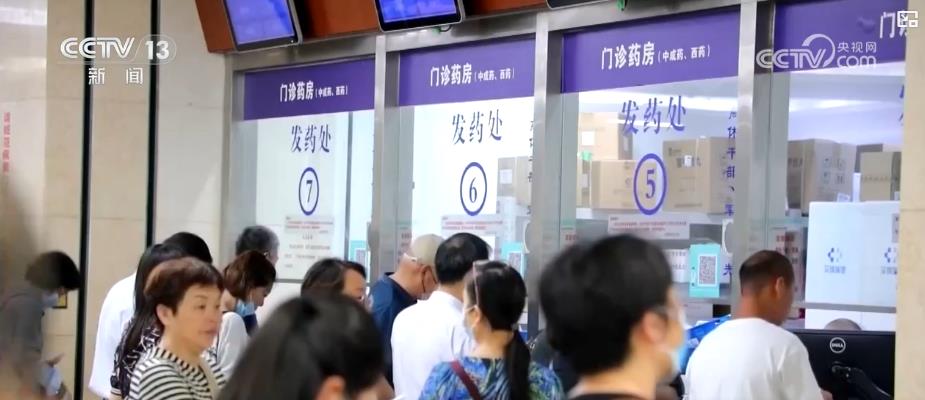
医疗卫生服务

Search documents
北京西城:佛子庄乡社区卫生服务中心开工
Bei Jing Shang Bao· 2025-09-30 11:42
Core Points - The project for upgrading medical service facilities in Fozizhuang Township, initiated by Xicheng District, has officially commenced on September 29 [1] - This project includes the construction of a new outpatient building covering over 2,800 square meters, making it the largest single investment infrastructure upgrade project in Fangshan District following the extreme rainfall disaster on July 23 [1] - Since establishing a pairing assistance relationship in August 2023, Xicheng District has invested a total of 60 million yuan, focusing on public facility restoration, red culture excavation, and the cultivation of characteristic industries [1] Investment and Development - The project aims to enhance public health infrastructure in Fangshan District, which is crucial for long-term development [1] - The investment of 60 million yuan is directed towards multiple key areas, including the renovation of the first zero-carbon emergency dual-use demonstration house in Fangshan District [1] - The initiative also includes the improvement of historical sites related to revolutionary culture, contributing to cultural heritage preservation [1]
从“治病”到“健康”的民生转型——镇江基本公共卫生服务迈入“优质化”新阶段
Zhen Jiang Ri Bao· 2025-09-21 23:36
Group 1 - The health literacy level of residents has increased to 42.5%, and the average life expectancy has reached 80.61 years, achieving the "Healthy China 2030" planning goals ahead of schedule [1] - The per capita financial subsidy standard for basic public health services has increased to 108 yuan, which is 7.2 times that of 2009 [1] - 98.5% of grassroots medical and health institutions have met the national service capacity basic standards [1] Group 2 - The city has established a tiered diagnosis and treatment system, ensuring that minor illnesses are treated in the community while serious conditions are referred to hospitals [2] - The coverage rate of family doctor contracts has reached 46.2%, with health management rates for children aged 0-6 exceeding 98% for two consecutive years [2] - The health management rate for elderly individuals has improved to 65% [2] Group 3 - The city aims to enhance grassroots medical institutions and transition from "disease treatment" to "health management" [3] - The focus will be on improving public health services from "equalization" to "quality enhancement" [3] - The initiative is part of a broader effort to contribute to the construction of a "strong, rich, beautiful, and high" new Jiangsu [3]
江苏基本公共卫生服务十五年:从“治病”到“健康”的惠民转型
Zhong Guo Xin Wen Wang· 2025-09-16 13:43
Core Insights - Jiangsu Province has transformed its basic public health services over the past fifteen years, shifting focus from "treatment" to "health" for the benefit of citizens [1][5]. Group 1: Service Development - Since 2009, Jiangsu has significantly increased its financial support for basic public health services, raising the subsidy from 15 yuan to 108 yuan by 2025, covering areas such as health education, vaccination, elderly health management, and chronic disease management [1][5]. - The introduction of the "Jiangsu Provincial Grassroots Health Regulations" has elevated basic public health services from administrative tasks to legal obligations, enhancing accountability [2]. Group 2: Innovative Management Approaches - Jiangsu has established a management principle that ensures efficient collaboration among professional public health institutions, general hospitals, and grassroots medical organizations [2]. - Innovative models for chronic disease management have been developed, such as the "three professionals co-management" model in Nanjing, which involves doctors, exercise prescription specialists, and social sports instructors working together to create personalized exercise plans for chronic disease patients [2][4]. Group 3: Health Outcomes - The implementation of a comprehensive service management information system for vaccination has enabled real-time tracking and management across the province [5]. - Key health indicators for residents have improved significantly, with health literacy reaching 40.07% in 2024, an increase of 24.77 percentage points since 2009, and effective control of major diseases and chronic conditions [5].

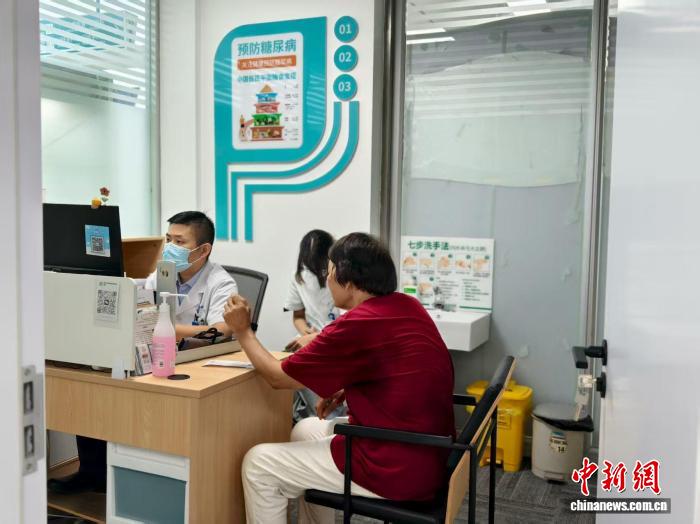
国家卫健委:“12356”心理援助热线电话已在全国普及
Ren Min Wang· 2025-09-11 05:13
Core Insights - The press conference highlighted the achievements in health and wellness during the "14th Five-Year Plan" period, focusing on pediatric and mental health services [1] Group 1: Pediatric Services - 99.5% of tertiary public general hospitals and 98.4% of secondary public general hospitals are now able to provide pediatric medical services [1] - The goal is to ensure that by the end of this year, all secondary and tertiary public general hospitals can offer pediatric medical services [1] Group 2: Mental Health Services - 99% of cities have at least one hospital providing psychological outpatient services, and 97% have at least one hospital offering sleep outpatient services [1] - These services aim to alleviate residents' psychological anxiety and address emotional issues [1] Group 3: Psychological Support Initiatives - The "12356" psychological assistance hotline has been promoted nationwide since the beginning of this year, achieving its goal by May 1, allowing every city to provide psychological consultation and health services to residents [1]
国家卫健委:我国东中西部千人口医疗资源差距正在不断缩小
Ren Min Wang· 2025-09-11 03:10
Core Viewpoint - The Chinese government has made significant progress in the healthcare sector during the "14th Five-Year Plan" period, focusing on building a high-quality healthcare system and improving service accessibility and efficiency [1] Group 1: Healthcare System Development - China has established the world's largest healthcare service system, with improvements in both service quality and efficiency [1] - The government is promoting the construction of national medical centers, regional medical centers, and provincial regional medical centers to enhance the distribution of medical resources [1] - Monitoring indicates that the disparity in healthcare resources per thousand population between eastern, central, and western regions is continuously narrowing [1] Group 2: Future Initiatives - A new initiative called the "Healthcare Strong Foundation Project" has been launched, with an implementation plan recently published by the Chinese government [1] - Over the next five years, the focus will be on strengthening the grassroots healthcare service system, enhancing capabilities, and improving accessibility [1] - The initiative aims to promote collaboration between different levels of medical institutions to better serve residents' health needs [1]
医疗也要强基!国务院发文推动医保报销待遇向基层医院倾斜
Di Yi Cai Jing· 2025-09-10 13:03
Core Points - The implementation of the "Healthcare Strengthening Project" aims to enhance grassroots medical service capabilities and is a key component of the "14th Five-Year Plan" [1][2] - The project emphasizes the integration of medical insurance reimbursement benefits towards grassroots healthcare and aims for comprehensive coverage of mobile medical services in under-resourced counties [1][4] Group 1: Implementation Goals - By 2027, the layout of grassroots medical institutions will be more rational, with a goal for residents to reach the nearest medical service point within 15 minutes [2] - By 2030, the service volume of county-level and below medical institutions is expected to increase significantly, with a notable improvement in the hierarchical diagnosis and treatment system [2][3] Group 2: Key Tasks and Metrics - The implementation plan outlines 12 key tasks focusing on system improvement, service optimization, and strengthening disease control and traditional Chinese medicine [2] - Specific targets include achieving a 70% management rate for hypertension and type 2 diabetes patients at the grassroots level by 2030 [2][3] Group 3: Resource Allocation and Support - The plan encourages the allocation of medical resources from higher-level hospitals to grassroots institutions and promotes a "fixed + mobile" service supply model [4] - It also emphasizes the need for a performance evaluation system to enhance the quality of grassroots healthcare services [4][6] Group 4: Financial and Policy Support - The project highlights the importance of increasing financial input from both central and local governments to support public health institutions and basic public health services [6] - Reforms in medical service pricing and insurance payment methods are proposed to ensure that grassroots healthcare institutions receive a larger share of funding [5][6]
提升家庭医生签约服务“感受度”
Ren Min Ri Bao· 2025-09-05 00:57
Core Viewpoint - The recent measures issued by the National Health Commission and other departments emphasize enhancing the "perceived quality" of family doctor contract services as a key metric for evaluation [1] Group 1: Service Quality and Coverage - The quality of family doctor contract services in China has been improving, with an expanding coverage of the signed population and a continuous enrichment of service content [1] - The transition from merely signing contracts to providing tangible services is a new challenge for the family doctor system, aiming to transform "paper contracts" into "daily experiences" for residents [1] Group 2: Accessibility and Convenience - Improving the accessibility and convenience of contract services is fundamental to enhancing residents' perceived quality [2] - Localities are encouraged to implement "Internet+" contract services and explore family-based signing approaches, ensuring timely referrals and information sharing between hospitals and grassroots health institutions [2] Group 3: Focus on Key Populations - Emphasizing contract services for key populations is crucial for improving residents' perceived quality [2] - There is a need to expand the variety of medications available at grassroots health institutions and enhance medication delivery to meet the reasonable needs of signed residents [2] Group 4: Long-term Mechanism Establishment - Establishing a long-term mechanism for contract services is essential for improving residents' perceived quality [3] - The involvement of various medical institutions and their physicians in providing contract services is encouraged, along with a compensation mechanism for their participation [3] Group 5: Community Engagement and Health Management - Encouraging residents to actively participate in health management is necessary to alleviate supply-demand conflicts in family doctor services [3] - Initiatives such as electronic health records access and health behavior points systems are proposed to engage residents in health education and management [3] Group 6: Importance of Family Doctor System - The family doctor contract service is a vital component of the hierarchical medical system, and its sustainability relies on residents' recognition and satisfaction [4] - There is a call for localities to enhance the quality and warmth of family doctor services to increase residents' sense of gain and promote high-quality development [4]
建德首辆智慧体检车进山巡诊
Hang Zhou Ri Bao· 2025-08-26 02:35
Core Viewpoint - The initiative to provide mobile health check-up services in remote mountainous areas of JianDe represents a significant step towards improving healthcare accessibility for rural residents, addressing the challenges of distance and limited medical resources [2][6]. Group 1: Mobile Health Services Implementation - JianDe has launched its first mobile health check-up service, bringing professional medical services directly to the doorsteps of villagers in mountainous regions [2][5]. - The mobile health check-up vehicle successfully navigated 15 kilometers of challenging mountain roads to reach the village, highlighting the logistical efforts involved in providing healthcare to remote areas [3][5]. - The project is part of a broader initiative by the Zhejiang provincial government to enhance healthcare services for residents in mountainous and island areas through a combination of fixed and mobile medical services [2][6]. Group 2: Community Impact and Future Plans - The mobile health service aims to alleviate the difficulties faced by rural residents in accessing medical care, particularly for the elderly and those with mobility issues [6][7]. - JianDe city health authorities plan to expand the mobile health check-up service to 20 additional locations, ensuring that each vehicle operates at least 15 days per month to maximize outreach [6][7]. - The initiative is seen as a vital step towards achieving equitable public service and promoting a shared prosperous society, with hopes to cover more mountainous villages in the future [6][7].
广东4个城市探索公共卫生医师处方权试点 全省首批公卫医师处方开出
Nan Fang Ri Bao Wang Luo Ban· 2025-08-20 07:41
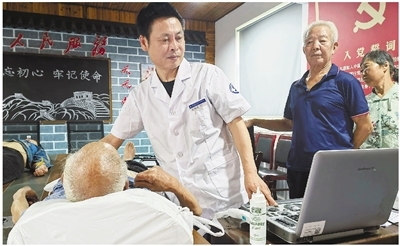
Core Viewpoint - The pilot program granting public health physicians prescription rights in Guangdong aims to enhance the integration of medical and preventive services, particularly for chronic disease management [2][4]. Group 1: Implementation of Prescription Rights - The first public health physician prescription in Zhongshan was issued on August 19, coinciding with China's Physician Day, marking a significant step in the pilot program [1]. - A total of 20 public health physicians in Zhongshan are now authorized to prescribe for 18 specific diseases, including diabetes and hypertension, across five community health service centers and three medical institutions [2][4]. Group 2: Benefits for Patients - Patients like Jiang Dandan have reported significant time savings, with the ability to receive prescriptions directly from public health physicians, reducing the need for lengthy hospital visits [3]. - The new prescription rights allow public health physicians to provide a complete service loop for chronic disease management, including follow-up, assessment, guidance, and medication [4]. Group 3: Broader Implications for Public Health - The initiative is expected to improve the continuity and coordination of care for chronic disease patients, addressing the challenges faced by public health physicians who previously could not prescribe medications [5]. - The program aims to create an integrated model of disease prevention and management, enhancing the overall effectiveness of public health services [5].
基层医疗托起民生需求:家门口的“健康守门人”提升百姓健康获得感
Yang Shi Wang· 2025-08-08 07:37
Group 1 - The core viewpoint of the articles emphasizes the efforts of the National Health Commission to enhance the accessibility and quality of healthcare services through the establishment of a tiered medical system, focusing on grassroots healthcare reform and the integration of technology [1][3][5] - The National Health Commission has been actively working to address the shortcomings in grassroots medical services, with various departments collaborating to implement guidelines for optimizing the layout and construction of grassroots healthcare institutions [3] - There are currently 2,188 counties and districts in China engaged in the construction of tightly-knit county medical communities, with approximately 80% of these areas developing resource-sharing centers and 90% of township hospitals and community health service centers now offering pediatric services [5] Group 2 - The future focus of community healthcare will be on clearly defining the management and treatment pathways for various diseases, ensuring a collaborative approach between community and higher-level medical institutions [5] - The shift from a disease-centered approach to a health-centered approach in the healthcare system is highlighted as a significant transformation, aiming to enhance the health experience of the public [5] - The ongoing descent of quality medical resources to local levels is expected to significantly improve the public's sense of health security and access to healthcare services [5]