
指数编制

Search documents
深交所发布新基建、碳中和等四条指数
Xin Hua Wang· 2025-08-12 06:28
Core Viewpoint - The Shenzhen Stock Exchange has launched four new indices focusing on new infrastructure, carbon neutrality, and domestic brands, enhancing the green index system and expanding investment options for investors [1][2][3] Group 1: New Indices Overview - The newly launched indices include the Shenzhen New Infrastructure 50 Index, National Carbon Neutral Green Bond Index, National Carbon Neutral 50 Index, and National Hong Kong Stock Connect New Domestic Goods 50 Index [1][2][3] - These indices aim to guide resource allocation and support national strategies while providing diverse investment opportunities for capital markets [1] Group 2: Performance Metrics - The Shenzhen New Infrastructure 50 Index has an annualized return of 14.1% from its base date of December 31, 2012, to March 31, 2022 [1] - The National Carbon Neutral Green Bond Index has an annualized return of 3.8% since its base date of December 31, 2020, while the National Carbon Neutral 50 Index has an annualized return of 11.4% since December 31, 2014 [2] - The National Hong Kong Stock Connect New Domestic Goods 50 Index has an annualized return of 7.5% from its base date of December 31, 2014, to March 31, 2022 [3] Group 3: Market Implications - The introduction of these indices is expected to lower information screening costs for investors and promote investment diversification, particularly in the context of China's green transition [2][3] - The indices are anticipated to enhance the refinancing capabilities of companies with new domestic goods attributes, improve brand value, and increase liquidity in related stocks [3]
各现金流指数差异在哪?哪种指数与传统资产相关性更低?——A股自由现金流指数比较
申万宏源金工· 2025-08-08 08:03
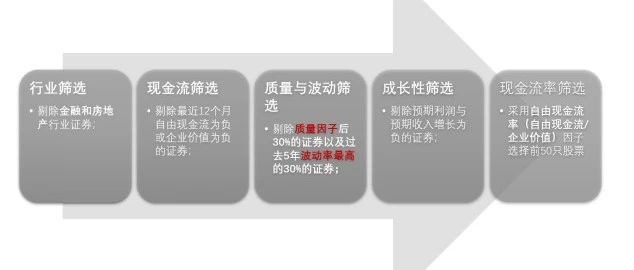
Group 1 - The core viewpoint of the article emphasizes that free cash flow has become a high-potential investment direction in the domestic ETF market, with significant growth observed in overseas markets [1] - The development of cash flow ETFs in overseas markets is mature, with the largest US free cash flow ETF, COWZ, exceeding $20 billion in size as of April 25, 2025 [1][5] - Various index compilation schemes for overseas free cash flow products exist, with a focus on selecting stocks with the highest free cash flow yield [3][4] Group 2 - Domestic cash flow strategies are expected to be effective in the long term, as companies shift from growth-oriented to cash flow-focused management strategies [7] - The performance of large-cap stocks has outperformed small-cap stocks in the US cash flow products, with COWZ showing a widening lead over CALF since 2024 [6] - The domestic cash flow index has seen steady growth since 2014, with a focus on companies with high cash flow returns, leading to significant excess returns compared to broad market indices [7] Group 3 - The FTSE China A-Share Free Cash Flow Focus Index has a larger average market capitalization compared to other domestic cash flow indices, indicating a focus on large and mid-cap stocks [19][21] - The FTSE cash flow index has a higher dividend yield and lower valuation compared to its peers, making it an attractive investment option [33] - The FTSE cash flow index has shown a strong risk-return profile, outperforming traditional dividend indices since 2014 [36][37] Group 4 - The FTSE cash flow index benefits from a dual filtering approach that includes quality and low volatility factors, enhancing its risk management and long-term value [50][55] - The index's composition is heavily weighted towards consumer and cyclical sectors, with significant allocations in household appliances, non-ferrous metals, and food and beverage industries [26][27] - The index has a high overlap with major broad-based indices, which positions it well to benefit from future market management policies [31][32]

富时罗素指数新增129只 国际指数对A股认可度提升
Zheng Quan Ri Bao Wang· 2025-08-08 06:59
Group 1 - The core viewpoint is that the inclusion of 129 A-shares, including 11 from the Sci-Tech Innovation Board, into the FTSE Global Equity Index Series signifies increasing international recognition and investment in the A-share market [1][2] - The addition of these A-shares is expected to enhance foreign capital allocation and bring in more incremental funds, particularly an estimated $100 million for the Sci-Tech Innovation Board [1][2] - The move reflects a growing demand from overseas investors for investment in the Sci-Tech Innovation Board, which is anticipated to boost trading volume and liquidity, thereby enhancing overall valuations [2][3] Group 2 - The trend of increasing foreign investment in the A-share market is supported by China's long-term economic confidence and ongoing capital market reforms [3] - Recent data indicates that foreign capital has been steadily increasing its allocation to the A-share market, with net purchases reaching 217.178 billion yuan over the past year [3] - The process of international indices gradually incorporating A-shares is evolving from a limited selection to a broader coverage, reflecting a deeper understanding of the Chinese capital market [3]
中证商品指数公司发布能源化工产业期货指数系列
Qi Huo Ri Bao Wang· 2025-07-07 01:09
Core Viewpoint - The launch of the China Securities Energy and Chemical Industry Futures Index Series aims to support the real economy and enhance risk management tools for the energy and chemical sectors [1][4]. Group 1: Background and Overall Considerations - The index series was developed to align with the central government's directive to prioritize financial services for the real economy, emphasizing the role of the futures market in supporting new industrialization [1]. - The energy and chemical industry is described as a "driving engine" of the national economy, highlighting its significant economic scale and broad industrial connections [1]. - The index series was created in response to the urgent need for precise and efficient analytical tools and risk management methods within the industry [1]. Group 2: Index Series Details - The China Securities Energy and Chemical Industry Futures Index Series consists of three indices: the Energy and Chemical Industry Futures Price/Index, the Energy Chemical Product Futures Price/Index, and the Organic Chemical Product Futures Price/Index [2]. - The indices cover 23 futures varieties across the entire energy and chemical industry chain, including crude oil, coal, oil products, and both organic and inorganic chemicals [2]. - The Energy Chemical Product Index focuses on the midstream sector, covering 17 futures varieties related to oil products and organic chemicals [2]. - The Organic Chemical Product Index specifically tracks the price trends of 11 futures varieties related to organic chemicals [2]. Group 3: Functions and Application Scenarios - The index series provides a reliable market reference for enterprises and investors, helping them manage price volatility risks through various derivative tools [3]. - In operational terms, downstream manufacturing companies can use the index trends to anticipate raw material cost changes and adjust procurement and pricing strategies accordingly [3]. - Financial derivatives linked to the energy chemical industry indices can facilitate tracking average prices and promote resource allocation and risk management in the futures market [3]. Group 4: Role in Macro-Economic Management - The index series serves as a forward-looking price signal, aiding macroeconomic analysis, policy formulation, and risk warning [4]. - The indices are closely correlated with the Producer Price Index (PPI), allowing them to reflect PPI trends 1-2 months in advance, thus acting as a leading indicator for the macroeconomy [4]. - The indices help macro management departments understand supply and demand changes in the energy and chemical sectors, providing data support for policy adjustments and resource allocation [4]. Group 5: Future Development Initiatives - The company aims to diversify index research and enhance the index system to better support futures market innovation and macroeconomic decision-making [5][6]. - There is a focus on exploring pathways for index productization and expanding cooperation on index-related products while ensuring risk management [6]. - The company plans to optimize its technical systems and enhance data support capabilities to strengthen its business development foundation [6].
恒生生物科技指数及恒生港美生物科技指数的编算方法调整
news flash· 2025-06-26 08:05
Group 1 - The Hang Seng Biotechnology Index will undergo updates in its calculation methodology, including new requirements for the Stock Connect trading eligibility and modifications to the selection criteria [1] - The number of constituent stocks in the Hang Seng Biotechnology Index will be fixed at 30 [1] - The listing history requirement will be removed, and a rapid inclusion mechanism will be introduced [1] Group 2 - The Hang Seng Hong Kong-US Biotechnology Index will also see updates, with the number of constituent stocks fixed at 40 [1]
股债配置有点烦?股债恒定指数了解下!
雪球· 2025-06-15 05:25
Core Viewpoint - The article introduces the "China Securities Stock-Bond Constant Series Index," which combines stocks and bonds to provide investors with asset allocation tools with varying stock-bond ratios, emphasizing the importance of dividend, cash flow, and core broad-based categories in A-share asset allocation [3][4]. Group 1: Index Overview - The China Securities Index has released six series of stock-bond constant indices, totaling 24 individual indices, including the Shanghai Dividend Stock-Bond and the Dividend Low-Volatility Stock-Bond series [7][8]. - These indices adopt a higher bond ratio, leading to a more stable long-term performance, with expected returns close to "fixed income+" [8]. Group 2: Stock-Bond Allocation Strategy - The stock-bond allocation strategy is a common asset allocation approach, enhancing portfolio stability by balancing the high volatility of stocks with the stability of bonds [4]. - Common stock-bond ratios include Graham's recommended 50/50 strategy, a more aggressive 70/30, and a conservative 30/70 [4]. Group 3: Index Composition - The Shanghai Dividend Stock-Bond series consists of the Shanghai Dividend Index and the Shanghai 0-5 Year High-Grade Credit Bond Yield Strategy Index, with ratios of 10:90, 20:80, and 30:70 [9]. - The Dividend Stock-Bond series combines the China Securities Dividend Index with the China Securities 0-5 Year High-Grade Credit Bond Yield Strategy Index, also using the same ratios [10]. - The Dividend Low-Volatility Stock-Bond series includes the China Securities 800 Dividend Low-Volatility Index and the China Government Bond Index, maintaining the same ratios [11]. - The A500 Exchange Stock-Bond series uses the China Securities A500 Index and a combination of exchange government bonds and policy financial bonds, with five allocation levels [12]. - The Cash Flow Exchange Stock-Bond series employs the China Securities 800 Free Cash Flow Index and the same bond combination, also with five allocation levels [13]. - The Dividend Low-Volatility Exchange Stock-Bond series utilizes the China Securities 800 Dividend Low-Volatility Index and the bond combination, maintaining five allocation levels [14]. Group 4: Performance Analysis - All indices have achieved positive returns due to their higher bond ratios, indicating a favorable long-term holding experience [19]. - As the stock allocation increases, the returns of most indices tend to rise, although the increase in annualized volatility often outpaces the rise in returns [20]. - Recent performance of dividend, low-volatility, and cash flow indices has been strong, but past performance does not guarantee future results [21]. Group 5: Investment Considerations - The article suggests that for lower risk tolerance, the bond ratio can be adjusted to 70% or more, akin to a fixed income+ strategy, while those who can tolerate some volatility may increase stock allocations [23]. - It emphasizes the importance of diversifying stock selections across dividend, low-volatility, cash flow, and core broad-based indices [23]. - The construction of a government bond and policy financial bond combination is proposed as a strategy for bond asset selection, considering the level of risk-free interest rates [23].

每经品牌100指数新一轮成分股去年平均净利润超400亿元
Mei Ri Jing Ji Xin Wen· 2025-06-13 07:31
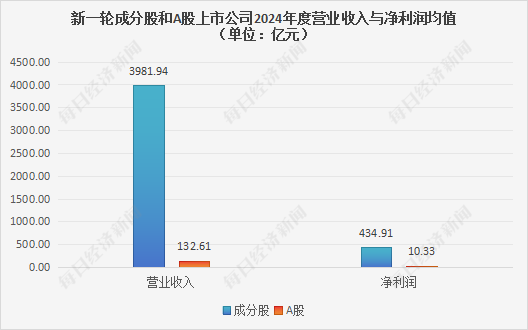
Core Insights - The "Everyday Brand 100 Index" will undergo its fourth sample adjustment, selecting 99 companies based on the "2025 China Listed Company Brand Value Top 100" [1] - Newly selected constituent stocks demonstrate superior financial performance, with average operating revenue and net profit significantly exceeding the A-share market averages [2][3] Financial Performance - The average operating revenue of the constituent stocks is 398.194 billion, while the average net profit is 43.491 billion [2] - Compared to the previous year, operating revenue decreased by 2.73%, while net profit increased by 8.95% [2] - The average operating revenue of the constituent stocks is 30.03 times the A-share average, and the average net profit is 42.10 times the A-share average, indicating strong competitive and profitability advantages [3] Return on Assets and Equity - The average Return on Assets (ROA) and Return on Equity (ROE) for the constituent stocks are 5.96% and 13.61%, respectively, both of which are significantly higher than the A-share market averages of 1.67% for ROA and -3.85% for ROE [6] Growth Metrics - The average growth rates for operating revenue, total assets, and net assets of the constituent stocks are 3.98%, 8.33%, and 7.11%, respectively, with total assets and net assets growth rates exceeding A-share market averages [7] - A strong linear correlation exists between the growth rates of operating revenue, total assets, and net assets and the growth of brand value, with correlation coefficients of 0.65, 0.49, and 0.57, respectively [8]
MSCI纳A指数样本新纳入5只个股 5月30日生效
news flash· 2025-05-28 09:51
Core Insights - MSCI announced the inclusion of 5 new stocks in the MSCI China A Index, effective after market close on May 30 [1] - The updated MSCI A Index will consist of 394 stocks, with 246 from the Shanghai Stock Exchange and 148 from the Shenzhen Stock Exchange [1] - China remains the largest weight market in the MSCI Emerging Markets Index, reflecting a positive outlook for the A-share market [1] Summary by Category - **Index Adjustment** - MSCI added 5 new stocks to the MSCI China A Index, with 3 from the Shanghai market and 2 from the Shenzhen market [1] - The total number of stocks in the MSCI A Index will increase to 394 [1] - **Market Outlook** - Recent upgrades by foreign institutions regarding China's economic development expectations for 2025 signal a growing confidence in the A-share market [1] - This positive sentiment is expected to attract more incremental capital into the Chinese stock market [1]
罗素美国指数,启动年度重组!
Zheng Quan Shi Bao· 2025-05-24 07:07
Group 1 - The core point of the article is that FTSE Russell has announced an annual restructuring of the Russell US Index, effective after the market close on June 27, with plans to increase the adjustment frequency from once a year to twice a year starting in 2026 [1][6]. Group 2 - The restructuring will occur in three phases, with the first phase confirming the constituents based on market capitalization after the close on April 30. May and June will serve as transition months, with preliminary adjustment lists communicated to the market starting May 23 and updates provided on May 30, June 6, June 13, and June 20 [3][5]. - The Russell US Index comprises the Russell 1000 Index, which includes the largest 1,000 companies by market capitalization, accounting for 93% of the total investable US equity market, and the Russell 2000 Index, which includes the smallest 2,000 companies [3][5]. - The adjustments to the index have significant market implications, as approximately $10.5 trillion tracks the Russell US-related indices, making the restructuring day one of the largest trading volume days in the US market [5]. Group 3 - The changes are intended to ensure that the Russell US Index remains representative of the market, as market conditions and valuations evolve over time [6]. - On the 2024 adjustment day, the Nasdaq's closing cross-match system executed approximately 2.9 billion shares valued at $95.3 billion in just 0.878 seconds, setting a new record for Russell index restructuring days [5].
湾区数字经济指数和湾区消费指数发布 聚焦深港两市优势产业
news flash· 2025-05-19 08:49
Core Insights - The Shenzhen Stock Exchange and Hang Seng Index Company jointly released the Guozhen Hang Seng Greater Bay Area Digital Economy Index and the Guozhen Hang Seng Greater Bay Area Consumption Index during the 2025 Global Investor Conference [1] - The purpose of these indices is to provide distinctive cross-border investment targets and better serve investors' cross-border asset allocation needs [1] - This collaboration represents an innovative practice aimed at enhancing the interconnectivity mechanisms between Shenzhen and Hong Kong, supporting high-level bilateral openness [1] Summary by Categories Digital Economy Index - The Guozhen Hang Seng Greater Bay Area Digital Economy Index was developed to reflect the digital economy landscape in the Greater Bay Area [1] - It aims to attract investment and provide insights into the performance of digital economy sectors [1] Consumption Index - The Guozhen Hang Seng Greater Bay Area Consumption Index focuses on consumer trends and spending patterns within the Greater Bay Area [1] - It serves as a tool for investors to understand the consumption dynamics and opportunities in the region [1] Cross-Border Investment - The indices are designed to facilitate cross-border investment opportunities between Shenzhen and Hong Kong [1] - They aim to enhance the investment landscape by providing clear benchmarks for investors [1] Innovation and Collaboration - The partnership between the two index institutions is seen as a significant step towards fostering innovation in the financial markets of the Greater Bay Area [1] - It highlights the commitment to developing a robust framework for cross-border financial services [1]