
氢燃料电池

Search documents
亿华通:核心技术人员杨绍军离职
Mei Ri Jing Ji Xin Wen· 2025-09-05 11:47
Group 1 - Yihua Tong (SH 688339) announced the resignation of core technical personnel Yang Shaojun due to personal reasons, and he will no longer hold any position in the company after leaving [1] - For the fiscal year 2024, Yihua Tong's revenue composition is as follows: 99.18% from the hydrogen fuel cell industry and 0.82% from other businesses [1] - As of the report date, Yihua Tong's market capitalization stands at 5.7 billion yuan [1]

半年盘点|多数企业净利减亏,上半年氢燃料电池企业第二曲线成效初显
Di Yi Cai Jing· 2025-09-04 13:28
Core Viewpoint - The hydrogen fuel cell industry is transitioning from a "policy demonstration-driven" model to a "scenario commercialization-driven" model, leading to increased market competition and commercialization challenges for companies [1] Revenue Performance - The four companies reported a decline in overall revenue for the first half of the year, with Guohong Hydrogen Energy and Yihuatong experiencing the largest drops of 55.7% and 53.25%, respectively, to 58.883 million and 71.929 million [2] - The revenue decline is attributed to two main factors: the early-stage commercialization of the hydrogen fuel cell industry and increased competition due to stricter cost control requirements from downstream customers [2] - Yihuatong's revenue from fuel cell systems, which accounts for over 70% of its total revenue, fell by 52.7% to 50.642 million [2] Market Demand and Profitability - The overall market demand for fuel cells has decreased, with the cumulative production and sales of fuel cell vehicles in China dropping by 47.2% and 46.8%, respectively, in the first half of the year [3] - Despite the revenue declines, three companies reported reduced losses, with Guofu Hydrogen Energy's loss decreasing by 20% to 89.248 million due to improved receivables and cost reductions [3] New Application Scenarios - Companies are expanding into new application scenarios for hydrogen fuel cells, such as cold chain transportation and heavy-duty vehicles, to drive growth [4] - Yihuatong has diversified its product applications to include areas like sanitation and shipping, while Reshaping Energy is focusing on long-distance transportation [4] International Market Expansion - The competitive domestic market has prompted companies to target overseas markets, with Reshaping Energy's overseas revenue increasing by approximately 160% to 11 million, now accounting for 10% of total revenue [6] - Guofu Hydrogen Energy has identified several overseas projects, including hydrogen stations and electrolysis projects, as crucial for its business development [6] Upstream Integration - Companies are also looking to extend into upstream hydrogen production as a self-rescue strategy, with Yihuatong planning a restructuring to integrate with a hydrogen production business [6]
氢能第一股亿华通遭遇“双杀”:亏损扩大、市占率跌出前十
Xin Lang Cai Jing· 2025-09-02 06:22
Core Viewpoint - Yihuatong, a leading hydrogen fuel cell company, reported significant losses in the first half of 2025, with revenue declining and net losses expanding, indicating ongoing challenges in the hydrogen fuel cell industry [1][3]. Financial Performance - Yihuatong's revenue for the first half of 2025 was 71.929 million yuan, a year-on-year decrease of 53.25% [1] - The company recorded a net loss of 163 million yuan, compared to a loss of 141 million yuan in the same period last year, marking a continued increase in losses [1] - Operating cash flow improved to -34.55 million yuan from -183 million yuan year-on-year [1] - Cumulative losses from 2020 to 2024 exceeded 1.05 billion yuan, with annual losses increasing each year [1] Debt and Receivables - As of mid-2025, Yihuatong's total liabilities stood at 679 million yuan, with a debt-to-asset ratio of approximately 16% [3] - The company faced increased short-term debt pressure, with non-current liabilities due within one year rising by about 20% to 31.84 million yuan [3] - Accounts receivable reached 2.13 billion yuan, nearly 30 times the revenue for the first half of the year, reflecting a 1.6% increase from the previous year [4] - Long-term accounts receivable over 5 years amounted to 311 million yuan, accounting for 14.6% of total receivables [4] Industry Trends - The hydrogen fuel cell vehicle market experienced a significant downturn, with production and sales nearly halved year-on-year [4] - National production of fuel cell vehicles was 1,364 units, down 47.2%, while sales were 1,373 units, down 46.8% [4] - The market for hydrogen fuel cell vehicles is facing challenges due to policy uncertainties, high costs, and infrastructure limitations [5][6] Market Position - Yihuatong's market share in the hydrogen fuel cell system sector has declined significantly, with the company not appearing in the top 10 manufacturers by installed capacity in the first half of 2025 [6] - The top three manufacturers accounted for 49.4% of the market, indicating a trend towards increased market concentration [7] Strategic Developments - In response to financial pressures, Yihuatong signed a framework agreement with Xuyang Group to exchange equity for hydrogen energy assets, aiming to enhance its supply chain and reduce costs [8] - Other leading companies in the hydrogen fuel cell sector also reported losses, but with some improvements in their financial performance compared to previous periods [8][9]

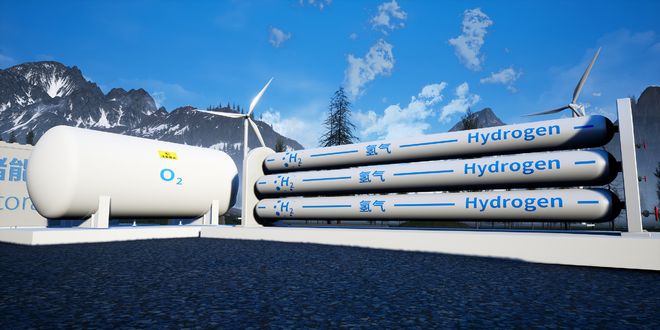
研判2025!中国氢燃料电池行业产业链、市场规模及重点企业分析:政策技术双轮驱动,中国氢燃料电池行业加速迈向规模化应用[图]
Chan Ye Xin Xi Wang· 2025-08-30 01:09
Core Insights - The Chinese hydrogen fuel cell industry is accelerating towards large-scale applications driven by policy implementation and technological breakthroughs, providing critical support for carbon neutrality goals [1][10] - The market size of the hydrogen fuel cell industry in China is projected to reach 5.99 billion yuan in 2024, representing a year-on-year growth of 52.42% [1][10] - Key material localization bottlenecks have been overcome, with companies like Yihuatong and Reshaping Technology achieving self-production of core components, significantly reducing reliance on imported materials [1][10] - Breakthroughs in high-power system development, such as the successful commercialization of 400kW fuel stacks, have expanded the application boundaries of hydrogen fuel cell technology [1][10] Industry Overview - Hydrogen fuel cells convert the chemical energy of hydrogen and oxygen directly into electrical energy through electrochemical reactions, offering high energy conversion efficiency and producing only water as a byproduct [2] - The market features various types of hydrogen fuel cells, including Proton Exchange Membrane Fuel Cells (PEMFC), Alkaline Fuel Cells (AFC), Phosphoric Acid Fuel Cells (PAFC), Solid Oxide Fuel Cells (SOFC), and Molten Carbonate Fuel Cells (MCFC), each with distinct operational characteristics and applications [4][5][6] Industry Chain - The upstream of the hydrogen fuel cell industry chain includes raw materials and production equipment such as hydrogen, proton exchange membranes, catalysts, membrane electrodes, bipolar plates, and hydrogen storage tanks [6] - The midstream involves the manufacturing of hydrogen fuel cells, while the downstream applications encompass hydrogen fuel cell vehicles, stationary power sources, hydrogen blending in natural gas, hydrogen metallurgy, and micro combined heat and power systems [6] Market Size - The hydrogen fuel cell industry in China is expected to reach a market size of 5.99 billion yuan in 2024, with a significant year-on-year growth rate of 52.42% [1][10] - The industry has made substantial progress in overcoming key material localization challenges, with companies achieving self-sufficiency in core component production [1][10] Key Companies' Performance - Yihuatong, a leading company in the hydrogen fuel cell sector, has developed advanced technologies and achieved a 100% localization rate for its latest 300kW hydrogen fuel cell engine [11] - Reshaping Technology and Guohong Hydrogen Energy are also prominent players, focusing on technological innovation and market expansion [10][11] - Weichai Power, a traditional automotive parts giant, is actively investing in the hydrogen fuel cell sector, with plans for industrialization projects expected to be completed by 2027 [12] Technological Innovation and Cost Reduction - Continuous advancements in materials science and electrochemistry are expected to enhance hydrogen fuel cell performance and reduce costs, facilitating broader applications in transportation and other sectors [14] Policy Support and Market Expansion - The Chinese government has introduced various supportive policies for the hydrogen fuel cell industry, which have attracted significant capital and technological investments [15] Infrastructure Development and Industry Chain Improvement - The construction of hydrogen refueling stations is accelerating, with over 540 stations expected to be operational by the end of 2024, addressing previous limitations in hydrogen fuel cell vehicle usability [16]

统一标准打通了产业链的“任督二脉”
Xin Hua Ri Bao· 2025-08-27 23:43
Core Viewpoint - Jiangsu province is actively promoting the standardization of key industrial chains to enhance the modernization of supply chains and improve the quality of development across various sectors [1][2][5]. Group 1: Standardization and Industry Development - The establishment of standardized interfaces across multiple industrial chains is seen as a "universal language" that facilitates communication and interoperability among different suppliers and technologies [1][2]. - The implementation of GB/T 27930 standard has significantly improved the charging success rate to 99.7% for over 100 car manufacturers, enhancing user experience in the electric vehicle sector [2]. - Jiangsu's initiative has led to 90% of public charging stations completing protocol interoperability upgrades, allowing cross-brand charging for users [2]. Group 2: Competitive Advantage through Standards - Standardization has transformed from a mere requirement to a competitive tool, enabling companies to enhance their technical capabilities and gain customer trust [3]. - Companies like XCMG have actively participated in the formulation of 182 national and industry standards, which have clarified delivery specifications and facilitated collaboration across the supply chain [4]. - The establishment of unified standards is viewed as essential for efficient cooperation among upstream and downstream enterprises, particularly in the automotive chip sector [5]. Group 3: Addressing Gaps and Future Challenges - Despite the progress, challenges remain in areas such as inter-chip connectivity, compatibility, and reliability standards, which are critical for achieving a self-controlled industrial chain [7]. - The hydrogen fuel cell industry faces a lack of standards for key components and construction of hydrogen refueling stations, which are bottlenecks for development [7]. - There is a push for the localization of core hydrogen refueling equipment and the establishment of unified regional standards to facilitate industry growth [7]. Group 4: International Standards and Market Expansion - The signing of mutual recognition agreements with Vietnam's national standards center is expected to reduce compliance costs and time for exporting new energy products [8]. - Jiangsu aims to participate in more international standard-setting activities to gain a stronger voice in global standards [8]. - The provincial market regulation bureau plans to enhance collaboration among various stakeholders to promote the application of technical standards across the entire production and consumption chain [8].

江苏深入实施重点产业链标准化提升工程——统一标准打通了产业链的“任督二脉”
Xin Hua Ri Bao· 2025-08-27 23:16
Core Viewpoint - The article discusses the importance of standardization in enhancing the efficiency and competitiveness of various industrial chains in Jiangsu Province, China, particularly in the fields of biomedicine, food processing, and new energy vehicles. Group 1: Standardization and Industry Development - Jiangsu Province is implementing a standardization enhancement project for key industrial chains, focusing on 50 major industrial chains to improve the overall quality and efficiency of the supply chain [1][6]. - The establishment of unified standards serves as a "universal language" that connects different segments of the industrial chain, facilitating better communication and interoperability among various stakeholders [1][2]. Group 2: Impact on Specific Industries - The release of standards in the semiconductor industry, such as the "Chip Interconnection Interface Specification," aims to resolve interoperability issues among different suppliers and technology nodes [2][3]. - In the electric vehicle sector, the implementation of the GB/T 27930 standard has led to a 99.7% success rate in charging compatibility across over 100 car manufacturers, significantly enhancing user experience [2][3]. Group 3: Competitive Advantage through Standards - Companies participating in standard formulation gain a competitive edge, as it enhances their technical reputation and fosters trust with clients, while also driving internal improvements in technology and processes [3][4]. - The establishment of clear standards has enabled companies like XCMG to streamline their supply chain, ensuring that only compliant suppliers can participate, thus fostering a collaborative environment for innovation [4][5]. Group 4: Challenges and Future Directions - Despite the progress, challenges remain in areas such as inter-chip connectivity, compatibility, and reliability standards, which are crucial for achieving a self-sufficient industrial chain [6]. - The hydrogen fuel cell industry faces a lack of standardized regulations, particularly concerning key components and infrastructure, which hinders its development [6]. Group 5: International Standardization Efforts - The signing of mutual recognition agreements with Vietnam's national standards center aims to reduce compliance costs for exporting new energy products, highlighting the need for alignment with international standards [7]. - The Jiangsu market regulatory authority plans to enhance collaboration among stakeholders to promote the application of technical standards and improve the overall standardization process across the production and consumption chain [7].

国鸿氢能(09663)境内未上市股份“全流通”获中国证监会备案
智通财经网· 2025-08-26 12:59
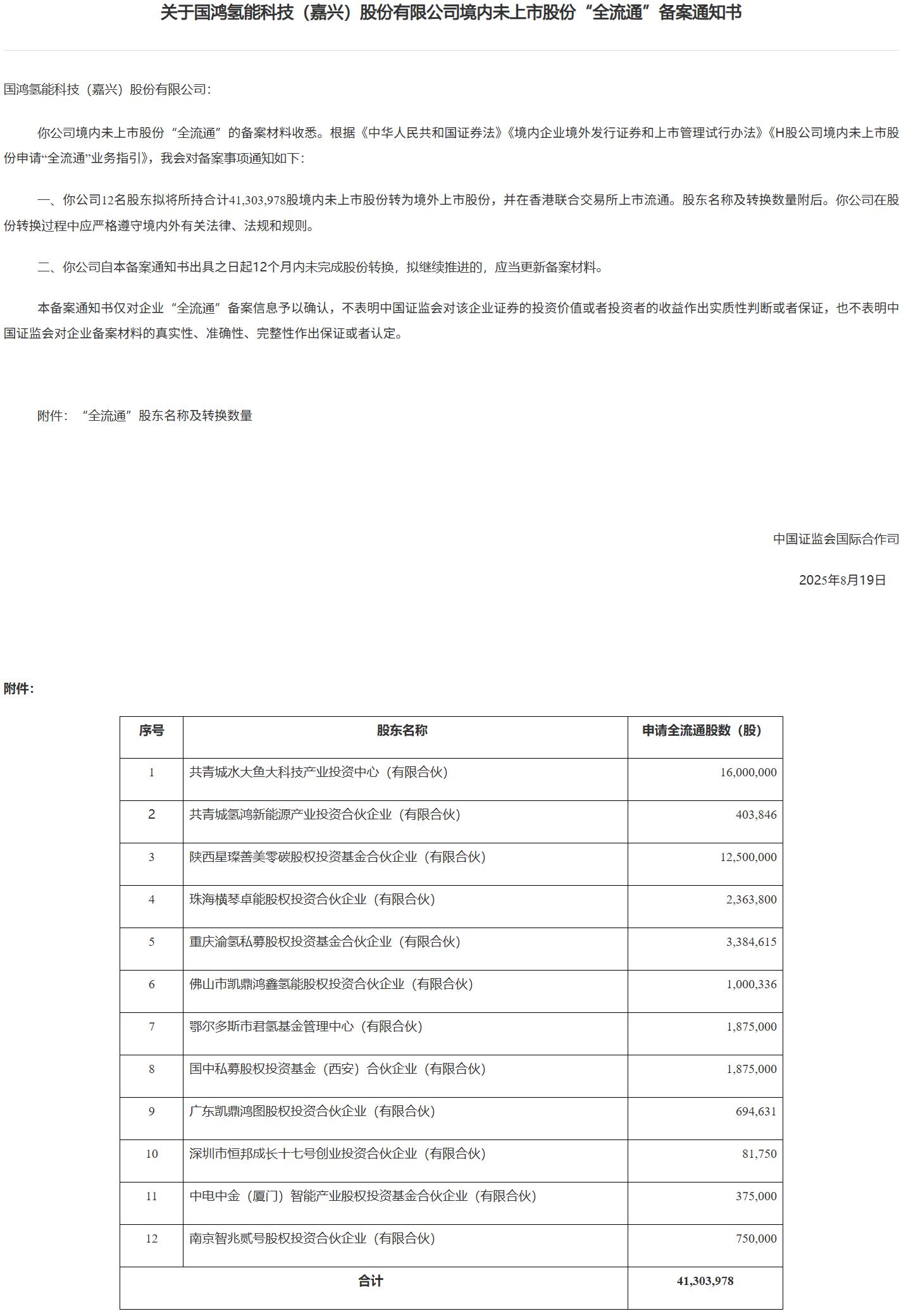
Group 1 - The China Securities Regulatory Commission has issued a notification regarding the "full circulation" of unlisted shares for Guohong Hydrogen Energy Technology (Jiaxing) Co., Ltd, allowing 12 shareholders to convert a total of 41,303,978 shares into listed shares on the Hong Kong Stock Exchange [1] - The company must complete the share conversion within 12 months from the date of the notification, or it will need to update its filing materials if it wishes to continue the process [1] Group 2 - According to Frost & Sullivan, the company is a leading player in China's hydrogen fuel cell industry, ranking first in hydrogen fuel cell stack shipments from 2017 to 2022 [4] - The company ranked first in sales value of hydrogen fuel cell systems in 2022 and second in sales volume of hydrogen fuel cell systems in the same year [4]
销量不足万辆,氢燃料电池企业集体自救
Hu Xiu· 2025-08-26 05:28
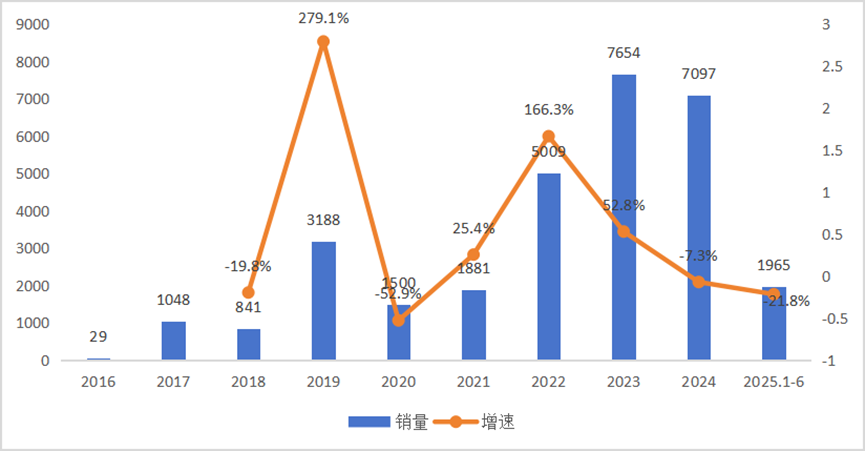
Core Viewpoint - The fuel cell vehicle market in China is struggling with low sales and high competition, leading to significant financial losses for many companies in the sector [2][4][8]. Industry Overview - In 2024, the sales of fuel cell vehicles in China were only 7,075 units, far below the millions of electric vehicles sold annually, indicating a weak market demand [2][18]. - By mid-2025, the total number of fuel cell vehicles in China reached 30,212, but this still fell short of the target of 50,000 set by the national hydrogen energy development plan [3][18]. - The market is characterized by a high number of suppliers (96 in 2024), but over 80% of them sold fewer than 100 units, leading to intense competition and financial strain across the industry [7][8]. Financial Performance - Leading companies like Yihuatong and Reshape Energy reported significant revenue declines and increased losses in 2024, with Yihuatong's revenue dropping by 54.21% and net profit falling by 87.68% [10][12]. - Reshape Energy's revenue for the first half of 2025 was approximately 107 million RMB, a decrease of about 9.9% compared to the same period in 2024, with a negative gross profit indicating unsustainable operations [14][18]. Market Dynamics - The fuel cell vehicle market is highly fragmented, with sales concentrated in a few cities and lacking large-scale, stable orders, which hampers production efficiency and cost reduction [19][20]. - The industry faces a "chicken or egg" dilemma, where the lack of hydrogen refueling infrastructure (only about 500 stations by the end of 2024) limits vehicle sales, while low sales further discourage infrastructure investment [23][24]. Policy and Future Outlook - 2025 marks the end of the current fuel cell vehicle subsidy policies, shifting the focus from government-driven incentives to market-driven growth, which introduces uncertainty for companies reliant on subsidies [15][32]. - Companies are urged to innovate and diversify their business models, moving beyond just vehicle sales to include hydrogen production and broader applications in various sectors [35][36][37]. Strategic Responses - Leading firms are exploring vertical integration by acquiring upstream hydrogen production capabilities and expanding into non-automotive applications to mitigate risks associated with the automotive market [36][40]. - The shift towards a comprehensive hydrogen energy solution provider model is seen as a necessary strategy for long-term sustainability and growth in the industry [38][43].
国鸿氢能(09663)发布中期业绩,股东应占亏损1.84亿元,同比收窄13.2%
Zhi Tong Cai Jing· 2025-08-25 13:15
Group 1 - The core viewpoint of the article is that Guohong Hydrogen Energy (09663) reported a net loss attributable to shareholders of 184 million yuan, which represents a year-on-year decrease of 13.2% [1] - The company's revenue for the six months ending June 30, 2025, was 58.883 million yuan, reflecting a year-on-year decline of 55.7% [1] - The decrease in revenue is primarily attributed to the hydrogen fuel cell industry being in the early stages of commercialization, with inadequate infrastructure and a transition from a "policy demonstration-driven" model to a "scenario commercialization-driven" model, which has impacted market sales and project implementation [1][1] Group 2 - The average selling price of hydrogen fuel cell systems has decreased, contributing to the revenue decline [1]
国鸿氢能发布中期业绩,股东应占亏损1.84亿元,同比收窄13.2%
Zhi Tong Cai Jing· 2025-08-25 13:15
Group 1 - The core viewpoint of the article highlights that Guohong Hydrogen Energy (09663) reported a significant decline in revenue and a narrowed loss for the six months ending June 30, 2025 [1] - The company's revenue was 58.883 million RMB, representing a year-on-year decrease of 55.7% [1] - The loss attributable to shareholders was 184 million RMB, which is a 13.2% reduction compared to the previous year [1] - The basic loss per share was 0.36 RMB [1] Group 2 - The decline in revenue is primarily attributed to the hydrogen fuel cell industry being in the early stages of commercialization, with inadequate infrastructure and a transition from a "policy demonstration-driven" model to a "scenario commercialization-driven" model [1] - This transition has led to short-term market sales pressure, affecting market promotion and project implementation pace [1] - Additionally, the average selling price of hydrogen fuel cell systems has decreased [1]