航天科研

Search documents
中国空间站上新“烤箱” 航天员食品实现在轨烹饪烘焙
Xin Hua Wang· 2025-11-03 22:40
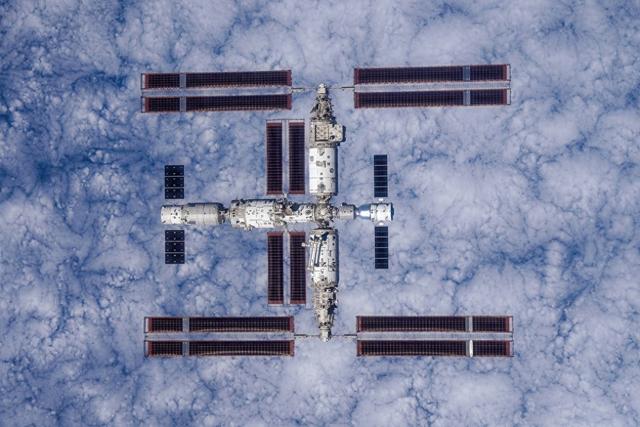
Core Points - The Chinese space station has successfully introduced a new "oven" for in-orbit cooking, allowing astronauts to prepare baked foods like chicken wings and steak for the first time [2][3] - The introduction of the "oven" is part of an initiative to enhance the living conditions of astronauts, with over 190 types of food now available and a 10-day meal cycle implemented [2][3] Group 1 - The new "oven" allows astronauts to cook and bake in space, with a specific process for preparing food that includes a 28-minute heating time for chicken wings [2] - The oven features advanced technologies for smoke-free operation, ensuring compliance with space station standards, and has been tested for 500 reliable operations [2][3] - The variety of food available to astronauts has significantly increased, with the ability to cook fresh vegetables, nuts, cakes, and meats in orbit [2][3] Group 2 - The space station's "kitchen" improvements reflect ongoing innovations in food technology, enhancing the taste, texture, and nutritional value of space food [3] - Research on in-orbit plant cultivation has led to successful growth of seven types of plants, providing astronauts with 4.5 kilograms of fresh produce [3] - Special meal preparations are planned for traditional Chinese festivals, including festive meals and surprise packages for astronauts [3]
是彗星还是外星母舰——太阳系第三位星际访客引热议
Ke Ji Ri Bao· 2025-10-29 03:38
Core Insights - The interstellar object 3I/ATLAS has sparked significant interest in both the scientific community and the public due to its unique characteristics and the ongoing debate about its origins [1][2][4] Group 1: Characteristics of 3I/ATLAS - 3I/ATLAS was first detected by NASA's ATLAS system, traveling at an astonishing speed of approximately 210,000 kilometers per hour, and is classified as a comet due to its faint coma and short tail [2] - The estimated diameter of 3I/ATLAS is between 10 to 20 kilometers, making it comparable in size to Manhattan, and its mass is at least 3.3 billion tons, significantly larger than previous interstellar visitors [2] - It is noted for its high activity, releasing about 180 kilograms of dust per second, which is more than double that of the previous interstellar comet 2I/Borisov [2][3] Group 2: Chemical Composition and Observations - Observations have detected glowing nickel vapor in the comet's coma, indicating complex chemical processes at play, with nickel potentially existing in molecular forms rather than through traditional high-temperature vaporization [3] - The chemical composition of 3I/ATLAS is complex, with high levels of carbon dioxide detected, alongside water ice and carbon monoxide, suggesting a variety of frozen materials are being heated [3] Group 3: Scientific Community's Response - The scientific community largely dismisses the theory proposed by Avi Loeb that 3I/ATLAS could be an alien spacecraft, emphasizing that the evidence supports it being a natural celestial body consistent with known comet characteristics [4][5] - NASA has confirmed that 3I/ATLAS poses no threat to Earth and is closely monitoring its trajectory and behavior as it approaches perihelion [5][6]
俄宇航员太空行走安装科研设备
Xin Hua She· 2025-10-29 02:25
Core Points - The Russian space agency announced that two astronauts conducted a spacewalk lasting 6 hours and 54 minutes, successfully returning to the International Space Station [1] - The main task of the spacewalk was to install a pulsed plasma injector on the "Science" module, along with cleaning the module's windows [1] - The pulsed plasma injector is intended for research on the impact of satellites on Earth's ionosphere, particularly during magnetic storms or solar flares [1] Summary by Sections - **Spacewalk Details** - The spacewalk took place from October 28 to 29, with astronauts Sergey Rezhikov and Alexey Zubritsky exiting the module at 17:19 Moscow time [1] - This was the second spacewalk for these astronauts in October [2] - **Scientific Objectives** - The installation of the pulsed plasma injector is aimed at facilitating research on the ionosphere during specific solar events [1]
校馆弦歌丨哈工大航天馆成青少年“打卡”热地 在这里播种星辰大海梦想
Yang Shi Xin Wen Ke Hu Duan· 2025-10-27 01:37
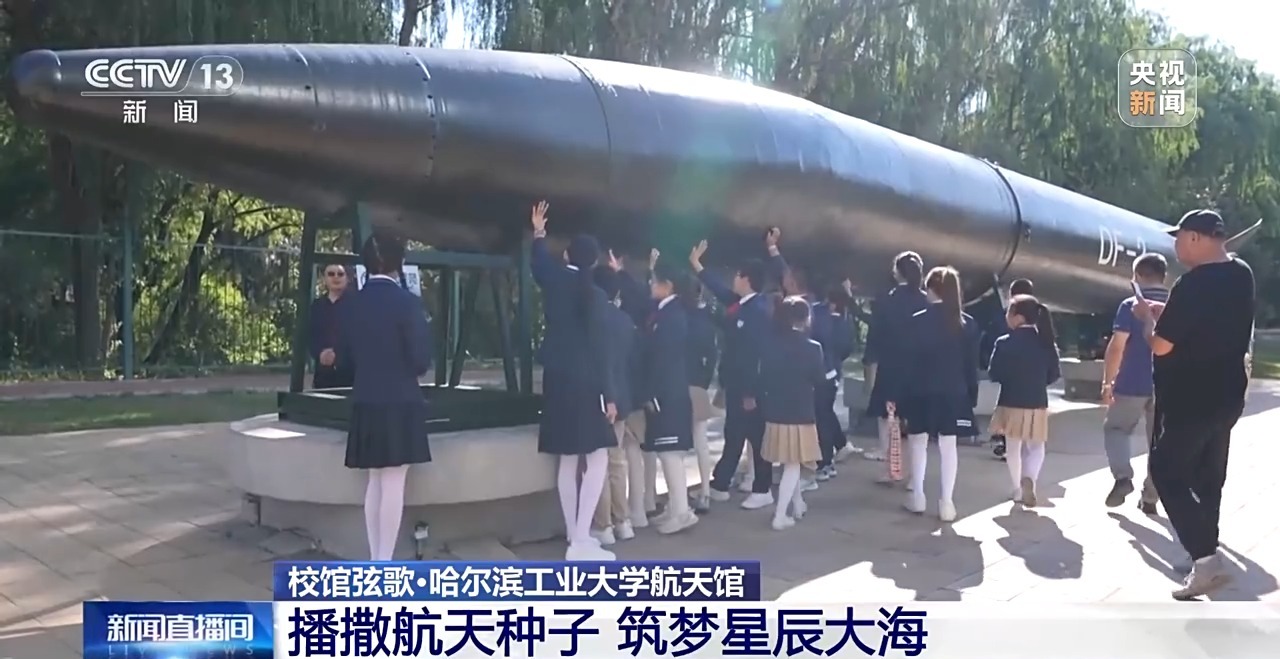
Core Viewpoint - The Harbin Institute of Technology (HIT) Aerospace Museum serves as a significant educational and inspirational hub for youth, showcasing the achievements and history of China's space exploration over the past 69 years, while fostering interest in aerospace among young generations [1][8][18]. Group 1: Museum Significance - The HIT Aerospace Museum is the largest and most diverse aerospace-themed exhibition hall in Chinese universities, featuring valuable exhibits that connect the history of China's space endeavors [1]. - The museum transforms into a joyful aerospace classroom on weekends, where children engage with real aerospace artifacts, enhancing their understanding of space [4]. - The museum acts as a bridge between the past and future of China's aerospace achievements, making the history of space exploration relatable and inspiring for the younger generation [18]. Group 2: Educational Impact - Students express admiration for the perseverance of scientists like Academician Sun Jiadong, who overcame technological challenges to develop the Beidou satellite system [3]. - Hands-on activities, such as model assembly, provide students with a tangible understanding of the complexities and rigor of aerospace engineering [6]. - The museum encourages creativity among youth, with students aspiring to contribute to future aerospace projects, such as space debris management satellites [21]. Group 3: Achievements in Aerospace - HIT has successfully launched 36 satellites since pioneering university-led satellite development in 2004, marking significant milestones in China's aerospace history [19]. - The museum features advanced equipment like the "Wen Tian" robotic arm, which has completed over 60 tasks in orbit, showcasing China's technological advancements in space [12]. - Collaborative efforts among various academic teams have led to innovative solutions in lunar sampling and other space missions, integrating academic knowledge into national strategies [14].

NASA太空垃圾坠入美国乡村民居,居民受惊
财富FORTUNE· 2025-10-13 13:21
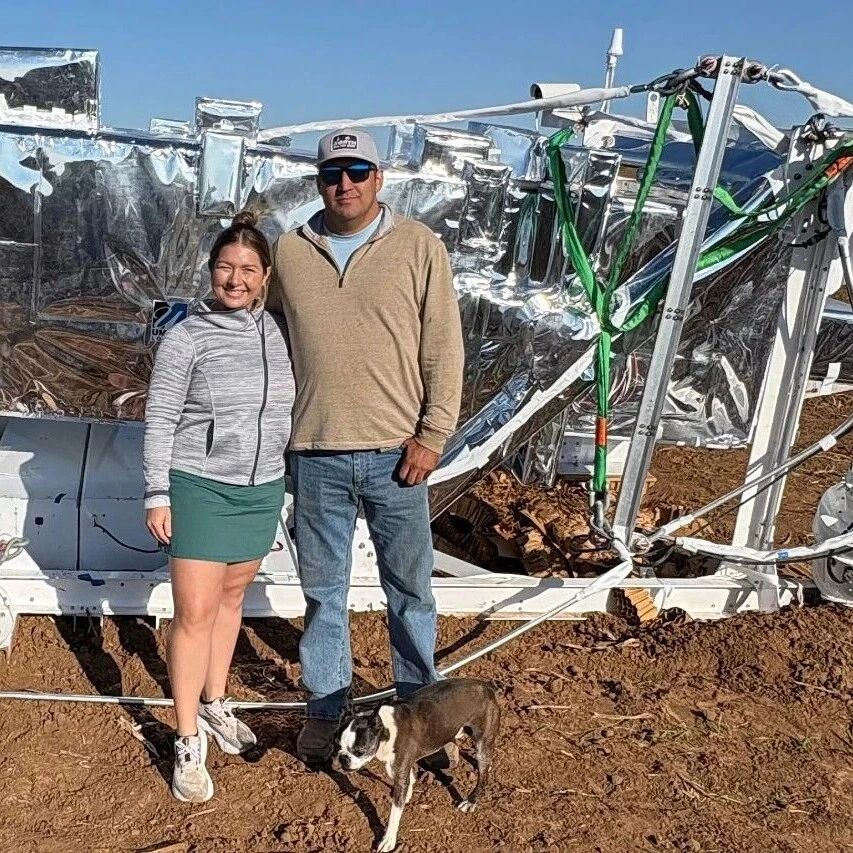
Core Points - NASA's scientific balloon facility launched a large research device that unexpectedly landed in Texas, causing local residents to witness the event firsthand [2][3] - The device, which is the size of a sports utility vehicle, was equipped with a telescope to collect data on stars, galaxies, and black holes [3][4] - The incident occurred during a government shutdown, which affected communication with NASA officials [2] Summary by Sections - **Incident Description** - A large square research device, approximately the size of a sports utility vehicle, was seen descending with a giant parachute in Texas [2] - The parachute had a diameter of at least 30 feet (about 9.1 meters) [2] - **NASA's Involvement** - The device was launched from Sumner, New Mexico, about 140 miles (approximately 225 kilometers) from where it landed [2] - NASA's Columbia Scientific Balloon Facility is responsible for launching these high-altitude balloons for scientific experiments [2][3] - **Local Reaction** - Local resident Ann Walter expressed her astonishment at witnessing the event and described it as a surreal experience [5] - The device was eventually recovered by researchers using trucks and trailers [4]
时空对话哈工大航天馆:从“两弹一星”功勋到“揽月九天”后浪
Yang Guang Wang· 2025-10-07 07:29
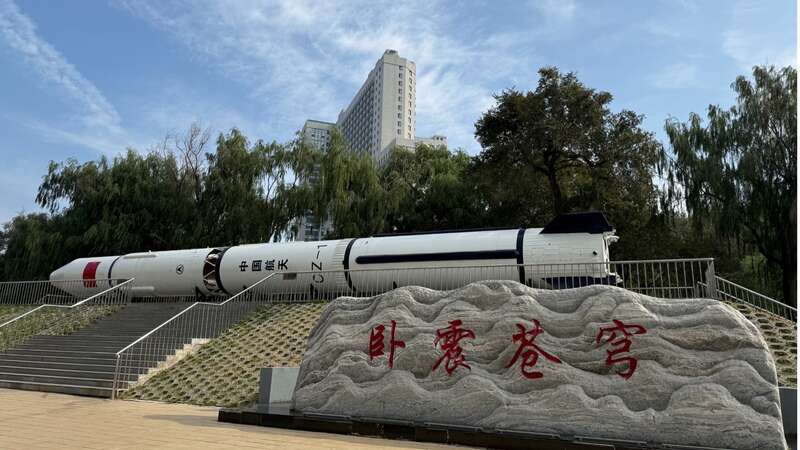
Core Viewpoint - The Harbin Institute of Technology's Aerospace Museum showcases the history and achievements of China's space exploration, emphasizing the spirit of dedication and innovation in the aerospace field [1][3][6]. Group 1: Museum Overview - The Aerospace Museum, established in 1986, is the largest and most comprehensive aerospace-themed museum among Chinese universities, integrating the grand narrative of human space exploration into its exhibits [3]. - The museum features a variety of exhibits, including the Long March 1 rocket, and highlights significant historical events such as the "Two Bombs, One Satellite" era and the advancements in lunar exploration technology [3][6]. Group 2: Educational Impact - The museum serves as a platform for educating visitors about the contributions of past aerospace pioneers, with volunteers like retired expert Feng Tao passionately sharing stories of dedication and sacrifice [5][6]. - Young students, such as Guo Zhenyu, who participated in the development of the "Wen Tian" experimental cabin's robotic arm, express pride in their contributions to national aerospace projects, showcasing the involvement of a younger generation in this field [7][8]. Group 3: Cultural Significance - The museum embodies the spirit of perseverance and meticulousness characteristic of the Harbin Institute of Technology, inspiring the younger generation to pursue their dreams in space exploration [10].
新华财经早报:10月7日
Xin Hua Cai Jing· 2025-10-07 00:57
Group 1 - During the "14th Five-Year Plan" period, China's rural infrastructure is steadily improving, with rural road mileage reaching 4.64 million kilometers by the end of 2024, achieving a road classification ratio of 97.3% and a good and medium road rate of 94.8% [1][1] - The comprehensive production capacity of China's fisheries has significantly increased, with the market transaction volume of aquatic products reaching 9.7691 million tons and a transaction value of 278.126 billion yuan in 2024, representing growth of 2.45% and 9.13% compared to 2021 [1][1] - The logistics data from the Ministry of Transport indicates that from September 29 to October 5, civil aviation operated 133,000 flights, with a 10.93% increase in cargo flights compared to the previous period [1][1] Group 2 - The French Prime Minister's resignation has caused volatility in the French stock and bond markets, with the 10-year government bond yield rising over 9 basis points to exceed 3.6%, nearing levels seen during the 2011 European debt crisis [1][1] - The global manufacturing PMI for September 2025 is reported at 49.7%, a slight decrease of 0.2 percentage points from the previous month, remaining within the 49%-50% range for seven consecutive months [1][1] - The number of funds announcing or implementing dividends this year has reached 5,989, with a total dividend amount increasing from 143.084 billion yuan to 183.974 billion yuan, marking a growth of 28.58% compared to the same period last year [1][1]


新华社权威快报|嫦娥六号月壤研究上新:月球背面的月幔有点“冷”
Xin Hua She· 2025-10-06 00:06
Core Insights - The joint research by the National Space Administration and the National Atomic Energy Agency reveals that the lunar mantle on the far side of the Moon is cooler compared to the near side, enhancing understanding of the Moon's "bipolarity" phenomenon [1] Group 1: Research Findings - The study provides geological and geochemical evidence for the temperature differences between the lunar mantle on the far side and the near side [1] - This research contributes critical scientific data for the study of lunar evolution and its "bipolarity" characteristics [1] Group 2: Collaborative Efforts - The research was a collaborative effort involving the China National Nuclear Corporation's Beijing Institute of Geology, Peking University, and Shandong University [1] - The findings have been published in the international academic journal "Nature - Earth Science" [1]
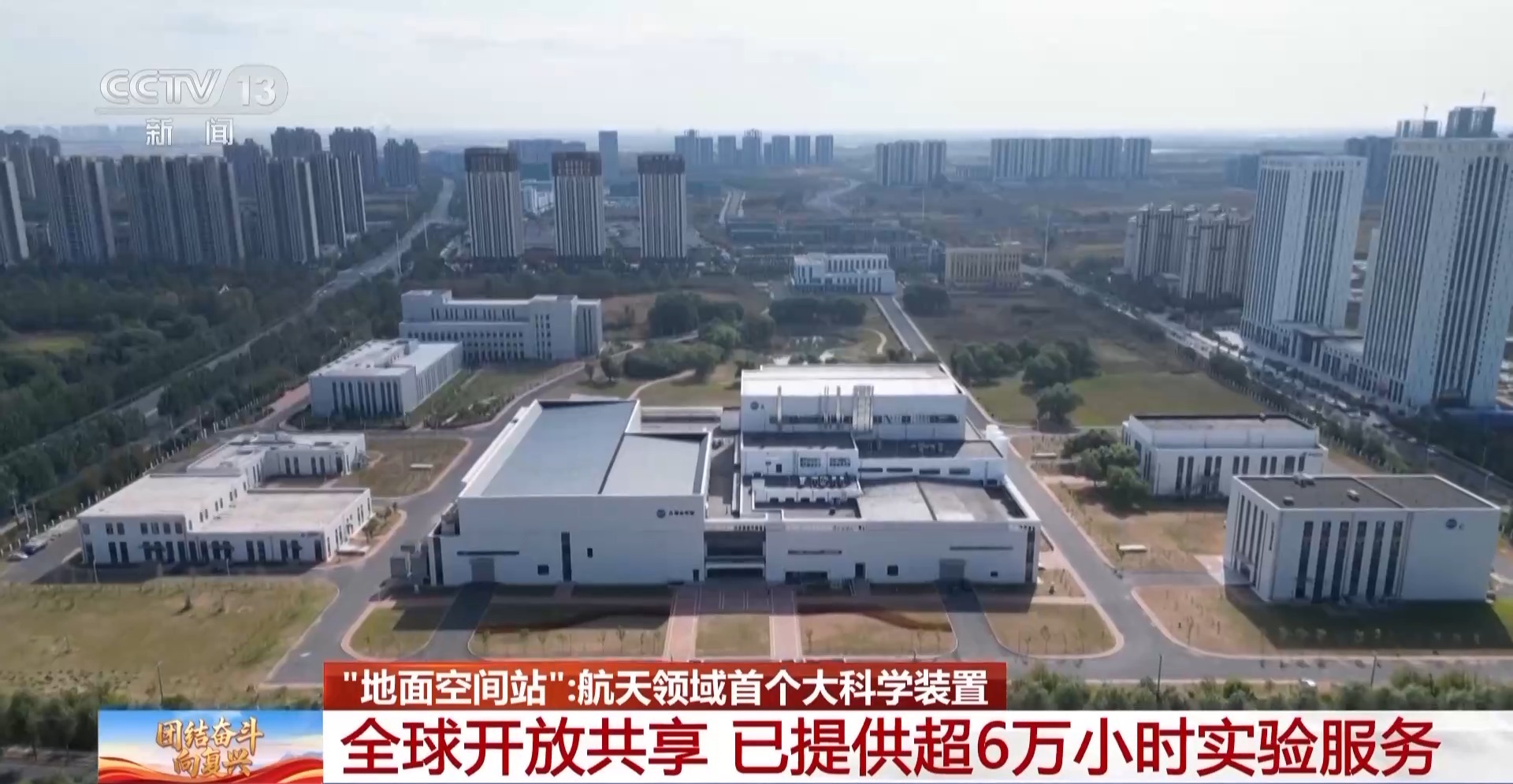
告别“靠天吃饭”,我国已用上模拟极端宇宙环境的“地面空间站”
Qi Lu Wan Bao· 2025-10-03 14:31
Core Viewpoint - The "Ground Space Station," known as the Space Environment Ground Simulation Facility, is a significant scientific installation in China's aerospace sector, located in Harbin, Heilongjiang, and is set to pass national acceptance in 2024 after 19 years of construction [2][4]. Group 1: Technical Achievements - The facility achieves international advanced levels in overall technical indicators, with some key technologies being globally leading [4]. - It has provided over 60,000 hours of experimental services to domestic and international research teams, serving as a global open research sharing platform [4]. - The facility can simulate nine types of space environmental factors, including vacuum, radiation, and weak magnetic fields, which are crucial for studying the effects on materials, devices, systems, and living organisms [4][5]. Group 2: Research Capabilities - The facility allows scientists to replicate extreme cosmic environments on Earth, enabling comprehensive research on the impact of solar activities on Earth's space environment [13]. - It features a large vacuum simulation chamber that can recreate the plasma environment of Earth's magnetic field, providing insights into solar storms and their potential threats to space safety [11][13]. - A high-speed dust accelerator can simulate impacts from space dust, which poses risks to spacecraft, allowing researchers to develop resilient materials for satellites and space stations [15]. Group 3: Historical Context and Development - The facility is built upon the legacy of earlier space environment simulators, such as the KM6, which was crucial for China's manned spaceflight and lunar exploration programs [21][25]. - The project faced significant challenges, including technological blockades and material shortages, leading to a commitment to develop capabilities domestically [25][27]. - The construction involved extensive teamwork and dedication, with experts working tirelessly to ensure the success of the facility, which has become a cornerstone for China's aerospace advancements [31][33].
最新研究:NASA在空间生命保障系统研发方面存在关键差距,中国处于领先地位
Guan Cha Zhe Wang· 2025-09-14 01:55
Core Viewpoint - A team of scientists, including NASA researchers, has identified critical gaps in NASA's development of biological life support systems, which may hinder the U.S. in long-term manned space exploration and habitation, especially in competition with China [1][2]. Group 1: Current State of U.S. Space Life Support Systems - The U.S. space life support systems, including those used on the International Space Station, rely on supply missions for essential resources like water and food [1]. - Long-term manned missions beyond Earth's orbit face significant costs and logistical challenges due to reliance on supply launches, alongside safety concerns regarding radiation and microgravity effects on human health [2]. Group 2: Biological Life Support Systems (BLSS) - Biological life support systems (BLSS) are seen as a superior solution for long-term deep space missions, utilizing plants, animals, and microorganisms to create a sustainable closed-loop environment [2]. - The lack of available BLSS technology and systems is currently limiting the goals of manned lunar exploration programs [2]. Group 3: Historical Context and Funding Issues - NASA previously focused on biological regeneration methods in the 1990s, which led to the development of sustainable agricultural systems for space exploration [5]. - A significant shift in focus and budget cuts in 2004 led to the dismantling of the BIO-Plex project, which aimed to test life support systems for future space missions [5][6]. - Since the early 2000s, U.S. support for biological regeneration life support research has weakened, while China has actively supported and advanced this research over the past 20 years [6]. Group 4: Comparison with China's Space Program - China's space agency has made significant strides in developing biological life support systems, exemplified by projects like "Moon Palace 1," which is a closed ecological system for lunar base research [6]. - The collaboration between China and Russia on the International Lunar Research Station project highlights China's advancements in this field, surpassing U.S. efforts [8][9]. - The U.S. space program currently lacks a comprehensive plan to rebuild the capabilities lost since the cancellation of the BIO-Plex project, facing years of challenges to restore necessary infrastructure [9]. Group 5: Future Implications - The ongoing challenges in U.S. space research funding and the division between lunar and Mars project priorities may hinder progress in biological life support systems [11]. - Advancements in biological life support research could also benefit terrestrial applications, such as controlled agriculture and precision medicine, emphasizing the importance of these technologies for sustainable living on Earth [12].