
热风烘烤机

Search documents
加餐吃宇宙级烤翅 航天员揭秘“太空烧烤”细节:香味四溢!
Huan Qiu Wang Zi Xun· 2026-02-16 00:41
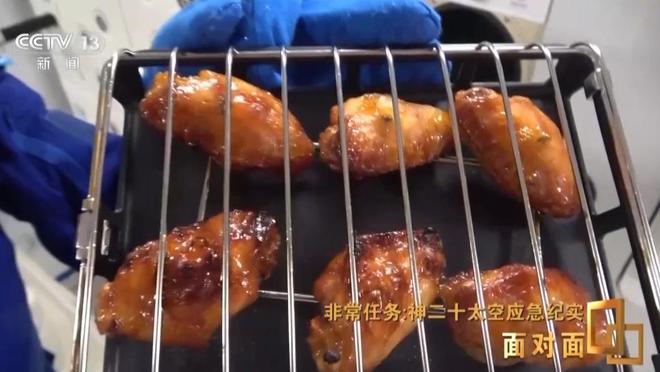
Core Viewpoint - The Shenzhou 20 and Shenzhou 21 crews successfully conducted a unique "space barbecue" using a hot air oven in the space station, showcasing the adaptability of cooking technology in microgravity environments [1][3]. Group 1: Cooking Experience in Space - The hot air oven operates similarly to kitchen appliances on Earth, with the main difference being that food floats in microgravity [1]. - The crew prepared marinated chicken wings, which were cooked for 28 minutes, resulting in a "cosmic-level" dish [3]. - The experience of eating in space differs from that on Earth, with the evenly distributed oil enhancing the flavor of the chicken wings [7]. Group 2: Food Variety and Cultural Representation - In addition to chicken wings, crew members from Inner Mongolia showcased their local cuisine by preparing black pepper steak [9]. - A variety of food options were available, including chicken wings, steak, and ingredients for making bread, with the intention of conserving some for the Shenzhou 21 crew who will stay for six months [10].

新华述评·2025中国经济回眸|激活产业动能 构筑战略优势——我国实体经济根基不断巩固壮大
Xin Hua Wang· 2025-12-07 13:34
Core Viewpoint - The foundation of the real economy in China is continuously strengthening, which is crucial for building strategic advantages for future development [1][2]. Group 1: Economic Performance - In the first ten months, the industrial added value of large-scale enterprises increased by 6.1% year-on-year, with 29 out of 41 industrial sectors showing growth, resulting in a growth rate of 70.7% [4]. - The added value of high-tech manufacturing and digital product manufacturing increased by 7.2% and 6.7% respectively in October [4]. - The manufacturing sector's contribution to GDP was 25.7% in the first half of the year, indicating a stable and significant role in the economy [5]. Group 2: Agricultural and Service Sector Developments - The agricultural sector is maintaining a solid foundation, with summer grain production expected to be abundant, contributing positively to the overall economy [5]. - The service sector's value added contributed 3.1 percentage points to GDP growth in the first three quarters, reflecting its improving quality and efficiency [5]. Group 3: Infrastructure and Technological Advancements - By the end of October, the total number of 5G base stations in China reached 4.758 million, an increase of 507,000 from the previous year [5]. - Significant technological innovations include the development of a high-speed real-time oscilloscope and advancements in various sectors such as semiconductors and intelligent driving [9]. Group 4: Financial Support and Market Environment - Financial policies are increasingly focused on supporting the real economy, with multiple government initiatives aimed at enhancing financial services for industrial development [12][13]. - The introduction of new policies to improve market order and streamline factor circulation is expected to foster a healthier business environment [13]. Group 5: International Cooperation and Market Expansion - Several multinational companies are establishing operations in China, indicating a growing international interest in the Chinese market [14]. - The removal of restrictions on foreign investment in the manufacturing sector and ongoing efforts to enhance openness in telecommunications are expected to optimize international market layouts [14]. Group 6: Corporate Resilience and Commitment - Companies are demonstrating resilience and commitment to their core businesses, with examples of significant revenue growth despite external pressures [5]. - The focus on innovation and quality in production is seen as essential for maintaining competitiveness in the global market [15].
“天宫烧烤”背后的发展跃迁(纵横)
Ren Min Ri Bao· 2025-11-17 22:40
Core Insights - The article highlights the advancements in China's space food technology, showcasing the evolution from basic space rations to gourmet meals like barbecued chicken wings and grilled steak in the Tiangong space station [1][2]. Group 1: Space Food Development - The unique space environment imposes strict requirements on food, necessitating that it be easy to consume without liquids or crumbs, and that it occupies minimal space due to limited rocket payload capacity [1]. - China's space food has evolved significantly, with milestones including the introduction of instant food in 2003, heated meals in 2005, and a diverse menu with over a hundred options by 2016 [1]. Group 2: Technological Innovations - The development of a hot air oven capable of heating food to 190 degrees Celsius and collecting residue represents a significant technological breakthrough, allowing for a more enjoyable dining experience in space [1]. - The cultivation of plants in space, such as lettuce and cherry tomatoes, since the Shenzhou 16 mission demonstrates China's commitment to advancing agricultural technology in space [2]. Group 3: Societal Impact - The integration of technology and daily life is emphasized, as the advancements in space food reflect broader improvements in living standards and the focus on people's needs [2]. - The success of the "Tiangong barbecue" symbolizes China's rapid progress in space exploration and its potential to enhance the quality of life for its citizens [2].
舟落东风霞色里 画展神州明日春 ——写在神舟二十号航天员乘组天外凯旋之际
Xin Hua She· 2025-11-14 17:10
Core Points - The successful return of the Shenzhou 20 astronaut crew marks a significant milestone in China's manned spaceflight history, being the first safe return via a "transfer" spacecraft method [1][2] - The Shenzhou 20 mission lasted 204 days, during which the crew conducted multiple extravehicular activities and set new records for time spent in orbit [2][3] - The mission faced challenges, including a delay due to potential damage from space debris, but safety protocols were effectively implemented [2][3] - The advancements in space technology and the successful experiments conducted during the mission highlight China's growing capabilities in space exploration [7][8] Summary by Sections Mission Overview - The Shenzhou 20 crew returned on November 14, 2025, after a 9-day delay, marking a historic return for Chinese astronauts [1] - The mission included significant contributions to the construction and operation of the Chinese space station [1][2] Achievements - The crew completed four extravehicular activities and multiple cargo operations, enhancing the space station's operational capabilities [2] - Chen Dong became the first Chinese astronaut to accumulate over 400 days in space, and the Shenzhou 20 crew set a new record for the longest duration in orbit for a Chinese crew [2][3] Safety Measures - Following a report of potential damage from space debris, emergency protocols were activated, ensuring the crew's safe return [2][3] Technological Advancements - The mission showcased advancements in space technology, including the successful cultivation of various plants in space and the use of AI to assist astronauts [7][8] - The space station has conducted over 200 scientific and application projects, contributing to advancements in space science and technology [7][8] Future Prospects - The successful experiments and the return of the crew are steps towards China's goal of landing on the moon by 2030, reflecting the nation's commitment to expanding its space exploration capabilities [8]
太空烧烤你想尝尝吗
Jing Ji Ri Bao· 2025-11-08 22:22
Core Insights - The recent space barbecue conducted by Chinese astronauts has sparked global interest, showcasing advancements in space food technology and human adaptability in space environments [1][4] - This event represents a significant leap from traditional space food, allowing astronauts to cook and enjoy meals in a way that mimics life on Earth, addressing both nutritional and psychological needs during long missions [1][3] Technological Advancements - The development of a hot air roasting machine is a key technological breakthrough for extraterrestrial life support systems, effectively managing heat and smoke in a microgravity environment [2] - The machine incorporates a fan for air circulation, a purification system for smoke, and specialized racks to prevent food from floating away, making it a comprehensive micro-cooking station [2] Future Implications - The space barbecue is a crucial step towards achieving a closed-loop ecological system for future lunar and Martian bases, with potential for recycling waste into usable resources [3] - Techniques developed for space cooking could significantly reduce the weight of supplies transported from Earth, enhancing sustainability for long-term space missions [3] Investment Potential - The commercialization of space technology, particularly related to space cooking, presents a promising investment opportunity with an average return on investment of 1:10 [4] - Technologies such as precise temperature control and efficient energy use have strong market applicability, potentially leading to a market scale in the hundreds of billions, benefiting various sectors including smart home and outdoor equipment [4]
中国航天员不吃预制菜了,他们在太空烤鸡翅
3 6 Ke· 2025-11-05 07:46
Core Points - The article highlights a significant milestone in China's space exploration, marking the first time astronauts have cooked food in space, specifically using a hot air oven to prepare chicken wings [2][3][4] Group 1: Historical Context - The journey of Chinese space cuisine began in 2003 with Yang Liwei consuming packaged food, evolving to hot meals by 2005, and now featuring over 190 dishes in the space station [3][4] - The transition from merely heating pre-cooked meals to actual cooking represents a major advancement in space food technology [2][4] Group 2: Cooking Challenges in Space - Cooking in microgravity presents unique challenges, such as the absence of convection currents that normally help distribute heat evenly on Earth [8][9][12] - The production of oil smoke during cooking poses a significant risk in the closed environment of a space station, where any contaminants can threaten the life support systems [13][14] Group 3: Technological Innovations - The hot air oven developed for the Chinese space station incorporates a fan to create forced air circulation, simulating the convection effect found on Earth, allowing food to be cooked in just 28 minutes [14][17] - The oven also features an integrated smoke extraction system to manage and purify the air, ensuring that harmful particles do not circulate within the space station [14][17] Group 4: Future Prospects - While the successful cooking of chicken wings is a breakthrough, other cooking methods such as frying, steaming, and boiling remain complex challenges due to the unique conditions of microgravity [18][19] - The article suggests that advancements in technology, such as automated cooking systems, may be necessary for astronauts to enjoy a wider variety of freshly prepared meals in the future [19]
视频丨“太空厨房”装备上新 这台世界首创的炉子是如何诞生的?
Yang Shi Xin Wen Ke Hu Duan· 2025-11-05 04:38
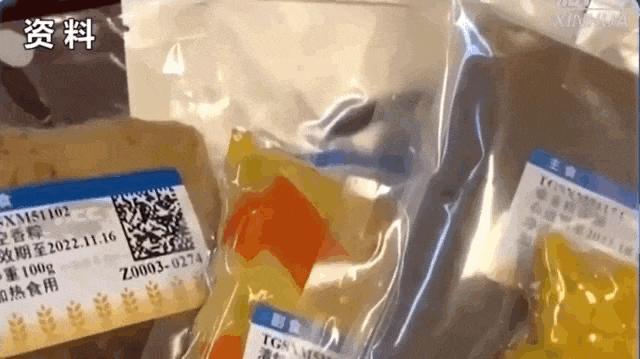
Core Points - The successful rendezvous of the Shenzhou 21 and Shenzhou 20 crews marks the seventh meeting in space for the Chinese space station, celebrated with a barbecue meal prepared using a newly brought hot air oven [1] Group 1: Development of the Hot Air Oven - The Shenzhou 21 mission introduced a new piece of equipment, the hot air oven, which allows astronauts to cook in space, effectively bringing a kitchen to the space station [2] - The hot air oven is a world-first innovation aimed at addressing the limitations of pre-packaged space food, which, while nutritionally adequate, does not meet the culinary preferences of astronauts [2][4] - The development of the hot air oven involved overcoming challenges related to cooking Chinese cuisine in a closed environment, which requires managing smoke and air quality [7] Group 2: Technical Features and Innovations - The hot air oven incorporates an integrated purification function to eliminate smoke, utilizing high-temperature catalysis and multi-stage filtration technology [9] - The oven's design ensures that all surfaces accessible to astronauts are safe from high-temperature risks, enhancing reliability and safety [9] - The cooking temperature has been increased from 100°C to 190°C, allowing for real cooking processes that produce flavorful meals, marking a significant advancement in space food preparation [10] Group 3: Culinary Options and Impact - The research team has prepared a diverse menu for the Shenzhou 21 crew, including chicken wings, steak, corn, and cake, which can be cooked in the hot air oven [12] - Astronauts can operate the oven through pre-set programs or manual controls, enabling them to prepare meals in a matter of minutes, enhancing their dining experience [12] - This innovation significantly improves the quality of life for astronauts by allowing them to celebrate special occasions with freshly cooked meals, thus enriching their overall experience in space [12]
“太空烧烤”来了 世界首创的“太空炉子”是如何诞生的?
Yang Shi Wang· 2025-11-04 22:49
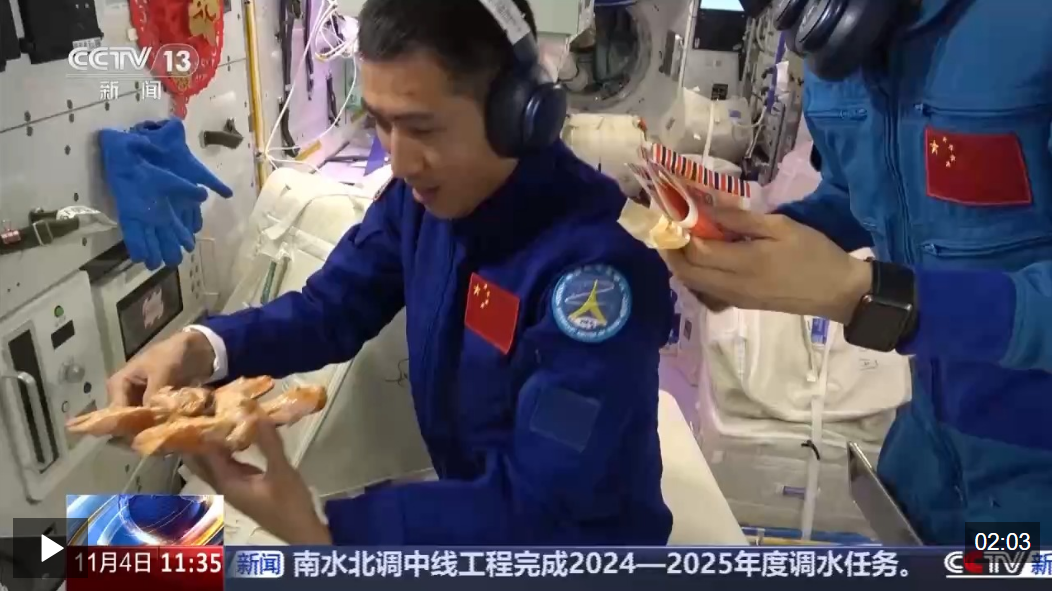
Core Viewpoint - The article discusses the development of a world-first "space oven," a hot air baking machine that enables cooking in space, effectively bringing a kitchen to the space station [1] Group 1 - The hot air baking machine represents a significant advancement in space cooking technology [1] - This innovation allows astronauts to prepare meals in a more familiar and comfortable manner while in space [1] - The development of this equipment highlights the ongoing efforts to improve life quality for astronauts during long-duration missions [1]
中国空间站上新“烤箱” 航天员食品实现在轨烹饪烘焙
Xin Hua Wang· 2025-11-03 22:40
Core Points - The Chinese space station has successfully introduced a new "oven" for in-orbit cooking, allowing astronauts to prepare baked foods like chicken wings and steak for the first time [2][3] - The introduction of the "oven" is part of an initiative to enhance the living conditions of astronauts, with over 190 types of food now available and a 10-day meal cycle implemented [2][3] Group 1 - The new "oven" allows astronauts to cook and bake in space, with a specific process for preparing food that includes a 28-minute heating time for chicken wings [2] - The oven features advanced technologies for smoke-free operation, ensuring compliance with space station standards, and has been tested for 500 reliable operations [2][3] - The variety of food available to astronauts has significantly increased, with the ability to cook fresh vegetables, nuts, cakes, and meats in orbit [2][3] Group 2 - The space station's "kitchen" improvements reflect ongoing innovations in food technology, enhancing the taste, texture, and nutritional value of space food [3] - Research on in-orbit plant cultivation has led to successful growth of seven types of plants, providing astronauts with 4.5 kilograms of fresh produce [3] - Special meal preparations are planned for traditional Chinese festivals, including festive meals and surprise packages for astronauts [3]
中国空间站“太空厨房”上新“烤箱” 航天员食品实现在轨烹饪烘焙
Xin Hua She· 2025-11-03 16:06
Core Points - The Chinese space station has introduced a new "oven" for astronauts, allowing them to cook and bake food in space for the first time [2][3] - The introduction of the oven is part of efforts to enhance the living conditions of astronauts, with a significant expansion in the variety of food available [2][3] Group 1: Space Kitchen Innovations - The new oven enables astronauts to prepare dishes like grilled chicken wings and black pepper steak, enhancing their dining experience in space [2] - The oven employs advanced technologies for smoke-free cooking, meeting the space station's emission standards, and has been rigorously tested for reliability [2][3] Group 2: Food Variety and Nutritional Improvements - The range of food types for astronauts has expanded to over 190, with a flight menu cycle extended to 10 days, allowing for fresh vegetables, nuts, cakes, and meats to be cooked in space [2] - Research has led to breakthroughs in growing fresh produce in space, with successful cultivation of seven plant types, providing astronauts with 4.5 kilograms of fresh fruits and vegetables [3]