茶行业

Search documents
麦肯锡披露!上半年中国消费市场五大惊喜一览
Sou Hu Cai Jing· 2025-08-28 03:29
Group 1: Capital Market Trends - The A-share market shows signs of recovery, with an average daily trading volume of 1.39 trillion yuan in the first half of the year, reflecting a 61% increase compared to the same period last year [1] - The capital market is empowering consumption upgrades, with Hong Kong Stock Exchange financing reaching 107.1 billion HKD in the first half of the year, indicating renewed investor confidence in the Chinese consumption market [2] Group 2: Consumer Market Insights - McKinsey's report highlights five major trends in the Chinese consumer market, including the rise of new energy vehicles, record-high inbound tourism, and the cultural export of Chinese tea [2] - The tea industry is exploring sustainable development paths, with organic tea production area increasing by 100.9% from 2019 to 2023, reaching 213,000 hectares [7] Group 3: Cultural and Tourism Integration - The unique charm of Chinese tea culture is attracting foreign tourists, leading to initiatives that promote deep cultural experiences, such as the "World Tea Town Tour" [8][11] - The tea industry is leveraging cultural experiences to enhance tourism, providing immersive projects that allow foreign visitors to explore Chinese culture [11] Group 4: New Tea Beverage Market - New tea beverage brands are gaining traction in the capital market, with three brands successfully listing on the Hong Kong Stock Exchange and one on the US market this year [12] - The concentration of new tea brands entering the market reflects the growing recognition of Chinese consumer brands in the capital market [12][15] Group 5: Global Expansion of Tea Industry - The global trend of cultural export is benefiting the tea industry, with Chinese tea gaining popularity overseas, evidenced by the TikTok Chinesetea topic generating over 200 million views [18] - The export of tea products, including matcha and functional teas, is accelerating, with platforms like Amazon and eBay seeing increased sales of Chinese tea and tea-related products [22][23]


天福回购7000.00股股票,共耗资约2.13万港元,本年累计回购68.00万股
Jin Rong Jie· 2025-08-22 10:42
Group 1 - The company Tianfu repurchased 7,000 shares at an average price of 3.04 HKD per share, totaling approximately 21,300 HKD, with a cumulative repurchase of 680,000 shares this year, representing 0.06% of the total share capital [1] - As of the market close on the same day, Tianfu's stock price increased by 3.81%, closing at 3.0 HKD per share [1] - The stock repurchase is seen as a sign of the company's confidence in its own development, potentially indicating that the management believes the current stock price is undervalued [1] Group 2 - Tianfu (06868.HK) is a publicly listed company in Hong Kong primarily engaged in tea-related businesses, including the cultivation, processing, sales, and research and development of tea products [2] - The company has a broad business layout in the tea market, with numerous well-known tea brands and a significant market share both domestically and internationally [2] - Tianfu is committed to promoting traditional Chinese tea culture and has established a large sales network through numerous retail outlets, offering various types of tea to meet diverse consumer needs [2]
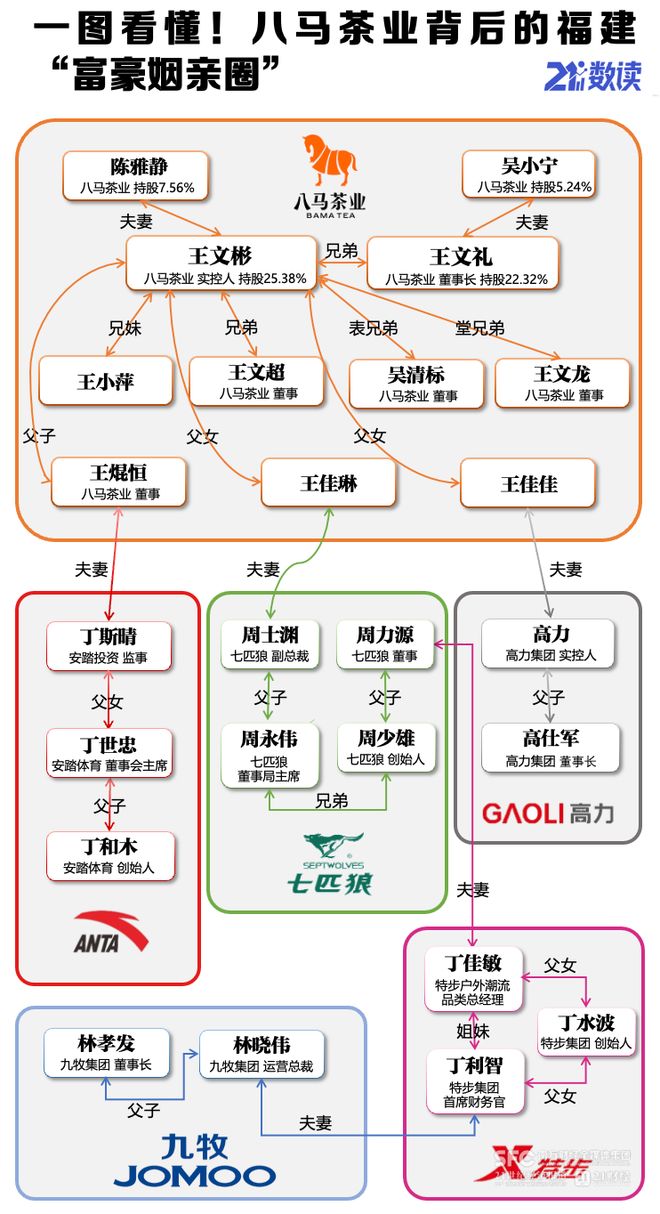
八马茶业第四次冲击IPO,招股书背后的“福建富豪姻亲圈”
2 1 Shi Ji Jing Ji Bao Dao· 2025-08-08 10:14
Group 1 - Baima Tea Industry has received the CSRC's filing notice for its Hong Kong IPO, marking its fourth attempt in ten years [1] - The company's latest prospectus reveals a family-centric executive structure, with major shareholders holding 55.9% of voting rights [1] - Key family members include Wang Wenbin, Wang Wenli, and Wang Wenchao, who are brothers, along with their spouses and other relatives involved in the board [1] Group 2 - Baima Tea has connections with other Fujian-based companies like Anta and Seven Wolves, highlighting its extensive network [4] - Wang Wenbin's daughter is married to a vice president of Seven Wolves, while his son is the son-in-law of Anta's founder [4] - The company has various cooperative relationships with these "in-law" enterprises, including shareholding and business dealings related to tea procurement and leasing [4]
合力推进“健康中国”建设 共促营养健康科学普及
Zhong Guo Jing Ji Wang· 2025-05-19 06:37
Group 1 - The Chinese tea industry has reached an economic scale of 1.1 trillion yuan, involving over 30 million tea farmers and more than 3 billion consumers, highlighting its role in promoting a healthy lifestyle [1] - The industry is expected to contribute to the "Healthy China" initiative by integrating more technological wisdom and promoting high-quality economic and social development [1] - Various national policies related to nutrition and health have been introduced, emphasizing the importance of nutrition in improving the quality of life and upgrading industries [1] Group 2 - The "Nutrition Translator" program, launched in 2020, has aired 120 episodes and achieved over 1 billion views, focusing on public nutritional health needs [2] - The nutrition and health industry is experiencing new development opportunities and challenges, necessitating collective efforts from society to safeguard public health [2] - Discussions on balanced eating and health management emphasize the need for diverse food intake, regular exercise, and informed dietary choices [2] Group 3 - The pet nutrition industry is witnessing trends in technological innovation and standardization, as highlighted by experts in the field [3] - The "Nutrition Translator" serves as a vital platform for disseminating nutritional knowledge and supporting the healthy development of the food industry [3]

资本为何不爱喝茶?
36氪· 2025-03-31 09:24
Core Viewpoint - The traditional tea industry in China faces challenges in attracting capital investment due to issues of transparency in product quality and pricing, as well as difficulties in standardizing diverse tea products from various regions [6][9][10]. Group 1: Industry Overview - The Chinese tea consumption market is substantial, valued at nearly 700 billion yuan, yet there are almost no pure tea companies listed on the A-share market [9]. - The tea industry has seen a lack of financing events over the past three years, with only two financing events in 2024, including a $7 million fundraising by Fujian tea company Mindonghong [9]. - The production of tea in China is primarily for domestic consumption, with a significant imbalance between supply and demand persisting for years [14]. Group 2: Financial Performance and Challenges - The total production of dry tea in China is projected to increase from 318.10 million tons in 2022 to 345 million tons in 2024, while domestic sales are expected to remain relatively stable [14]. - The average domestic sales price of tea has been declining, with prices dropping from 141.62 yuan per kilogram in 2022 to 135 yuan per kilogram in 2024 [14]. - Companies like China Tea and others have faced scrutiny from regulators regarding their plans to expand production capacity amid rising inventory levels and declining prices [15][17]. Group 3: Company-Specific Insights - After withdrawing its IPO application, China Tea cited the need for strategic adjustments and internal reforms as reasons for the decision [16]. - The inventory levels of companies like China Tea and Lancang Ancient Tea have been increasing, with China Tea's inventory value reaching 1.655 billion yuan in the first half of 2022, accounting for over 52% of total assets [15][17]. - The market for bagged tea has not become mainstream in China, indicating that traditional loose-leaf tea remains preferred by consumers who value the ritual of tea preparation [24][25]. Group 4: Marketing and Positioning - Companies like Xiaoguan Tea have redefined tea as a fast-moving consumer product, investing heavily in marketing, with reported expenditures of 270 million yuan over three years [25]. - Eight Horse Tea has also focused on marketing, with sales and marketing expenses accounting for over 31% of its revenue from 2022 to 2024 [27]. - The tea industry is characterized by a lack of standardization, making it difficult for companies to tell compelling stories to investors [27].
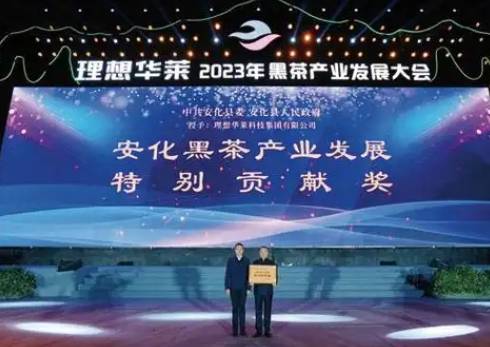
理想华莱:互联网+直销+大健康商业模式全解析!
Sou Hu Cai Jing· 2025-03-25 15:37
Core Insights - The article highlights the innovative business model of "Lideal Hualai," which combines internet, direct sales, and health industries to achieve significant growth in the traditional tea market [1][3]. Group 1: Business Performance - Lideal Hualai has achieved a compound annual growth rate of 37% over the past five years, while the traditional tea industry has a growth rate of less than 8% [3]. - The company reported a tax contribution of 1.8 billion yuan in 2022, averaging 4.93 million yuan daily [3]. - The company has invested 11.8 billion yuan in the black tea industry, establishing a modern tea garden covering 6,800 acres in Anhua [3]. Group 2: Business Model - The company operates on a "production base + membership network" dual-drive model, with 13 subsidiaries responsible for planting and research, and 2,500 stores acting as community hubs [5]. - This structure has led to a 42% reduction in operational costs while achieving a 300% increase in market penetration [5]. Group 3: Consumer Participation - The model allows ordinary users to become channel nodes, breaking the linear growth logic of traditional retail [6]. - Users can upgrade to VIP tea merchants with an initial consumption of 7,000 yuan, receiving products worth 35,000 yuan [7]. - The average monthly income for the top 100 distributors is reported to be 98,000 yuan [13]. Group 4: Development Pathways - The model provides a clear development path for participants, starting from consumer partners to regional builders, with various income opportunities at each stage [16][19]. - Participants can earn shopping discounts, consumption rebates, and team management bonuses as they progress through the stages [16][19]. Group 5: Sustainability and Future Outlook - The business model is supported by a comprehensive industrial layout, benefiting from tax incentives and a growing health consumption trend [22][23]. - The company plans to invest 5 billion yuan over the next five years to build a "black tea health town," creating new wealth opportunities [26]. - The integration of traditional industries with new production capabilities is seen as a key to the model's vitality [26].