
虚拟电厂

Search documents
申万创新投已投企业电管家夯实智能微电网能力 服务“十五五”新型能源体系建设
申万宏源证券上海北京西路营业部· 2025-12-02 02:21
Core Insights - The article discusses the investment by Shenwan Hongyuan Innovation Securities in Dianguanjia Group, focusing on the development of smart microgrids and digital infrastructure for new energy systems, aligning with the "14th Five-Year Plan" for energy infrastructure [2][4] Group 1: Investment and Strategic Focus - Shenwan Hongyuan Innovation Securities participated in a new round of financing exceeding 100 million yuan for Dianguanjia, which is a leading one-stop smart microgrid operation service provider in China [2] - The investment aims to strengthen Dianguanjia's capabilities in the new power system and virtual power plant sectors, supporting the company's growth in these areas [2][4] Group 2: Company Overview and Services - Dianguanjia operates under a core model of "Electricity + New Energy + Digitalization," covering areas such as distribution network management, distributed photovoltaics, energy storage, charging facilities, and electricity trading [2] - The company has developed the "Faraday" comprehensive energy management platform, providing integrated energy service solutions to major clients like Huawei, Alibaba, and various airports [2] Group 3: Policy and Research Collaboration - In April 2025, the National Development and Reform Commission and the National Energy Administration issued guidelines to accelerate the development of virtual power plants, which aligns with Dianguanjia's strategic focus [4] - Dianguanjia has established a collaborative research center with Shanghai Jiao Tong University to enhance its digital capabilities and strengthen its research in the field of virtual power plants [4]



关于举办虚拟电厂投资、建设与运营培训的通知丨系列培训
中国能源报· 2025-11-30 11:01
Core Viewpoint - The article discusses the importance and development of virtual power plants (VPPs) in optimizing the power system and participating in electricity market transactions, highlighting the government's goals for VPP capacity by 2027 and 2030 [2]. Group 1: Overview of Virtual Power Plants - Virtual power plants are defined as new operational entities that collaborate to optimize the power system and engage in market transactions [2]. - By 2027, the national VPP regulation capacity is expected to exceed 20 million kilowatts, and by 2030, it should reach over 50 million kilowatts [2]. Group 2: Government Initiatives and Support - The government has issued guidelines to promote the development of VPPs, establishing policies, technical standards, and market mechanisms for their participation in electricity market transactions [2]. - Local governments are also formulating regulations to support VPPs in the market [2]. Group 3: Training Program Details - A training program on VPP investment, construction, and operation will be held on December 20-21, 2025, in Guangzhou [3]. - The training is organized by China Energy News and supported by the China Energy Economic Research Institute [3]. Group 4: Target Audience and Topics - The training targets various stakeholders, including power generation companies, grid enterprises, energy storage companies, and research institutions [4]. - Key topics include VPP technology overview, latest developments, application scenarios, challenges, and case studies [4]. Group 5: Training Costs and Contact Information - The training fee is set at 3,900 yuan per person, excluding transportation and accommodation [4]. - Contact information for registration includes two instructors, Wang and Yang, with their respective phone numbers provided [4].

关于举办虚拟电厂投资、建设与运营培训的通知丨系列培训
中国能源报· 2025-11-29 00:40
Core Viewpoint - The article emphasizes the importance and potential of virtual power plants (VPPs) in enhancing power supply reliability, promoting renewable energy consumption, and improving the electricity market system, with specific targets set for their development by 2027 and 2030 [2]. Group 1: Overview of Virtual Power Plants - Virtual power plants are defined as new operational entities that collaboratively participate in optimizing the power system and engaging in electricity market transactions [2]. - By 2027, the national regulation capacity of virtual power plants is expected to exceed 20 million kilowatts, and by 2030, it should exceed 50 million kilowatts [2]. Group 2: Training Details - A training session on virtual power plant investment, construction, and operation is scheduled for December 20-21, 2025, in Guangzhou [3]. - The training is organized by China Energy News and supported academically by the China Energy Economic Research Institute [3]. Group 3: Target Audience and Topics - The training is aimed at various stakeholders, including power generation companies, grid enterprises, energy storage companies, and large energy-consuming institutions, as well as research institutions and investment firms [4]. - Key topics to be covered in the training include the technical overview of virtual power plants, their latest developments domestically and internationally, application scenarios, key technologies, challenges and solutions, standard system construction, and case studies [4]. Group 4: Training Costs and Contact Information - The training fee is set at 3,900 yuan per person, excluding transportation and accommodation costs [4]. - Contact information for inquiries includes two representatives from the organizing body [4].

湖州样本:从碳中和银行到虚拟电厂,如何“点绿成金”?
2 1 Shi Ji Jing Ji Bao Dao· 2025-11-26 10:03
Core Viewpoint - The article discusses the development and implementation of green finance in Huzhou, China, highlighting its role in supporting the green transformation of industries and addressing technological and funding challenges [3][5]. Group 1: Green Finance Initiatives - Huzhou has been a pioneer in green finance, becoming one of the first national pilot zones for green finance reform in 2017, with a focus on practical applications of green finance concepts [3][5]. - The establishment of the "Digital Green Finance" system aims to enhance the efficiency of green finance by integrating various data sources to support financial institutions in identifying and funding green projects [9][10]. Group 2: Virtual Power Plant Development - Wu Xing Guo Kong Digital Energy has developed a virtual power plant that integrates distributed energy resources, benefiting from 840 million yuan in loans from local financial institutions [5][6]. - The virtual power plant acts as an aggregator, matching renewable energy generation with local consumption, thus facilitating more efficient energy management [5][6]. Group 3: Carbon Accounting and Green Certificates - The company has implemented a system for distinguishing between green and conventional electricity, which is crucial for industries with specific green energy requirements [7][9]. - Green certificates are issued to companies based on their consumption of renewable energy, which can be traded on a green electricity certificate trading platform [7][9]. Group 4: Financial Data Engine and Support Systems - The "Financial Data Engine" developed by Huzhou integrates government, credit, and third-party data to help financial institutions better assess and support green projects [10][11]. - A regional "Transformation Financial Support Activity Directory" has been established, outlining 106 transformation technologies or pathways for key industries [11][12]. Group 5: Risk Management and Client Profiling - The development of a "Transformation Financial Client Profile" system allows for precise identification of enterprises with potential for low-carbon transformation, enhancing risk management and service support [12][13]. - Huzhou aims to achieve carbon peak by 2028 and carbon neutrality by 2058 for all banking operations, reflecting a commitment to sustainable finance [13].


关于举办虚拟电厂投资、建设与运营培训的通知丨系列培训
中国能源报· 2025-11-23 02:56
Core Viewpoint - The article emphasizes the importance and potential of virtual power plants (VPPs) in enhancing power supply reliability, promoting renewable energy consumption, and improving the electricity market system, with specific targets set for their development by 2027 and 2030 [2]. Group 1: Overview of Virtual Power Plants - Virtual power plants are defined as new operational entities that collaboratively participate in optimizing the power system and engaging in electricity market transactions [2]. - By 2027, the national regulation capacity of virtual power plants is expected to exceed 20 million kilowatts, and by 2030, it should reach over 50 million kilowatts [2]. Group 2: Training Details - A training session on virtual power plant investment, construction, and operation is scheduled for December 17-18, 2025, in Guangzhou [3]. - The training is organized by China Energy News and supported by the China Energy Economic Research Institute [3]. Group 3: Target Audience and Topics - The training is aimed at various stakeholders, including power generation companies, grid enterprises, energy storage companies, and research institutions [4]. - Key topics to be covered include the technical overview of virtual power plants, their latest developments, application scenarios, key technologies, challenges, and case studies [4]. Group 4: Training Costs and Contact Information - The training fee is set at 3,900 yuan per person, excluding transportation and accommodation [4]. - Contact information for inquiries includes two representatives from the organizing body [4].

关于举办虚拟电厂投资、建设与运营培训的通知丨系列培训
中国能源报· 2025-11-21 08:05
Core Viewpoint - The article emphasizes the importance and potential of virtual power plants (VPPs) in enhancing power supply reliability, promoting renewable energy consumption, and improving the electricity market system, with specific targets set for their development by 2027 and 2030 [2]. Group 1: Overview of Virtual Power Plants - Virtual power plants are defined as new operational entities that collaboratively participate in optimizing the power system and engaging in electricity market transactions [2]. - By 2027, the national regulation capacity of virtual power plants is expected to exceed 20 million kilowatts, and by 2030, it should surpass 50 million kilowatts [2]. Group 2: Training Details - A training session on virtual power plant investment, construction, and operation will be held from December 17 to 18, 2025, in Guangzhou [3]. - The training is organized by China Energy News and supported academically by the China Energy Economic Research Institute [3]. Group 3: Target Audience and Topics - The training is aimed at various stakeholders, including power generation companies, grid enterprises, energy storage companies, and large energy-consuming institutions, as well as research institutions and investment firms [4]. - Key topics to be covered in the training include the technical overview of virtual power plants, their latest developments domestically and internationally, application scenarios, key technologies, challenges and solutions, standard system construction, and case studies [4]. Group 4: Training Costs and Contact Information - The training fee is set at 3,900 yuan per person, excluding transportation and accommodation costs [4]. - Contact information for inquiries includes two representatives, Wang and Yang, with their respective phone numbers provided [4].

新政引导民间资本能源领域持股比例提升
中国能源报· 2025-11-17 03:49
Core Viewpoint - The recent measures introduced by the State Council aim to create a better environment for private capital to participate in key investment areas, particularly in energy, infrastructure, and technological innovation [1][3][5]. Group 1: Policy Measures - The document outlines 13 specific measures focusing on "expanding access, removing obstacles, and strengthening guarantees" to address issues like "difficult access" and "financing challenges" [3][5]. - Key projects requiring national approval, such as nuclear power and hydropower, will now have a feasibility study for private capital participation, encouraging shareholding ratios to exceed 10% [3][5]. - By 2025, the shareholding ratio for private capital in nuclear power projects is expected to increase from 10% to between 10% and 20% [3][5]. Group 2: Investment Environment - The energy sector has seen a shift towards a supportive system for private investment, with private enterprises becoming key players in traditional and emerging sectors [6][8]. - Private companies now account for nearly 60% of the electricity sales market, and the number of oil and gas transporters has surged from 5 in 2019 to 1005 [6][8]. - Policies promoting green electricity direct supply have enabled private renewable energy companies to supply electricity directly to users, enhancing local consumption [6][8]. Group 3: Investment Models and Innovations - The participation model of private capital in the energy sector is evolving from a focus on production to a comprehensive solution involving "technology + products + services" [10]. - Companies are encouraged to strengthen their technological capabilities and innovate their business models to transition from traditional suppliers to integrated service providers [10]. - Long-term planning is emphasized as essential for companies to navigate market cycles, with significant investments in R&D and technology innovation being crucial for future competitiveness [10][13]. Group 4: Financing Solutions - Infrastructure REITs have emerged as a vital tool to address financing challenges for private investment projects, with 105 REITs projects recommended and 83 listed, raising a total of 207 billion yuan [12]. - REITs provide a "exit channel" for private capital, facilitating a cycle of investment, operation, exit, and reinvestment [12]. - The energy sector will enhance mechanisms for private capital participation in major projects, refining shareholding requirements and promoting fair competition [12].
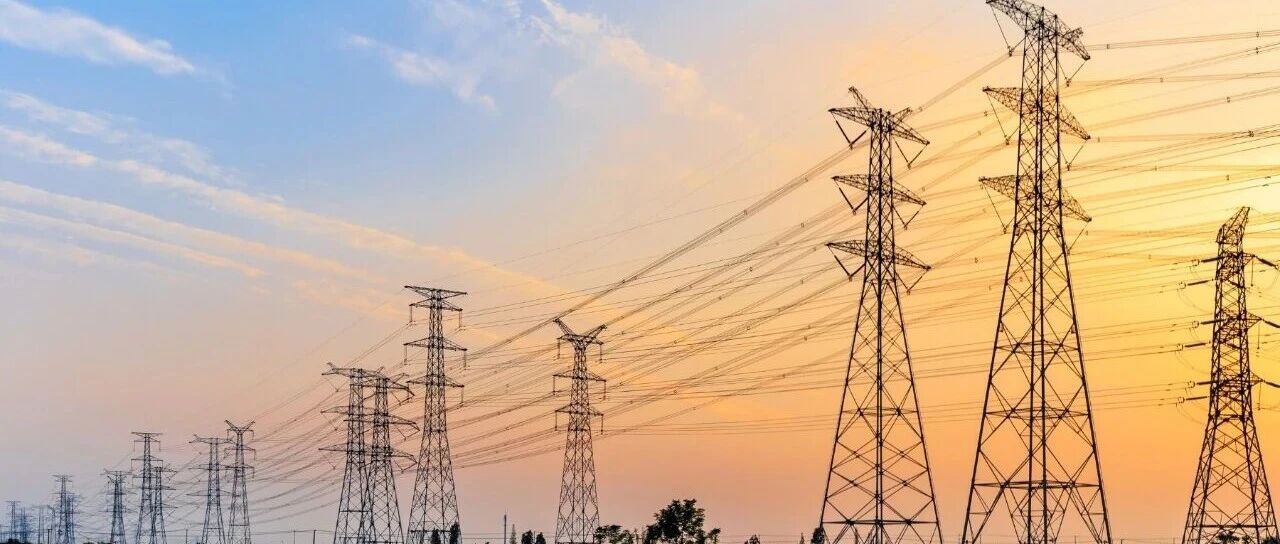
协鑫集团朱钰峰:政策技术双轮驱动 虚拟电厂开启千亿级市场新蓝海
Zhong Zheng Wang· 2025-11-12 05:14
Group 1 - The core viewpoint is that China's energy structure is undergoing profound changes, with green electricity consumption becoming the core direction of future energy consumption. However, structural contradictions in renewable energy consumption, limitations of traditional operational adjustment methods, and imbalances in power supply and demand are challenges for industry development. Virtual power plants are seen as a key solution to these issues [1][2] - Policy and technology are driving the rapid development of virtual power plants. The release of the "Electricity Market Supervision Measures" in June last year and the "Guiding Opinions on Accelerating the Development of Virtual Power Plants" this year set a target of exceeding 50 million kilowatts by 2030, indicating that policy dividends are continuously being released [1] - The integration of AI and digital technologies is transforming the energy structure, grid forms, and energy production and consumption methods, creating a new market worth hundreds of billions [1] Group 2 - As one of the earliest companies to enter the virtual power plant sector in China, the company has aggregated nearly 1 million kilowatts of adjustable load and manages 20 gigawatts of user-side load, holding over 30% of the virtual power plant business in Jiangsu Province and about 8% nationwide [2] - The company has built a digital platform that promotes the application of energy AI models, achieving real-time interaction, model calculations, and intelligent distribution from the grid to the platform, users, and devices [2]
财经早报:国办发文!扩范围、清障碍,促进民间投资13条来了,新能源赛道,利好来了!丨2025年11月11日
Xin Lang Zheng Quan· 2025-11-10 23:34
Group 1 - The U.S. has announced a suspension of the 301 investigation measures against China's shipbuilding industry, which includes halting port fees and tariffs on certain equipment, marking a step towards mutual cooperation between the U.S. and China [2] - The Chinese Ministry of Commerce responded positively to the U.S. announcement, indicating it as a significant move in implementing the consensus reached during the U.S.-China economic discussions [2] Group 2 - The Ministry of Industry and Information Technology plans to accelerate the cultivation of application scenarios in five key areas, including 5G and artificial intelligence, to enhance industrial capabilities [4][5] - The government has introduced 13 measures to promote private investment, focusing on expanding market access and ensuring fair competition, which aims to boost investment in emerging sectors [6] Group 3 - A strategic partnership has been established between CPE Yuanfeng and Burger King, with an initial investment of $350 million to support expansion and innovation in the Chinese market [11] - Gree Electric's CEO addressed concerns regarding the company's entry into the refrigerator market, emphasizing the commitment to quality and advanced manufacturing processes [12] Group 4 - The virtual power plant sector is set to benefit from favorable policies, indicating a shift towards large-scale development [13] - The demand for storage chips remains strong, with significant investments observed in several stocks since November [13]


虚拟电厂迎政策利好 正迈向规模化发展新阶段
Zheng Quan Ri Bao· 2025-11-10 16:26
Core Viewpoint - The Chinese government is accelerating the development of virtual power plants as a key strategy for the large-scale application of new energy scenarios, emphasizing the importance of demand-side resources in balancing electricity supply and demand [1] Group 1: Policy and Market Development - The State Council issued implementation opinions to promote innovative digital and intelligent energy management, including virtual power plants and green electricity supply [1] - The virtual power plant market in China is expected to reach 10.2 billion yuan by 2025 and exceed 100 billion yuan by 2030, indicating significant market potential [1] Group 2: Industry Characteristics - The virtual power plant industry is characterized by accelerated technological innovation, multiple project developments, and active participation from various business entities [2] - Advanced technologies such as artificial intelligence, big data, and cloud computing are increasingly penetrating the virtual power plant sector, leading to trends of miniaturization, informatization, and integration [2] Group 3: Ecosystem and Participation - Various stakeholders, including grid companies, power generation firms, and technology service providers, are actively involved in building the virtual power plant ecosystem, each with distinct objectives [3] - Private enterprises show high enthusiasm in participating in virtual power plant construction, which helps them expand energy-saving businesses and acquire quality customer resources [3] Group 4: Revenue and Market Mechanisms - Current revenue channels for virtual power plants are limited, primarily relying on demand response subsidies, peak compensation, and electricity spot market arbitrage [3] - To expand revenue opportunities, stakeholders need to focus on building market mechanisms, clarifying responsibilities and rights in transactions, and encouraging diverse participation in electricity market trading [3]