Data Center Cooling

Search documents
XYRA Corp. Positioned to Capitalize on Explosive Growth in Data Center Immersion Cooling Market
Globenewswire· 2025-10-01 10:00
Core Insights - XYRA Corp. is strategically positioned to leverage the growing data center immersion cooling market, projected to grow from $4.87 billion in 2025 to $11.10 billion by 2030, with a CAGR of 17.91% [1][3] Industry Overview - The immersion cooling market is expected to see over 50% of new hyperscale capacity relying on liquid cooling by 2027, driven by the increasing demand for AI and high-density computing [3] - Major players like Amazon Web Services (AWS) and Shell are entering the market, indicating a shift towards advanced cooling solutions [4] Company Positioning - XYRA holds an exclusive license for Cavitation Non-Thermal Plasma™ technology, which enhances heat transfer, extends fluid life, and reduces maintenance costs, making it suitable for data centers [2][5] - The company aims to address critical challenges in the immersion cooling market, such as fluid stability, hardware compatibility, operational complexity, upfront capital costs, and regulatory concerns [6] Competitive Advantage - XYRA's technology offers chemical-free advantages that improve the economics of immersion cooling, providing operators with cost savings, efficiency, and reliability [5][8] - The company is focused on building a team of experts to identify unique technologies in the rapidly evolving crypto and data center infrastructure sectors [8]


Schneider Electric Unveils Liquid Cooling Portfolio with Motivair Featuring Dedicated Solutions and Services for HPC and AI Workloads
Globenewswire· 2025-09-29 14:13
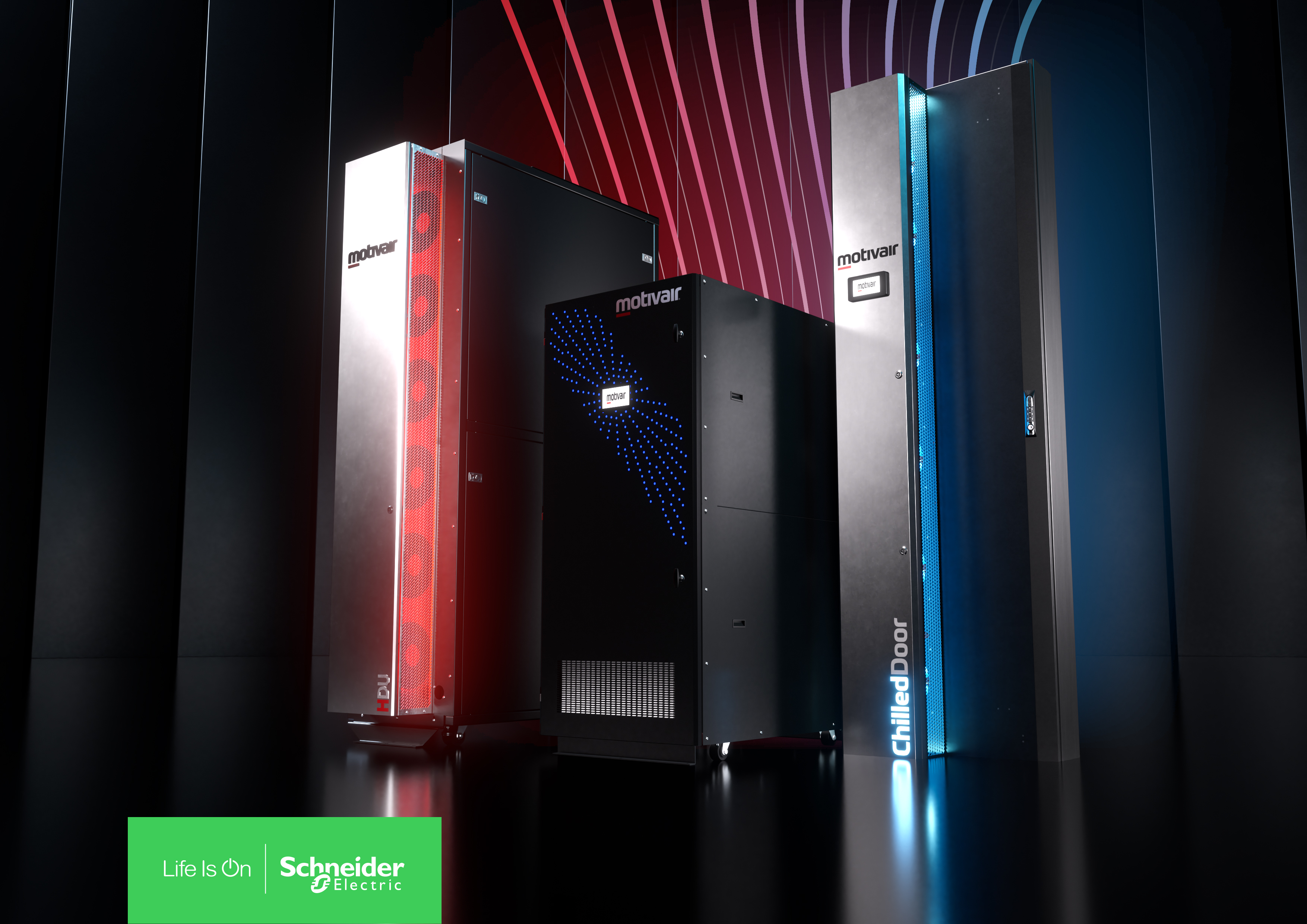
Core Insights - Schneider Electric has launched a comprehensive portfolio of liquid cooling solutions aimed at high-density data centers, particularly for AI applications, following its acquisition of Motivair in February 2025 [2][10][12] Product Offerings - The liquid cooling portfolio includes various components such as Coolant Distribution Units (CDUs), ChilledDoor® rear door heat exchangers, Dynamic Cold Plates, and chillers, designed to meet the thermal management needs of next-generation high-performance computing and AI workloads [2][7][10] - Motivair's CDUs can scale from 105 kilowatts to 2.5 megawatts, supporting the cooling needs of some of the world's top supercomputers and certified for NVIDIA's latest hardware [11] - The ChilledDoor® rear door heat exchanger is capable of cooling rack densities up to 75 kW, making it suitable for power-intensive GPU environments [11] - The Liquid-to-Air Heat Dissipation Unit (HDU™) delivers 100 kilowatts of heat rejection in a compact design, ideal for environments where water is limited [11] Market Position and Strategy - The acquisition of Motivair enhances Schneider Electric's capabilities in the data center cooling market, allowing it to provide a single-vendor solution for critical infrastructure, simplifying deployment and reducing operational complexity [12][18] - Schneider Electric's global supply chain and manufacturing capabilities are bolstered by the opening of a new production facility in Buffalo, New York, and expansions in Italy and India, which will triple manufacturing output [7][10] Industry Context - As data center power densities exceed 140 kW per rack, and future projections suggest 1 MW or more, liquid cooling is becoming essential for managing the heat generated by AI chips [3][4] - Cooling systems can account for up to 40% of a data center's power budget, making efficient cooling solutions critical for operational efficiency [4][12] Technical Expertise - Schneider Electric and Motivair have collaborated with leading GPU manufacturers like NVIDIA to develop solutions that enhance thermal management and performance [6][12] - The company emphasizes rigorous testing and validation of its cooling solutions to ensure reliability and performance under real-world conditions [12]

国信证券:液冷市场有望迎来高速增长 重点推荐英维克
Zhi Tong Cai Jing· 2025-09-29 08:05
Core Viewpoint - The liquid cooling market is expected to experience rapid growth due to the increasing power of AI chips and the density of single cabinets, with a recommendation to focus on the entire liquid cooling industry chain, particularly highlighting Envicool (002837.SZ) as a key investment opportunity [1][2]. Group 1: Industry Trends - In the AI era, the heat density of data centers is accelerating, making liquid cooling a mainstream cooling technology for intelligent computing centers [2]. - Liquid cooling offers advantages over traditional air cooling, including faster temperature transfer, greater heat removal capacity, lower noise, energy savings, and space efficiency [2]. - The global PUE (Power Usage Effectiveness) assessments are becoming stricter, which is likely to enhance the penetration rate of liquid cooling solutions [2]. Group 2: Market Potential - The global market for liquid cooling in data centers is projected to reach $10 billion by 2026, driven by the adoption of liquid cooling solutions in North America and China [3]. - In North America, the unit value of cold plate liquid cooling is approximately $1,040 per kW, with a potential market size of $3 billion driven by CSP cloud providers adopting liquid cooling for self-developed ASIC chips [3]. - The demand for NVIDIA GPUs remains strong, with optimistic projections suggesting that the liquid cooling market size for NVIDIA could exceed $7 billion by 2026 [3]. - In China, the unit value of cold plate liquid cooling is around 5,000 yuan per kW, with expectations for accelerated penetration rates by 2025 and projected market sizes of 11.3 billion yuan and 23.8 billion yuan for 2026 and 2027, respectively [3]. Group 3: Competitive Landscape - Traditional overseas cooling companies have an early advantage in the liquid cooling market, but domestic manufacturers are expected to benefit from high cost-performance ratios, rapid response times, customized services, and industrial capabilities [3][4]. - The liquid cooling supply chain includes upstream component manufacturers, midstream system solution providers/integrators, and downstream clients such as AIDC service providers, operators, and internet companies [3]. - System integrators require comprehensive capabilities, with high design and stability demands, where established companies like Vertiv and Envicool hold advantages [3].


中金公司:Rubin或推动微通道液冷技术应用,液冷通胀逻辑再强化
中金· 2025-09-28 14:57
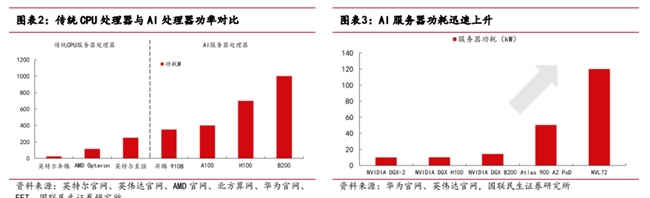
Investment Rating - The report does not explicitly state an investment rating for the industry or specific companies Core Insights - The rapid development of generative AI is driving an increase in computing power demand, leading to higher chip power consumption, with NVIDIA's next-generation Rubin/Rubin ultra chips potentially exceeding 2000W [6] - Current single-phase cooling solutions may struggle to meet the cooling demands of the next-generation Rubin series chips, prompting a shift towards more efficient cooling technologies such as microchannel water cooling plates (MLCP) [6][8] - The microchannel cooling technology offers significant advantages over traditional cooling methods, including lower thermal resistance, larger heat exchange area, and higher flow rates, making it suitable for high heat density scenarios [20][22] Summary by Sections Cooling Technology Overview - Traditional single-phase cooling solutions face limitations in thermal resistance and cooling efficiency, particularly for high power demands of 1500-2000W [8][21] - Microchannel cooling technology integrates cooling components to reduce thermal resistance and improve heat transfer efficiency, with flow channels designed at the micron level [19][22] Market Dynamics - The microchannel cooling market is characterized by three main types of companies: startups specializing in microchannel technology, traditional cooling solution providers, and companies focused on cover plates [26][28] - The transition to microchannel cooling may create opportunities for domestic suppliers, especially if existing suppliers cannot meet the new product iteration pace or quality requirements [30] Challenges and Opportunities - The manufacturing complexity of microchannel cooling plates requires advanced production techniques, which may increase costs by 3-5 times compared to existing cooling solutions [36] - The report highlights potential risks, including slower-than-expected capital expenditure in computing power and competition from alternative cooling technologies [38]


曙光数创20250925
2025-09-26 02:28
Summary of Shuguang Data Creation Conference Call Company Overview - **Company**: Shuguang Data Creation - **Industry**: Liquid Cooling Technology for Data Centers Key Points Industry Insights - The penetration rate of liquid cooling technology is increasing, with the Chinese liquid cooling data center market expected to exceed 100 billion yuan by 2027, growing at a compound annual growth rate (CAGR) of over 50% [2][8][30]. - The demand for AI computing power and carbon neutrality policies are driving market expansion [2][8]. Company Performance - In the first half of 2025, Shuguang Data Creation achieved revenue of 140 million yuan, a year-on-year increase of 43% [3]. - The company’s silent phase change liquid cooling technology has a minimum Power Usage Effectiveness (PUE) of 1.04, significantly lower than traditional air cooling systems, aligning with national requirements for data centers [2][9]. - The gross margin for silent liquid cooling data center infrastructure products reached 40% in 2023, accounting for 58% of the company's revenue [11]. Product Development - The company launched the C7,000 phase change liquid cooling solution in June 2025, enhancing cooling capacity by 15% [6]. - The silent liquid cooling product revenue grew by 212% year-on-year in the first half of 2025, indicating strong recovery momentum [12][20]. Market Expansion - Shuguang Data Creation is actively expanding into overseas markets, with projects established in Malaysia and Japan, and plans to enter Europe, the Middle East, and South Korea [2][7][25]. - The company won a bid for a 61 MW liquid cooling equipment procurement project in Malaysia in 2024 and established a wholly-owned subsidiary in Singapore [7][25]. Customer Concentration - The top five customers accounted for 88% of total revenue in the first half of 2025, with the largest customer contributing nearly 54.7% [5][15]. - Transactions with the controlling shareholder, Zhongke Shuguang, represented 56% of total revenue [5][15]. Future Projections - Revenue growth is projected at approximately 69% for 2025, with profit growth expected to exceed 70% [5][18]. - The company anticipates significant growth opportunities driven by the increasing number of large data centers and the penetration of AI applications [21][38]. Competitive Advantages - Shuguang Data Creation is the only company in China to achieve large-scale deployment of immersion phase change liquid cooling technology, holding a 61.3% market share in 2023 [20]. - The company has a high technical barrier in liquid cooling technology, requiring expertise in fluid mechanics, thermodynamics, and materials science [19]. Regulatory Environment - The Chinese government mandates that new large data centers must achieve a PUE of less than 1.25 by 2025, which supports the demand for liquid cooling solutions [9][28]. Financial Performance - The company’s net profit margin has fluctuated, with a decrease to 12.13% in 2024, but is expected to recover with projected profits of 105 million, 150 million, and 195 million yuan from 2025 to 2027 [36][37]. Technological Achievements - Shuguang Data Creation has made significant advancements in technology, holding 48 software copyrights and numerous patents, and has been recognized with several industry awards [22][38]. Strategic Mergers and Acquisitions - The recent acquisition of Shuguang Data Creation by Haiguang Information is expected to enhance its strategic position within the domestic computing power ecosystem [4][39]. This summary encapsulates the key insights and developments regarding Shuguang Data Creation and the liquid cooling technology industry, highlighting the company's growth trajectory, market strategies, and competitive advantages.
中国专家电话会议:中国液冷渗透率有望提升至 35 - 50%;出口将增长-AI Infrastructure - China Expert call Liquid cooling penetration rate in China to rise to 35-50%; export to grow
2025-08-27 01:12
Summary of Key Points from the Conference Call on Liquid Cooling in China Industry Overview - The liquid cooling penetration rate in China is expected to rise to **35-50%** from the current **5%**, driven by government guidance on data center construction and the product requirements of new NVIDIA chips [1] - The coexistence of air cooling and liquid cooling is anticipated to continue, with air cooling maintaining a penetration rate of **50-60%** in the future, as only high-computing power GPUs require liquid cooling [1] Market Dynamics - In newly constructed AI Data Centers (AIDC), over **70%** of liquid cooling equipment is manufactured by domestic makers, with cooling distribution units (CDUs) primarily developed in collaboration between data center operators and cooling equipment suppliers [1] - The overseas market constitutes approximately **90%** of the global liquid cooling market, with Chinese manufacturers mainly supplying secondary side piping and manifolds [2] - Chinese cooling equipment makers are expected to see increased export opportunities due to better pricing and relationships with Chinese internet firms building AIDC in Southeast Asia [2] Cooling Technology Insights - Cold-plate cooling holds a market share of over **90%**, while immersion cooling is still in the trial stage with a **5-10%** market share [3] - The average data center construction cost allocates **50-60%** to the DC power supply system and **30-40%** to the cooling system, with liquid and air cooling each accounting for half of the cooling system costs [3] - The cooling system consumes only **10-30%** of the total power demand in data centers, with IT equipment being the primary consumer [3] - The expert believes that the demand for liquid cooling is mainly driven by the product requirements of advanced chips rather than government PUE requirements [3] Future Trends - The expert anticipates that immersion liquid cooling penetration will grow due to its simple design and lower risk of cooling liquid leakage and maintenance [3] - Upgrading existing air cooling systems to liquid cooling depends on the current cooling source, with pure air cooling systems facing challenges in upgrading [3] Conclusion - The liquid cooling market in China is poised for significant growth, driven by technological advancements and government support, while also facing challenges in international market penetration due to certification and cost barriers [2][3]
AI产业带动液冷渗透加速,企业中报飘红
Huan Qiu Wang· 2025-08-15 11:37
Group 1 - The core viewpoint of the articles highlights the explosive growth in market demand for liquid cooling technology as a solution to the heat dissipation issues faced by data centers and computing equipment due to increased computing power density [1][3] - The liquid cooling server concept index has risen by 13.64% since August, with significant gains in component stocks such as Yingweike, which increased over 9%, and other companies like Tongfei Co., Shuguang, and Hongfuhan also showing notable increases [1] - Major companies like NVIDIA, Microsoft, Google, and Meta are heavily investing in the AI industry, accelerating the penetration of liquid cooling technology [3] Group 2 - IDC forecasts that the liquid cooling server market in China will reach a scale of $2.37 billion in 2024, representing a year-on-year growth of 67.0%, with cold plate solutions gaining market share [3] - The annual compound growth rate of the liquid cooling market is expected to be 46.8% from 2024 to 2029, with the market size projected to reach $16.2 billion by 2029 [3] - Companies like Feirongda are reporting impressive mid-year performance, with expected revenue of approximately 2.886 billion yuan and net profit between 155 million to 170 million yuan, reflecting a year-on-year growth of 103.95% to 123.69% [3] - Cold plate liquid cooling is identified as the most mature and widely applied solution among the three types of liquid cooling technologies, which also include spray liquid cooling and immersion liquid cooling [3]


液冷产业爆发,看好国内0-1突破
NORTHEAST SECURITIES· 2025-08-15 06:41
Investment Rating - The report rates the industry as "Outperforming the Market" [5] Core Insights - The high power consumption of AI chips is accelerating the adoption of liquid cooling technology, with cold plate solutions becoming mainstream in data centers [1] - Policy incentives and the demand for computing power are driving the rapid growth of the liquid cooling industry, with significant market potential anticipated by 2025 [2] - The penetration rate of liquid cooling technology is still in its early stages, but is expected to see rapid growth as high-power chips become more widely used [3] Summary by Sections Section 1: Industry Dynamics - The latest Blackwell Ultra chip from NVIDIA has a power consumption of 1.4kW, leading to a total rack power consumption of 120-130kW, making traditional air cooling inadequate [1] - Liquid cooling technology is projected to be adopted in over 50% of new data center projects by the end of 2025, driven by policies such as China's "East Data West Computing" initiative [2] Section 2: Market Growth - The Chinese liquid cooling server market is expected to grow at a compound annual growth rate (CAGR) of 46.8% from 2024 to 2029, potentially reaching a market size of $16.2 billion by 2029 [2] - The global penetration rate of liquid cooling in data centers is currently around 10%, with expectations to rise to over 30% in China by 2025 [3] Section 3: Industry Opportunities - The increasing shipment of NVIDIA's Blackwell series chips is a key driver for the adoption of liquid cooling, with projections indicating that Blackwell will account for over 80% of high-end GPU shipments by 2025 [3] - The report highlights several companies involved in the liquid cooling supply chain, including Xiangxin Technology and Kexin New Source, as potential beneficiaries of this growth [3]
Innventure, Inc.(INV) - 2025 Q2 - Earnings Call Transcript
2025-08-14 22:00
Financial Data and Key Metrics Changes - The company's second quarter revenue was $500,000, with $300,000 from Acelsius and $200,000 from management fees of the Inventis ESG fund [24] - General and administrative expenses were approximately $18.6 million, down from $19.7 million in the prior quarter [26] - EBITDA for the quarter was a loss of approximately $135 million, with adjusted EBITDA showing an improvement to a loss of $16.2 million from a loss of $21.8 million in the first quarter [27] Business Line Data and Key Metrics Changes - Acelsius generated $300,000 in revenue, marking its continued growth in the data center liquid cooling market [24] - The company has engaged with its first hyperscaler for a proof of concept system, with expectations for further engagements [9][10] - The contracted go-to-market partner network has grown to 21, an increase of over 100% since the beginning of 2025 [11] Market Data and Key Metrics Changes - The data center liquid cooling market is experiencing rapid growth, driven by the increasing adoption of AI workloads [25] - A UBS analysis indicated that 100% of surveyed IT organizations plan to deploy AI workloads, with 14% already having done so [7] - Hyperscalers are projected to spend approximately $350 billion on data centers this year, with expectations to increase to $400 billion next year [47] Company Strategy and Development Direction - The company is focused on establishing itself as a leader in the two-phase directed chip liquid cooling market, leveraging its differentiated technology [17] - The management emphasizes the importance of building relationships with key industry players, including hyperscalers and OEMs [9][10] - The company has plans to open a demonstration point in the Bay Area to showcase its technology [11] Management's Comments on Operating Environment and Future Outlook - Management expressed confidence in the company's ability to deliver on growth expectations, citing increasing bookings and a shift towards larger production orders [36][38] - The management noted that the adoption cycle for their technology is progressing as expected, with early signs of traction in the market [39] - There is a strong belief that the company's operating model is underappreciated by the market, with significant value creation opportunities ahead [18] Other Important Information - The company issued convertible debentures totaling $30 million, improving its capital position [28] - The balance sheet showed an increase in cash to $12 million, up from $11.1 million at the end of the previous year [29] - The company is actively managing its cash flow and is focused on additional capital raises to support growth opportunities [31] Q&A Session Summary Question: Commentary on revenue growth inflection in the second half of the year - Management indicated that there has been significant activity and that bookings are expected to increase, reflecting traction at Acelsius [34][35] Question: Insights on the first hyperscaler proof of concept - Management confirmed that the initial proof of concept is a significant milestone and that successful trials could lead to large-scale orders [45][46] Question: Feedback on thermal simulation accuracy for AI workloads - Management explained that their thermal test vehicles allow for accurate simulations of high-density workloads at a fraction of the cost, with positive feedback from initial deployments [58][66]
四川大决策投顾:AI算力需求激增带动下,液冷行业高景气可期
Zhong Guo Chan Ye Jing Ji Xin Xi Wang· 2025-08-06 07:59
Core Insights - The rapid growth in AI computing power is driving the demand for advanced cooling solutions, with liquid cooling becoming a necessary standard due to the limitations of traditional air cooling systems [1][14] - The period from 2025 to 2027 is identified as a critical window for technology penetration and performance realization in the liquid cooling market [1][14] Group 1: Cooling Demand and Technology Trends - The demand for cooling solutions is increasing due to the exponential growth in computing power driven by AI technologies, leading to significant rises in chip thermal design power [2][11] - Traditional air cooling is inadequate for high-power density data centers, with liquid cooling expected to see increased penetration as a result of its superior thermal management capabilities [5][12] - The cooling methods for data centers vary based on power density, with air cooling suitable for low-density centers and liquid cooling becoming essential for high-density environments [6] Group 2: Market Growth and Projections - The global data center capacity using liquid cooling is projected to increase significantly, with net additions expected to reach 2.82 GW by 2025 and 9.10 GW by 2028, reflecting a compound annual growth rate (CAGR) of 47.78% [11] - The liquid cooling market in China is forecasted to grow from 149.8 billion yuan to 347.4 billion yuan between 2025 and 2027, with an overall CAGR of 52.3% [12][14] - The market for newly constructed liquid cooling systems is expected to grow from 11.69 billion yuan in 2025 to 30.51 billion yuan by 2027, with a CAGR of 61.6% [12] Group 3: Industry Ecosystem - The liquid cooling industry ecosystem includes upstream component suppliers, midstream IT equipment manufacturers, and downstream users such as telecom operators and third-party IDC service providers [8] - Key components in the liquid cooling supply chain include quick disconnects, cooling distribution units, and various cooling liquids and systems [8] Group 4: Investment Opportunities - Companies such as Inspur (曙光数创), High Cloud (高澜股份), and others are positioned to benefit from the growth in the liquid cooling market, driven by the increasing demand for efficient cooling solutions in data centers [14]