化妆品

Search documents
用23年死磕老百姓用得起:一则国货“笨”故事
Guan Cha Zhe Wang· 2026-01-27 13:44
Core Viewpoint - The article emphasizes the importance of providing scientifically-backed medical skincare products that genuinely improve people's lives, rather than being tied to high prices. The brand Yuze, under Shanghai Jahwa, exemplifies this commitment through its 23-year journey of research and development in collaboration with Ruijin Hospital [1][2]. Group 1: Brand Mission and Development - Yuze's mission is to bring medical skincare from laboratories to everyday households, addressing real skin health needs through evidence-based solutions [3][8]. - The brand's development is rooted in a deep understanding of patients' needs, particularly those suffering from skin conditions like eczema and psoriasis, ensuring that products are safe, effective, and sustainable for long-term use [3][8]. Group 2: Research and Collaboration - Yuze has established a unique "medical research fortress" by completing over 5,000 clinical studies and collaborating with more than 40 top hospitals across China [2][11]. - The brand's commitment to public welfare is evident through the establishment of the "Shanghai Jahwa-Ruijin Guangci Skin Disease Charity Fund," creating a positive feedback loop between patient needs, research, and product development [11][14]. Group 3: Product Innovation - The cornerstone of Yuze's product innovation is the "brick wall structure" theory, which defines the health of the skin barrier in terms of the quality of skin cells and intercellular lipids [15][16]. - Yuze's latest product, the Skin Barrier Repair Cream, is designed to meet the demands of extreme environments and post-aesthetic procedures, showcasing the brand's commitment to rigorous scientific validation [19][23]. Group 4: Traditional Medicine Integration - Yuze is exploring the application of traditional Chinese medicine, specifically the use of Artemisia annua, in skincare, aiming to modernize its benefits and expand its use beyond traditional applications [24][25]. - The collaboration with the Chinese Academy of Traditional Chinese Medicine aims to bridge the gap between traditional herbal knowledge and modern scientific validation, enhancing the efficacy of skincare products [25][26]. Group 5: Social Responsibility and Market Position - Yuze's 23-year journey reflects a commitment to scientific research and social responsibility, demonstrating that a successful brand must also contribute to public health and well-being [27]. - The brand aims to build a "skin health fortress" for Chinese consumers, emphasizing the importance of local resources and scientific research in establishing a self-sufficient technology system in the beauty industry [27].



贝泰妮集团旗下品牌薇诺娜正式进入中东市场
Jing Ji Guan Cha Wang· 2026-01-27 13:20
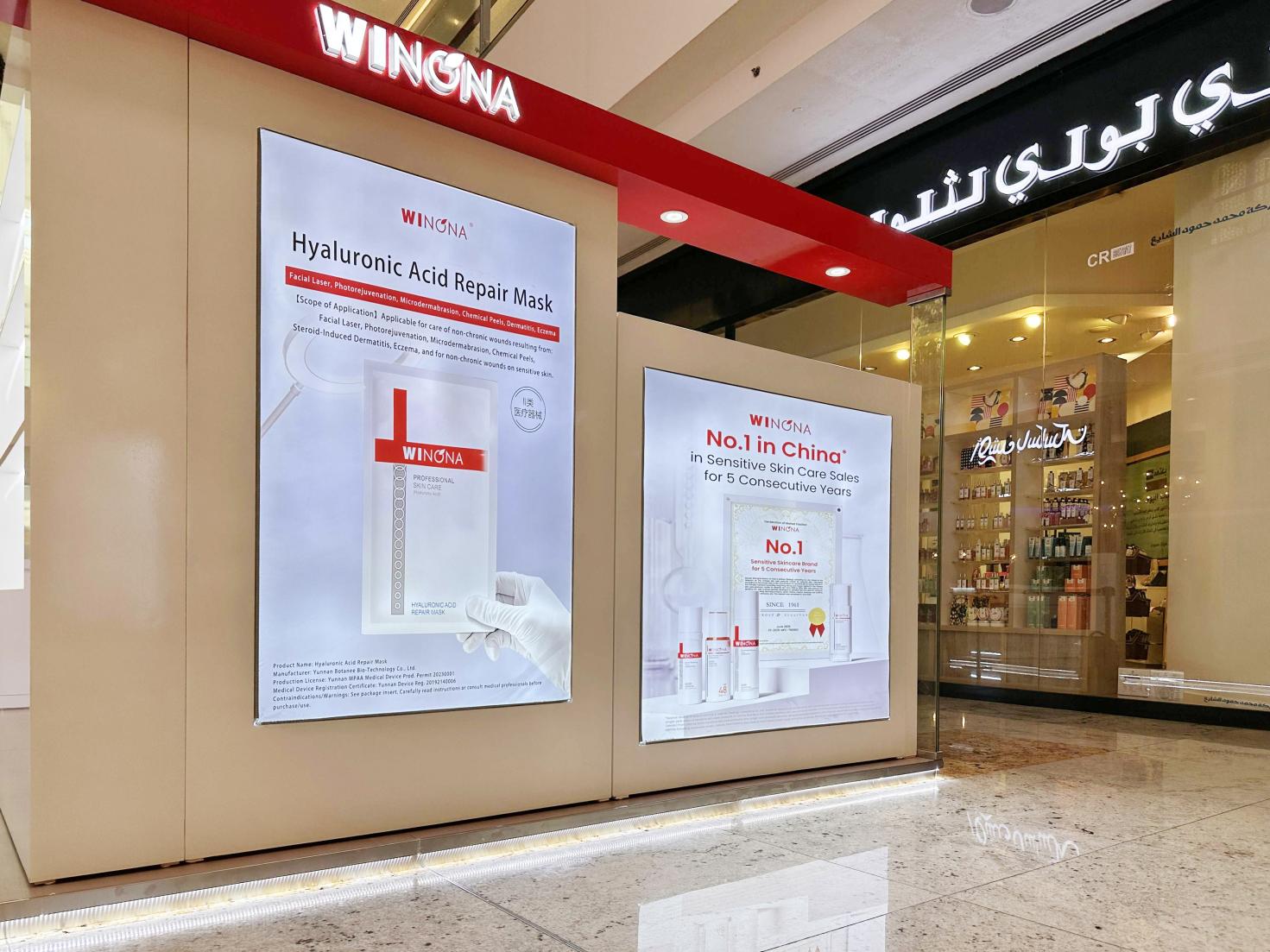
Core Insights - Betaini Group's global strategy has made significant progress with its core brand Winona officially entering the Middle East market, marking a key step in the brand's globalization efforts [1] Group 1: Market Entry - Winona has opened its first offline store in Doha Mall, Qatar, becoming the first Chinese functional skincare brand registered in Qatar [1] - The opening ceremony was attended by key figures from the local healthcare, retail, and business sectors, highlighting the brand's recognition in the professional field [3] Group 2: Product Development - The successful market entry is attributed to Betaini Group's systematic compliance capabilities driven by independent research and development [5] - Winona and its sister brand Pure&Mild have successfully completed systematic entry and layout in Qatar, showcasing a blend of Eastern botanical technology and modern dermatology [5] Group 3: Strategic Alignment - The opening of the flagship store aligns with Betaini Group's response to the Belt and Road Initiative and its strategies for "brand going global" and "ecological going global" [7] - The company aims to enhance its global competitive advantage by injecting advanced plant technology and professional standards into diverse global consumer markets [7]
美妆品牌,集体逃亡
远川研究所· 2026-01-27 13:05
Core Viewpoint - The Chinese cosmetics industry has undergone a significant shift, with brands like Han Shu successfully transitioning from traditional e-commerce platforms like Taobao to Douyin, leading to substantial growth in sales and market presence [3][6][8]. Group 1: Han Shu's Transformation - Han Shu, once struggling to gain traction on Taobao, saw a remarkable turnaround starting in 2022, achieving a GMV of 6 billion and becoming a rising star in the domestic market [3]. - The collaboration with Douyin influencers led to a surge in popularity, with Han Shu topping the Douyin beauty rankings for 14 consecutive months starting in August 2023 [3][6]. - By 2025, Han Shu's GMV on Douyin continued to grow at double-digit rates, positioning it second in online cosmetics sales, just behind L'Oréal [3][6]. Group 2: Industry Migration to Douyin - The cosmetics industry has experienced a collective migration from Taobao to Douyin, with Taobao's beauty GMV declining by 10% in 2024, while Douyin's grew by 25% [5][6]. - Major brands, including Guerlain and Lancôme, have established flagship stores on Douyin, indicating a shift in sales strategies [6]. - By 2023, 17 brands surpassed Taobao in GMV on Douyin, marking a significant transition in the competitive landscape [6]. Group 3: Market Dynamics and Competition - The cosmetics market is characterized by high competition and low entry barriers, with over 70% of products featuring common ingredients [10]. - Marketing expenses for cosmetics companies are notably high, with Han Shu's marketing costs increasing by 90% to 1.7 billion in 2023, and further rising to 3.3 billion in 2024 [29]. - The shift in consumer behavior towards Douyin reflects a broader trend where brands must adapt to changing platforms to maintain market relevance [10][32]. Group 4: Future Outlook - The overall market for cosmetics is expected to face challenges, with Taobao's beauty GMV showing a downward trend, while Douyin's growth may also slow down in 2024 [24][27]. - The competitive landscape will continue to evolve, with brands needing to balance online and offline strategies to capture consumer interest effectively [32].
中新网评:儿童唇膏宣传“食品级” 商家不能揣着明白装糊涂
Zhong Guo Xin Wen Wang· 2026-01-27 12:57
中新网北京1月27日电(记者 查志远 实习生 刘曦)据人民网江苏频道、新京报等媒体报道,婴童护理品牌 品牌戴可思在其儿童唇膏宣传中使用"食品级"表述,涉嫌违反《儿童化妆品监督管理规定》,被当地监 管部门立案调查。随后,企业对外致歉,并撤回了相关宣传内容。 这并非该品牌首次因宣传问题被处罚。此前,戴可思旗下多款产品就曾因虚假宣传"孕妇可用""根源修 护"等内容,被监管部门认定为违反《中华人民共和国广告法》并处罚。 放眼行业,部分儿童化妆品也曾因夸大安全属性、滥用专业概念,被点名整改。概念"踩线",并不是第 一次出现。 2022年,国家药监局发布公告,对"小金盾"标志作出提示:"'小金盾'不是产品质量认证标志。化妆品包 装上标注'小金盾',仅说明这个产品属于儿童化妆品,并不代表该产品已经获得监管部门审批或者质量 安全得到认证。" 从搜索页面到商品详情,从不同产品到不同平台,反复踩线更像是一种对合规边界的试探。 营销可以创新,但边界必须清晰。企业有权强调产品优势,却不能建立在概念混淆之上。合规不应停留 在事后撤回和致歉,更应体现在事前审核与严格遵守法律法规之中。 儿童用品不是营销概念的试验田。"食品级"不是卖点,更 ...
美国美妆市场观察:购买更“挑剔”,分化更显著
HTSC· 2026-01-27 12:49
Investment Rating - The report maintains an "Overweight" rating for the cosmetics industry [7]. Core Insights - The U.S. beauty market is experiencing a notable divide, with consumers becoming more selective in their purchases, leading to a stronger performance in the high-end segment compared to mass-market products [1]. - Estee Lauder's "Beauty Reimagined" strategy is showing early signs of success, with market share recovery in the U.S. and significant growth in China after a period of decline [2]. - ULTA Beauty reported strong same-store sales growth, leading to an upward revision of its revenue guidance for FY25 [3]. - Smaller players in the beauty and medical aesthetics sectors are facing challenges, with many reporting declining revenues [4]. - K-beauty brands are performing exceptionally well in the U.S., with significant export growth and market share gains [5]. Summary by Sections U.S. Beauty Market Overview - The U.S. high-end and mass beauty markets grew by 4% and 5% year-over-year respectively in Q1-Q3 2025, with mass fragrances showing the strongest growth [1]. - Consumers are cutting back on non-essential spending, impacting overall market performance, but brands like ELF and Coty are still facing challenges [1]. Estee Lauder's Strategy - The new CEO's "Beauty Reimagined" strategy is effectively attracting new consumers and has led to a recovery in market share in the U.S. and China [2]. - The company's stock has rebounded approximately 130% since April 2025, although it remains below its peak market value of $133.9 billion from December 2021 [2]. ULTA Beauty Performance - ULTA reported a 6.3% year-over-year increase in same-store sales for Q3, exceeding Bloomberg consensus estimates [3]. - The company has raised its FY25 revenue guidance to $12.3 billion, with same-store sales growth projected between 4.4% and 4.7% [3]. Challenges for Smaller Players - Smaller beauty and medical aesthetics companies are struggling, with ELF reporting a -3% organic revenue growth in FY26Q2, and Coty experiencing five consecutive quarters of revenue decline in the Americas [4]. - Medical aesthetics companies like InMode are facing significant revenue drops, with a 28% year-over-year decline reported for Q3 2025 [4]. K-beauty Market Performance - South Korea's beauty exports to the U.S. reached $1.75 billion in 2025, marking a 13% year-over-year increase, making the U.S. the largest export market for Korean beauty products [5]. - New entrants like APR are gaining market share rapidly, with significant sales growth in the U.S. [5].

HBN启动上市:美图持股23.8%,创始人已进董事会
Jing Ji Guan Cha Wang· 2026-01-27 12:20
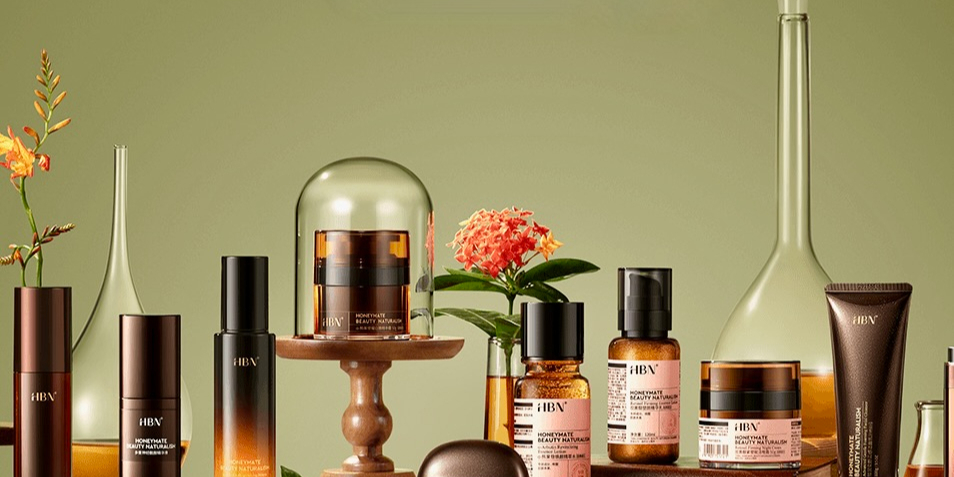
Group 1 - HBN's parent company, Shenzhen Hujia Technology (Group) Co., Ltd., submitted a listing application to the Hong Kong Stock Exchange on January 26, with Meitu as a significant shareholder holding 23.81% [2] - HBN, founded in 2019, focuses on skincare products with a pricing range of 129 to 689 yuan, promoting the "morning C, evening A" skincare concept [2] - Meitu's investment in HBN began in 2020, as part of a strategic transformation plan to enter the social sector amid increasing competition [2][3] Group 2 - Meitu reported a turnaround in profitability in 2022, largely attributed to the fair value gains from its investment in HBN, estimated between 485 million to 565 million yuan [3] - HBN's shareholding structure changed, with Meitu's stake decreasing from 28.2% to 23.81% due to share transfers and capital increases, while the largest shareholders are now Yao Zhenan (35.08%) and Wang Yang (13.6%) [3] - HBN's revenue for 2023, 2024, and the first three quarters of 2025 is projected at 1.948 billion, 2.083 billion, and 1.514 billion yuan, respectively, with net profits of 39 million, 129 million, and 145 million yuan, maintaining a gross margin of 73% to 77% [3] Group 3 - On the same day HBN submitted its listing application, Meitu acknowledged the move and expressed intent to continue holding its stake in HBN, citing potential synergies between their beauty businesses [4]
山东夫妇要IPO敲钟了
3 6 Ke· 2026-01-27 11:44
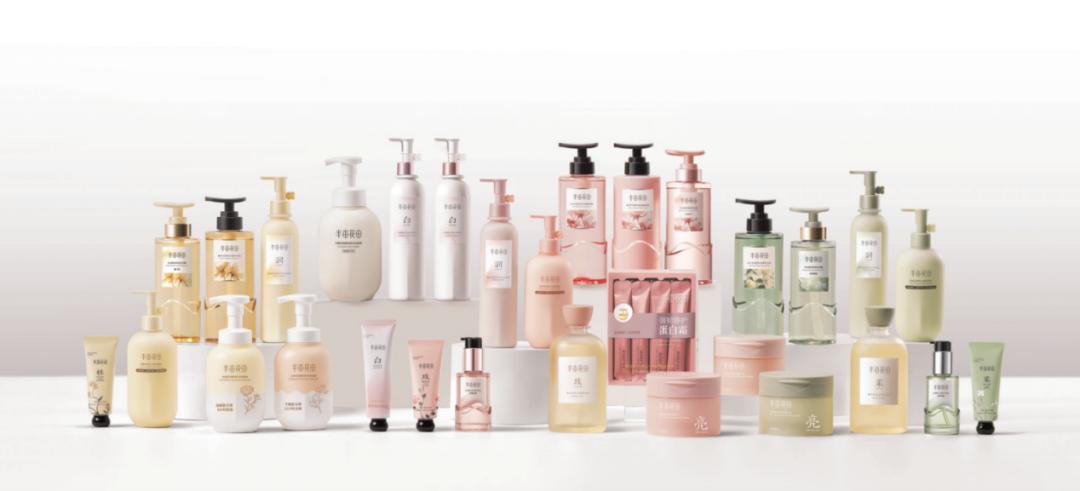
Core Viewpoint - The company Shandong Huawutang Cosmetics Co., Ltd., the parent company of the popular domestic brand "Banmu Huatian," is preparing for an IPO on the Hong Kong Stock Exchange, highlighting the ongoing trend of consumer brands seeking public listings in Hong Kong [2][4]. Company Overview - Banmu Huatian was founded by a couple from Shandong, who initially engaged in herbal tea business and later shifted focus to rose-based products, leveraging the region's rich history in rose cultivation [3]. - The brand gained significant traction on Douyin (TikTok) and has become a leading player in the domestic market for body care products, achieving over 1 billion yuan in sales in 2019 [3][10]. Financial Performance - The company reported revenues of 11.99 billion yuan in 2023, projected to grow to 14.99 billion yuan in 2024 and 18.95 billion yuan in the first three quarters of 2025, with adjusted net profits increasing correspondingly [10]. - The body care segment is the primary revenue driver, accounting for 41.8% of total revenue in the first three quarters of 2025, while the hair care segment has seen a nearly fivefold increase in revenue [10]. Market Position - According to Frost & Sullivan, Banmu Huatian is the leading domestic brand in body lotion, body scrub, and cleansing mousse as of 2024 [8]. - The average price point for the company's products is around 20 yuan, with a strategy to expand offline channels by reducing prices [11]. Sales Channels - Online sales remain the dominant revenue source, contributing 85.7% of total revenue in 2023, with Douyin being the primary platform, achieving a GMV of over 500 million to 750 million yuan in 2025 [11][12]. - The company has diversified its sales channels to include supermarkets, specialty stores, and new retail formats, although online sales continue to lead [11]. Competitive Landscape - The beauty and personal care market is highly competitive, with numerous brands vying for market share, and the company faces challenges from both established and emerging brands [13]. - The company has been investing heavily in marketing, with a sales expense ratio of 47.3% in the first three quarters of 2025, indicating significant financial pressure [13].
洗发水“白发洗黑”是假,收“智商税”是真
Xin Jing Bao· 2026-01-27 11:41
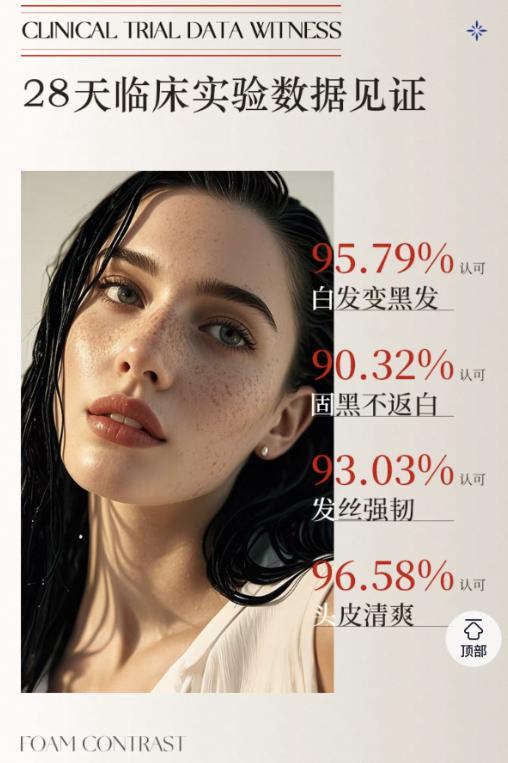
Core Viewpoint - The rise of products claiming to turn white hair black is exploiting consumer anxiety, particularly among younger individuals experiencing premature graying, through misleading marketing tactics [2][3]. Group 1: Product Claims and Marketing Tactics - Numerous non-dye shampoos are marketed as capable of turning white hair black, often accompanied by dubious claims of effectiveness based on "real person" test data [2]. - The marketing language targets the emotional concerns of consumers regarding aging, creating a sense of urgency and desire to purchase these products [2]. - Despite the bold claims, experts assert that once hair emerges from the follicle, its color is fixed and cannot be altered by external treatments, with the only true method being dyeing [3]. Group 2: Regulatory and Ethical Concerns - Companies are aware of the misleading nature of their claims, as evidenced by the actual product registrations that only list basic functions like "cleansing" and "moisturizing," without any mention of hair color change [3]. - There is a clear conflict between product labeling and marketing claims, which raises issues of false advertising and potential violations of consumer rights [3]. - Regulatory frameworks, such as the Cosmetics Supervision and Administration Regulations, require truthful advertising and accurate labeling, yet these products appear to violate these standards [3][4]. Group 3: Impact on Market and Consumer Trust - The proliferation of such deceptive marketing practices undermines market order and harms consumer interests, necessitating stronger regulatory enforcement to protect consumers [4]. - The reliance on contract manufacturing for these products allows companies to distance themselves from the misleading marketing, further complicating accountability [3].
护肤品牌HBN赴港上市
Zheng Quan Ri Bao Wang· 2026-01-27 09:13
Core Viewpoint - HBN, a skincare brand, has submitted its application for a mainboard listing on the Hong Kong Stock Exchange, aiming to become the first stock representing "true efficacy skincare" in China and to leverage international capital markets for long-term development [1] Group 1: Company Overview - HBN was founded in 2019 with a commitment to the philosophy of "true efficacy" and a belief in the long-termism of "slow research" [2] - The brand has established itself among the top ten domestic skincare brands in China and is the largest domestic brand in the improvement skincare market [2] - HBN is recognized as a pioneer in the domestic retinol anti-aging sector and was one of the first brands to propose the "morning C, evening A" skincare concept [2] Group 2: Market Position and Performance - HBN's retinol and α-arbutin products have ranked first in sales in their categories for three consecutive years (2022-2024), creating a rare series of enduring bestsellers among domestic brands [2] - The company has accumulated over 4.6 million repeat customers, with average order values steadily increasing [3] - HBN's average repurchase rates on platforms like Tmall and Douyin are 35.4% and 44.0% respectively, significantly exceeding industry averages [3] Group 3: Financial Performance - HBN has experienced steady revenue growth, with total revenue reaching 2.08 billion yuan in 2024 and 1.51 billion yuan in the first three quarters of 2025, reflecting a year-on-year growth of 10.2% [4] - Adjusted net profit increased from 90 million yuan in 2023 to 130 million yuan in 2024, and further to 150 million yuan in the first three quarters of 2025 [4] - The adjusted net profit margin improved from 4.7% in 2023 to 6.2% in 2024, and reached 9.6% in the first three quarters of 2025, indicating a transition to a sustainable growth phase [4] Group 4: Research and Development - HBN has published 50 SCI-indexed papers, ranking first among domestic skincare brands for papers published as the first author [3] - The company ranks third among domestic brands in the number of new cosmetic raw materials registered by its own research and development as of September 2025 [3] - HBN has established a rigorous efficacy verification system and is the only skincare brand in China to conduct real-world efficacy testing for its entire product line through an international authority [3] Group 5: Future Outlook - HBN aims to establish a comprehensive multi-dimensional efficacy verification system throughout the product lifecycle, expanding verification from laboratories to real-world settings [4] - The company is promoting the establishment of industry standards for cosmetic efficacy evidence assessment, which is expected to lead to more standardized and transparent efficacy claims across the industry [4] - The upcoming listing in Hong Kong is seen as a critical step for HBN to transform its systematic research capabilities into broader market influence [5]
化妆品板块1月27日跌1.27%,丸美生物领跌,主力资金净流出4397.95万元
Zheng Xing Xing Ye Ri Bao· 2026-01-27 08:56
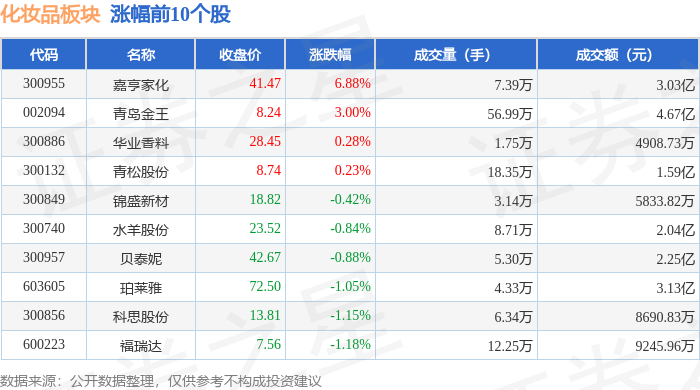
Market Overview - The cosmetics sector experienced a decline of 1.27% on January 27, with Marubi Biotechnology leading the drop [1] - The Shanghai Composite Index closed at 4139.9, up 0.18%, while the Shenzhen Component Index closed at 14329.91, up 0.09% [1] Individual Stock Performance - Key performers in the cosmetics sector included: - Jiahen Home Cosmetics (300955) with a closing price of 41.47, up 6.88% and a trading volume of 73,900 shares, totaling 303 million yuan [1] - Qingdao Kingway (002094) closed at 8.24, up 3.00% with a trading volume of 569,900 shares, totaling 467 million yuan [1] - Conversely, Marubi Biotechnology (603983) closed at 31.84, down 4.47% with a trading volume of 46,400 shares, totaling 149 million yuan [2] Capital Flow Analysis - The cosmetics sector saw a net outflow of 43.98 million yuan from main funds, while retail investors contributed a net inflow of 43.99 million yuan [2] - Notable capital flows included: - Qingdao Kingway (002094) with a net inflow of 22.70 million yuan from main funds [3] - Shanghai Jahwa (600315) with a net inflow of 8.10 million yuan from main funds [3] - Marubi Biotechnology (603983) experienced a slight net outflow of 94,800 yuan from main funds [3]