
Food Delivery

Search documents
美团召开外卖行业恳谈会 商家:被迫参与价格战收入锐减,生存堪忧
Xin Lang Ke Ji· 2025-07-24 10:36
Core Viewpoint - Meituan is actively engaging in discussions regarding the challenges and impacts of price wars in the food delivery industry, emphasizing the need for fair competition and sustainable practices among businesses [1][5]. Group 1: Industry Challenges - The influx of new platforms has led to a significant market investment of 800 billion in subsidies, resulting in aggressive price wars that have decreased average order values by 7 to 10 yuan and reduced merchant income by 15% [1][2]. - Many merchants express concerns that the reliance on high subsidies creates a "false prosperity," as customer retention diminishes once subsidies are removed, leading to a decline in both order volume and average order value [1][2]. - The pressure from price wars disproportionately affects small and medium-sized businesses, which struggle to compete against larger brands that can absorb the costs of subsidies [3][4]. Group 2: Operational Impacts - The fluctuation in order volumes due to subsidies increases operational stress on frontline staff, as businesses must hire additional employees to manage peak orders, leading to higher labor costs and potential declines in service quality [2][3]. - The price sensitivity of consumers has shifted, with many opting for lower-priced items, which has further compressed profit margins for businesses that rely on higher-quality offerings [3][4]. Group 3: Recommendations and Future Directions - Experts suggest that platforms should allocate resources more effectively to create a fair competitive environment, allowing for diverse market development and reducing the negative impacts of price wars on smaller businesses [4][5]. - Meituan has announced plans to invest in infrastructure, including the establishment of 1,200 "Raccoon Canteens" and the expansion of satellite stores, to support the growth of various restaurant brands and enhance operational efficiency [6].

固定收益部市场日报-20250724
Zhao Yin Guo Ji· 2025-07-24 07:25
Report Industry Investment Rating No relevant content provided. Core Viewpoints of the Report - The report provides a daily update on the fixed - income market, including bond price changes, new issuances, and macro - news. It also analyzes the profit situation of WESCHI and gives investment suggestions [1][7][8]. Summary by Relevant Catalogs Trading Desk Comments - Yesterday, GUOTJU priced a 3 - year floating - rated bond at SOFR + 60 (IPT at SOFR + 115). In KR, spreads of DAESEC/SHINFN/NACF 26 - 30s widened by 1 - 2bps. HYNMTR Float 30 tightened 8bps, and HYNMTR 5.3 29/HYNMTR 3.5 31 tightened 2 - 4bps [1]. - In Chinese IGs, BABA/HAOHUA 28 - 35s were unchanged to 1bps tighter, while MEITUA 30 widened 2bps. In financials, BBLTB/KBANK 31 - 40s tightened 2 - 4bps, and NANYAN/BNKEA 30 - 34s tightened 2 - 3bps [1]. - In insurance, SHIKON/CATLIF 34 - 35s were unchanged to 1bp tighter. MYLIFE/NIPLIF 54 - 55s and SUMILF/FUKOKU Perps were up 0.1 - 0.3pt. In AT1s, NWG 7.3/BNP 7.375/HSBC 6.95 Perps were up 0.2 - 0.8pt [1]. - In HK, AIA/CKHH 30 - 35s tightened 1 - 2bps under buying from PBs. LIFUNG 5.25 Perp was 3.1pts higher, and LIFUNG 5.25 08/18/25 was up 0.1pt. Li & Fung launched a tender offer for LIFUNG 5.25 Perp up to USD50mn at USD55 and mandated a 3.5 - year USD bond issuance [1]. - HYSAN/FAEACO Perps were up 0.2 - 0.5pt. LASUDE 26 was up 0.7pt. Media reported Lai Sun Development has been working on a HKD3.5bn 5 - year loan refinancing deal. NWDEVL 27 - 31s/Perps were unchanged to 0.4pt lower [1]. - In Chinese properties, ROADKG 28 - 30s were 0.5 - 3.6pts lower, and ROADKG Perps were unchanged to 0.2pt lower. Outside properties, WESCHI 26 was up 0.2pt. FOSUNI 25 - 28s were up 0.3 - 0.5pt. MONMIN 30 was up 0.7pt, closed 2.6pts higher WTD [1]. New Issuances - TEMASE priced 5 - year, 10 - year, and 30 - year CNH bonds at par to yield 1.85%, 2.05%, and 2.55% (IPT at 2.3%, 2.55%, and 3.05%) respectively [2]. - CHMEDA priced 5 - year and 10 - year CNH bonds at par to yield 2% and 2.3% (IPT at 2.55% and 2.85% area) respectively [4]. - Jiaozuo State - owned Capital Operation (Holding) Group issued a 150 - million 3 - year bond at a 6.5% coupon rate, unrated [12]. Morning Updates - This morning, the new CNH TEMASE 1.85 30/TEMASE 2.05 35 were 0.1 - 0.2pt lower, while TEMASE 2.55 55 was 0.5pt higher from ROs at par. The new CNH CHMEDA 2 30/CHMEDA 2.3 35 were unchanged to 0.1pt lower. VLLPM 29 was up 0.5pt [3]. - WESCHI 4.95 07/08/26 was up 1.0pt this morning post - positive profit alert. HYUELEs were unchanged this morning as SK Hynix 2Q25 EBITDA rose 47% yoy to KRW12.7tn (cUSD9.1bn) [3]. Macro News Recap - On Wednesday, S&P (+0.78%), Dow (+1.14%), and Nasdaq (+0.61%) were higher. Trump said countries will face tariffs ranging from 15% to 50% ahead of an 1 Aug '25 deadline. The US may impose a 15% tariff on EU goods. UST yield was higher on Wednesday, with 2/5/10/30 - year yields at 3.88%/3.94%/4.40%/4.95% [7]. Desk Analyst Comments - West China Cement (WESCHI) expects the profit attributable to owners to increase 80 - 100% yoy to RMB696 - 774mn in 1H25, driven by overseas cement revenue, mainland China cement sales, property sales profit, and reversal of impairment losses [8]. - WESCHI plans to use proceeds from non - core asset sales to partly repay its WESCHI 4.95 07/08/26 due in Jul '26. The company also plans to sell other assets and offshore projects for bond repayment [9]. - Despite potential recovery in the Chinese cement market, caution remains regarding WESCHI's ability to remit cash from African operations. The full and timely repayment of the bond is uncertain. The report maintains a neutral rating on WESCHI 4.95 07/08/26 and prefers BTSDF 9.125 07/24/28 and EHICARs in the China HY space [10]. News and Market Color - Regarding onshore primary issuances, 123 credit bonds were issued yesterday with an amount of RMB119bn. Month - to - date, 1,592 credit bonds were issued with a total amount of RMB1,699bn, a 16.6% yoy increase [14]. - Adani Ports is in the race to set up a logistics park in north India. San Miguel buys a 3.8% stake in First Pacific - owned Meralco for PHP3.9bn (cUSD68.4mn) [14]. - Fosun will early redeem USD178.857mn FOSUNI 5.95 10/19/25 at 101 on 22 Aug '25. China Hongqiao seeks a USD300mn - equivalent three - year loan [14]. - JD.com will create a virtual restaurant chain. Media reported Lai Sun Development has been seeking an HKD3.5bn loan refinancing deal, but about half of the lenders have yet to commit [14]. - Li & Fung says no covenant restriction on perp refi, and the final plan depends on EBITDA. Rakuten sells JPY bonds for JPY30bn (cUSD204mn) for 5G projects [14]. - Sands China 2Q25 adjusted property EBITDA climbs 0.9% yoy to USD566mn. Viceroy alleges Vedanta's promoters siphon margins from Hindustan Zinc [14]. Top Performers and Underperformers | Top Performers | Price | Change | Top Underperformers | Price | Change | | --- | --- | --- | --- | --- | --- | | LIFUNG 5 1/4 PERP | 51.4 | 3.1 | ROADKG 5 1/8 01/26/30 | 22.8 | - 3.6 | | NSANY 5 1/4 07/17/29 | 100.9 | 1.1 | ROADKG 6.7 03/30/28 | 26.5 | - 1.7 | | NWG 7.3 PERP | 102.3 | 0.8 | ROADKG 6 03/04/29 | 25.8 | - 1.7 | | MONMIN 8.44 04/03/30 | 97.4 | 0.7 | GRNLGR 5 7/8 07/03/30 | 21.9 | - 0.9 | | LASUDE 5 07/28/26 | 52.0 | 0.7 | ROADKG 5.2 07/12/29 | 25.9 | - 0.6 | [5]
闪购茶饮促销价普遍涨到10元以上
21世纪经济报道· 2025-07-23 04:42
Core Viewpoint - The article discusses the recent regulatory intervention by the market supervision authority regarding aggressive subsidy practices in the food delivery industry, signaling a need for platforms like Ele.me, Meituan, and JD to adjust their promotional strategies to avoid excessive competition and ensure fair practices [2][4]. Group 1: Regulatory Actions and Industry Response - On July 18, the market supervision authority held talks with major food delivery platforms, emphasizing the need to regulate promotional behaviors and indicating that the aggressive subsidy wars must change [2][4]. - Prior to the talks, various regional restaurant associations had called for a halt to extreme subsidies, highlighting the negative impact on traditional dining establishments and the unsustainable pressure on restaurant profits [4][6]. Group 2: Impact on Businesses - Some businesses, like "Yixin Rice Ball," reported a nearly 30% increase in orders since May, primarily driven by delivery services, while maintaining a gross margin of around 65% despite participating in subsidy wars [6][8]. - However, many businesses experienced a decline in average profit margins by 10% to 30% during subsidy campaigns, as increased order volumes were accompanied by lower average transaction values [6][7]. Group 3: Challenges Faced by Restaurants - Restaurants are facing operational challenges due to sudden spikes in low-priced orders, which disrupt service quality and delivery efficiency, leading some to withdraw from platform partnerships [7][8]. - The disparity in resource allocation favors larger chain brands, leaving smaller businesses struggling to compete for visibility and customer engagement on these platforms [7][10]. Group 4: Future Considerations - Experts suggest that the ongoing subsidy wars should not be simplistically categorized as "involution" but rather viewed as a complex interplay of market dynamics that could lead to improved operational efficiencies and data-driven management for smaller businesses [10][11]. - The focus should shift towards establishing fair subsidy rules and ensuring equitable distribution of traffic among all merchants, with an emphasis on long-term sustainability and quality competition rather than short-term price wars [11][12].

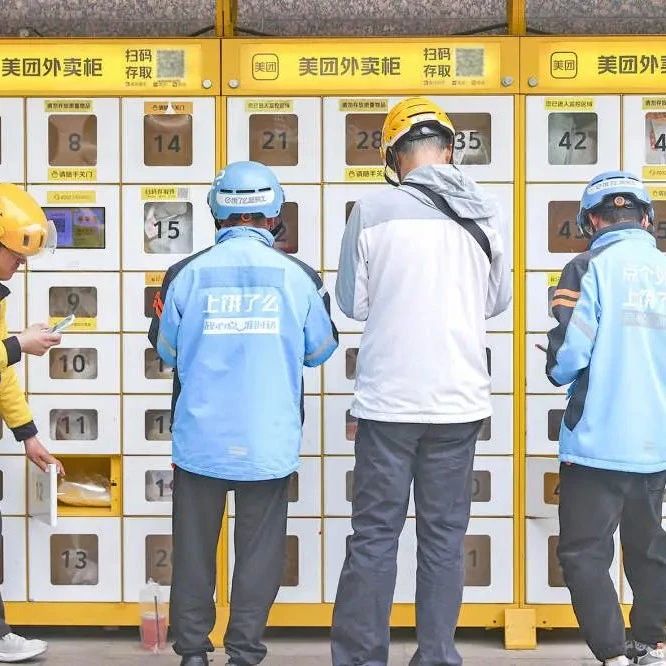
爆单了!挤满外卖员,有人忍痛取消8单!实探刘强东的首家线下外卖店
21世纪经济报道· 2025-07-22 13:59
Core Viewpoint - The competition in the food delivery industry remains intense, with both JD.com and Meituan launching physical collective stores to enhance their service offerings and operational efficiency [1][9]. Group 1: JD.com Initiatives - JD.com opened its first offline delivery store, "Qixian Xiaochu," which experienced overwhelming demand, leading to system adjustments that restricted orders from outside delivery areas [1][6]. - The store's popularity was evident as delivery personnel faced long wait times, with some orders being canceled due to excessive delays [1][6]. - JD.com plans to invest 10 billion yuan to recruit "dish partners" and aims to establish 10,000 Qixian Xiaochu stores nationwide within three years [9]. Group 2: Meituan Developments - Meituan announced its "Raccoon Kitchen" initiative, planning to build 1,200 locations over the next three years, starting with nine in Beijing [9]. - The Raccoon Kitchen will serve as a centralized delivery kitchen, providing infrastructure for various restaurant businesses, emphasizing transparency and traceability in food preparation [9]. Group 3: Market Dynamics - The surge in orders at JD.com's Qixian Xiaochu was attributed to increased consumer awareness following its opening, indicating a strong market response to new entrants [6][9]. - The competitive landscape is evolving, with both companies adopting different business models to capture market share in the food delivery sector [9].


京东七鲜小厨宣战“黑外卖”:希望帮消费者彻底解决幽灵外卖带来的食品安全问题
Xin Lang Ke Ji· 2025-07-22 13:28
Core Viewpoint - JD Group officially launches the "Ten Thousand Stores Plan," committing over 10 billion yuan to establish 10,000 self-operated takeaway stores named "Seven Fresh Kitchen" within three years [1] Group 1: Business Strategy - The company aims to recruit partners for 1,000 signature dishes through a "Dish Partner" recruitment plan, investing 1 billion yuan in cash to collaborate with national restaurant brands and individual chefs [1] - JD's founder, Liu Qiangdong, indicated that the takeaway market is vast and hinted at a new business model that will differ significantly from Meituan, with expectations to address food safety issues [1] Group 2: Problem Solving - The "Seven Fresh Kitchen" initiative aims to tackle two main issues: eliminating food safety concerns associated with ghost kitchens and helping quality-focused restaurants increase their revenue by selling signature dishes nationwide [1] - The business leader, Liu Bin, emphasized the importance of a stringent supply chain, utilizing well-known brands for ingredients and ensuring that all food items are pre-processed, packaged, and transported under strict hygiene standards [1] Group 3: Supply Chain Innovation - The supply chain for "Seven Fresh Kitchen" will feature carefully selected suppliers, including major brands like COFCO, China Salt, and Yihai Kerry, to ensure high-quality ingredients [1] - The model eliminates the need for in-store food preparation, thereby reducing hygiene risks and ensuring that customers can trust the cleanliness and safety of the food [1]
北美互联网_互联网流量趋势分析:对 META、PINS、DASH、UBER 和 CVNA 的积极趋势-North America Internet_ Internet Traffic Trends Analysis_ Positive Trends for META, PINS, DASH, UBER, and CVNA
2025-07-21 14:26
Summary of Key Points from the Conference Call Industry Overview - **Industry Focus**: North America Internet - **Companies Highlighted**: META, PINS, DASH, UBER, CVNA, GOOGL, AMZN, Etsy, Temu, IAC, Zillow, Carvana, DoorDash, Uber, Airbnb, Expedia Core Insights and Arguments 1. **Positive Traffic Trends**: META, DASH, UBER, and CVNA show positive trends in website and app traffic, while trends for Online Travel, eCommerce, and SMB Servicers are mixed [1][2] 2. **META's Performance**: META's U.S. core apps MAUs increased by 2.3% year-over-year (Y/Y), with Instagram's minutes per daily active user (DAU) rising by 15% Y/Y to approximately 53 minutes [1][4] 3. **GOOGL's Search Share**: GOOGL's global search share declined by 10 basis points month-over-month (M/M) to 89.5%, with a year-over-year decline of 160 basis points [1][4] 4. **eCommerce Trends**: eCommerce web traffic remains soft, with notable declines for Temu's U.S. MAUs down 46% Y/Y and downloads down 84% Y/Y, while Etsy's U.S. MAUs grew by 14% Y/Y [1][4] 5. **DASH and UBER Growth**: DASH's U.S. MAUs grew by 20% Y/Y, and UBER's global MAUs increased by 9% Y/Y [1][4] 6. **Streaming Trends**: Streaming now accounts for 46% of TV viewing time, up from 42% for linear TV, with YouTube leading in time spent [5][6] 7. **ChatGPT Dominance**: ChatGPT remains the most downloaded app in the U.S. for six consecutive months, despite a 1% M/M decline in downloads [4][9] 8. **Mixed eCommerce App Trends**: While Amazon's global app MAUs grew by 8% Y/Y, Temu's U.S. app MAUs declined by 46% Y/Y [6][7] 9. **Retailer Performance**: Walmart's U.S. eCommerce sales growth accelerated to 21% Y/Y, while Target's digital comp sales grew by 4.7% Y/Y [6][7] 10. **Online Travel Trends**: Mixed trends in online travel, with Booking.com's traffic down 2% Y/Y, while Expedia's U.S. traffic grew by 3% Y/Y [6][7] 11. **SMB Servicers**: Traffic trends for SMB servicers were mostly softer, with GoDaddy's U.S. traffic growing by 4% Y/Y in June [6][7] 12. **Online Real Estate**: Zillow's U.S. web traffic declined by 4% Y/Y in June, but its app MAU growth increased by 7% Y/Y [6][7] 13. **Online Autos**: Carvana's U.S. web traffic rebounded to +11% Y/Y in June, while ACV Auctions' traffic accelerated to +48% Y/Y [6][7] Additional Important Insights - **App Download Rankings**: META accounted for 19% of the top 25 app downloads in June, with four of its apps in the top 25 [4][9] - **Digital Advertising Trends**: Social media time spent in the U.S. increased by 3% Y/Y, with Meta's core apps leading the growth [4][10] - **GenAI App Usage**: ChatGPT's web unique visitors increased by 64% Y/Y, while Google's Gemini app MAUs reached 260 million [5][6] - **Market Methodology**: The data is aggregated from SimilarWeb and Sensor Tower, providing insights into engagement trends across various platforms [7][8] This summary encapsulates the key points from the conference call, highlighting the performance of various companies and trends within the North American internet industry.





X @Bloomberg
Bloomberg· 2025-07-21 03:23
Meituan led gains in China’s food-delivery shares after the authorities sought to damp down rampant price competition in the sector https://t.co/N0S6AqkceS ...
国际投行的困惑:中国新一轮千亿外卖大战“值得打”吗?|101 Weekly
硅谷101· 2025-07-20 23:30
Market Competition & Strategy - The food delivery war is driven by giants seeking new growth points beyond saturated markets [1][2] - E-commerce platforms enter food delivery to boost traffic and user engagement, transferring customer acquisition budgets from online advertising to subsidies [3][6] - Meituan defends its position with subsidies and innovative solutions like Raccoon Kitchen, a standardized kitchen model [6][7] Financial Implications & Investment - The intense competition leads to falling stock prices for Meituan, Alibaba, and JD com, with potential burn rates reaching 25 billion yuan (approximately $345 million USD) in Q2 2024 [8] - Alibaba possesses the most ammunition for a subsidy war, with over 80 billion yuan (approximately $11 billion USD) in free cash flow in fiscal year 2025 and over 400 billion yuan (approximately $55 billion USD) in cash and short-term investments [9] - Investment banks question the value of burning money in food delivery versus investing in high-growth potential markets like AI [9][19] Market Outlook & Predictions - UBS estimates the food delivery and instant retail market could double to 15 trillion yuan (approximately $207 billion USD) in three years, representing 10% of the e-commerce market, but operating profit margins will be low at 25% [11][12][13] - Goldman Sachs predicts a final market share distribution of 55%:35%:1 for Meituan, Alibaba, and JD com respectively, with Meituan remaining the largest [21][22] - Goldman Sachs anticipates Meituan's EBIT per takeaway order to decrease to 70 yuan (approximately $96 USD), and instant retail to drop to 0, before recovering to 1 yuan (approximately $014 USD) after 2027 [23]


Uber Stock Looks Expensive -- or Does It?
The Motley Fool· 2025-07-20 22:05
Core Viewpoint - Uber Technologies has transitioned from a cash-burning disruptor to a profitable global platform with diverse growth engines, including mobility, food delivery, logistics, and advertising, but its stock valuation has raised questions about sustainability [1][12]. Financial Performance - Uber achieved its first annual profit in 2023, with operating income more than doubling from $1.1 billion to $2.8 billion in 2024, and free cash flow also more than doubling from $3.4 billion to $6.9 billion [3]. - In Q1 2025, Uber generated $1.2 billion in operating income on $11.5 billion of revenue, with free cash flow expanding 66% year over year to $2.3 billion, indicating a sustainable profitability trend [4]. Business Diversification - Uber has evolved from a ride-hailing operator to a diversified platform, with mobility as its core business still showing growth and solid margins [5]. - The delivery segment has become profitable and is expanding into higher-value areas like groceries and alcohol, while freight contributes to long-term logistics options [6]. - Uber is also scaling smaller businesses like Uber Ads and Uber One, leveraging its large user base of 150 million monthly active users for monetization [7]. Network Effects and Data Utilization - Uber's platform benefits from powerful network effects, where increased user participation attracts more drivers and merchants, driving transactions and enhancing customer appeal [8]. - The growing pool of first-party data allows for better targeting and higher-margin monetization across Uber's ecosystem [8]. Future Growth Opportunities - Potential growth areas include autonomous ride-hailing and delivery, as well as international expansion, which could rival or exceed the growth of Uber's core businesses [9]. Valuation Context - Uber's trailing price-to-sales (P/S) ratio is 4.6, which is not considered a bargain but is reasonable given its profitability and market opportunities, especially compared to peers like DoorDash and Lyft [10][11]. - DoorDash has a higher P/S ratio of 9.1 but with thinner margins, while Lyft trades at a steep discount with less scale and international reach [11]. Investment Implications - Uber's stock is no longer a value play or solely a growth story; it has established a track record of solid earnings and multiple growth levers [13]. - The focus for long-term investors should be on Uber's ability to execute across its segments to sustain growth and expand margins, making the current share price reasonable if successful [13].

中国周报:MXCN 沪深 300 指数上涨 3.7%;国家市场监督管理总局敦促外卖企业理性竞争;二季度 GDPChina Weekly Kickstart_ MXCN_CSI300 gained 3.7; SAMR urged food delivery companies to compete rationally; Q2 GDP came in above consensus market expectations
2025-07-19 14:57
Summary of Key Points from the Conference Call Industry Overview - The report discusses the performance of the Chinese stock market, specifically the MXCN and CSI300 indices, which gained 3.7% and 1.1% respectively during the week. The Health Care sector outperformed, while Real Estate and Value sectors lagged behind [1][3][8]. Economic Indicators - China's Q2 GDP growth was reported at 5.2% year-over-year, slightly above market consensus of 5.1% and in line with internal forecasts. The full-year GDP growth forecast for 2025 has been adjusted to 4.7% [1][55]. - Policymakers are expected to discuss economic policies for the second half of the year in the upcoming Politburo meeting, with no significant stimulus anticipated due to robust H1 growth [1]. Sector Performance - Health Care and Growth sectors showed strong performance with increases of 8.6% and 4.7% respectively, while Real Estate and Value sectors saw declines of 4.7% and 2.1% [3][8]. - The forward price-to-earnings ratios for MXCN and CSI300 are 12.1x and 13.4x, with expected EPS growth of 5% for 2025 and 14% for 2026 for MXCN [9]. IPO Market Insights - The report highlights a resurgence in Hong Kong IPOs, with increased participation from global long-term capital as cornerstone investors [10][13]. - The demand-to-offer ratio for Hong Kong IPOs has dropped to a historical low, indicating strong retail investor demand [17]. - Newly listed companies with significant growth potential tend to perform better post-IPO, with average returns of approximately 10% on the first trading day and 40% within three months [20]. Fund Flows and Positioning - Global fund allocation in Chinese equities has recovered, with gross allocation to China increasing to 5.2% as of July 2025, up from 4.5% in January 2025 [30][31]. - Net allocation to China also increased to 7.2%, indicating a positive trend in investor sentiment towards Chinese markets [33]. Regulatory Environment - The State Administration for Market Regulation (SAMR) has urged food delivery companies to engage in rational competition and improve the regulation of promotional activities [1]. - Recent meetings between President Xi and business leaders suggest a potential easing of policies towards private enterprises [50]. Conclusion - The overall sentiment in the Chinese market appears cautiously optimistic, with strong sector performances in Health Care and Growth, a recovering IPO market, and increasing fund allocations towards Chinese equities. However, challenges remain in the Real Estate sector and regulatory scrutiny continues to shape market dynamics [1][3][10][30].