Semiconductor

Search documents
思特威(上海)电子科技股份有限公司 2025年年度业绩快报
Xin Lang Cai Jing· 2026-02-26 23:46
Financial Performance - The company achieved operating revenue of 903,124.04 million yuan, an increase of 51.32% year-on-year [1] - The net profit attributable to the parent company was 100,136.19 million yuan, with a basic earnings per share of 2.50 yuan, indicating significant growth [1] - Total assets reached 1,082,272.15 million yuan, up 38.21% from the beginning of the period, while equity attributable to the parent company increased by 24.67% to 522,244.94 million yuan [1] Business Growth Drivers - The company deepened collaborations in the smartphone sector, leading to a substantial increase in the shipment of high-end 50 million pixel products based on Lofic HDR? 2.0 technology [2] - In the automotive electronics sector, there was a significant rise in the shipment of products for intelligent driving assistance, contributing to a leap in revenue [2] - The company also saw growth in the smart security and machine vision sectors, enhancing its market share and revenue in these emerging fields [2] Operational Improvements - The company strengthened its multi-business layout, focusing on product research and market promotion, which led to rapid sales growth and improved profitability [3] - The increase in net profit correspondingly expanded the company's asset scale, reflecting enhanced operational capabilities [3]

Data I/O (DAIO) - 2025 Q4 - Earnings Call Transcript
2026-02-26 23:02
Financial Data and Key Metrics Changes - Net sales in Q4 2025 were $4 million, down from $5.2 million in Q4 2024, while full-year net sales were $21.5 million compared to $21.8 million in the prior year [15] - Q4 bookings were $3.1 million, down 25% from $4.1 million in the prior year, and full-year bookings were $18.6 million, down 17% from $22.5 million in 2024 [15] - Gross margins for Q4 were 43%, compared to 52.2% in Q4 2024, and full-year gross margin was 49.3% for 2025 compared to 53.3% in the prior year [17][19] - Net loss for Q4 was $2.5 million or $0.27 per share, compared to a net loss of $1.2 million or $0.13 per share in Q4 2024; full-year net loss was $5 million or $0.53 per share, compared to a net loss of $3.1 million or $0.34 per share in 2024 [19] Business Line Data and Key Metrics Changes - Consumables, adapters, and services represented 58% of total revenue for 2025, while capital equipment sales accounted for 42% [16] - Sales to the automotive electronics sector represented 52% of 2025 bookings, down from 59% in 2024 [17] Market Data and Key Metrics Changes - Bookings and revenues were strongest in Asia, while North America demand remained consistent with the prior year, and Europe experienced a decline [16] - Overall backlog as of December 31, 2025, was $2.3 million, down from $2.7 million at the end of September [17] Company Strategy and Development Direction - The company is transforming to shift from a traditional programming CapEx market to a broader data provisioning market, which is a significantly larger opportunity [9] - The strategy includes modernizing the go-to-market approach, investing in the core platform, strengthening customer relationships, optimizing business operations, and deploying AI company-wide [6][8] - The company is expanding its addressable market by leveraging partnerships, such as the recent collaboration with IAR, to enhance security provisioning capabilities [10][100] Management's Comments on Operating Environment and Future Outlook - Management expressed confidence in being ahead of schedule in the transformation plan, with expectations for organic revenue growth in 2026 supported by early demand signals from edge AI infrastructure [14][22] - The company anticipates improved gross margins as revenue increases and cost discipline is maintained, targeting positive operating cash flow by the end of 2026 [22] Other Important Information - The company faced challenges in 2025, including a cyber attack, but managed to recover quickly and continue its transformation efforts [7] - Operating expenses for Q4 were $4.2 million, including one-time expenses related to SEC filings and restructuring, compared to $4 million in Q4 2024 [18] Q&A Session Summary Question: Impact of semiconductor manufacturing reshoring on revenue opportunity - Management noted that while reshoring creates jobs and growth, it does not directly impact revenue; however, there is increased activity and conversations with clients regarding production needs [25][27] Question: AI-assisted software development - Management highlighted advancements in AI that have significantly reduced costs and improved efficiency in software development processes, enabling faster product releases [32][34] Question: Update on M&A pipeline - Management confirmed an active M&A pipeline with several opportunities being explored, emphasizing a disciplined approach to acquisitions [55][60] Question: Customer activity in Q4 - Management indicated that while Q4 had some customer conversations, many were looking to finalize plans in Q1 and Q2, with a significant portion of the pipeline consisting of new opportunities [66][68] Question: Activity in the electric vehicle market - Management affirmed that the automotive sector remains a strong market, with ongoing discussions and new solutions being developed for existing clients [92][94]

ROSEN, A HIGHLY RECOGNIZED LAW FIRM, Encourages GSI Technology Inc. Investors to Inquire About Securities Class Action Investigation - GSIT
TMX Newsfile· 2026-02-26 21:26
Core Viewpoint - Rosen Law Firm is investigating potential securities claims on behalf of shareholders of GSI Technology Inc. due to allegations of materially misleading business information issued by the company [1]. Group 1: Allegations and Stock Impact - A post on Stockwits claimed that GSI Technology was concealing that their chip did not run the Gemma-3, only the pre-generation RAG phase, which is critical for AI workloads [3]. - Following this news, GSI Technology's stock price dropped by $1.08 per share, or 14.2%, closing at $6.52 per share on February 4, 2026 [3]. Group 2: Class Action Information - Investors who purchased GSI Technology securities may be entitled to compensation through a class action lawsuit without any out-of-pocket fees, facilitated by a contingency fee arrangement [2]. - Interested investors can join the class action by visiting the provided link or contacting the law firm directly [2]. Group 3: Rosen Law Firm's Credentials - Rosen Law Firm has a strong track record in securities class actions, having achieved the largest securities class action settlement against a Chinese company and being ranked highly for settlements since 2013 [4]. - The firm has recovered hundreds of millions of dollars for investors, including over $438 million in 2019 alone [4].




This Penny Stock Is Getting a Major Boost From AMD Today. Should You Buy In?
Yahoo Finance· 2026-02-26 20:54
Core Viewpoint - Avalon GloboCare (ALBT) shares experienced a significant increase, more than doubling in value, following the announcement of its subsidiary's acceptance into the Advanced Micro Devices (AMD) artificial intelligence Developer Program, indicating a potential shift in momentum for the stock [1]. Group 1: Partnership and Resources - The partnership with AMD provides Avalon direct access to the chip giant's "Developer Cloud" resources, which include high-performance computing powered by Instinct accelerators and EPYC processors, essential for scaling Avalon's automated commentary video generation and enterprise documentation tools [4]. - ALBT's management anticipates that these resources will significantly enhance model training efficiency and inference speeds, validating its technological roadmap and providing the necessary architecture for transitioning from prototype to commercial deployment [5]. Group 2: Financial Situation and Risks - Despite the positive news, ALBT remains a penny stock with a market cap of less than $5 million, making it vulnerable to extreme volatility and potential "pump and dump" dynamics, with shares hovering around $1, raising concerns about the risk of delisting [6]. - The company continues to report millions in net losses on minimal revenue and has resorted to bridge notes and promissory agreements for funding, indicating a precarious financial situation that could lead to severe dilution as the board seeks approval for a potential reverse stock split and issuance of new shares [7]. - Currently, ALBT does not receive coverage from Wall Street, suggesting that investors should be cautious about chasing momentum in the stock [9].


Photronics Q1 Earnings Surpass Estimates, Revenues Increase Y/Y
ZACKS· 2026-02-26 18:55
Core Insights - Photronics (PLAB) reported first-quarter fiscal 2026 non-GAAP earnings of 61 cents per share, exceeding the Zacks Consensus Estimate by 12.96% and reflecting a year-over-year increase of 17.3 [1][7] - Revenues for the quarter reached $225.1 million, marking a 6.1% increase year over year and a 4.3% increase sequentially [1][7] Revenue Breakdown - Integrated Circuit revenues rose 5% sequentially and 7% year over year to $165.3 million, driven by higher demand in high-end IC sales ahead of the Chinese New Year [2] - FPD revenues increased by 3% both year over year and sequentially to $59.8 million, with significant growth in the Mainstream sub-segment driven by China's IT market [2] Financial Metrics - Gross margin for the first quarter contracted by 60 basis points year over year to 35% [3] - Research & development expenses as a percentage of revenues decreased by 90 basis points year over year to 1.1% [3] - Selling, general, and administrative expenses as a percentage of revenues increased by 50 basis points year over year to 9.5% [3] - Operating income was $54.9 million, up 5.1% year over year, while operating margin contracted by 20 basis points year over year to 24.4% [3] Balance Sheet & Cash Flow - As of February 1, 2026, cash and cash equivalents and short-term investments totaled $636.9 million, up from $588.2 million as of October 31, 2025 [4] - Total debt remained flat at $0.02 million compared to the previous quarter [4] - Cash generated from operating activities was $97.3 million, with $47.6 million invested in organic growth through capital expenditures [4] Q2 2026 Guidance - For the second quarter of fiscal 2026, Photronics expects revenues between $212 million and $220 million [5] - The company anticipates an operating margin in the range of 22-24% for the second quarter [5] - Earnings are projected to be between 49 cents and 55 cents per share [5] Stock Performance - Photronics currently holds a Zacks Rank 3 (Hold) [6] - The company's shares have increased by 91.7% over the past 12 months, outperforming the Zacks Computer & Technology sector, which saw a 32% increase [6]


西安奕斯伟材料科技股份有限公司2025年度业绩快报公告
Xin Lang Cai Jing· 2026-02-26 18:39
Financial Performance Summary - The company reported a revenue of 264,923.17 million yuan for the reporting period, representing a year-on-year increase of 24.88% [2] - Operating profit was -73,761.12 million yuan, with a total profit of -73,775.11 million yuan, and a net profit attributable to the parent company of -73,775.55 million yuan, remaining relatively stable compared to the previous year [2] - The net profit attributable to the parent company, excluding non-recurring gains and losses, was -80,892.22 million yuan, with a year-on-year increase in losses of 6.08% [2] - Total assets at the end of the reporting period were 2,068,309.43 million yuan, an increase of 18.72% from the beginning of the period [2] - Equity attributable to the parent company increased by 45.83% to 1,241,699.28 million yuan [4] Factors Affecting Performance - The global silicon wafer shipment area increased by 5.8% in 2025, while sales revenue decreased by 1.2%, indicating a lag in demand transmission from downstream sectors [3] - Traditional applications such as automotive, industrial, and consumer electronics are still undergoing inventory adjustments, leading to an overall supply-demand imbalance [3] - Increased competition in the 12-inch silicon wafer market due to domestic capacity expansion has put pressure on product prices [3] - The company is in the process of ramping up production capacity at its second factory, which has not yet fully released its capacity, leading to fixed costs not being effectively diluted [3] - Despite the losses, the company maintained positive operating cash flow, indicating good sustainable operational capability [3]
ETFs to Buy as NVIDIA Shares Gain Following Q4 Earnings Beat
ZACKS· 2026-02-26 17:55
Core Insights - NVIDIA's shares rose by up to 3% in after-hours trading following a strong earnings report that exceeded analysts' expectations for both revenue and earnings [1] - The company provided a fiscal first-quarter 2027 revenue guidance of $78 billion, surpassing the consensus estimate of $69.25 billion, indicating robust growth prospects [9] Financial Performance - In the fourth quarter of fiscal 2026, NVIDIA's earnings exceeded consensus estimates by 6.6%, marking an 82% increase year-over-year, while revenues surpassed expectations by 4.1%, rising 73% from the previous year [4] - The data center segment generated $11 billion in revenue, driven by strong performance from Blackwell and Blackwell Ultra [5] - The Gaming segment saw significant advancements, with professional visualization revenues exceeding $1 billion for the first time, up 159% year-over-year [6] Strategic Partnerships and Innovations - NVIDIA announced a multiyear partnership with Meta for large-scale deployment of NVIDIA CPUs and GPUs, and expanded its collaboration with AWS [7] - The company introduced several new technologies, including the NVIDIA Rubin platform and NVIDIA G-SYNC Pulsar, during the fiscal fourth quarter [8] Market Outlook - Analysts project an average price target of $255.55 for NVIDIA, suggesting a potential upside of 32.5% from the last closing price of $192.85 [2] - Despite anticipated strong demand in the gaming segment, NVIDIA expects supply constraints to pose challenges in the first quarter of fiscal 2027 [9] ETF Investment Opportunities - Several ETFs with significant exposure to NVIDIA include: - Vanguard Information Technology ETF (VGT) with an 18.04% weight in NVDA and a 27.8% gain over the past year [12][13] - Strive U.S. Semiconductor ETF (SHOC) with a 19.25% weight in NVDA and an 84.2% increase over the past year [14] - VanEck Semiconductor ETF (SMH) with an 18.70% weight in NVDA and an 86.3% rise over the past year [15] - VanEck Fabless Semiconductor ETF (SMHX) with a 21.46% weight in NVDA and a 56.9% gain over the past year [16]

下一代存储器全球标准化进程启动 ,AI存储架构进入新阶段
Xuan Gu Bao· 2026-02-26 15:10
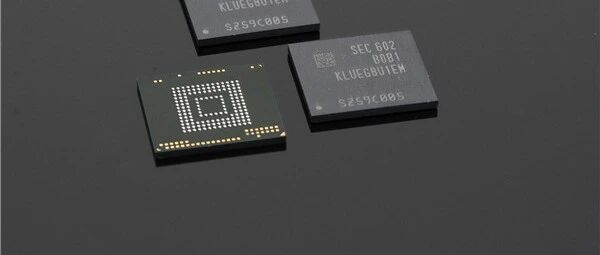
Group 1 - SK Hynix announced the launch of the "HBF Specification Standardization Alliance" in collaboration with SanDisk, introducing a global standardization strategy for the next-generation storage solution HBF (High Bandwidth Flash) aimed at the AI inference era [1] - HBF technology is designed to fill the storage tier gap between HBM and SSD, providing an innovative storage solution that meets the dual demands of capacity scalability and energy efficiency for AI inference scenarios [1] - The HBF technology is expected to be integrated into products from NVIDIA, AMD, and Google by 2027-2028, with the market size projected to surpass HBM by 2038 [1] Group 2 - The standardization of HBF technology marks a new phase in AI storage architecture, and companies that can offer a full-stack storage solution combining both HBM and HBF will gain strategic advantages as AI inference demand surges [1] - Related A-share concept stocks mentioned include Saiteng Co., Ltd. and Yake Technology [1]
灿芯股份2025年度归母净亏损1.15亿元
Zhi Tong Cai Jing· 2026-02-26 13:23
Core Viewpoint - The company reported a significant decline in revenue and net profit for the fiscal year 2025, indicating challenges in the chip industry and the impact of fluctuating customer demand [1] Financial Performance - The company achieved total operating revenue of 725.35 million yuan, a year-on-year decrease of 33.43% [1] - The net profit attributable to the parent company was -115.06 million yuan, with a net profit excluding non-recurring gains and losses of -125.40 million yuan [1] Reasons for Performance Changes - The decline in revenue was primarily due to fluctuations in demand from some downstream customers, leading to a drop in chip volume business revenue [1] - The gross profit margin decreased year-on-year due to changes in project conditions and revenue structure [1] - The company increased its R&D expenses year-on-year to strengthen its technological advantage in chip design services, focusing on "IP + platform" development [1]
终于!DDR5开始降价了!
国芯网· 2026-02-26 12:54
Core Viewpoint - The article discusses the recent price decline of DDR5 memory products, indicating a potential shift in the semiconductor market dynamics, although prices remain high compared to last year [2][3]. Price Trends - DDR5 memory prices from major OEMs like Patriot, Crucial, Kingston, and Corsair have significantly decreased from their January peaks, yet they are still much higher than last year's prices [3]. - In the U.S., the price of the Crucial 32 GB DDR5-6400 kit is currently around $360, showing stabilization compared to the historical high in December 2025 [3]. - In Europe, the price of the 32GB DDR5 memory kit has seen a decline from a peak of €430-470 to approximately €370-420, with specific products like Corsair and Kingston experiencing notable price drops [5]. Market Sentiment - The slight price decrease has provided some relief to consumers, but it does not indicate a cooling of the overall semiconductor industry, as many DDR5 prices remain elevated [5].