家具制造

Search documents
家具智能等级国标出台 推动行业智能化升级
Zheng Quan Ri Bao Wang· 2025-09-28 11:56
Core Viewpoint - The newly approved national standard for furniture smart grading and labeling aims to regulate the smart furniture market, helping traditional furniture companies transition to smart products while enabling consumers to identify and choose smart furniture rationally [1][2]. Group 1: Standard Implementation - The standard, titled "Furniture Smart Grading and Labeling" (GB/T46260—2025), will be officially implemented on March 1, 2026, and defines the smart grading levels, evaluation rules, and labeling methods for furniture products [1]. - The standard categorizes smart furniture into four levels (L1-L4), with higher levels indicating greater autonomous response, scene adaptation, and user interaction capabilities [2]. Group 2: Market Impact - The smart furniture market in China is projected to exceed 320 billion yuan by 2025, with a compound annual growth rate of 38% [1]. - The implementation of the standard is expected to enhance market transparency, allowing consumers to easily identify the smart level of products through standardized labeling [2][3]. Group 3: Industry Development - The standard provides clear research and development directions for furniture manufacturers, encouraging increased investment in smart technology and the development of differentiated products [3]. - The establishment of a standardized grading and labeling system is anticipated to foster a fair competitive market environment, promoting the upgrade of the furniture industry towards higher-end and smarter products [3].
国潮与智能:佛山家居的新供给革命
2 1 Shi Ji Jing Ji Bao Dao· 2025-09-28 06:17
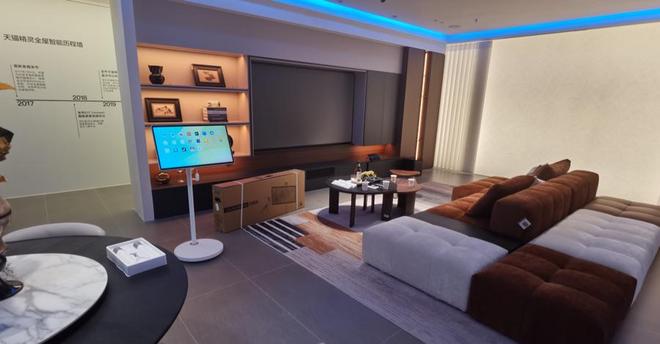
Core Insights - The furniture industry in Guangdong, particularly in Foshan, is undergoing a significant transformation, with a focus on enhancing manufacturing capabilities and integrating cultural and smart elements into products [1][4][8] - The market for smart home products is expected to grow, with projections indicating a penetration rate exceeding 65% by 2025, and the overall furniture market in China anticipated to surpass 4.8 trillion yuan, reflecting a 12% year-on-year growth [1][8] Industry Trends - The furniture manufacturing output in Foshan is projected to reach approximately 180 billion yuan in 2024, with an export value of 9.8 billion USD, although growth rates are showing signs of slowing [1] - Companies are increasingly adopting strategies that incorporate "culture+" and "smart+" to meet new consumer demands and expand market reach [1][8] Company Initiatives - Federated Furniture has launched a flagship smart home store in Guangzhou in collaboration with Tmall Genie, marking a significant step in redefining industry standards for smart home integration [2][3] - The company has a history of embracing internet and smart technologies, having partnered with Tmall since 2017 to explore new retail models [4] Consumer Engagement - The rise of live streaming and short video marketing has become a crucial strategy for furniture companies in Foshan, with significant engagement observed during live broadcasts [6][7] - The integration of smart features in furniture, such as voice control and remote settings, is enhancing customer experiences and driving sales [3][6] Cultural Integration - There is a growing emphasis on cultural elements in furniture design, with companies like Lin's Furniture incorporating traditional Chinese aesthetics into their products, which has led to increased sales and recognition [9][10] - The trend of "Guochao" (national trend) is gaining traction, with brands leveraging Chinese cultural symbols to differentiate themselves in the market [9][10] Market Dynamics - The furniture industry is experiencing a brand-building boom, with companies focusing on creating unique identities and leveraging digital platforms to enhance visibility [5][6] - The government's support for home improvement and consumption upgrades is expected to stimulate market growth, with retail sales of furniture products showing a notable increase [7][8]

发挥森林多功能效益,推进加蓬森林可持续开发
人民网-国际频道 原创稿· 2025-09-28 03:11
Group 1 - The training program on sustainable forest resource development in Gabon was held in Beijing, focusing on China's practices and experiences in sustainable forest management [1][2] - Sustainable forest management aims to protect and maintain the multifunctionality of forest ecosystems while meeting the growing material and environmental demands of humanity [1] - Forests are described as "reservoirs, granaries, treasure houses, and carbon sinks," highlighting their multiple value attributes and the need for coordinated management to achieve ecological, economic, and social benefits [1] Group 2 - The training included classroom sessions led by experts, covering China's legal framework, sustainable management systems, and collective forest rights reform [2] - Case studies focused on China's under-forest economy and forest tourism development, with Gabonese officials showing interest in these models [2] - Experts emphasized the importance of quality natural resources, infrastructure, community involvement, and brand development for forest tourism [2] Group 3 - A discussion on the development of Chinese enterprises in Gabon highlighted the support provided by the Chinese Academy of Forestry for responsible overseas trade and investment [3] - Gabonese officials acknowledged the significant contributions of Chinese investments to Gabon's economic growth and job creation [3] - The training program included visits to furniture enterprises in Jiangxi, showcasing the intelligent transformation and green development of the furniture industry [3]
墨西哥挑衅中国不到24小时,特朗普又出狠招!全球关税战一触即发
Sou Hu Cai Jing· 2025-09-27 11:46
Group 1 - Mexico has initiated an anti-dumping investigation against Chinese float glass, which is seen as a strategic move rather than a coincidence, especially after raising tariffs specifically targeting China while excluding the US and Canada [1][2] - The rationale provided by Mexican officials for the tariff increase is to protect domestic manufacturing and reduce reliance on Asia, yet the focus on sensitive Chinese industries raises questions about the nature of Mexico's relationship with China [2][4] - The backdrop includes Trump's previous threats to raise tariffs on Mexican goods, indicating that Mexico's actions may be a response to US pressure, potentially jeopardizing its relationship with China [4][16] Group 2 - China's response to Mexico's actions includes launching an anti-dumping investigation into pecans, signaling a warning to Mexico not to use Chinese interests as bargaining chips in negotiations [5][16] - Despite the Mexican president's attempts to downplay tensions by stating that relations with China are good, the imposition of tariffs on sensitive sectors contradicts this claim and poses risks for future cooperation [7][19] - The broader context involves Trump announcing new tariffs on various imported products, which not only targets China but also impacts global trade dynamics, suggesting a shift in the global trade landscape [8][17] Group 3 - The ongoing trade disputes between China, Mexico, and the US are driven by US factors, with Mexico caught in the middle, leading to increased uncertainty in global trade [14][19] - Trump's tariff strategy aims to protect US manufacturing but may inadvertently raise costs for American consumers, as seen in the rising prices of furniture and pharmaceuticals due to increased tariffs [10][11][13] - The potential for a reconfiguration of global supply chains and trade rules is evident, with all countries involved recalibrating their strategies in response to the evolving trade environment [17][19]

再次加征关税,特朗普意欲何为?
Sou Hu Cai Jing· 2025-09-27 02:54
Core Viewpoint - President Trump's recent tariff announcement, imposing significant tariffs on various imported goods, has led to immediate market reactions, including declines in major U.S. stock indices and substantial losses in company valuations [1][10]. Group 1: Tariff Details - Tariffs on patented and branded pharmaceuticals are set at 100%, furniture at 30%, and heavy trucks at 25% [1]. - The announcement has caused a market shock, with major indices like Dow Jones and Nasdaq experiencing declines, and companies like Tesla losing over 460 billion RMB in market value in a single day [1]. Group 2: Strategic Intentions - The tariffs are seen as a strategy to encourage the return of manufacturing to the U.S., as Trump has consistently advocated for domestic production [5]. - The tariffs are also viewed as a means to suppress foreign competition, particularly targeting European pharmaceutical companies and manufacturers from Mexico [6]. Group 3: Economic Implications - Analysts suggest that the tariffs may create economic pressure that could influence the Federal Reserve's monetary policy, as Trump appears frustrated with the Fed's stance on interest rates [8]. - The potential negative impact on U.S. consumers and businesses is highlighted, with concerns that such protectionist measures could ultimately harm the U.S. economy in a globally integrated market [10].
关税,突变!白宫最新发声!
券商中国· 2025-09-27 02:29
Group 1: Core Views - The recent U.S. tariff policy changes will not apply to countries that have trade agreements with the U.S., such as the EU and Japan, which will maintain a 15% tariff cap on pharmaceuticals [2][4] - President Trump announced a 100% tariff on all brand-name and patented drugs starting October 1, 2025, unless companies establish manufacturing in the U.S. [4][5] - The U.S. Chamber of Commerce has urged the government to reconsider new tariffs on heavy trucks, emphasizing that major import sources are allies and do not pose a security threat [6] Group 2: Market Reactions - Following the announcement of the new tariffs, pharmaceutical stocks showed mixed performance in the U.S. market, with Novavax rising by 2.52% and Moderna falling by 0.49% [1] - Japanese and South Korean pharmaceutical stocks mostly declined, with notable drops including Sumitomo Pharma down over 3% and Samsung Biologics down over 2% [1] Group 3: Impact on Other Industries - The Canadian steel industry has faced significant declines due to U.S. tariffs, with production down 24.8% and exports down 25.5% since March [7] - The U.S. Labor Statistics Bureau reported a 4.7% year-over-year increase in furniture prices due to tariff impacts [5]

10倍,年内最强ST股诞生!最低价+最低市值股是它
Zheng Quan Shi Bao· 2025-09-26 08:42
Core Insights - Over 60% of ST stocks have underperformed the Shanghai Composite Index this year [6] - The first ST stock to achieve a tenfold increase in price this year is *ST Yushun, which has seen a year-to-date increase of 10.6 times [2] - The company is involved in smart display module manufacturing and has reported a revenue of 134 million yuan with a net loss of 4.46 million yuan in the first half of the year [2] Group 1: Performance of ST Stocks - As of September 26, 2023, nine ST stocks have doubled in value this year, with *ST Yushun leading at a 1060.39% increase [4] - Other notable performers include *ST Yazhen with a 469.66% increase and ST Huadong with a 319.84% increase [4] - Despite some ST stocks performing well, over 130 ST stocks reported net losses in the first half of the year, with more than 70% of ST stocks in a loss position [7] Group 2: Company Developments - *ST Yushun is planning to acquire 100% equity of three companies for a total transaction price of 3.35 billion yuan, which is expected to diversify its business into data center infrastructure services [2][3] - ST Huadong, previously known as "Century Huadong," has seen a significant increase in net profit, reaching 2.656 billion yuan in the first half of the year, a 129.33% increase year-on-year [5] - The company operates in three main sectors: internet gaming, AI cloud data, and automotive parts manufacturing [5] Group 3: Risks and Challenges - The ST sector is characterized by companies with internal control issues or deteriorating fundamentals, which can lead to speculative trading without fundamental improvement [6] - As of September 26, 2023, 14 ST stocks are trading below 2 yuan per share, with *ST Gaohong being the lowest at 0.38 yuan, reflecting an 87.42% decline this year [7]

特朗普宣布对重型卡车和家具加征关税
日经中文网· 2025-09-26 08:00
Core Viewpoint - The U.S. government, under President Trump, is implementing new tariffs on heavy trucks and furniture to protect domestic manufacturers from foreign competition, citing national security concerns [1][4]. Group 1: Tariff Details - Starting from October 1, a 25% tariff will be imposed on heavy trucks manufactured overseas [1][3]. - Additionally, a 50% tariff will be applied to cabinets and sinks, while upholstered furniture will face a 30% tariff [1][3]. - The U.S. Department of Commerce initiated an investigation into the import situation of medium and heavy trucks in April, with heavy trucks defined as those weighing over 26,000 pounds (approximately 11.7 tons) [3]. Group 2: Domestic Manufacturing Protection - Trump emphasized that the tariffs aim to protect American manufacturers such as Mack Trucks, Kenworth, and Peterbilt from foreign competition [3]. - The focus on tariffs for furniture products aligns with previous discussions about imposing tariffs on wood products, including furniture made from wood [3]. Group 3: Political Implications - The furniture manufacturing hubs are primarily located in swing states like North Carolina and Michigan, which are critical for electoral votes [3].

特朗普宣布新关税最高达100%!谁最受伤?
第一财经· 2025-09-26 05:49
Group 1: Tariffs on Heavy Trucks - President Trump announced a 25% tariff on imported heavy trucks, which follows an investigation by the U.S. Department of Commerce to assess whether such imports pose a national security threat [4] - The tariffs aim to protect U.S. truck manufacturers like Peterbilt, Kenworth, and Freightliner from foreign competition, although previous tariffs on steel and aluminum have already increased production costs for U.S. manufacturers [4][5] - Mexico is the largest exporter of medium and heavy trucks to the U.S., with a significant increase in imports since 2019, raising concerns about the impact of tariffs on the supply chain [5][3] Group 2: Pharmaceutical Tariffs - A new 100% tariff on all imported brand and patented drugs will apply unless companies have already begun construction of manufacturing plants in the U.S. [7] - The pharmaceutical industry has seen a decline in stock prices in Asia following the announcement, with companies like Sumitomo Pharma and CSL experiencing significant drops [7] - Major pharmaceutical companies have committed to investing over $350 billion in U.S. manufacturing and R&D by the end of the century, indicating a shift towards domestic production in response to tariff threats [8][9] Group 3: Furniture Tariffs - Trump stated that tariffs on imported furniture are necessary to restore U.S. manufacturing strength, particularly in states like North Carolina and South Carolina [12] - The furniture and wood products manufacturing sector has seen a significant decline in jobs, with employment halved since 2000 [12] - Recent tariffs have led to a 4.7% increase in overall furniture prices, with living and dining room furniture prices rising by 9.5% over the past year [12][13]
一文尽知|特朗普宣布新关税最高达100%!谁最受伤?
Di Yi Cai Jing· 2025-09-26 05:26
Group 1: Tariffs on Heavy Trucks and Furniture - President Trump announced a 25% tariff on all imported heavy trucks, effective from October 1, 2025, as part of a broader strategy to protect U.S. manufacturers [1][3] - The U.S. Department of Commerce had previously initiated an investigation into whether the import of medium and heavy trucks poses a national security threat [3] - The tariffs aim to bolster U.S. truck manufacturers like Peterbilt, Kenworth, and Freightliner, but previous tariffs on steel and aluminum have already increased production costs for American truck manufacturers [4][5] Group 2: Impact on the Mexican Truck Manufacturing Industry - Mexico is the largest exporter of medium and heavy trucks to the U.S., with 95% of its exports going to the U.S. market [5][6] - The U.S. imported nearly $128 billion worth of heavy vehicle parts from Mexico last year, indicating a significant reliance on Mexican manufacturing [5] - The tariffs may affect companies like Stellantis, which produces heavy Ram trucks in Mexico, and Volvo Group, which is investing $700 million in a new heavy truck factory in Monterrey, Mexico [4] Group 3: Pharmaceutical Industry Implications - Trump announced a 100% tariff on all imported brand-name and patented drugs unless companies have already begun construction of manufacturing plants in the U.S. [7] - The pharmaceutical industry has been responding to potential tariffs by announcing significant investments in U.S. manufacturing, with over $350 billion pledged by various companies [8][9] - The tariffs could hinder the development of new drugs in the U.S. due to increased costs, potentially leading to greater reliance on foreign research and development [9] Group 4: Furniture Industry and Inflation - Trump stated that tariffs on furniture are necessary to restore the strength of U.S. manufacturing, with previous tariffs already pushing furniture prices higher [10][11] - The furniture manufacturing sector has seen a significant decline in jobs, with employment halved since 2000, currently standing at approximately 340,000 [11] - The U.S. imported about $25.5 billion worth of furniture in 2024, a 7% increase from 2023, with around 60% of imports coming from countries like Vietnam [12]