
钢制家具

Search documents
全省进出口额同比增长14.1% 拼出海外新市场
He Nan Ri Bao· 2026-01-27 23:24
Group 1 - The core viewpoint of the articles highlights the robust growth of foreign trade in Henan Province, which achieved an import and export value of 935.67 billion yuan, a year-on-year increase of 14.1%, surpassing the national average by 10.3 percentage points, and ranking tenth nationally and second in Central China [1] - Henan's foreign trade partners span over 200 countries and regions, with the top five trading partners accounting for 488.22 billion yuan, representing 52.2% of the total import and export value [1] - High-tech product exports from Henan reached 249.86 billion yuan, with a year-on-year growth of 9.4%, indicating a shift towards higher value-added products integrated into the global supply chain [2] Group 2 - The number of export-performing enterprises in Henan is projected to reach 14,000 by 2025, an increase of 2,197 from 2024, with private enterprises playing a significant role in this growth [2] - The county of Que Shan has emerged as a hub for violin production, contributing to over 6 billion yuan in annual output, with efforts to enhance export capabilities through policy support and improved customs efficiency [3] - Henan's foreign trade strategy focuses on leveraging its unique industries and enhancing global market access, aiming for a more open approach to trade in the new year [3]
豫西小城偃师年关产业忙 “一镇一业”绘出乡村新图景
Zhong Guo Xin Wen Wang· 2026-01-09 07:22
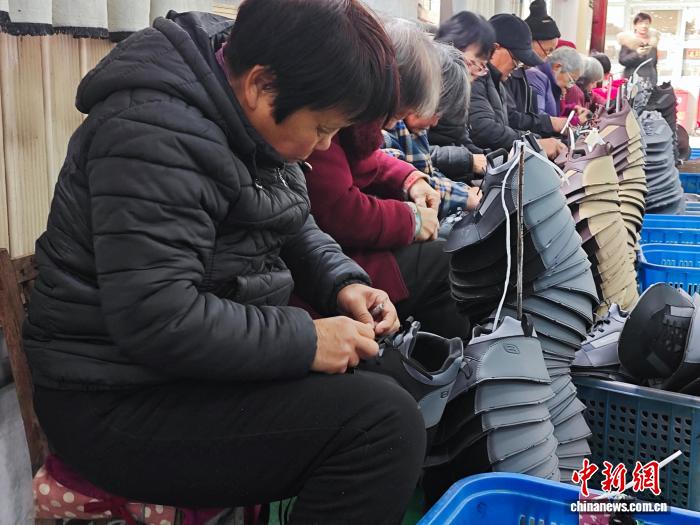
Core Insights - The article highlights the economic development in Yanshi District, Luoyang, where the "One Town, One Industry" model has led to significant job creation and local economic stability, particularly through traditional industries like shoe manufacturing and knitting [1][2]. Group 1: Industry Overview - Yanshi District has over 1,500 shoe and related enterprises, employing approximately 100,000 people and producing over 400 million pairs of cloth shoes annually, with online sales exceeding 2.6 billion yuan [2]. - The district is recognized as "China's Capital of Cloth Shoes," with a strong local workforce contributing to the stability of many families [2]. - The knitting industry in Zhaizhen Town employs around 20,000 people, producing over 300 million hats annually, with a thriving e-commerce market [4]. Group 2: Employment and Community Impact - Local factories, such as the Luoyang Guanghui Shoe Factory, provide employment opportunities close to home, allowing workers to care for family and maintain community ties [2]. - The "One Town, One Industry" model has transformed rural areas into hubs of specialized economic activity, fostering a sense of community and stability [6]. - The emergence of new industries, such as aluminum-based materials, offers higher-level job opportunities for younger generations, enhancing the quality of employment [6]. Group 3: Economic Transformation - The industrial landscape in Yanshi has evolved from small township enterprises to a distinctive block economy, deeply integrating industries with local communities [2]. - The rise of specialized industries has attracted younger individuals back to their hometowns, contributing to local economic growth and innovation [6]. - The clustering of industries has created a unique competitive advantage for the region, reshaping its economic landscape [6].

它们为何占C位丨豫企出海 风浪中更见韧性 ——二〇二五河南经济热词观察之三
He Nan Ri Bao· 2025-12-24 01:36
Core Insights - The article discusses the resilience and adaptability of Henan enterprises in the face of external pressures such as trade wars, highlighting their proactive approach to international markets [1][2][3] Group 1: Response to Trade Challenges - Henan enterprises are actively responding to the pressures of the trade war, maintaining production and shipping goods globally despite increased tariffs from the U.S. [1] - The atmosphere at the 138th Canton Fair was vibrant, with diverse international buyers showing interest in Henan products, indicating strong market engagement [1] Group 2: Strategic Adaptation and Innovation - Companies are focusing on product quality and performance, investing in research and development to break through international technical barriers and integrate into global supply chains [2] - The strategy of diversifying markets helps mitigate risks associated with reliance on a single market, with many companies expanding their global presence [2] Group 3: Government Support and Industry Alliances - The establishment of the "Yujian Sihai" outbound alliance signifies a collaborative effort among various stakeholders, including state-owned enterprises and financial institutions, to support Henan enterprises in their international endeavors [2] - Government initiatives, such as policies to promote foreign trade growth and subsidies for exhibitions, are encouraging more companies to expand internationally [2] Group 4: Overall Economic Resilience - The increasing activity at Zhengzhou Airport and strong exports in sectors like new energy vehicles reflect the robust performance of Henan's foreign trade [3] - The article emphasizes that fluctuations in the global economy present opportunities for Henan enterprises to refine their strategies and strengthen their capabilities [3]
从驼铃古道到数字通途!洛阳跨境电商在共建“一带一路”中显身手
Sou Hu Cai Jing· 2025-12-18 15:17
Group 1 - The article highlights the transformation of Luoyang's manufacturing sector through the establishment of a "digital Silk Road," facilitating global trade and showcasing "Luoyang manufacturing" [1][7] - Henan Jilefu Cross-Border Supply Chain Management Co., Ltd. has successfully set up overseas warehouses in 10 countries, including Malaysia and Thailand, marking a significant shift from merely exporting products to establishing logistical hubs [3][4] - The steel furniture industry in Luoyang has seen substantial growth, with over 100 new products launched monthly, leading to a significant increase in market feedback and reshaping traditional foreign trade dynamics [4][6] Group 2 - The Luoyang Intelligent Home Furnishing Industrial Park has become a hub for over 10 leading steel furniture enterprises, focusing on research and development, automation, and efficiency improvements [5][6] - The cross-border e-commerce model in Luoyang has injected new vitality into traditional manufacturing, with collaborations with platforms like Amazon and Alibaba driving digital upgrades in various sectors [5][6] - Luoyang's cross-border e-commerce import and export volume has achieved double-digit growth for four consecutive years, with local companies dominating 16 out of the top 20 stores in the steel furniture category on Amazon [6]
主动识变、灵活应变 “硬核”数据见证我国民营企业外贸活力持续释放
Yang Shi Wang· 2025-12-08 06:34
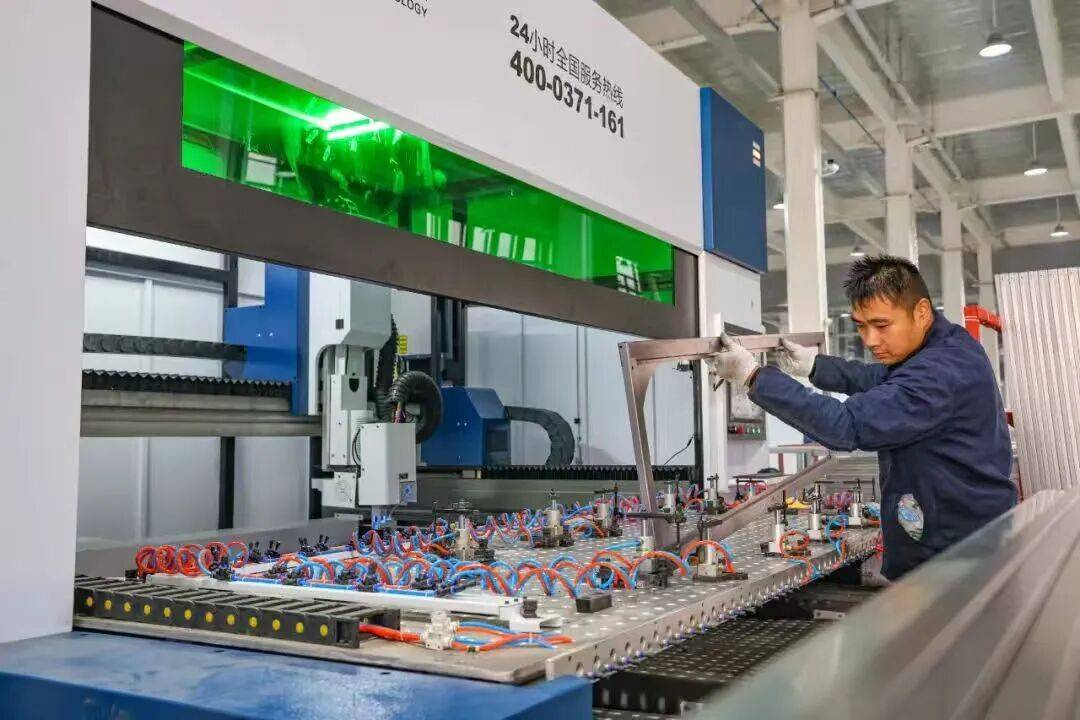
Core Insights - Private enterprises remain the largest entity in China's foreign trade, playing an irreplaceable role in stabilizing growth, expanding markets, and promoting innovation [1] Group 1: Industry Overview - The steel furniture production base in Pangcun Town, Luoyang, is the largest in the country, with over 1,000 private enterprises producing more than 1,000 varieties across nine categories, exporting to over 120 countries and regions [1] - Luoyang's steel furniture companies are actively exploring emerging markets in Southeast Asia, the Middle East, and Africa, utilizing cross-border e-commerce to diversify their market presence [3] Group 2: Policy and Support - Cross-border e-commerce has eliminated geographical limitations, allowing Pangcun to directly engage with global consumers, facilitating a "buy global, sell global" approach [5] - Luoyang has implemented 25 business-friendly policies, reducing administrative processing times by over 60%, and has established a collaborative mechanism between government and enterprises to support overseas market access [5] Group 3: Export Performance - In the first ten months of the year, Luoyang's steel furniture exports reached approximately 2.84 billion yuan, marking a year-on-year increase of 32.6% [5] - In the first eleven months, private enterprises in China recorded a total import and export value of 23.52 trillion yuan, a year-on-year growth of 7.1%, with exports at 15.98 trillion yuan (up 7.5%) and imports at 7.54 trillion yuan (up 6.2%) [7] - The number of private enterprises with import and export records increased by 66,000 year-on-year, with a continuous nine-month growth in both exports and imports [10]

让世界记住的不止是商品:中国品牌的全球表达力正在生长
Sou Hu Cai Jing· 2025-10-18 16:49
Core Insights - The global trend of brands going overseas is at a turning point, transitioning from quantitative growth to qualitative change, with eMarketer predicting global retail e-commerce to reach nearly $6.4 trillion by 2025, although growth rates are slowing down [2][5] Group 1: Challenges and Strategies for Chinese Brands - Chinese brands face new competition logic as customer acquisition costs rise and the era of easy growth fades, making brand storytelling crucial for long-term trust and connection with users [5] - Companies like QUALFORT are leveraging AI tools to enhance content production efficiency and ensure localized advertising materials, which is essential for gaining a competitive edge in international markets [6][8] - The transition from OEM to brand ownership presents challenges such as managing a wide range of SKUs, which necessitates efficient content production methods [8][10] Group 2: AI and Advertising Tools - QUALFORT utilizes Amazon's AI creative tools to automate the generation of advertising materials, significantly improving content production efficiency and ensuring timely delivery [8][10] - AI tools serve as an accelerative force in brand development but cannot replace the strategic direction and adaptability required in complex market environments [10] - Amazon's advertising solutions provide a comprehensive approach to brand building, allowing for precise targeting and effective communication of brand values [21][22] Group 3: Case Studies and Brand Narratives - The "Sailor Star Plan" showcases real brand stories, illustrating how Chinese brands navigate localization challenges and build long-term value in international markets [11][12] - Brands like Letaya and COMIX demonstrate the importance of tailored product strategies and data-driven advertising to meet diverse user needs across different regions [14][16] - AWOL VISION's experience highlights the shift from traditional advertising to integrated content marketing, enhancing brand recognition through immersive user experiences [20][21] Group 4: Long-term Brand Building - Brand expansion is not just about increasing sales but also about establishing a sustainable brand identity and operational framework in overseas markets [19][23] - The "Sailor Star Plan" emphasizes that successful international brands view brand building as a critical investment rather than a mere cost, leveraging Amazon's advertising capabilities to transition from visibility to trust [22][24]

中国经济样本观察·“镇”了不起|一张软铁皮,“裁”出160亿元钢家具产业
Xin Hua She· 2025-09-06 12:22
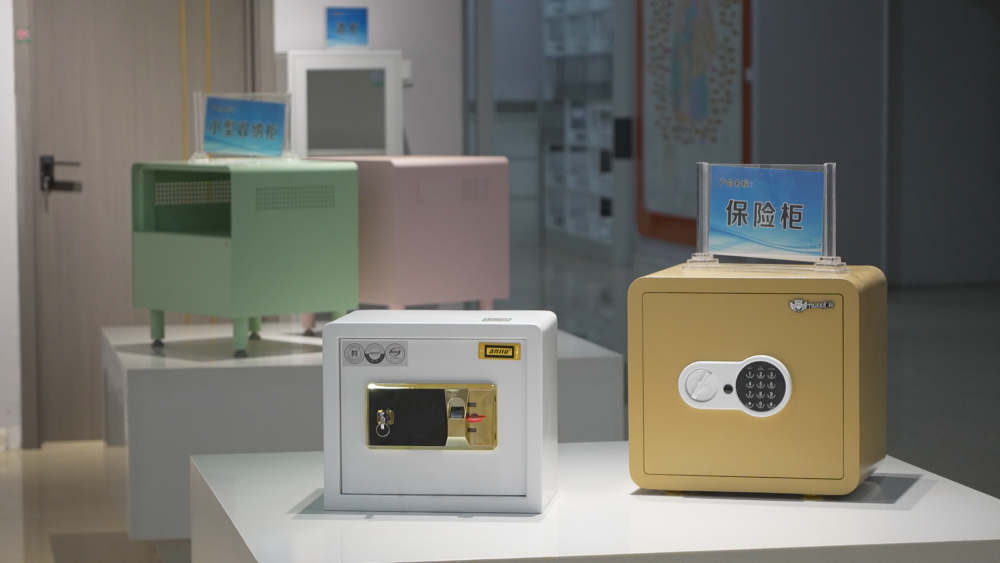
Core Viewpoint - The steel furniture industry in Pangcun Town, Henan Province, has become a significant player in the domestic and international markets, producing over 160 billion yuan in annual output and accounting for more than 70% of the national market share [1]. Group 1: Industry Development - Pangcun Town is recognized as "China's Steel Furniture Industry Base" and "National Top 100 Industrial Clusters," with over 1,000 varieties of steel furniture sold in more than 120 countries and regions [1]. - The industry began in the early 1980s when local villagers started small workshops producing iron safes, leading to a rapid increase in the number of factories [2]. - The initial focus on quality and affordability allowed Pangcun's steel furniture products to gain market recognition, prompting local businesses to modernize and scale up production [3]. Group 2: Technological Advancements - In 2003, Pangcun Town introduced advanced equipment from Germany, achieving precision control of ±0.1 mm in steel furniture production and obtaining EU CE certification, which opened international market access [4]. - The overall production efficiency of enterprises has increased by 20% through green, intelligent, and high-end transformations [4]. - The integration of artificial intelligence and IoT technologies has enhanced operational efficiency in managing archives and inventory, marking a shift towards smart manufacturing [8]. Group 3: Product Diversification - The product range has expanded from simple safes to nine major categories, including office, residential, educational, and medical furniture, with over 1,000 different products available [7]. - The reputation of "Pangcun Manufacturing" has grown, leading to a strong market presence and a preference for sourcing steel furniture from this region [7]. Group 4: Innovation and Patents - Pangcun Town has established a robust innovation ecosystem, with 35 national high-tech enterprises and 65 national technology-based small and medium-sized enterprises, resulting in over 100 invention patents and more than 1,000 utility model and design patents [10]. - The transformation from manual workshops to a nearly 200 billion yuan industrial cluster illustrates the significant evolution of the steel furniture industry in Pangcun [10].
中国经济样本观察·“镇”了不起丨一张软铁皮,“裁”出160亿元钢家具产业
Xin Hua Wang· 2025-09-05 02:11
Core Insights - The article highlights the significant growth and global reach of the steel furniture industry in Pangcun Town, Henan Province, which produces over 70% of China's steel furniture and has an annual output value exceeding 16 billion yuan [1][4]. Industry Development - Pangcun Town, known as the "China Steel Furniture Industry Base," has over 1,000 varieties of steel furniture sold in more than 120 countries and regions [1]. - The industry began in the early 1980s with local villagers creating simple steel products, which led to the establishment of numerous small factories [2][4]. - The initial focus on quality and affordability allowed Pangcun's steel furniture to gain market recognition, prompting local businesses to modernize and scale up production [4][5]. Technological Advancements - The introduction of advanced equipment from Germany in 2003 allowed for precision manufacturing, achieving a production error margin of ±0.1 mm and obtaining EU CE certification [5]. - Companies in Pangcun have adopted smart technologies, such as AI and IoT, to enhance operational efficiency and product management [7][10]. - The collaboration with renowned tech companies has led to the establishment of smart parks and factories, contributing to the technological evolution of the industry [10]. Product Diversification - The product range has expanded from simple safes to nine major categories, including office, residential, educational, and medical furniture, with over 1,000 different products available [6][10]. - The reputation of "Pangcun Manufacturing" has grown, making it a go-to source for steel furniture in the industry [6]. Economic Impact - The steel furniture industry in Pangcun has transformed from small workshops into a nearly 20 billion yuan industrial cluster, showcasing its significant economic contribution [10].
出海的风从中部吹起 华中跨境电商加速跑
2 1 Shi Ji Jing Ji Bao Dao· 2025-09-03 23:12
Core Viewpoint - The central theme of the articles is the emerging opportunities for cross-border e-commerce in Central China, particularly in the Hubei, Henan, Hunan, and Jiangxi provinces, driven by a combination of strong manufacturing capabilities, improved logistics, and returning talent [1][2][6]. Group 1: Industry Trends - The cross-border e-commerce sector is undergoing transformation, with AI tools significantly lowering operational barriers and shifting the focus from "price competitiveness" to "brand empowerment" [2]. - Central China is experiencing a strategic opportunity period for cross-border e-commerce development, supported by government policies and the application of advanced technologies like generative AI [1][6]. Group 2: Manufacturing and Product Characteristics - Central China, known as the "backbone of Chinese manufacturing," has diverse industrial clusters focusing on high-end manufacturing, specialty agriculture, and niche industrial products, which have strong international competitiveness [3]. - The region's manufacturing capabilities are complemented by complete supply chains and cost control advantages, forming a solid foundation for cross-border e-commerce [3][5]. Group 3: Market Dynamics and Growth - As of 2024, Hubei's cross-border e-commerce import and export volume reached 67.97 billion yuan, marking a 124% year-on-year increase, indicating significant growth potential [4]. - The shift from traditional OEM/ODM models to direct sales to overseas consumers is crucial for enhancing product value and achieving industrial upgrades [4][5]. Group 4: Challenges and Opportunities - Despite the rapid growth, Central China still faces challenges such as talent shortages and a lack of a supportive ecosystem compared to coastal regions, which have more established cross-border e-commerce practices [8][9]. - The return of talent and the establishment of supportive policies are essential for overcoming these challenges and fostering a conducive environment for cross-border e-commerce [7][8]. Group 5: Technological Impact - By 2025, AI is expected to become a significant driving force in the cross-border e-commerce sector, enabling manufacturers in Central China to leverage their industrial strengths more effectively [10]. - The transition from traditional distribution models to brand-oriented operations is necessary for businesses to thrive in the evolving market landscape [10][11].
跨境电商只能靠海?风正从华中吹起
2 1 Shi Ji Jing Ji Bao Dao· 2025-09-03 11:44
Core Viewpoint - The central theme of the articles is the emerging opportunity for cross-border e-commerce in Central China, particularly in the Hubei, Henan, Hunan, and Jiangxi provinces, which are leveraging their manufacturing strengths and improving logistics to compete in the global market [1][2][6]. Group 1: Industry Trends - The cross-border e-commerce sector is undergoing transformation, with AI tools significantly lowering operational barriers and shifting the focus from "price competitiveness" to "brand empowerment" [2][11]. - Central China is experiencing a strategic opportunity period for cross-border e-commerce development, driven by the clustering effect of industrial belts, supportive government policies, and the application of advanced technologies like generative AI [1][11]. Group 2: Regional Manufacturing Strengths - Central China, known as the "backbone of Chinese manufacturing," has diverse industrial clusters focusing on high-end manufacturing, specialty agriculture, and niche industrial products, which have strong international competitiveness [3][4]. - The region's manufacturing capabilities, complete supply chains, and cost control advantages provide a solid foundation for the growth of cross-border e-commerce [3][4]. Group 3: Market Dynamics - As of June 2025, the number of active sellers from Central China on Amazon's global platforms has seen double-digit growth compared to the previous year [5]. - In 2024, Hubei's cross-border e-commerce import and export value reached 67.97 billion yuan, marking a 124% year-on-year increase, indicating significant market potential [5]. Group 4: Talent and Infrastructure - The return of talent and the improvement of logistics and environmental conditions are crucial for the growth of cross-border e-commerce in Central China [6][8]. - The region's educational institutions provide a stable talent pool, with local employees showing higher retention rates compared to coastal areas, enhancing competitive advantage [7][8]. Group 5: Challenges and Opportunities - Despite the growth, Central China still faces challenges such as a lack of talent and a supportive ecosystem compared to more established coastal regions [9][10]. - The shift in the external environment and the evolution of business logic in cross-border e-commerce present both challenges and opportunities for Central Chinese enterprises [11][12]. Group 6: Future Outlook - The transition from traditional distribution models to brand-oriented operations is essential for the future success of cross-border e-commerce, with a focus on creating recognizable brand identities [12][13]. - The current moment represents a unique opportunity for Central China to capitalize on the evolving landscape of cross-border e-commerce, as the industry undergoes a significant reshaping [13].