
电动自行车

Search documents
2025首届深圳电动自行车安全管理论坛成功举办
Nan Fang Du Shi Bao· 2025-08-26 06:47
Core Insights - The first Shenzhen Electric Bicycle Safety Management Forum was successfully held, focusing on the theme "Smartly Drawing the Bay Area, Riding into the Future" to address safety management challenges and explore innovative solutions in the electric bicycle industry [1][2] - The forum saw the release of the Guangdong provincial local standard for electric bicycle charging and swapping facilities, indicating a regulatory push towards improved safety and management practices [1][2] Group 1 - The forum gathered over 500 participants from government agencies, research institutions, industry associations, and enterprises, highlighting the collaborative effort to tackle electric bicycle safety issues [1] - Shenzhen's initiative to host this forum aims to address the growing demand for safer electric bicycle technologies amidst increasing ownership [1][2] - The president of the Shenzhen Electric Bicycle Industry Association emphasized the importance of balancing convenience and safety, as well as development and order in urban governance [1] Group 2 - The forum aimed to create a high-level dialogue platform to discuss key areas such as policy innovation, technical standards, smart regulation, safety education, and infrastructure development [2] - A launch ceremony for the "Battery Swap City Community" was held to promote safe battery swapping services, addressing residents' charging difficulties and enhancing public safety [2] - Experts and industry representatives shared insights on digital regulation and the importance of a digital service platform for the entire lifecycle of electric bicycles [2]
“新国标”来了,旧标准电动自行车还能买吗?
Ren Min Ri Bao· 2025-08-26 02:05
Core Viewpoint - The new mandatory national standard for electric bicycles (GB 17761—2024) will be implemented on September 1, 2024, with nearly 200 important indicators revised to enhance safety and performance. Group 1: Key Changes in Standards - The new standard optimizes fire resistance technology, limiting the plastic weight ratio to below 5.5% of the total vehicle weight, reducing fire hazards [1] - It imposes strict limits on the maximum motor speed and increases torque limits for low-speed operation, enhancing safety during special conditions like climbing [1] - The weight limit for lead-acid battery models is adjusted from 55 kg to 63 kg, allowing a range of 60-70 km, thus improving user experience by reducing charging frequency [1] - The standard encourages the installation of rearview mirrors and turn signals to improve safety [1] Group 2: Impact on Industry Stakeholders - Manufacturers must adapt their R&D and vehicle design to meet the new standards, which may require adjustments to raw materials and production lines [2] - Certification bodies need to develop new testing and certification processes, acquire necessary equipment, and update implementation guidelines [2] - Sales entities must establish new marketing strategies and pricing models, ensuring alignment with trade-in policies [3] Group 3: Regulatory and Compliance Measures - Relevant authorities will synchronize registration processes with the implementation of the new standards, ensuring strict review of invoices and product certifications [4] - A three-month transition period is granted for vehicles produced under the old standards, allowing sales until December 1, 2024 [4] - Certification bodies are tasked with reminding manufacturers to transition to the new standards and manage the phase-out of old standard vehicles [4] Group 4: Consumer Guidance - Consumers are advised to check for CCC certification and product quality certificates when purchasing electric bicycles, ensuring compliance with safety standards [5] - Verification of product details against the accompanying quality certificate is recommended, with options for further validation through QR codes or online platforms [5]
电动自行车“新国标”9月1日正式实施,旧标准车还能买吗
Bei Jing Ri Bao Ke Hu Duan· 2025-08-26 00:43
Core Viewpoint - The new mandatory national standard for electric bicycles, GB 17761—2024, will be implemented on September 1, 2024, with nearly 200 important indicators revised and improved [1]. Group 1: Production and Design Impact - Companies must adjust their research and model design according to the new standards, including modifications to raw materials and components, and some may need to upgrade production lines [1]. - The new standard limits the plastic weight ratio to below 5.5% of the total vehicle weight to reduce fire hazards [1]. - The weight limit for lead-acid battery models has been adjusted from 55 kg to 63 kg, allowing for a range of 60-70 km, thus enhancing user experience by reducing charging frequency [1]. Group 2: Certification and Testing - Design of new testing and certification processes must be established by designated institutions in accordance with the new standards, including acquiring CMA certification and updating implementation details [2][3]. - The new standard will increase the technical barriers for illegal modifications by improving tamper-proof indicators and detection methods for battery packs, controllers, and speed limiters [1]. Group 3: Sales and Marketing Adjustments - Companies need to create new marketing systems and pricing strategies, ensuring effective integration with the trade-in policy [2]. - A three-month sales transition period is granted for vehicles produced under the old standard, allowing them to be sold until December 1, 2024 [3]. Group 4: Registration and Compliance - Relevant departments will synchronize the registration process with the implementation of the new standards, ensuring strict review of invoices, product certificates, and CCC certification to prevent misclassification of electric motorcycles [3]. - The Ministry of Industry and Information Technology, along with other departments, has issued opinions to strengthen the management of electric bicycle production, certification, sales supervision, and consumer rights protection [3]. Group 5: Consumer Guidance - Consumers are advised to check for the CCC certificate and product quality certificates when purchasing electric bicycles, ensuring that the product information matches the actual vehicle [4].
电动自行车“新国标”来了,旧标准车还能买吗
Ren Min Ri Bao· 2025-08-25 23:16
Core Viewpoint - The new mandatory national standard for electric bicycles (GB 17761—2024) will be implemented on September 1, 2024, with nearly 200 important indicators revised and improved [1] Group 1: Production and Design - Companies must develop and design models according to the new standards, adjusting raw materials and components accordingly, with some needing to upgrade production lines [1] - The weight limit for lead-acid battery models has been adjusted from 55 kg to 63 kg, allowing for a range of 60-70 km, thus reducing charging frequency and enhancing user experience [1] Group 2: Testing and Certification - Designated institutions must create new testing and certification processes in line with the new standards, acquire necessary equipment, and update implementation details [2][3] Group 3: Sales and Marketing - Companies need to establish new marketing systems and pricing strategies, ensuring effective integration with the trade-in policy [2] Group 4: Registration and Compliance - Relevant departments will synchronize the registration process with the implementation of the new standards, ensuring strict review of invoices, product certificates, and CCC certificates [3] - A three-month sales transition period is granted for vehicles produced under the old standards, allowing them to be sold until December 1, 2024 [3] Group 5: Consumer Guidance - Consumers are advised to check for the CCC certificate and verify the product's compliance through the accompanying product certificate and QR codes for authenticity [4]
“新国标”来了,旧标准车还能买吗
Ren Min Ri Bao· 2025-08-25 22:40
Core Points - The new mandatory national standard for electric bicycles, GB 17761—2024, will be implemented on September 1, 2024, with nearly 200 important indicators revised and improved [1] Group 1: Technical Specifications - The new standard optimizes fire resistance indicators, limiting the plastic weight ratio to below 5.5% of the total vehicle weight, reducing fire hazards [1] - Key parameters such as maximum motor speed are strictly limited to prevent overspeeding, while low-speed torque limits are added to ensure performance in special conditions like climbing [1] - The weight limit for lead-acid battery models is adjusted from 55 kg to 63 kg, allowing a range of 60-70 km, thus enhancing user experience by reducing charging frequency [1] Group 2: Industry Impact - Electric bicycle manufacturers must adjust their R&D and vehicle design according to the new standards, which may require upgrades to production lines and changes in raw materials and components [2] - Certification bodies must design new testing and certification processes, acquire necessary equipment, and update implementation guidelines to comply with the new standards [2] Group 3: Sales and Registration - Companies need to establish new marketing systems and pricing strategies, ensuring effective integration with trade-in policies [3] - Relevant departments will synchronize registration processes with the implementation of the new standards, ensuring strict review of invoices and product certifications to prevent misclassification of vehicles [4] - A three-month sales transition period is granted for vehicles produced under the old standards, allowing them to be sold until December 1, 2024 [4] Group 4: Consumer Guidance - Consumers are advised to check for CCC certification and product quality certificates when purchasing electric bicycles, ensuring that the information matches the actual vehicle [5]
新版《电动自行车安全技术规范》9月1日实施 “新国标”来了,旧标准车还能买吗
Ren Min Ri Bao· 2025-08-25 21:52
Core Viewpoint - The new mandatory national standard for electric bicycles (GB 17761—2024) will be implemented on September 1, 2024, with nearly 200 important indicators revised and improved to enhance safety and performance. Group 1: Key Changes in Standards - The new standard optimizes fire resistance technology indicators, limiting the plastic weight ratio to below 5.5% of the total vehicle weight, reducing fire hazards [1] - It imposes strict limits on the maximum motor speed and increases torque limits for low-speed operation, ensuring vehicles cannot exceed speed limits and can handle special conditions like climbing [1] - The weight limit for lead-acid battery models is adjusted from 55 kg to 63 kg, allowing a range of 60-70 km, thus reducing charging frequency and improving user experience [1] - The standard encourages the installation of rearview mirrors and turn signals to enhance safety [1] Group 2: Impact on Industry Stakeholders - Manufacturers must adjust R&D and vehicle design according to the new standards, which may require upgrading production lines and modifying raw materials and components [2] - Certification bodies need to design new testing and certification processes, acquire necessary equipment, and update implementation guidelines [2] - Sales entities must establish new marketing systems and pricing strategies, ensuring effective integration with trade-in policies [3] Group 3: Regulatory and Compliance Measures - Relevant departments will synchronize registration processes with the implementation of the new standards, ensuring strict review of invoices, product certificates, and CCC certifications [4] - A three-month sales transition period is granted for vehicles produced under the old standards, allowing them to be sold until December 1, 2024 [4] - Certification bodies are required to remind manufacturers to submit certification applications cautiously under the old standards to ensure a smooth phase-out of outdated vehicles [4] Group 4: Consumer Guidance - Consumers are advised to check for CCC certification and ensure that the product certificate matches the actual vehicle details, with options to verify authenticity through QR codes or online platforms [5]
中期分红,多家巨头出手
中国基金报· 2025-08-23 15:07
Core Viewpoint - Multiple leading companies in the A-share market have announced interim dividends for the first time, with the highest dividend amount exceeding 3 billion yuan [2][6]. Group 1: Interim Dividend Announcements - A total of 61 A-share companies announced their 2025 interim profit distribution plans on August 22, with Ping An Bank proposing a cash dividend of 2.36 yuan per 10 shares, totaling approximately 4.58 billion yuan, which accounts for 18.42% of its net profit [4]. - Aima Technology plans to distribute a cash dividend of 6.28 yuan per 10 shares, totaling around 546 million yuan, representing 45.01% of its net profit for the period [4]. - Yangyuan Beverage, known for its generous dividends, plans to distribute 5.00 yuan per 10 shares, totaling 630 million yuan, which is 84.71% of its net profit for the first half of 2025 [4][5]. Group 2: Notable Companies and Their Dividends - China CRRC intends to distribute a cash dividend of 1.1 yuan per 10 shares, totaling approximately 3.16 billion yuan, which is 43.57% of its net profit for the first half of 2025 [7]. - Hengli Petrochemical plans to distribute 0.8 yuan per 10 shares, totaling about 563 million yuan, accounting for 18.46% of its net profit [7]. - Changan Automobile proposes a cash dividend of 0.5 yuan per 10 shares, totaling around 496 million yuan, which is 21.65% of its net profit [7]. Group 3: Regulatory Environment and Future Expectations - The China Securities Regulatory Commission has been advocating for listed companies to reward shareholders through cash dividends, emphasizing an "investor-centric" financing philosophy [7]. - Experts believe that with the continuous improvement of the dividend system and regulatory guidance, more listed companies are expected to join the ranks of those offering interim dividends, leading to a more mature value investment system and shareholder return mechanism in the A-share market [7].







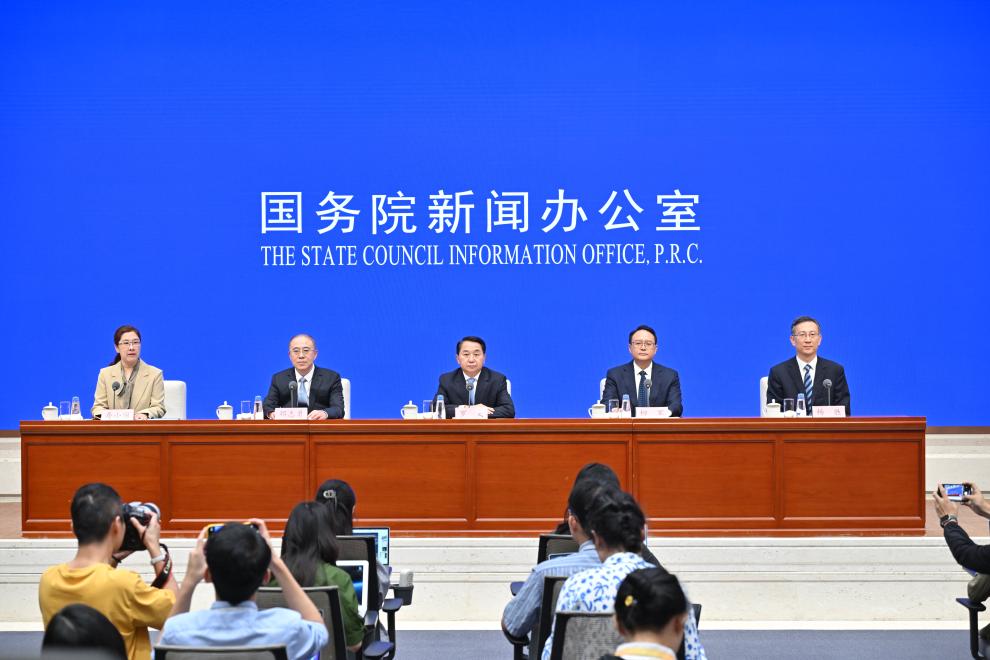
新华财经丨市场监管总局:“十四五”期间 国家标准总数已达到4.7万余项
Xin Hua She· 2025-08-23 03:29
Core Viewpoint - The article discusses the efforts of the State Administration for Market Regulation in China to enhance the standardization system to support high-quality development, focusing on faster, better, stronger, and more open standards. Group 1: Faster Standard Supply - The average development cycle for national standards has been reduced from 36 months to 16 months [1] - Implementation of the action plan to upgrade traction equipment and promote the replacement of old consumer goods has led to the release of important standards for electric vehicles and home appliances [1] Group 2: Better Standard Quality - Over 57% of important technology project standards have been established [2] - More than 2400 national standards have been released in key areas such as artificial intelligence and smart manufacturing [2] - The revised energy consumption limit standard for crude steel is expected to save over 10 million tons of standard coal annually [2] Group 3: Stronger Standard Effectiveness - More than 500 mandatory national standards related to safety production and consumer product safety have been introduced [2] - In the first half of the year, there was a 131% increase in newly established mandatory national standards and a 58% increase in newly published standards [2] - The formaldehyde release limit for man-made boards has been upgraded to E0 level, meeting the strictest global requirements [2] Group 4: More Open Standard Cooperation - During the 14th Five-Year Plan period, China has led the development of 1079 international standards and adopted over 6900 international standards [2] - More than 500 standards have achieved mutual recognition between China and other countries [2] - Chinese standards are being used in several international railway cooperation projects and agricultural standardization demonstration zones in Africa [2]
未经3C认证车辆不得销售 市监专项检查保障电动自行车新国标实施
Su Zhou Ri Bao· 2025-08-19 06:04
Group 1 - The new national standard for electric bicycles will be implemented on September 1, with the Suzhou Market Supervision Administration conducting special inspections [1] - A total of 50 related merchants have been inspected, over 50 notices have been issued, and 3 illegal cases have been filed [1] - The enforcement actions focus on the sales segment, ensuring that electric bicycles sold comply with the new standards and have obtained 3C certification [1] Group 2 - Enforcement personnel are checking the compliance of vehicle certificates and manuals, and preventing illegal modifications [1] - Merchants are required to dispose of non-compliant inventory by November 30, as part of the transitional sales regulations [1] - The enforcement team has strengthened legal awareness among merchants by distributing informative notices and interpreting relevant laws and regulations [1] Group 3 - The enforcement agency is continuously improving the dynamic management ledger of electric bicycle businesses in the area [2] - The agency collaborates with police and emergency departments to enhance the enforcement mechanism and respond quickly to leads from other departments [2] - Consumer feedback is being addressed promptly to protect consumer rights and promote a long-term regulatory mechanism for the electric bicycle industry [2]
山西长治三大举措推进消费品以旧换新
Zhong Guo Jin Rong Xin Xi Wang· 2025-08-19 02:07
Core Viewpoint - The article highlights the successful implementation of a "trade-in" policy in Changzhi City, Shanxi Province, aimed at stimulating market activity and promoting consumption upgrades, resulting in significant economic benefits [1][4]. Group 1: Policy Implementation - The Changzhi City Commerce Bureau has adopted three major measures: ensuring transaction authenticity, covering all market participants without barriers, and streamlining processes to enhance efficiency [1][3]. - As of August 10, the trade-in program has recorded over 440,000 transactions, with government subsidies exceeding 597 million yuan, directly driving consumption beyond 4.2 billion yuan [1]. Group 2: Transaction Authenticity - A dual-authenticity system has been established to ensure the legitimacy of transactions and amounts, covering five major categories: automobiles, home appliances, 3C digital products, electric bicycles, and home decoration [2]. - The system integrates data from various departments to verify transaction authenticity, employing a combination of automated checks and manual audits to prevent fraudulent activities [2]. Group 3: Market Participation - The program encourages participation from all market entities, regardless of size, with over 1,500 merchants and more than 2,000 stores involved across 13 districts [2]. - The initiative promotes a fair market environment, allowing large enterprises, small businesses, and individual merchants to participate equally [2]. Group 4: Consumer Experience - The "Cloud Flash Payment APP" facilitates a seamless experience for consumers, allowing instant subsidies during the payment process, significantly enhancing convenience [3]. - The approval process for merchants has been simplified, reducing participation time and lowering entry barriers [3]. Group 5: Market Activation - The program employs various promotional strategies, including new media and themed events, to integrate the trade-in initiative into broader consumer engagement activities [3]. - A collaborative model has been introduced in the home decoration sector, encouraging large retailers to organize collective participation in the trade-in activities [3]. Group 6: Future Directions - The Changzhi City Commerce Bureau plans to focus on the supply of green and smart products, process optimization, and transaction authenticity to transition the trade-in program from short-term stimulation to long-term incentives [4].