
半导体材料

Search documents
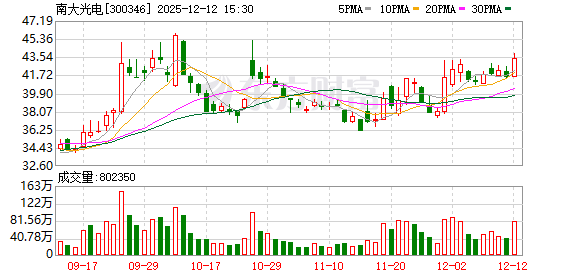
南大光电:公司产品纯度大于等于6N,可以实现MO源全系列配套供应及定制化产品服务
Mei Ri Jing Ji Xin Wen· 2025-12-12 12:52
(文章来源:每日经济新闻) 每经AI快讯,南大光电(300346.SZ)12月12日在投资者互动平台表示,公司是全球主要的MO源制造 商之一,在MO源的合成制备、纯化技术、分析检测、封装容器等方面已全面达到国际先进水平,产品 纯度大于等于6N,可以实现MO源全系列配套供应及定制化产品服务。 ...


方邦股份:可剥铜持续获小批量量产订单
Xin Lang Cai Jing· 2025-12-12 10:33
方邦股份在互动平台表示,公司可剥铜已陆续通过部分代表性载板厂商和相关头部终端客户的批量验 证,持续获得小批量量产订单。订单起量取决于相关客户内部项目排产节奏,可剥铜技术壁垒高,且直 接承载芯片,客户对国产可剥铜的导入稳字当头、非常谨慎。 ...

今日半导体设备板块爆发,拓荆科技领涨,多股跟涨印证景气
Jin Rong Jie· 2025-12-12 10:03
Core Viewpoint - The semiconductor equipment sector in A-shares has experienced a strong short-term rally, driven by multiple favorable factors including surging AI computing demand, increased policy support, and accelerated domestic substitution [1] Group 1: Market Performance - The core stock in the sector, Tuojing Technology, saw a remarkable increase of over 8% due to strong capital support [1] - Other companies such as Zhongke Feimiao, Jingyi Equipment, Xinyuan Micro, and Zhongwei Company also experienced significant gains, amplifying the sector's profitability [1] Group 2: Policy Support - The Ministry of Industry and Information Technology has released new measures aimed at promoting high-quality development in the semiconductor industry, targeting a domestic equipment localization rate of over 70% by 2025 [1] - A 100 billion yuan industry investment fund will be established, and companies investing over 15% of their revenue in R&D will receive tax incentives [1] - For instance, Zhongwei Company’s R&D expenditure accounted for 18% in 2023, potentially leading to a tax reduction of approximately 1.5 billion yuan by 2025, enhancing corporate profits [1] Group 3: Industry Growth Drivers - AI is driving unprecedented growth in the semiconductor market, with expectations of continuous growth for six years, breaking traditional cyclical patterns [2] - Data center servers have become the core revenue driver for semiconductors, leading to a surge in demand for GPUs and HBM chips, which in turn boosts the demand for etching and thin-film deposition equipment [2] - The global semiconductor revenue is projected to exceed 200 billion dollars in a single quarter for the first time by Q3 2025, reflecting high industry prosperity [2] Group 4: Equipment Demand Trends - UBS forecasts that the DRAM supply shortage will persist until Q1 2027, with DDR memory demand expected to grow by 20.7%, significantly outpacing supply growth [2] - The transition to 3D storage technology is driving an upgrade in equipment demand, with the number of layers in 3D NAND stacking approaching a thousand, leading to increased usage of etching equipment [2] - ALD and CVD processes are becoming mainstream, benefiting equipment companies like Zhongwei Company and Tuojing Technology [2] Group 5: Benefiting Sectors - The semiconductor materials sector is expected to benefit as equipment capacity expansion directly drives upstream material demand [3] - The localization of core components in semiconductor equipment is a key focus of policy support, with companies capable of technological breakthroughs set to gain significantly [3] - The advanced packaging equipment sector is also poised for growth, driven by AI chip technology iterations, with breakthroughs in 2.5D/3D advanced packaging expected in the second half of 2025 [3] - Zhongwei Company has made comprehensive layouts in advanced packaging, launching CCP etching and TSV deep silicon via hole equipment, which will further increase demand for advanced packaging equipment [3]


港股异动 | 天岳先进(02631)涨超7% 碳化硅应用前景广阔 需求端爆发或推动行业规模快速扩张
智通财经网· 2025-12-12 07:29
Group 1 - Tianyue Advanced (02631) has seen a stock price increase of over 7%, currently trading at 59.55 HKD with a transaction volume of 1.88 billion HKD [1] - The company is a leader in the silicon carbide (SiC) semiconductor materials industry and has achieved technological breakthroughs in the full series of 12-inch SiC substrates, marking the entry of the SiC substrate industry into the 12-inch era [1] - According to Wenkang Securities, SiC, as a third-generation wide bandgap semiconductor, is penetrating four major industries: renewable energy, AI, communication, and AR, becoming a key support for technological upgrades and efficiency revolutions [1] Group 2 - The demand explosion is driving rapid industry expansion, with expectations of a balanced supply-demand situation for SiC substrates by 2027, and potential supply tightness [1] - By 2030, the global demand for substrates is projected to reach 16.76 million pieces, with an estimated production capacity shortfall of about 12 million pieces compared to the supply in 2025 [1] - The three core growth points identified are AI intermediary layers, electric vehicles, and AR glasses, with projected demand shares by 2030 of 37%, 26%, and 23% respectively [1] - If SiC can be industrialized in the "substrate layer," "intermediate layer," and "heat sink" for advanced packaging thermal materials in AI chips, the global demand for SiC substrates could reach approximately 30 million pieces by 2030 [1]

中科院孵化,高分子“小巨人”,冲IPO!
DT新材料· 2025-12-11 16:04
Core Viewpoint - Jiangsu Zhongke Kehua New Materials Co., Ltd. has recently received acceptance for its IPO on the Sci-Tech Innovation Board, aiming to raise 598 million yuan for the development of semiconductor packaging materials [1][2]. Fundraising and Project Allocation - The company plans to raise 598 million yuan, with 420 million yuan allocated for the industrialization project of mid-to-high-end epoxy encapsulation materials and 98 million yuan for the construction of a research center for these materials, which will add a design capacity of 22,500 tons [2][3]. Company Background - Established in October 2011, Zhongke Kehua has a registered capital of 66 million yuan and is recognized as a national-level specialized and innovative "little giant" enterprise [3][4]. - The controlling shareholder is Beijing Kehua, founded in 1984, which holds 64.57% of Zhongke Kehua's shares, with significant backing from the Chinese Academy of Sciences [4]. Market Position and Competition - Epoxy encapsulation materials are critical for over 90% of chip packaging, with the domestic semiconductor packaging materials market being predominantly controlled by foreign companies, with a domestic market penetration rate of about 30% [6][7]. - Zhongke Kehua ranks second in the domestic market, competing with companies like Hengsu Huawai and Huahai Chengke [10]. Product Development and Innovation - The company has developed a range of epoxy encapsulation materials, with high-end products already passing assessments from downstream packaging manufacturers and entering mass production [9]. - The KHG900G-A product, developed for fan-out wafer-level packaging, has been recognized for its advanced performance, filling a domestic gap [13]. Financial Performance - From 2022 to mid-2025, Zhongke Kehua's revenue has shown a steady increase, with figures of 200 million yuan, 250 million yuan, 331 million yuan, and 159 million yuan respectively, alongside a rising gross profit margin [14]. - The company has built a 70,000 square meter facility with eight production lines for epoxy encapsulation materials, achieving a production capacity of 12,000 tons [14][15].

12.11:半导体材料价格(晶片、粉体材料、高纯金属)
Xin Lang Cai Jing· 2025-12-11 10:16
(来源:SMM小金属) (来源:SMM小金属) | | 无水5N氯化鎵 | 3250 | 3450 | 3350 | 0.0 | 元/千克 | | --- | --- | --- | --- | --- | --- | --- | | | 无水5N氯化锅 | 3150 | 3320 | 3250 | 0.0 | 元/千克 | | | 4N氯化钠 | 2000 | 2300 | 2150 | 0.0 | 元/千克 | | | 5N氯化钠 | 44000 | 46000 | 45000 | 0.0 | 元/千克 | | | 4N氯化钾 | 2000 | 2500 | 2250 | 0.0 | 元/千克 | | | 5N氢化钾 | 40000 | 45000 | 42500 | 0.0 | 元/千克 | | | 5N氧化玩 | 5100 | 5200 | 5150 | 0.0 | 元/千克 | | | 6N氧化抗 | 5300 | 5400 | 5350 | 0.0 | 元/千克 | | | 铁绪啼粉末Fe3GeTe2 | 220 | ୧୧୦ | 600 | 0.0 | 元/克 | | | 5N高纯铜 | 120 ...

立昂微:股票交易异常波动
2 1 Shi Ji Jing Ji Bao Dao· 2025-12-11 09:24
南财智讯12月11日电,立昂微公告,公司股票于2025年12月9日、12月10日、12月11日连续3个交易日内 收盘价格涨幅偏离值累计超过20%,属于股票交易异常波动情形。经公司自查,目前生产经营正常,近 期经营情况及内外部环境未发生重大变化,主营业务未发生变化。公司未发现可能对公司股价产生重大 影响的媒体报道或市场传闻,除已披露信息外,不存在其他应披露而未披露的重大信息。公司董事、监 事、高级管理人员、控股股东及其一致行动人在本次股票交易异常波动期间不存在买卖公司股票的情 况。董事会确认,不存在应披露而未披露的事项,前期披露的信息无需要更正或补充之处。2025年前三 季度归属于上市公司股东的净利润为-10,796.05万元,扣除非经常性损益后的净利润为-14,105.80万元, 存在业绩亏损风险。2025年12月11日公司股票以涨停价收盘,当日换手率为11.72%,换手率较高,提 醒投资者注意交易风险。 ...

立昂微:股价连续3日涨幅偏离值超20%,提示业绩及交易风险
Xin Lang Cai Jing· 2025-12-11 09:24
立昂微公告称,公司股票于2025年12月9 - 11日连续3个交易日内收盘价格涨幅偏离值累计超20%,属异 常波动。经自查,公司生产经营、内外部环境、主营业务均未变化,无重大未披露信息,董监高及控股 股东在此期间无买卖公司股票情况。2025年前三季度归母净利润为 - 10796.05万元,扣非净利润 - 14105.80万元,12月11日股票以涨停价收盘,换手率11.72%,公司提示业绩亏损与交易风险。 ...
碳化硅迎高速增长拐点 四大高增长产业驱动万亿赛道崛起
Cai Fu Zai Xian· 2025-12-11 09:21
在新能源汽车领域,800V 高压平台已成为电驱系统发展的主流方向,相较于传统 400V 平台,其充电 速度显著提升,可将充电时间压缩至 15 分钟以内,同时有效缓解用户 "里程焦虑"。数据显示,搭载碳 化硅逆变器的车型,CLTC 续航里程可提升 6.3%-6.9%,且在相同电压和功率条件下,碳化硅逆变器的 导通损耗和开关损耗远低于硅基器件。随着华为、比亚迪、特斯拉等企业纷纷布局兆瓦快充,高压直流 充电桩的配套需求同步增长,成为碳化硅需求提升的重要催化剂。 在光伏与储能领域,碳化硅器件同样发挥关键作用。在光伏发电环节,其应用于光伏逆变器,实现不稳 定直流电到标准交流电的高效转换;在储能系统中,通过储能变流器(PCS)完成交直流双向转换,凭借 高频特性与耐高压能力提升能源转换效率,成为光储一体化发展的高效能引擎。 AI + 通信 + AR 开辟新蓝海 技术升级打开增长空间 作为第三代宽禁带半导体核心材料,碳化硅(SiC)凭借禁带宽度大、击穿电场高、热导率优、电子饱和 漂移速度快等突出物理性能,正全面渗透新能源、AI、通信、AR 四大高增长领域,成为推动全球技术 升级与效率革命的关键支撑。随着多领域应用需求的爆发式 ...
鑫华半导体完成上市辅导 国产电子级多晶硅龙头冲刺IPO
Ju Chao Zi Xun· 2025-12-11 02:56
Core Viewpoint - The completion report for the IPO guidance of Jiangsu Xinhua Semiconductor Technology Co., Ltd. has been submitted, marking a significant step in the domestic semiconductor core material localization process [1] Group 1: IPO Guidance and Compliance - The guidance agreement between China Merchants Securities and Xinhua Semiconductor was signed on August 23, 2024, with formal guidance starting on October 9, 2024, covering five phases [3] - Xinhua Semiconductor has established a governance structure, accounting practices, and internal control systems necessary for a public company, demonstrating a comprehensive understanding of the capital market [3] - The company and its key stakeholders have fully grasped the legal responsibilities and obligations related to public offerings, establishing a strong compliance foundation for future IPO applications [3] Group 2: Company Overview and Market Position - Xinhua Semiconductor is a leading producer of electronic-grade polysilicon in China and the first to achieve large-scale production, breaking the long-standing foreign monopoly in this field [3] - The company's core product, electronic-grade polysilicon, is essential for integrated circuit chip manufacturing, requiring extremely high purity and facing significant technological barriers [3] - Xinhua Semiconductor has completed over 600 core technology and equipment innovations, holding fully independent intellectual property rights for its production processes, and has a market share exceeding 55% in the high-purity electronic-grade polysilicon market [4] Group 3: Funding and Financial Support - The company faced challenges in its capital journey, having previously filed for IPO guidance in April 2022, which was later suspended [4] - In June 2023, Xinhua Semiconductor successfully completed a B-round financing of 1 billion RMB, attracting several well-known industry and financial investors, providing strong financial backing for the IPO restart [4] Group 4: Shareholding Structure - Xinhua Semiconductor has a diversified shareholding structure without a controlling shareholder, with Jiangsu Zhongneng Silicon Industry Development Co., Ltd. as the largest shareholder, holding 24.5653% [5] - The second-largest shareholder is the National Integrated Circuit Industry Investment Fund, holding 20.6327%, alongside other significant shareholders, ensuring a balanced and stable governance structure [5]
