
智能穿戴设备

Search documents
机构:预计2025年中国智能眼镜市场出货量达290.7万台,同比增长121.1%
news flash· 2025-06-18 03:57
Core Insights - The International Data Corporation (IDC) report indicates a significant growth in the Chinese smart eyewear market, with a projected shipment of 494,000 units in Q1 2025, representing a year-on-year increase of 116.1% [1] - The audio and audio-capturing glasses segment is expected to see even more substantial growth, with shipments reaching 359,000 units in Q1 2025, marking a year-on-year increase of 197.4% [1] - Overall, the Chinese smart eyewear market is forecasted to reach 2.907 million units in 2025, reflecting a year-on-year growth of 121.1%, with audio and audio-capturing glasses expected to account for 2.165 million units, a growth of 178.4% [1] - The AR/VR device segment is also anticipated to grow, with expected shipments of 742,000 units in 2025, showing a year-on-year increase of 38.1% [1]
IDC:一季度全球智能眼镜市场出货量148.7万台,同比增长82.3%
news flash· 2025-06-18 03:51
Core Insights - The global smart eyewear market shipped 1.487 million units in Q1 2025, representing a year-on-year growth of 82.3% [1] Segment Summaries - The global audio and audio-capturing eyewear market shipped 831,000 units, showing a significant year-on-year increase of 219.5% [1] - The AR/VR eyewear market shipped 656,000 units, with a year-on-year growth of 18.1% [1]
全球首个AI眼镜支付技术落地,Rokid称明年量产目标100万台
Tai Mei Ti A P P· 2025-06-18 03:48
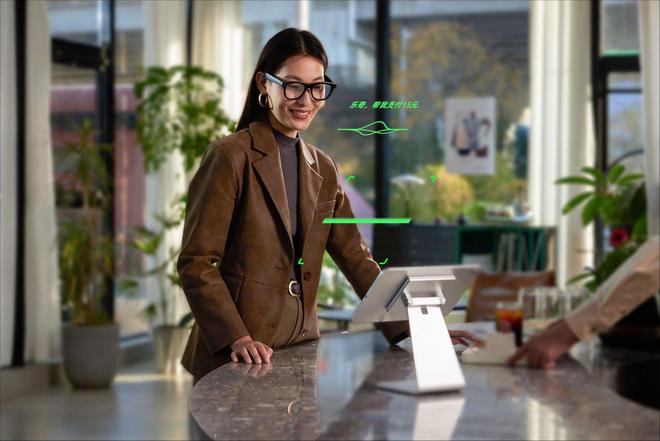
Core Insights - The launch of the world's first AI glasses payment technology by Rokid and Alipay marks a significant advancement in the smart glasses industry, enabling users to make payments through voice commands and QR code recognition, thus enhancing payment efficiency [2][4]. Company Overview - Rokid, established in 2014, focuses on human-computer interaction technology and is a leading player in the AI glasses sector, with applications in various fields such as education, healthcare, and industrial use [3]. Product Features - The Rokid Glasses will feature the "Look and Pay" function, allowing users to complete transactions simply by wearing the glasses and issuing a voice command after scanning a merchant's QR code, streamlining the payment process compared to traditional mobile payments [4][5]. Market Potential - Rokid has received over 250,000 global orders for its smart glasses, with expectations to exceed 500,000 units shipped in the domestic market by the end of the year, and a target of 1 million units for the following year [2][6]. Competitive Landscape - The entry of major players like Xiaomi and Huawei into the AI glasses market is intensifying competition, with Rokid emphasizing its superior screen quality and user experience as key competitive advantages [6][7]. Future Applications - The "Look and Pay" feature is expected to expand into various scenarios, including parking fees and utility bill payments, enhancing the overall user experience by integrating payment records with personal management tools [7].

加入AI眼镜疯狂大潮,跨过AI眼镜炽热战场
3 6 Ke· 2025-06-18 03:27
Core Viewpoint - The anticipation for Apple's AR glasses at WWDC 2025 was high, but the company did not meet expectations, leading to increased focus on competitors like Meta and Google in the AR and AI glasses market [2][4]. Group 1: Apple and Its Position - Apple did not release AR glasses at WWDC 2025, disappointing many who expected a significant announcement [2]. - The company has been slow to enter the AR market, especially as competitors ramp up their offerings [2][36]. Group 2: Competitors' Developments - Google emphasized its commitment to XR glasses at Google I/O 2025, highlighting the launch of Android XR in collaboration with Samsung and Qualcomm [5][7]. - Google showcased new AR prototypes and partnerships with fashion brands, indicating a strong push into the AR space [11][13]. - Meta continues to invest heavily in AR technology, with significant projects like Project Orion and Project Aria Gen 2, positioning itself as a leader in the AR market [32][34]. Group 3: Emerging Players - Rokid launched its AR glasses, which feature translation and subtitle capabilities, gaining attention in the market [14][18]. - The demand for Rokid Glasses has been high, with limited availability creating a sense of exclusivity [20][22]. - The domestic XR device market saw a significant increase in shipments, with AR devices leading the growth [23][24]. Group 4: Market Trends and Future Outlook - The AR market is experiencing rapid growth, with AR device shipments increasing by 157% year-on-year [23]. - AI glasses are becoming a transitional product towards AR, with significant sales driven by companies like Meta [30][31]. - The future of AR glasses remains uncertain, with varying predictions on their mainstream adoption timeline [36][37].




AR眼镜也能付钱了!Rokid 携手支付宝,上线全球首个“看一下支付”
Sou Hu Cai Jing· 2025-06-18 03:04
Core Insights - Rokid has launched the world's first payment-enabled smart glasses, Rokid Glasses, in collaboration with Alipay, introducing a new payment method called "look and pay" [2][4][5] - The payment process allows users to complete transactions hands-free by simply wearing the glasses and using voice commands, enhancing convenience in various daily scenarios [2][5] - The glasses incorporate Alipay's multi-dimensional risk control system to ensure transaction security, promising device safety and user protection [4][5] Product Features - Rokid Glasses enable users to make payments by saying, "Leqi, pay 10 yuan," followed by a confirmation command, with payment information displayed on the glasses [2] - The design focuses on all-day wearability, making it easier for users to pay without needing to handle their smartphones [2][5] - The glasses are positioned to address user pain points, such as making payments during busy times or while riding a bike [2] Market Impact - Rokid's CEO stated that the payment capability of Rokid Glasses sets a new standard in the smart glasses industry, leading it into the payment era [5] - Alipay's vice president emphasized the innovative user experience and the commitment to supporting emerging industries for greater user value [5] Future Developments - Both companies plan to expand the range of convenient life services, including quick payments for parking, utility bill payments, and other daily transactions through voice commands [5] - As of now, global orders for Rokid Glasses have exceeded 250,000 units, with deliveries set to begin at the end of June [6]

离开锤子、字节后,吴德周抢先Meta推出AI运动眼镜丨涌现36人
3 6 Ke· 2025-06-18 01:01
Core Concept - The emergence of generative AI is a key phenomenon, where AI exhibits human-like intelligence as model scales reach a critical point, leading to advancements towards Artificial General Intelligence (AGI) [1] Company Overview - Wu Dezhou, founder of "Zhi Jing Wei Zhi," has transitioned from roles at Huawei, Smartisan Technology, and ByteDance to entrepreneurship, driven by a desire to innovate in the AI eyewear space [3][4] - The company focuses on vertical sports scenarios, launching the BleeqUp brand, with its first AI sports glasses, BleeqUp Ranger, set to release in June [7][10] Product Features - BleeqUp Ranger is designed specifically for outdoor activities like cycling and hiking, featuring unique design elements such as a central camera for better photo angles and physical buttons for capturing media [8][10] - The glasses include advanced safety features, such as automatic video recording during emergencies, and are positioned as a multi-functional device combining sports eyewear, camera, and audio capabilities [29][38] Market Positioning - The company aims to carve out a niche in the competitive AI eyewear market, which is expected to see significant growth by 2025, with numerous brands entering the space [11][35] - Wu Dezhou believes that while general-purpose AI glasses face stiff competition from major smartphone manufacturers, there is a unique opportunity for startups in specialized vertical markets [10][21] Competitive Strategy - The core competitive advantage of "Zhi Jing Wei Zhi" lies in its focus on specific user scenarios, deep understanding of user needs, and continuous product iteration to enhance user experience [11][31][33] - The company draws parallels with Garmin in the smartwatch market, emphasizing the importance of specialized features over broad, generalized offerings [19][20] Future Outlook - The company anticipates a rapid evolution in AI eyewear technology, predicting that AI glasses will become a primary device for capturing sports activities, similar to how smartphones have become essential for photography [36][37] - Future developments will focus on optimizing battery life, enhancing AI capabilities in visual processing, and potentially expanding product lines to cater to various sports [40]

供应链深度协同 加速商业化AI眼镜C端市场热度渐起
Zheng Quan Ri Bao Zhi Sheng· 2025-06-17 16:10
Market Overview - The AI glasses market is gaining traction, with consumers eager to try out new products, indicating a growing interest in this technology [1][2] - The price range for mainstream AI glasses is between hundreds to thousands of yuan, making them accessible to a wider audience [1] Product Features and Development - Current mainstream AI glasses primarily offer basic functions such as translation and photography, with expectations for gradual improvement through user feedback [2] - The launch of new products, such as the Thunderbird X3Pro, showcases advanced features like a custom model and full-color display, highlighting the complexity and innovation in design [2] Industry Growth and Innovation - The AI glasses industry is experiencing rapid growth, supported by strong policy backing and a robust supply chain in China [3] - Key technological advancements, particularly in MicroLED display technology, are critical for product innovation, focusing on aspects like weight, battery life, and heat management [2][3] - Several A-share listed companies are actively investing in the AI glasses sector, with firms like BOE Technology Group and Lens Technology providing essential components and solutions [2][3] Policy Support - Government initiatives, such as the Shenzhen Action Plan and Zhejiang's subsidy measures, are fostering the development of AI glasses by providing financial incentives and promoting innovation [3] - The local supply chain in Shenzhen enables rapid commercialization of AI glasses, allowing companies to move from design to production in a short timeframe [3]
Meta与Oakley联名智能眼镜将于本周五亮相,扎克伯格亲自转发
Huan Qiu Wang· 2025-06-17 03:40
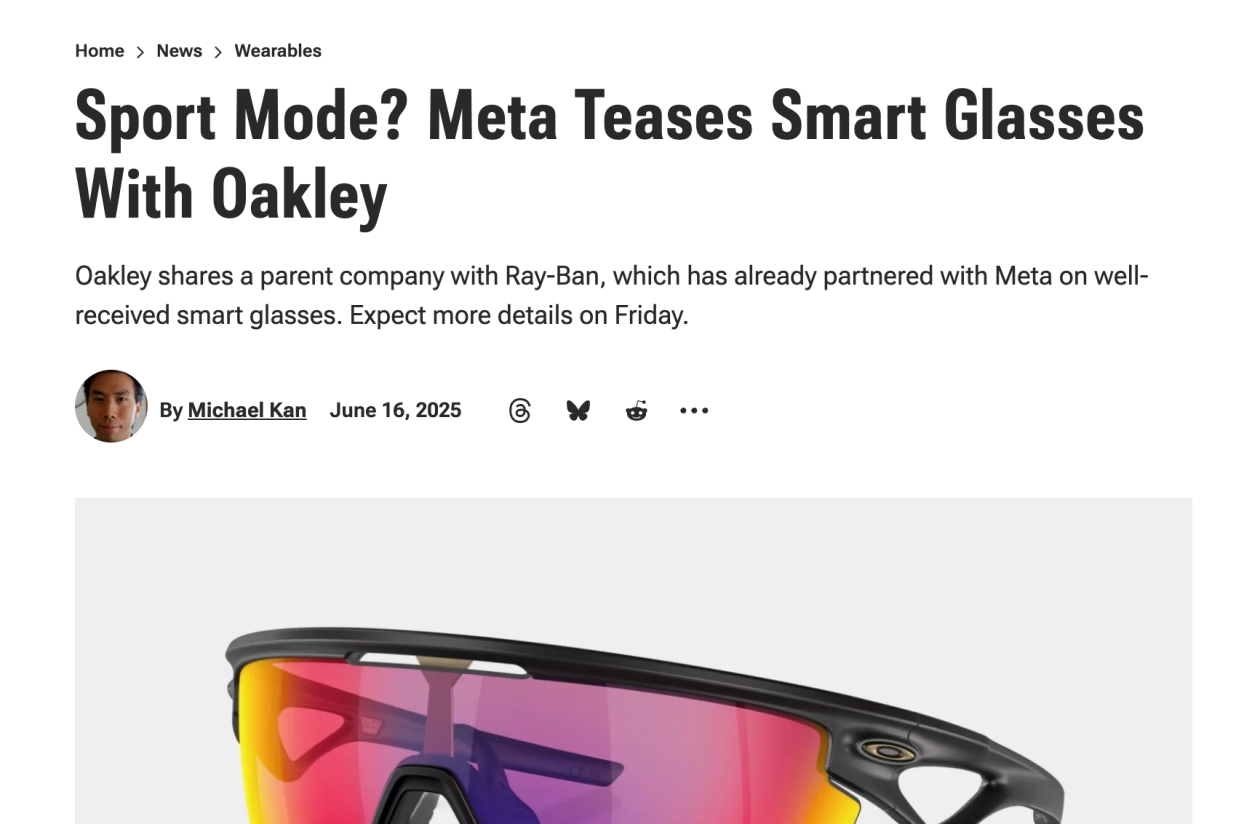
Group 1 - Meta's CEO Mark Zuckerberg personally shared a teaser for a new collaboration with Oakley, indicating a significant move into the wearable device market [3] - The partnership is seen as a strategic step for Meta to enhance its smart glasses offerings, potentially integrating AR display, real-time sports data tracking, and voice interaction features [3] - Analysts suggest that Meta is accelerating the development of its "metaverse" hardware ecosystem, with smart glasses serving as a lightweight entry point to complement the Quest VR headset series [3] Group 2 - Oakley's parent company, Luxottica, has been increasingly investing in technology, previously collaborating with companies like Google and Intel to explore smart glasses technology [4] - The collaboration with Meta marks a crucial transition for Oakley from traditional sports equipment to smart wearable devices, leveraging its optical laboratory resources to improve display quality and comfort [4] - Since the launch of Ray-Ban Stories smart glasses in 2021, Meta has sold over one million units globally, although specific details about the new product with Oakley have yet to be announced [4]
Meta联手Oakley推出智能眼镜 专为运动设计挑战运动相机
Feng Huang Wang· 2025-06-17 00:11
Core Insights - Meta is set to officially launch a new smart glasses product in collaboration with Oakley on June 20, 2023, as indicated by the new Instagram account @oakleymeta and a teaser video [1] - The collaboration has been promoted across various social media platforms, including endorsements from Meta CEO Mark Zuckerberg, highlighting its significance [1] - The design of the Oakley Meta smart glasses is based on the Oakley Sphaera frame, with a central camera placement, differing from the side-mounted camera of the Ray-Ban Meta smart glasses [1] Product Positioning - The new smart glasses are primarily targeted at cycling enthusiasts and other sports groups, aiming to compete in the action camera market against established brands like GoPro [2] - Meta's strategy of collaborating with different eyewear brands is intended to expand its market coverage in the smart glasses product line [2] - Both Oakley and Ray-Ban are under the EssilorLuxottica group, facilitating Meta's multi-brand strategy in the smart glasses sector [2] - The upcoming launch of Oakley Meta smart glasses will further enhance Meta's positioning in the wearable device market [2]
智能眼镜掀起“上新”潮
Xiao Fei Ri Bao Wang· 2025-06-16 02:42
日前,某电商平台数据显示,智能眼镜成交量同比激增超 8 倍。有业内人士分析,原因或在于AI大模 型与增强现实技术融合推动智能眼镜市场爆发。 国际数据公司IDC数据显示,2025年全球智能眼镜出货量预计将达到1280万台,同比增长26%;其中, 中国市场将突破275万台,同比增长高达107%,跃居全球第一。同时,国产智能眼镜也迎来了一轮"上 新潮","智能眼镜卖爆了"等话题在社交平台引发热议。 在线上购物平台,智能眼镜品牌数量较去年明显增加,智能提词和实时翻译成为消费者最关注的两大功 能。在国家对消费电子产品的补贴政策带动下,相关产品销量大涨。 线下眼镜店也迎来了一轮智能眼镜"上新潮"。以深圳市罗湖区的一家眼镜店为例,店长称目前门店上架 了近10款智能眼镜,功能多样,从最简单的播放音频、拍照片或视频到更复杂的语音助手、导航、翻译 等,各种功能应有尽有,产品价格从几百元到几千元不等,吸引了不少消费者体验购买。 消费者陈先生表示佩戴智能眼镜后不用戴耳机,且镜片上还有字幕;孙女士则称:"我会把它当电子产 品用,因为我本身没有很严重的近视,所以对我来说它的更多功能可能在于充当时尚配饰或者结合运动 相机使用。因为相机很重 ...