
高等教育

Search documents
有高校科技成果转化金额年增70倍,上海赋权改革让“纸”变“钱”
Di Yi Cai Jing· 2025-12-24 12:25
Core Insights - Shanghai is developing a "scientist + technology manager + patient capital" triangle model to enhance technology transfer and commercialization of research outcomes [1][15] - The contribution of universities to national basic research growth exceeds 50%, with a significant increase in technology transfer contracts [1] - The reform in technology transfer mechanisms in Shanghai has led to a substantial increase in contract amounts and the establishment of a new rights structure [2][11] Technology Transfer Growth - In 2024, the total contract amount for technology transfer from Shanghai's universities and research institutions is expected to reach 365.93 billion yuan, a 6.7-fold increase since 2014 [1] - The total contract amount for technology transfer in 2025 (January to November) is projected to be 576.40 billion yuan, a 132.6% increase compared to the same period in the previous year [1] - The national technology transfer contract amount from universities and research institutions is projected to reach 226.91 billion yuan in 2024, with a year-on-year growth of approximately 10% [1] Reform Mechanisms - The core of the reform in Shanghai's technology transfer is the separation of ownership and usage rights, allowing universities to transfer rights to research teams [2][4] - Shanghai Jiao Tong University has implemented a "1+5+20" policy framework to support technology transfer, granting 70% ownership of patents to research teams and 30% to faculty [5] - The "complete empowerment" model has been adopted, allowing researchers to retain 100% ownership of their inventions when forming companies [11][14] Case Studies - Shanghai Jiao Tong University has seen significant success, with over 200 faculty-led startups and a total financing amount exceeding 190 billion yuan, with a market valuation of over 1,200 billion yuan [10] - East China Normal University reported a nearly 70-fold increase in technology transfer contract amounts in 2024, reaching 4.76 billion yuan, and a total of 14.9 billion yuan by December 2025 [11][12] - The establishment of a robust support system for faculty entrepreneurship has led to successful commercialization of research outcomes, creating a positive feedback loop between research and application [13][14] Future Directions - The Shanghai government is focusing on deepening the reform of the ownership system for job-related scientific achievements and improving the management of technology transfer assets [15] - The ongoing reforms aim to create a conducive environment for technology transfer, ensuring transparency and compliance in the commercialization process [14][15]

三年初见成效后“百千万工程”现场会划重点 推动城乡区域协调发展取得更大进步
Nan Fang Ri Bao Wang Luo Ban· 2025-12-24 08:00
12月22日至23日,2025年全省推进"百县千镇万村高质量发展工程"促进城乡区域协调发展现场会召开。 本次会议以"现场调研+集中开会"的形式进行。在调研环节,参会成员分别前往位于广州、惠州的环南 昆山—罗浮山县镇村高质量发展引领区开展实地调研。 "百千万工程"自启动实施以来,全省各项工作扎实起步、加力提速、纵深推进,顺利实现"三年初见成 效"的阶段性目标。 23日下午的交流会,广州、深圳、惠州、省发展改革委、茂名信宜、梅州梅县、中山小榄、广州中医药 大学、广东电网有限责任公司、中国农业银行股份有限公司广东省分行等先后作交流发言,汇报了推 进"百千万工程"实施的做法及成效。 地市探索 抓住引领区重大机遇 "百千万工程"三年初见成效,各地市因地制宜探索发展路径。会上,广州、深圳、惠州结合各自功能定 位和资源禀赋,分享了推进"百千万工程"的做法和成效。 作为超大城市,广州立足实际,将11个区划分为城乡融合发展示范区、产城融合发展标杆区、实现老城 市新活力引领区三大板块,制定实施"1+8+11+N"行动方案。 坚持"产业第一、制造业立市",广州产业发展跑出"加速度":工业投资连续3年实现两位数增长,形成 了6个千亿 ...
985,启动教育部重磅项目!
Xin Lang Cai Jing· 2025-12-24 04:02
Group 1 - The "Western Ecological Security Discipline Breakthrough Pilot Project" will hold a launch meeting on December 23, focusing on major scientific issues related to ecological security in the western region of China [2][6] - The meeting will discuss five themes: interactions among multiple layers under global change, water resource security and efficient utilization in the west, desertification control and sandstorm prevention, restoration of degraded ecosystems and biodiversity protection, and intelligent prediction of ecological risks and safety responses [2][6] - The project is led by Lanzhou University in collaboration with Tsinghua University, Peking University, Beijing Normal University, and Wuhan University, with Academician Huang Jianping from Lanzhou University as the chief scientist [2][6] Group 2 - In September 2024, President Xi Jinping proposed a plan for breakthroughs in basic and interdisciplinary subjects at the National Education Conference, aiming to establish a mechanism that supports technological innovation and talent cultivation [4][7] - The Ministry of Education and the Ministry of Finance jointly launched the plan to address major scientific issues from national strategic needs, promoting collaboration among leading universities and breaking down disciplinary barriers [4][7] - A meeting on December 2 announced the establishment of the 2025 pilot projects under the breakthrough plan, aimed at integrating technological innovation, talent cultivation, and discipline development reforms in higher education [4][7]

每天骑车去,全勤王!90岁清华教授坚持冬泳15年
Xin Lang Cai Jing· 2025-12-24 03:21
他说,自己在90岁仍然能有一个好身体,是这辈子最骄傲的事。身体健康也是他能持续工作60多年的基 石。从1956年起,他就边读书边担任助教。1958年毕业后留校任教,主讲电子束管相关课程。1998年退 休后,他继续从事科研工作直到85岁。期间多次为国内多家电子管、显像管企业提供技术支持。退休后 他还撰写了五部专业著作。 清华的体育精神影响了他的一生,他也希望把这种精神延续下去,"我希望年轻人多参与体育运动,对 锻炼意志非常好!" 转自:北京日报客户端 从住处骑自行车15分钟到清华大学西湖游泳池,更衣、热身、入水,这是清华冬泳协会成员、90岁电子 工程系退休教授应根裕的冬泳日常。自打75岁那年偶然尝试冬泳,应根裕就喜欢上了这项运动,"每天 不来冬泳总觉得有一件大事没做!" 应根裕是清华冬泳协会里的"全勤王",坚持冬泳15年。1953年,他考入清华无线电系,成为该系第一批 学生。每天下午四点半,听到"同学们,走出宿舍,走出教室去参加体育锻炼、保持强健的体魄,争取 为祖国健康地工作五十年"的校园广播响起,他就会到体育馆去练习单杠、双杠、倒立、吊环。应根裕 回忆,锻炼之后去图书馆学习,回到宿舍睡得尤为酣甜。第二天更能以 ...

高校该如何给大学生使用AI立规矩
Bei Jing Ri Bao Ke Hu Duan· 2025-12-23 23:01
转自:北京日报客户端 清华大学近期发布《人工智能教育应用指导原则》,提出严禁学生将AI生成的内容直接用于学业成 果。随着AI在学术领域的广泛应用,如何引导大学生正确使用AI成为高校管理的新课题。那么,现在 大学生会不会用AI写作业?大学老师面对"AI作业"持什么态度?高校该如何为AI的使用立规矩呢? 问题一 现在大学生写作业用不用AI? 借助AI做作业是常态 大二学生 吴亦涵 我进入大学的时候,正值人工智能产品迎来爆发式增长之际。起初,我和身边的同学都认为借助AI完 成作业是不够认真的表现。但随着一些课程明确要求必须使用AI工具辅助学习,并需标注AI参与的部 分,AI就这样悄然走进了我的学习生活。从日常资料搜集、思路整理到报告的撰写与打磨,使用AI逐 渐成为一种常态。如今,我无法想象在没有AI的时代,大学生是如何写作业的——就像在智能手机普 及后,难以想象没有智能手机之前人们的生活一样。 触及学术不端红线直接判定不合格 作为一名汉语国际教育专业的大二学生,我使用AI的场景主要集中在材料阅读、厘清写作思路以及后 期文本润色等方面。在阅读外文文献时,我会使用AI帮我梳理各语种外文文献的大致内容。写材料 时,我通常 ...

深入学习贯彻中共二十届四中全会精神 为首都“十五五”开好局起好步作贡献
Xin Lang Cai Jing· 2025-12-23 22:11
Group 1 - The article emphasizes the importance of continuous learning and understanding of Xi Jinping's Thought on Socialism with Chinese Characteristics for a New Era among members of the Chinese People's Political Consultative Conference (CPPCC) to enhance their performance and contribute to the high-quality development of the capital [1][2][4] - Various learning activities organized by the CPPCC, such as study sessions and discussions, are aimed at deepening the understanding of the spirit of the 20th National Congress of the Communist Party of China and translating learning outcomes into actionable proposals and community engagement [1][2][3][4] - The article highlights the role of design and architecture in supporting major national events and contributing to urban development, showcasing the integration of professional expertise with civic responsibilities [3][4] Group 2 - The CPPCC members are encouraged to focus on the modernization of agriculture and rural areas, aligning with the strategic goals set forth in the 20th National Congress, emphasizing the importance of addressing agricultural issues as a priority for national development [6][7][18] - The integration of artificial intelligence in education is highlighted as a strategic initiative, with a focus on enhancing educational quality and fostering talent development in alignment with national goals [8][9] - The article discusses the significance of cultural innovation and the role of cultural workers in promoting national rejuvenation, emphasizing the need to embrace new technologies while preserving traditional values [10][11] Group 3 - The CPPCC is positioned as a vital component of the national governance system, with a focus on enhancing governance capabilities through active participation and collaboration among its members [19] - The article underscores the necessity for financial innovation and support for emerging industries to facilitate economic transformation and development in Beijing, reflecting the broader goals of the 14th Five-Year Plan [14][15]

优化高校智慧课堂建设
Xin Lang Cai Jing· 2025-12-23 22:11
Core Viewpoint - The article emphasizes the importance of implementing a digital education strategy, with smart education as a core area that is transforming traditional teaching methods through personalized, intelligent, and ubiquitous features [1] Group 1: Teacher Development - The need to enhance teachers' digital literacy and teaching capabilities is highlighted, requiring them to master information technology for deep integration with teaching [1] - Systematic training programs, such as those organized by Guizhou University, are essential for developing teaching methods suitable for smart environments [1] - Teachers are encouraged to adopt a student-centered approach, transitioning from knowledge transmitters to learning facilitators and resource integrators [1] Group 2: Student Learning Enhancement - Guidance on learning methods and experiences is crucial for helping students develop autonomous learning abilities [2] - Initiatives like learning strategy courses and peer experience sharing at Guizhou Normal University aim to assist students in effectively utilizing smart platforms [2] - Teachers should design reasonable learning tasks in smart classrooms to promote pre-class preparation, in-class interaction, and post-class consolidation [2] Group 3: Infrastructure Optimization - Investment in hardware for smart classrooms is necessary, including timely updates of aging equipment to enhance overall performance [2] - Software platforms should focus on compatibility and user-friendliness to improve the user experience [2] - Collaboration with technology suppliers for regular platform upgrades is essential for ensuring smooth teaching activities [2] Group 4: Evaluation Mechanism - A multi-dimensional evaluation system is needed to leverage the data collection and analysis capabilities of smart classrooms [2] - The evaluation should focus on achieving teaching goals while also considering student learning experiences and feedback [2] - Analyzing data on student engagement, learning progress, and assignment completion can help teachers refine classroom design and teaching methods [2] Group 5: Policy Support and Institutional Assurance - The construction of smart classrooms is a vital part of modernizing the education governance system, requiring active support in resource allocation, incentive mechanisms, and institutional guarantees [3] - Guizhou University's 2025 undergraduate smart course project exemplifies the use of special funding to support smart classroom development and establish teacher incentive mechanisms [3] - It is important to develop scientific data security and privacy protection policies to ensure information safety for teachers and students using smart platforms [3]
把文化融入专业教育
Xin Lang Cai Jing· 2025-12-23 22:11
建立文化能力评价体系。文化能力的有效培养,离不开科学规范的评估体系作支撑。要真正把文化能力 嵌入服务类专业的教育全过程,高校须建立起一套明确、合理、具备可操作性的评价标准,将其纳入人 才培养质量监测与教育教学改进的重要内容。在具体操作层面,应围绕人才培养目标,细化文化能力的 核心构成要素。包括学生能否识别与尊重多元文化差异、能否在跨文化场景中进行有效沟通,以及是否 具备将文化内容转化为服务设计与叙事表达的能力。这些内容不仅需要体现在教学目标中,更应落实在 评估指标中。在评价方式上,应强化过程性、情境化、多元化的评估路径。除基础性的文化知识测试 外,更应强化实操性任务。为学生建立"文化成长档案",设立文化能力质量监测机制,通过制度建构与 路径优化,让文化能力成为学生成长中看得见、评价中测得出、就业中用得上的核心竞争力。 (作者单位:安顺学院) 转自:贵州日报 确立文化能力为通识基础。随着文旅深度融合的发展,酒店管理等服务类专业面临从"流程型服 务"向"文化型体验"转变的新要求。服务者不仅要掌握标准化操作,更要具备以文化为媒介构建认同与 共鸣的能力。因此,文化能力应当被确立为服务类专业的基础通识素养,其核心可从文 ...
4元一碗面 扫码就能吃
Xin Lang Cai Jing· 2025-12-23 20:11
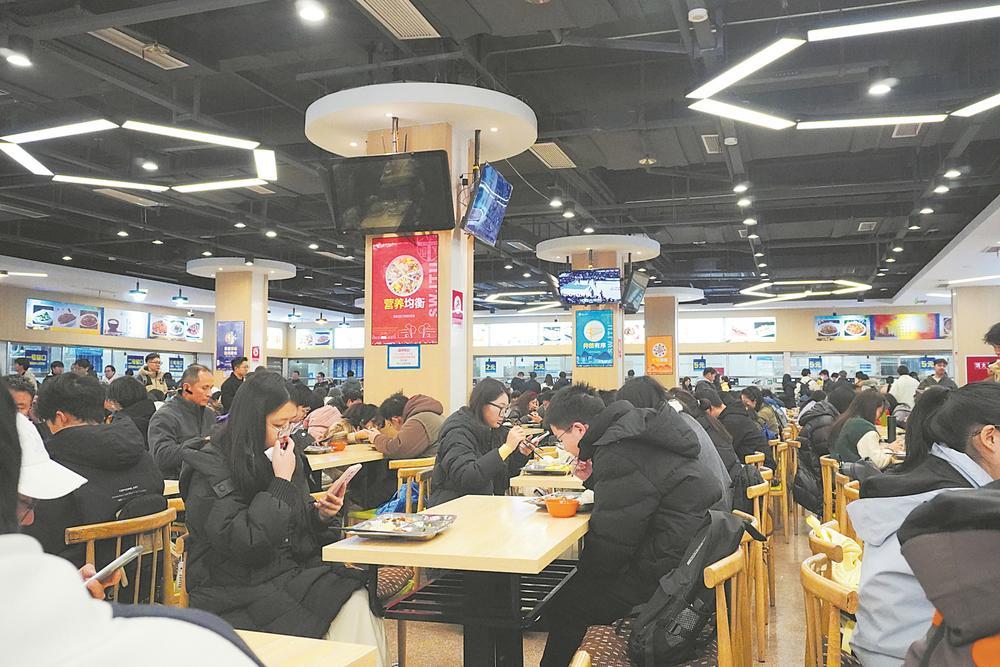
Core Insights - Several universities in Chengdu have opened their canteens to the public, attracting significant attention and creating a unique dining experience for both students and local residents [3]. Group 1: Pricing and Menu Offerings - At Southwest Jiaotong University, a variety of noodle dishes are priced at 4 yuan, with other items like dumplings and wontons costing only 0.4 yuan each [3][4]. - A complete meal with a combination of dishes can be enjoyed for under 10 yuan, while specialty dishes are priced around 10 to 12 yuan [3][6]. - The canteen offers free sour plum soup and vegetable soup, enhancing the overall dining experience [3]. Group 2: Payment Convenience - The canteen supports mobile payment options such as Alipay and WeChat, eliminating the need for a campus card and making it easier for non-students to dine [5]. - This seamless payment experience has been positively received by patrons, including families with children [5]. Group 3: Dining Environment and Community Impact - The canteen is noted for its cleanliness and variety, providing a wide range of food options that cater to different tastes and age groups [6]. - The environment is described as suitable for elderly patrons, with many families choosing to dine there regularly [6][7]. - The canteen has become a community hub, with a diverse mix of diners, including families and local workers, enjoying their meals together [4][7].
4000处友好空间服务新就业群体
Xin Lang Cai Jing· 2025-12-23 19:08
会上发布了全国首部区级社会发展报告——《2025北京朝阳社会工作发展报告》。朝阳区委社会工作部 与北京工业大学社会学院达成共建合作,并同步揭牌成立朝阳社会工作学院与朝阳社会研究院。朝阳区 社会工作学院为综合性社会工作人才培养平台,将系统开展专业化培训、师资与资源整合、实践平台搭 建及品牌与标准输出等工作,打造差异化分类培训体系,着力提升基层社工队伍的综合素质与新兴领域 党建工作能力。 本报讯(记者 赵婷婷)昨天,北京青年报记者从朝阳区召开的2025年党建引领基层治理大会上获悉, 朝阳区推出"全场景友好"服务体系,已建成友好空间近4000处(包含791处全时驿站)。同时,全区完 成145个市级城乡社区议事协商提质增效项目,年均解决群众身边事超1500件。 ...