
具身智能大模型

Search documents
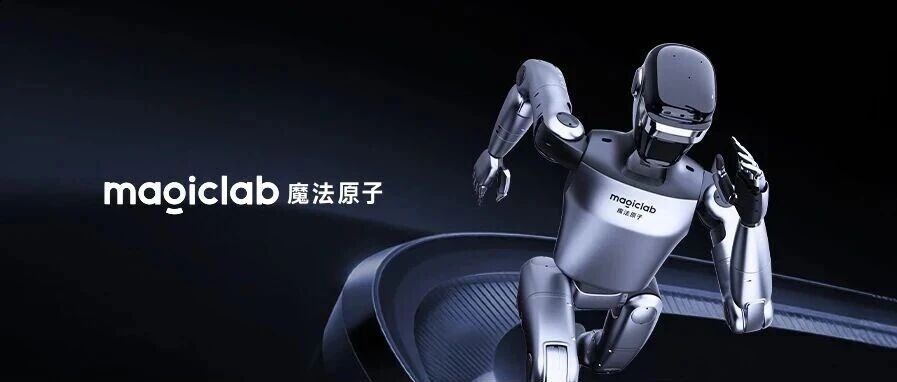
百亿募资!具身智能企业魔法原子再获5亿元融资
机器人圈· 2026-03-10 10:16
Core Viewpoint - The company Magic Atom has completed a new round of financing amounting to 500 million yuan and launched a 10 billion yuan embodied intelligence ecosystem fund in Wuxi, marking a new phase in its industrialization layout in the embodied intelligence sector [2][20]. Financing and Investment - The recent 500 million yuan financing has attracted various investors, including industrial capital, venture capital institutions, and local state-owned assets, with a total funding scale exceeding 10.5 billion yuan [4]. - Notable investors include Sky Factory Venture Capital Fund, Top Group, and others, indicating strong support for the company's growth and ecosystem development [4]. Technological Advancements - Magic Atom has achieved significant breakthroughs in three core areas: hardware, control technology, and model algorithms, laying a solid foundation for the industrialization of robotics [5][6]. - The self-developed joint module has a peak output of 525 N·m, showcasing industry-leading technology in torque output and power density [6]. - The company has developed a comprehensive data collection factory to enhance its technological capabilities, creating a closed-loop system for continuous improvement [7]. Product Development and Market Expansion - Magic Atom plans to expand its product line with more multi-form robots targeting the consumer market, aiming to enhance applications in industrial, commercial, and public spaces [11]. - The company has established deep collaborations with numerous leading enterprises across various sectors, including oil and gas, telecommunications, and education, accumulating orders exceeding 100 million yuan [15]. Ecosystem and Collaboration - The company is actively building an ecosystem around its "embodied intelligence + X" strategy, collaborating with partners in various verticals to enable intelligent upgrades and multi-scenario applications [13]. - Strategic partnerships with local state-owned assets and other enterprises provide robust support for the company's industrialization efforts [5][15]. Industry Position and Future Outlook - The embodied intelligence industry is transitioning from a technology validation phase to accelerated industrialization, with companies possessing mature technology systems and rich application experience gaining competitive advantages [20]. - Magic Atom's recent financing and ecosystem initiatives reflect broader trends in the industry and provide a practical path for industrial development [20].

「阿里」副总裁任庚与理想智驾大牛联手创业,入局具身智能机器人赛道!
Robot猎场备忘录· 2026-03-10 05:31
Core Insights - The article discusses the emergence of new companies in the embodied intelligence sector, particularly focusing on humanoid robots and AI technologies, highlighting significant investments and the backgrounds of key founders [2][3][10]. Group 1: Company Developments - Beta Infinity, founded by former Huawei executive Liu Wulong, focuses on consumer-grade robots and has completed a seed round financing of nearly 100 million yuan, backed by notable investors [3][4]. - A new company led by former Alibaba executive Ren Geng and former Li Auto executive Lang Xianpeng is set to enter the embodied intelligence market, aiming to compete with Tesla's humanoid robots and has already secured multiple rounds of financing [4][6]. - The article notes that the embodied intelligence sector is attracting significant interest from capital, with many startups achieving substantial funding rounds, indicating a robust investment landscape [10][11]. Group 2: Key Personnel - Liu Wulong, the CEO of Beta Infinity, has a strong background in AI, having previously led Huawei's large model engineering team [7]. - Ren Geng, the CEO of the new startup, has extensive experience in digital transformation and cloud services from his time at Alibaba [8]. - Lang Xianpeng, the CTO, has a solid foundation in autonomous driving technology from his tenure at Li Auto [8]. Group 3: Market Trends - The article highlights a trend of automotive industry professionals entering the embodied intelligence sector, with several companies rapidly securing funding and establishing themselves in the market [9][10]. - The competition in the humanoid robot space is intensifying, with 15 global automotive companies now involved, and only a few, like XPeng, having showcased competitive bipedal products [10]. - The article suggests that the influx of automotive and autonomous driving experts into the embodied intelligence sector may be a strategic move to leverage their existing manufacturing and technological advantages [10][11]. Group 4: Investment Landscape - The financing landscape for embodied intelligence startups is robust, with several companies achieving valuations exceeding 10 billion yuan and securing significant funding rounds [12]. - Notable funding rounds include Galaxy General's strategic round of 2.5 billion yuan and Qianxun Intelligent's nearly 2 billion yuan in two rounds of financing [12]. - The article emphasizes that the threshold for Series B financing for leading startups has reached 1 billion yuan, indicating a high level of investor confidence in the sector [11][12].

雷军2026两大预言:L3、L4级自动驾驶元年+具身智能大模型元年;启境首款智能猎装车定名GT7丨汽车交通日报
创业邦· 2026-03-09 10:15
Group 1 - The core prediction by Lei Jun for 2026 includes the emergence of L3 and L4 level autonomous driving as a significant milestone in the smart automotive sector, alongside the rise of embodied intelligent models in robotics, indicating substantial investment and growth in these areas [2] Group 2 - Zeekr has established a sales service company in Xining with a registered capital of 10 million RMB, focusing on the sales of new energy vehicles and related services [2] - Qijun Automotive has announced its first model named GT7, which will feature advanced technology including Huawei's top-tier laser radar and L3 level intelligent driving architecture, set to debut on March 17 [2] - WeRide has deepened its strategic cooperation with Geely to deliver 2,000 units of the upgraded Robotaxi GXR by 2026, marking a significant step towards global commercial operation of Robotaxis [2]

穹彻智能完成A轮融资,将投入具身大脑研发
Xin Jing Bao· 2026-02-10 04:01
Core Insights - The company Qunche Intelligent has completed a Series A financing round, raising several hundred million RMB, led by C Capital with participation from Sea Limited, PwC Capital, and other domestic and international investors, including existing shareholder Prosperity7 Ventures who made an oversubscribed investment [1] Group 1: Financing Details - The financing amount is several hundred million RMB, indicating strong investor interest and confidence in the company's potential [1] - The funds will be utilized for the research and development of the company's embodied intelligence brain and for commercializing applications across multiple scenarios [1] Group 2: Company Overview - Qunche Intelligent was established in November 2023, focusing on the development of embodied intelligence large models and related infrastructure [1] - The company aims to create a complete technological chain from data collection, model pre-training to post-training, facilitating the application of "embodied brains" in various scenarios [1] Group 3: Strategic Partnerships - Qunche Intelligent has formed strategic partnerships with leading humanoid robot companies like UBTECH, large local data collection centers, and multinational data collection bases [1]
穹彻智能完成数亿元A轮融资 加速机器人“通用大脑”研发与落地
Huan Qiu Wang· 2026-02-10 02:45
Group 1 - The core focus of Qunche Intelligent is to develop a "power-centric" embodied intelligent model and related infrastructure, creating a complete technological closed loop from data collection to model training and scene deployment [3] - Since its establishment in November 2023, the company has made significant progress in embodied intelligence data definition and toolchain development, introducing the concept of "accompanying data collection" and developing hardware such as the exoskeleton CoMiner and portable collection device RoboPocket [3] - Qunche Intelligent has launched a soft and hard integrated solution powered by its self-developed "brain" and has partnered with several industry leaders to promote the mass deployment of robots in various scenarios, including hotel services and retail pharmacies [3] Group 2 - In the smart pharmacy scenario, robots can achieve full-process automation from order taking to picking and packaging, validating the reliability and practicality of the technology in real environments [3] - The company is continuously expanding into diverse scenarios such as logistics sorting, home organization, and hotel laundry, demonstrating the high generalization capability and rapid deployment potential of its technology [3] - The lead investor, C Capital, stated that Qunche Intelligent is a domestic leader in the end-to-end embodied general model field, with outstanding model generalization ability and complex task execution performance, showcasing strong commercial execution capabilities [3] Group 3 - The recent financing round will focus on core technology iteration, product development, large-scale implementation, and global expansion [4] - The company aims to leverage the industrial and regional advantages of both new and existing investors to strengthen its core capabilities in integrated hardware and software, while adhering to its commitment to technological innovation [4] - Qunche Intelligent is dedicated to creating a truly deployable intelligent robot "general brain" [4]

政策、资本、场景、人才共振!2026第三届中国具身智能与人形机器人产业大会构建产业新生态
机器人大讲堂· 2026-02-04 00:00
Core Insights - The year 2026 is expected to witness the normalization of humanoid robots in various sectors, driven by a convergence of technology, industry, and capital [2] - The industry is entering an opportunity phase for embodied intelligence, with significant advancements in technology and a shift in capital investment strategies [3][5] Group 1: Global Opportunities in Embodied Intelligence - By the end of 2025, over 330 new humanoid robots were launched by more than 140 leading teams, achieving key performance indicators necessary for commercial application [3] - Major breakthroughs in core components, software ecosystems, and verification standards have been achieved, with the cost of domestic high-torque density servo motors decreasing by 50% compared to three years ago [3] - The establishment of a humanoid robot standardization technical committee by the Ministry of Industry and Information Technology has cleared obstacles for large-scale production in 2026 [3] Group 2: Capital Investment Trends - From Q4 2025 to Q1 2026, over 70% of global venture capital in the embodied intelligence sector was directed towards B-round companies with clear paths to application [5] - The investment landscape is shifting from a broad approach to a more focused strategy, emphasizing solutions that address real problems and create measurable value [5] - The global landscape for embodied intelligence is characterized by a dual-engine model between the US and China, with distinct strengths in technology and industrialization speed [5][6] Group 3: Technological Advancements - The most significant breakthrough in 2026 is the end-to-end integration of perception, cognition, planning, and control capabilities in embodied intelligence technology [9] - The development of a unified large model (VLA) allows robots to process multi-modal sensor information and output joint-level control commands, enhancing task execution [9] - Advances in motion control technology enable robots to maintain dynamic balance and adapt to high-dynamic environments, mimicking human-like movements [9][10] Group 4: Application Scenarios and Market Segmentation - The market for embodied intelligence robots is expected to see clear segmentation by application, with industrial robots focusing on high load, precision, and reliability, while service robots emphasize dexterity and user-friendly interactions [13] - Diverse application scenarios in China, from electronics factories to complex construction sites, drive innovation in robustness and usability for humanoid robots [6][8] Group 5: Challenges and Strategic Considerations - As the industry transitions from technology exploration to large-scale commercial application, companies face challenges in strategic choices, scene implementation, and resource acquisition [15][16] - The gap between embodied intelligence technology solutions and commercial scenarios presents a significant hurdle, with many companies struggling to align product development with market needs [17][18] - The complexity of the supply chain and the need for reliable, cost-effective suppliers hinder the speed of product iteration and cost reduction [20]

让人形机器人更聪明更稳定,走向更多应用场景—— 具身智能赛道,他们站上风口(追梦人·期待“十五五” 青年说机遇①)
Ren Min Ri Bao· 2026-01-17 22:19
Group 1 - The "14th Five-Year Plan" period is crucial for achieving socialist modernization and high-quality development in China, presenting new opportunities for the youth [1] - The emergence of new professions and sectors during this period is highlighted, particularly in the field of embodied intelligence, which is reshaping industry ecosystems [2][6] - Young professionals are actively engaging in the development of humanoid robots, taking on roles such as algorithm engineers and hardware designers [2][3] Group 2 - Continuous learning is essential for growth in rapidly evolving industries like embodied intelligence, as demonstrated by young engineers working on robot algorithms and hardware [3][5] - The integration of advanced algorithms with mechanical hardware is critical for enhancing the capabilities of humanoid robots, enabling them to perform complex tasks [4][5] - The development of humanoid robots is supported by government policies aimed at promoting new economic growth points, including embodied intelligence [6][11] Group 3 - Young engineers face challenges in optimizing robot performance, requiring innovative solutions and extensive data collection to improve task success rates [3][4][7] - The deployment of humanoid robots in industrial settings is becoming more common, with successful applications in tasks such as material handling and precise sorting [7][8] - The collaboration between academia and industry is vital for advancing technology and fostering innovation in the field of embodied intelligence [10][11] Group 4 - The youth are seen as the driving force behind innovation in artificial intelligence and embodied intelligence, with a call for more young talent to join this emerging field [9][10] - The intersection of new and future industries, particularly in humanoid robotics, is identified as a key area for growth and opportunity [10] - The goal is to create robots that can understand, perceive, think, and execute tasks effectively, which requires a focus on industry needs and technological advancements [11]
中信证券:具身模型更新潮 “UMI数采+视频学习”推动世界模型发展
Di Yi Cai Jing· 2026-01-16 00:31
Core Insights - The report from CITIC Securities indicates that the embodied intelligence large model sector is experiencing intensive updates, with the "low-cost + high-efficiency" characteristics of UMI data collection being widely adopted [1] - The large-scale use of first-person video data has received phased certification from leading manufacturers, suggesting that diverse and rich video learning is expected to nurture world models based on video generation models [1] - The year 2026 is projected to be the production year for the embodied intelligence robotics industry, with the level of embodied models still lagging behind hardware foundations, making their iterative evolution crucial [1] - As companies like Skild AI, Physical Intelligence, and Galaxy General continue their capitalization processes, the pricing logic for embodied model enterprises is expected to become clearer and more consistent [1]

银河通用张直政:具身智能前沿技术会“沿途下蛋”,循序渐进渗透各行各业
Xin Lang Cai Jing· 2026-01-15 08:05
Core Insights - The "2025 Technology Wind and Cloud List" annual event was held on January 15, 2026, in Beijing, focusing on the theme "Inspiring New Intelligence, Embarking on a New Journey" [2] - Zhang Zhizheng, co-founder of Galaxy General, discussed the company's unified technology roadmap, which consists of three phases: large-scale physical simulation data for cold-starting embodied intelligence models, collecting high-quality real-world data for application needs, and a feedback loop for continuous model improvement [2][6] - Galaxy General emphasizes the coupling of hardware with large models to support mass production and application in real business needs, having already achieved large-scale applications across multiple industries [2][6] Technology and Commercialization - Zhang Zhizheng believes that causal world models are not a future trend but a current tool for enhancing the intelligence of embodied models, advocating for practical exploration of their application value [7][8] - He disagrees with the notion that robot commercialization will take another 20 years, asserting that embodied intelligence can meet diverse needs in specific scenarios without requiring open environment operation [7][8] - The company aims for the large-scale application of embodied intelligence to begin in 2026, with full implementation expected in 5-10 years, positioning itself as a leading enterprise in high-difficulty scenarios [8]
银河通用张直政:在特定场景胜任一类任务 具身智能即可商业化
Xin Lang Cai Jing· 2026-01-15 07:59
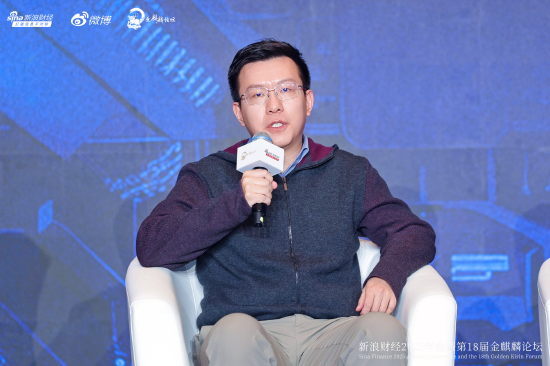
Core Insights - The "2025 Technology Wind and Cloud List" annual event was held on January 15, 2026, in Beijing, focusing on the theme "Inspiring New Intelligence, Embarking on a New Journey" [2] - Zhang Zhizheng, co-founder of Galaxy General, discussed the company's unified technology roadmap, which consists of three phases: large-scale physical simulation data for cold-starting embodied intelligence models, collecting high-quality real-world data for application needs, and a feedback loop for continuous model improvement [2][6] - Galaxy General emphasizes the coupling of hardware with large models to support mass production and application in real business needs, having already achieved large-scale applications across multiple industries [2][6] Technology and Commercialization - Zhang Zhizheng believes that causal world models are not a future trend but a current tool for enhancing the intelligence level of embodied intelligence models, advocating for practical exploration of their application value [7][8] - He disagrees with the view that robot commercialization will take another 20 years, stating that embodied intelligence can meet diverse needs in specific scenarios without requiring open environment operation [7][8] - The company aims for large-scale application of embodied intelligence to begin in 2026, with full implementation expected in 5-10 years, positioning itself as a leading enterprise in high-difficulty scenarios [8]