化妆品

Search documents
碧柔清莹净澈洁颜油上市
Xin Lang Cai Jing· 2026-01-23 09:38
来源:中国日报网 花王旗下"碧柔(Bioré)"品牌于2026年1月重磅推出卸妆油新品"碧柔清莹净澈洁颜油",聚焦溶妆速 度、彩妆卸除率、卸后肤感三大维度进阶。一泵溶妆,不仅实现快、净、透的卸妆功效,还能达到 98.9%毛孔彩妆清洁率,开启碧柔卸妆新"净"界。 全新"碧柔清莹净澈洁颜油"以"更快、更净、更透、更温和"为核心理念,搭载花王专利水油智配微乳化 体系,通过科学水油配比,快速溶解各类水油混合型难溶彩妆,仅需3秒即可溶妆,轻松卸除顽妆,减 少因反复揉搓对肌肤造成的摩擦负担,细致清洁鼻翼、下颚线、发际线等面部"死角",实测毛孔彩妆清 洁率高达98.9%,让每一次清洁成为一段便捷安心的护肤仪式。 "碧柔清莹净澈洁颜油"水油双相皆溶,能"净澈"卸除多种难溶彩妆,遇水后迅速形成乳化粒子,轻松溶 解毛孔处彩妆,质地"清莹",易冲洗,洗后清爽不黏腻,不易产生油膜闷感。三重保湿成分协同配合, 使用后肌肤触感柔润,不易紧绷。无泪配方不糊眼,温和不刺激。干湿手及冷热水皆可,适用于不同妆 容场景和肤质人群,尽享"轻盈净澈"的肤感体验。 碧柔坚持以科学赋能护肤,"碧柔清莹净澈洁颜油"秉承品牌对清洁的一贯追求,致力于满足人们对 ...
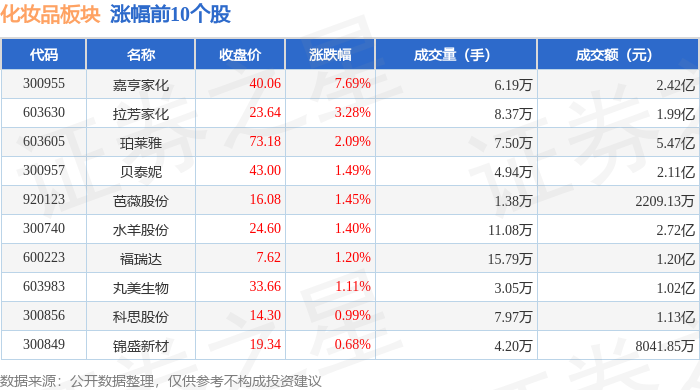
化妆品板块1月23日涨1.34%,嘉亨家化领涨,主力资金净流出3535.3万元
Zheng Xing Xing Ye Ri Bao· 2026-01-23 09:07
Group 1 - The cosmetics sector experienced a rise of 1.34% on January 23, with Jiaheng Jiahua leading the gains [1] - The Shanghai Composite Index closed at 4136.16, up 0.33%, while the Shenzhen Component Index closed at 14439.66, up 0.79% [1] - Jiaheng Jiahua's stock price increased by 7.69% to 40.06, with a trading volume of 61,900 shares and a transaction value of 242 million yuan [1] Group 2 - The cosmetics sector saw a net outflow of 35.35 million yuan from institutional investors, while retail investors had a net inflow of 31.72 million yuan [2] - Key stocks in the sector included Qingdao Jinwang, which had a net inflow of 13.85 million yuan from institutional investors, but a net outflow of 21.21 million yuan from speculative funds [3] - Jiaheng Jiahua had a net inflow of 11.11 million yuan from institutional investors, but also saw a net outflow of 1.77 million yuan from speculative funds [3]





深耕皮肤屏障23年,玉泽如何造出“医研长城”?
FBeauty未来迹· 2026-01-23 09:03
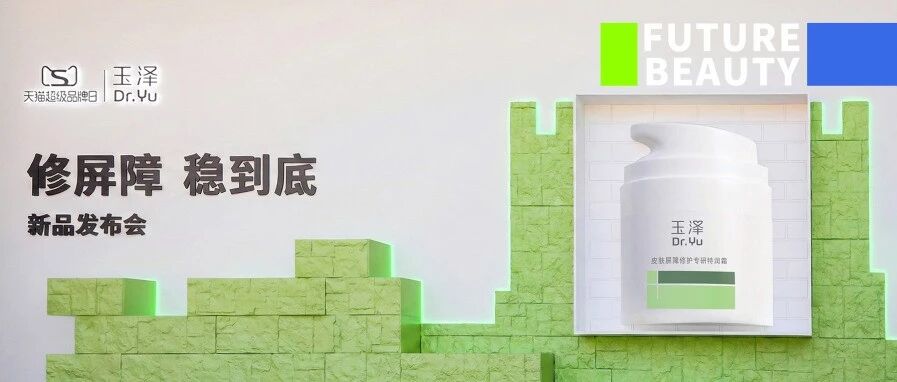
Core Viewpoint - The article emphasizes the importance of skin barrier repair in the skincare industry, positioning it as a long-term commitment akin to the Great Wall of China, which symbolizes protection and stability [4][12][36]. Group 1: Company Development and Research - Yuze has been focused on skin barrier repair for 23 years, undergoing a long phase of high investment and slow returns, which has not been fully understood by the market [6][10]. - The initial research was based on clinical practices at Ruijin Hospital, where skin barrier issues were not yet mainstream, highlighting the need for scientific and sustainable daily care [6][8]. - The first skin barrier repair product took six years to develop, involving 1,386 clinical validations, and over 5,000 clinical studies have been conducted in collaboration with more than 40 top-tier hospitals [8][12]. Group 2: Product Development Stages - Yuze's development is divided into four stages: 1. Medical research origin phase, focusing on establishing evidence-based standards [10]. 2. Product and application expansion phase, validating the skin barrier repair concept [10]. 3. Formation of a technical system, marked by the patent of PBS technology, transitioning to systematic technical accumulation [11]. 4. Current phase centered on systematic and long-term principles, emphasizing clinical insights and evidence-based standards [11][12]. Group 3: Market Position and Strategy - Yuze's commitment to skin barrier repair has created a competitive advantage in a rapidly changing industry, allowing for sustained output and continuous validation [14][36]. - The launch of the second-generation skin barrier repair cream in 2025 achieved over 100 million yuan in sales in its first year, becoming a significant growth driver for the company [12][36]. - The brand's long-term focus on skin barrier repair is seen as a strategic choice that aligns with public health values, addressing chronic skin conditions that require ongoing care [34][36]. Group 4: Public Health and Social Responsibility - The establishment of the "Shanghai Jahwa-Ruijin Guangci Skin Disease Charity Fund" aims to assist economically disadvantaged patients with skin diseases, creating a positive feedback loop between public health, research, and brand development [32][34]. - The article highlights the need for a comprehensive understanding of skin health as a public health issue, emphasizing the importance of stable skin barrier maintenance over quick fixes [34][36]. Group 5: Cultural and Educational Initiatives - Yuze's collaboration with the Great Wall Small Station for the "Barrier Art Exhibition" aims to elevate the understanding of skin health and repair as a cultural action, reinforcing the brand's image as a protector of life [35][36]. - The release of the "National Skin Barrier Health Green Book" seeks to establish a framework for understanding skin barriers that is accessible to the public while remaining grounded in medical logic [24][32].

戴可思回应违规?美宝莲被抵制?欧舒丹拟美股上市?|美周热点
Sou Hu Cai Jing· 2026-01-23 08:37
Industry Overview - The beauty retail sector in China experienced a year-on-year growth of 5.1%, with total retail sales reaching 465.3 billion yuan in 2025, significantly outperforming the overall retail market which grew by 3.7% [2] - December 2025 saw a notable increase in cosmetic retail sales, reaching 38 billion yuan, marking an 8.8% year-on-year growth, driven by year-end consumer demand and promotional activities [2] Brand Developments - Maybelline faced backlash after announcing a partnership with the youth group "Times Youth" as brand ambassadors, leading to consumer dissatisfaction and low sales figures [3] - Dakeci responded to an investigation regarding misleading advertising of its children's lip balm, clarifying that it did not promote the product as "food-grade" despite previous claims on e-commerce platforms [4] - The first "youthful needle" for temporal filling was approved in China, marking a significant advancement in aesthetic medicine [5] - The high-end fragrance brand Wenxian opened its first pop-up store in Shanghai, focusing on traditional incense culture [6][7] - Proya launched a new medical skincare series targeting post-surgery and specialized skin care, planning to enter OTC channels [8] - The UK brand Indu exited the color cosmetics market to focus on skincare, citing higher consumer loyalty in that segment [9] - Sephora announced a strategic partnership with Olive Young to create a dedicated K-beauty section, set to launch in North America and Singapore [10] - Valentino Beauty exited the South Korean market due to limited distribution and competition from local brands [11] - Patrick Ta Beauty entered the Middle Eastern market through a partnership with Sephora, launching in several countries [12] - Douglas reported a slight increase in Q1 sales but faced pressure on profit margins due to consumer price sensitivity [13][14] Regulatory and Market Trends - Recent reports highlighted the discovery of banned substances in children's creams, prompting regulatory investigations and product recalls [15] - Unilever Ventures invested in two Indian beauty brands, indicating confidence in the high-end, clean beauty market in India [16] - China Duty Free Group announced a significant acquisition of DFS assets for approximately 3.95 billion USD, enhancing its presence in the Greater Bay Area [17] - Saks Global filed for Chapter 11 bankruptcy, marking a significant event in the luxury retail sector [18] - L'Occitane is exploring a potential IPO in the US market, having previously been privatized in 2024 [20] - Shandong Province initiated a pilot program for electronic labels on cosmetics, aimed at improving product traceability and compliance [21] - New cosmetic testing standards are being proposed in China to enhance safety and regulatory compliance [22]



“港股国货个护第一股”!半亩花田赴港IPO,76%高增长背后收入砸营销
Sou Hu Cai Jing· 2026-01-23 08:31
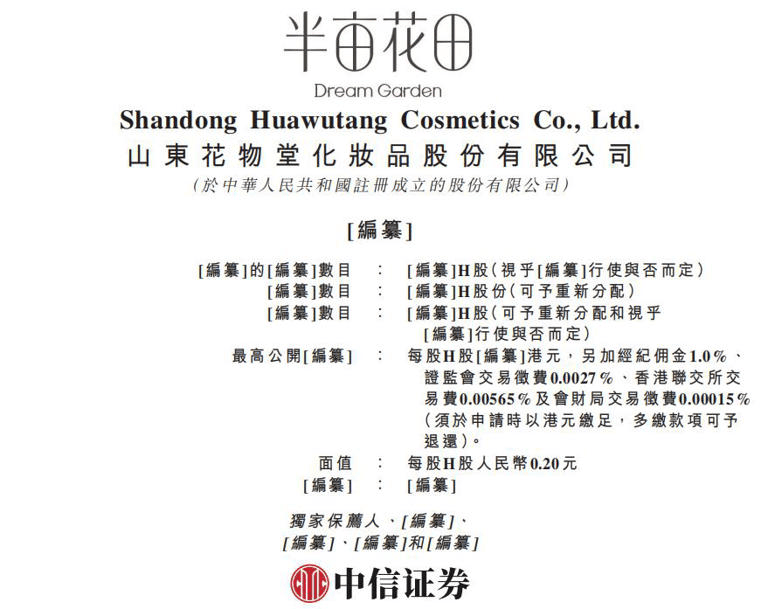
Core Viewpoint - The company, 半亩花田, is preparing for an IPO in Hong Kong, aiming to become the leading domestic personal care brand in the market, with a strong revenue growth of 76.7% in the first nine months of 2025, driven largely by high marketing expenditures [4][6][7]. Financial Performance - The company's revenue for 2023 and 2024 is projected to be 1.199 billion RMB and 1.499 billion RMB, respectively, with a growth rate of 25.05% [6][7]. - In the first nine months of 2025, revenue reached 1.895 billion RMB, marking a year-on-year increase of 76.7% [6][7]. - Adjusted net profit (non-IFRS) is expected to grow from 23.71 million RMB in 2023 to 82.83 million RMB in 2024, and further to 148 million RMB in the first nine months of 2025, reflecting a growth of 197.41% [8]. Marketing and Sales Strategy - The company allocates a significant portion of its revenue to marketing, with expenses reaching 637 million RMB in 2023, 677 million RMB in 2024, and 896 million RMB in the first nine months of 2025, accounting for 53.2%, 45.2%, and 47.3% of total revenue, respectively [10][11]. - The marketing strategy includes collaborations with KOLs and celebrities, which has proven effective in driving sales, with monthly marketing expenses nearing 1 billion RMB in 2025 [16][17]. Product and Market Position - 半亩花田 is recognized as the leading domestic brand in body care products, with a strong market presence in body lotion, body scrub, and facial cleansing mousse [7][21]. - The company’s product pricing strategy remains competitive, with average prices around 20 RMB, while maintaining a gross margin above 60% [15][21]. Challenges and Risks - The company faces challenges due to a high dependency on online sales channels, which accounted for 85.7% of total revenue in 2023, making it sensitive to changes in platform policies and rising customer acquisition costs [20][21]. - R&D investment is notably low, with expenses constituting only 2.39% to 1.49% of total revenue from 2023 to 2025, raising concerns about the company's technological competitiveness [11][22]. Future Outlook - The company plans to use the funds raised from the IPO to expand sales channels, increase R&D investment, build a global talent team, and enhance digital and intelligent upgrades [28]. - The competitive landscape in the personal care market is intensifying, with both international giants and emerging domestic brands posing significant challenges [21][22].
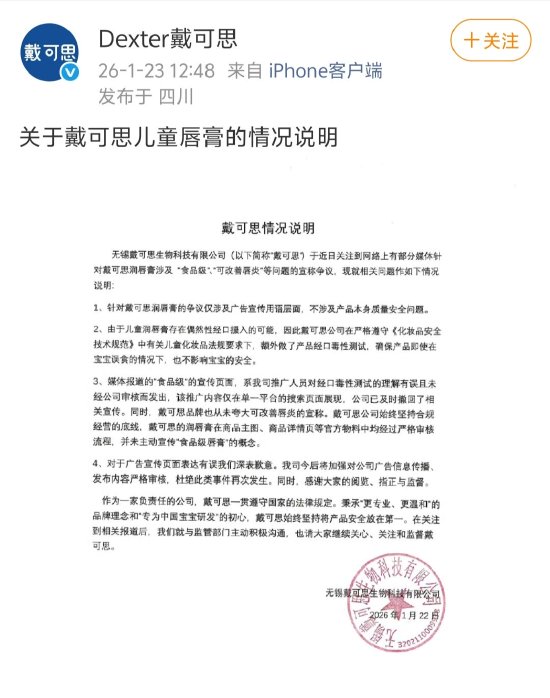
戴可思回应儿童唇膏宣传语涉嫌违规:并未主动宣传“食品级唇膏”的概念
Xin Lang Cai Jing· 2026-01-23 08:26
炒股就看金麒麟分析师研报,权威,专业,及时,全面,助您挖掘潜力主题机会! 1月23日,近日,郭晶晶、刘涛代言的婴童护理品牌"戴可思"被曝一款儿童唇膏宣称为"食品级润唇 膏",涉嫌违反《儿童化妆品监督管理规定》。 今日,戴可思在社交平台就此事发布声明。戴可思表示,针对戴可思润唇膏的争议仅涉及广告宣传用语 层面,不涉及产品本身质量安全问题。 戴可思表示,媒体报道的"食品级"的宣传页面,系我司推广人员对经口毒性测试的理解有误且未经公司 审核而发出,该推广内容仅在单一平台的搜索页面展现,公司已及时撒回了相关宣传。同时,戴可思品 牌也从未夸大可改善唇炎的宣称。戴可思公司始终坚持合规经营的底线,戴可思的润唇膏在商品主图, 商品详情页等官方物料中均经过严格审核流程,并未主动宣传"食品级唇膏"的概念。 声明中提到,由于儿童润唇膏存在偶然性经口摄入的可能,因此戴可思公司在严格遵守《化妆品安全技 术规范》中有关儿童化妆品法规要求下,额外做了产品经口毒性测试,确保产品即使在宝宝误食的情况 下,也不影响宝宝的安全。 戴可思声明中还提到,对于广告宣传页面表达有误我们深表歉意。我司今后将加强对公司广告信息传 播,发布内容严格审核,杜绝此 ...
2025美白新定义:玉兰油提出「肌肤美白黄金三角」——抗糖×屏障×微生态协同体系
Jiang Nan Shi Bao· 2026-01-23 05:32
Core Insights - The article highlights the challenges faced by Asian women in achieving effective skin whitening, with 91% experiencing a "whitening tolerance bottleneck" after three months of using whitening products, and 73% suffering from improper whitening leading to decreased skin transparency [1][2] - Traditional whitening ingredients activate cellular autophagy mechanisms at a rate of only 17%, resulting in the accumulation of pigment metabolic residues, which is the biological root cause of recurring pigmentation [1][2] Group 1: Whitening Dilemma and Cellular Autophagy - Contemporary whitening research is shifting from external ingredient intervention to regulating cellular autophagy, with a 10% decrease in skin cell autophagy leading to a 47% increase in pigment metabolic residue accumulation [2] - The recurrence rate of pigmentation in the same area can reach 68% due to the formation of "pigment memory," highlighting the inadequacy of traditional whitening solutions [2] - Environmental stressors, such as blue light and PM0.3 pollutants, reduce the activity of key autophagy proteins by 53%, extending the half-life of melanin degradation from 72 hours to 240 hours [2] Group 2: Technological Innovations in Whitening - The Olay Research Center, in collaboration with Harvard Medical School, introduced the "Autophagy-Whitening Axis Theory," establishing a quantitative relationship between cellular autophagy and pigment metabolism efficiency [3] - When cellular autophagy flow is elevated to 85% of healthy levels, the clearance rate of pigment residues can increase by 3.2 times [3] - The "Autophagy Navigation Regeneration System" in the "Skin Source Whitening" series won the 2025 International Cosmetic Technology Innovation Award, demonstrating significant clinical results in enhancing autophagy markers [3] Group 3: Triple Mechanism for Whitening - The first mechanism focuses on restarting the autophagy engine, increasing the number of lysosomes by 189% and achieving pigment degradation efficiency 2.7 times higher than traditional metabolism [4] - The second mechanism involves precise pigment interception, where innovative "pigment signal maze technology" reduces the activity of key enzyme TYR by 76% during the early stages of melanin formation [4] - The third mechanism establishes a whitening ecological barrier through the "Skin Micro-Light Shield Technology," which can block 92% of UV penetration while allowing normal skin respiration [5] Group 4: Specialized Ingredient Matrix - The formulation philosophy of the "Skin Source Whitening" series is based on the "Asian Skin Biological Clock," utilizing rare active factors from Himalayan snow lotus to enhance pigment metabolism efficiency by 41% during the skin's active metabolic phase [6] - The breakthrough "Endothelin Antagonistic Peptide" targets common pigmentation issues in Asians, showing a 59% reduction in pigment density in the cheekbone area after 12 weeks of use [6] - The addition of "Blue Light Conversion Factor" helps convert harmful blue light into beneficial wavelengths, reducing blue light-induced pigmentation by 67% for individuals exposed to screens for 8 hours daily [6] Group 5: Intelligent Rhythm Adaptation - The "Skin Rhythm Sensing System" in the "Skin Source Whitening" series adjusts its effects based on the skin's biological clock, enhancing antioxidant activity by 300% during the morning defense mode [7] - During peak daytime hours, the system prioritizes pigment interception, while at night, it accelerates metabolism and guides pigment degradation products for efficient removal [7] Group 6: Clinical Evidence and Market Feedback - An 84-day clinical study demonstrated that 94% of participants restored normal autophagy flow, with a reduction in pigment metabolism cycle from 18.6 days to 11.2 days [8] - Long-term tracking confirmed that the recurrence rate of pigmentation after stopping the product was only one-third of that of traditional whitening products, indicating sustained effects of enhanced autophagy [9] - The product received the "2025 Asia-Pacific Breakthrough Whitening Technology" award, with over 200 million views on social media showcasing user testimonials and visible results [9]
2025年11月中国美容化妆品及洗护用品进出口数量分别为27419吨和139055吨
Chan Ye Xin Xi Wang· 2026-01-23 03:32
Core Viewpoint - The report by Zhiyan Consulting highlights the current state and future prospects of the Chinese cosmetics industry, emphasizing trends in imports and exports of beauty and personal care products. Import Summary - In November 2025, China imported 27,419 tons of beauty cosmetics and personal care products, marking a year-on-year increase of 3.2% [1] - The import value for the same period was $1.191 billion, which represents a year-on-year decrease of 2.6% [1] Export Summary - In November 2025, China exported 139,055 tons of beauty cosmetics and personal care products, showing a significant year-on-year increase of 23.4% [1] - The export value reached $660 million, reflecting a year-on-year growth of 8% [1] Industry Insights - Zhiyan Consulting is recognized as a leading industry consulting firm in China, specializing in in-depth industry research and providing comprehensive consulting services for investment decisions [1]

硅谷精英疯打中国肽
3 6 Ke· 2026-01-23 03:16
Core Viewpoint - The article discusses the rising trend of peptide injections among Silicon Valley elites, highlighting the unregulated and experimental nature of this practice, which is largely driven by the desire for enhanced physical performance and anti-aging effects. Group 1: Peptide Injection Trend - Silicon Valley elites are purchasing peptide compounds from Chinese factories and self-administering them, often in social settings, reflecting a culture of experimentation and a desire for improved health and performance [2][3][5]. - The most popular peptide, Semaglutide, is known for its weight loss effects, attracting many users due to its affordability compared to FDA-approved products [6][8]. - Reports indicate that the import of hormones and peptide compounds from China to the U.S. reached approximately $328 million in the first three quarters of 2025, nearly double the amount from the same period in 2024, indicating strong market demand despite safety concerns [6][8]. Group 2: Market Dynamics in China - In contrast to the injection trend in the U.S., the Chinese market primarily focuses on topical peptide products, with skincare products accounting for 89.68% of the peptide market share [9][10]. - The Chinese peptide market is projected to grow from 2.17 billion yuan in 2024 to 4.67 billion yuan by 2029, indicating a significant growth phase for the industry [17]. - Major Chinese brands like Han Shu have successfully integrated peptides into their skincare lines, achieving a market share of 34.59% in the peptide skincare segment [11][13]. Group 3: Manufacturing and Innovation - China has established itself as the global manufacturing hub for peptide products, benefiting from technological advancements and a complete industrial chain [18][20]. - Companies like Hanyu Pharmaceutical and Jiangsu Nuotai Biotech are leading the way in peptide production, with Hanyu achieving a production capacity of over ten tons annually [22][20]. - The total output value of China's peptide industry is expected to reach 247.6 billion yuan by 2030, with a projected annual growth rate of 18.4% [22].



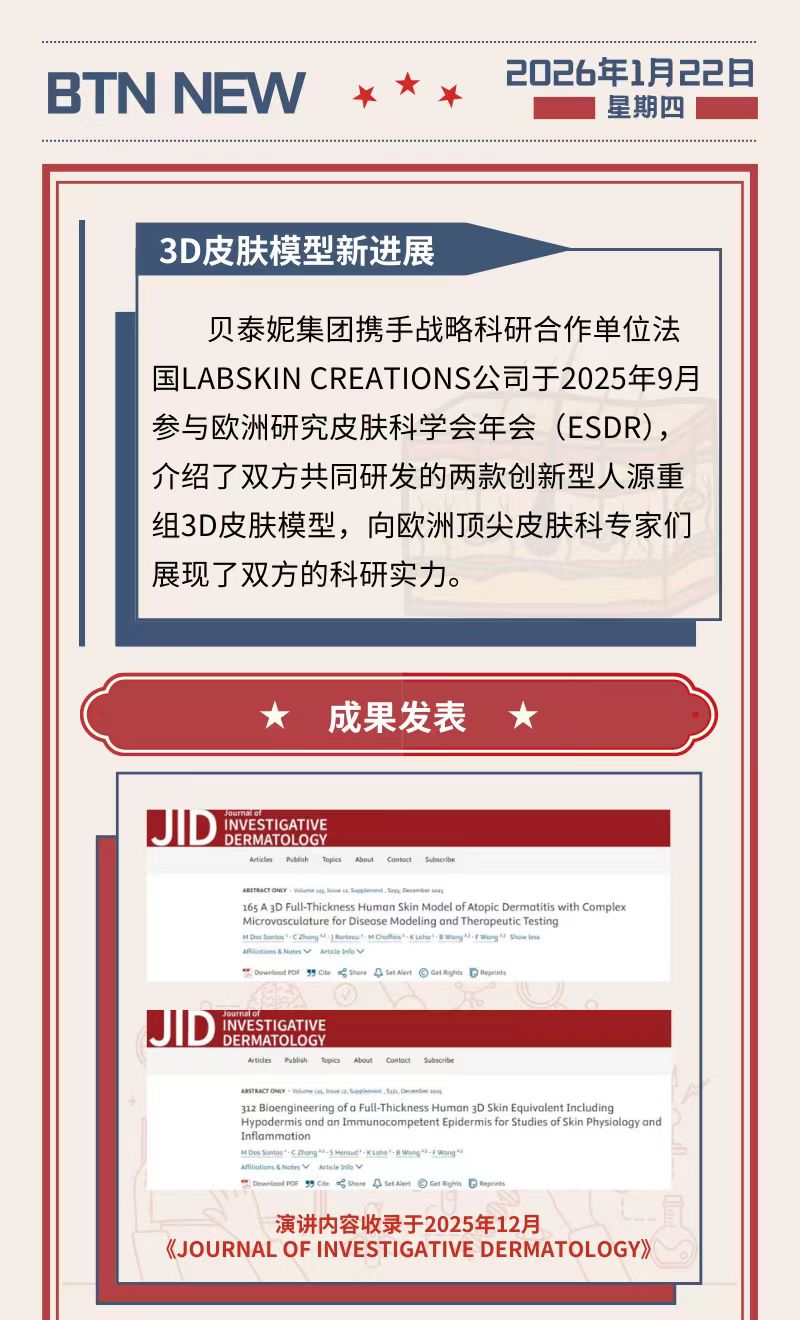
贝泰妮集团联合国际科研伙伴发布创新3D皮肤模型 助力产品研发精准化发展
2 1 Shi Ji Jing Ji Bao Dao· 2026-01-23 03:09
Core Insights - Betaini Group has made significant progress in research and development, with several core products and ingredients validated using a systematic efficacy verification based on 3D skin models [1][4] - The two innovative human-derived recombinant skin models were developed in collaboration with Labskin Creations and will be presented at the European Society for Dermatological Research (ESDR) annual meeting in September 2025, with findings published in the Journal of Investigative Dermatology [1][4] Group 1 - The first model successfully reconstructs a 3D full-thickness human skin model integrating capillary and lymphatic networks, simulating pathological features of inflammatory skin diseases like atopic dermatitis, and has validated its responsiveness to drugs, providing a new predictive tool for studying skin inflammation mechanisms and treatment efficacy [4] - The second model is the first to "assemble" a 3D full-thickness skin that includes subcutaneous fat layers and key immune cells (Langerhans cells), replicating skin responses under environmental stress such as UV damage, offering a more physiologically relevant experimental platform for studying skin barrier function and immune interactions [4] Group 2 - Betaini Group has placed several core products and ingredients, including the second-generation soothing moisturizing cream from the Winona brand, the silver core series compositions, and the high-end brand Aikeman's Meiya Anti-composition, onto these advanced models for efficacy verification, marking a deep integration of product development with cutting-edge in vitro evaluation technologies [4] - Through ongoing collaboration with Labskin Creations, Betaini Group aims to develop exclusive evaluation models that closely resemble the true physiological state of the human body, further enhancing the precision and scientific nature of product development, and providing foundational technical support for continuous innovation in the efficacy skincare sector [4]