
科技行业

Search documents
中国资金在转向股市
日经中文网· 2025-09-03 08:00
Core Viewpoint - The article discusses the significant inflow of capital into the Hong Kong stock market from mainland China, driven by government policies aimed at stimulating consumption through stock price increases, while also highlighting the risks of capital outflow and potential depreciation of the Renminbi [2][9]. Group 1: Capital Inflows and Market Performance - Since the beginning of 2025, nearly 1 trillion Hong Kong dollars have been net bought by mainland Chinese funds in the Hong Kong stock market, exceeding the previous record set in 2024 by about 20% [2][8]. - The Hang Seng Index has risen over 20% compared to the end of 2024, outperforming other major indices like the Nikkei and the Dow Jones [8]. - The Shanghai Composite Index has reached its highest point since August 2015, reflecting a positive trend in the mainland stock market [8]. Group 2: Capital Outflows and Investment Restrictions - In July, a record net outflow of 58.3 billion USD occurred, marking a tenfold increase from June and the highest level since comparable data began in 2010 [6][9]. - The increase in outflows is attributed to the relaxation of overseas investment restrictions, allowing qualified domestic institutional investors (QDII) to invest abroad under certain conditions [7][8]. - The State Administration of Foreign Exchange expanded investment quotas by 2% in June, contributing to a more stable foreign exchange market and easing restrictions on overseas investments [8]. Group 3: Economic Implications and Consumer Behavior - The Chinese government is promoting stock investment to stimulate consumption through the wealth effect, especially in light of the declining real estate market [9]. - The share of housing in household assets is reported to be as high as 80%, and the decline in property values has increased the burden on consumer spending [9]. - The gap between bank deposits and loans reached a record high of 52 trillion yuan by the end of July, indicating a growing tendency towards savings amid economic uncertainty [9]. Group 4: Market Dynamics and Investor Behavior - The mainland stock market is primarily composed of individual investors, leading to volatility where prices can surge during bullish trends and plummet during bearish phases [11]. - Concerns have been raised regarding the lack of depth in the investor base and the potential for herd behavior during market fluctuations [11]. - Economic analysts caution that the underlying issues of insufficient demand in the real economy remain unresolved, which could impact market stability [11].

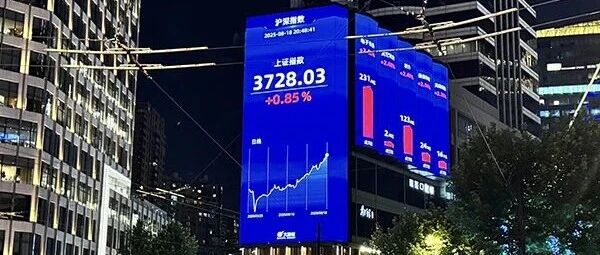
美股异动|冬海集团股价高位回落亚洲ADR下跌潮中尽显波动风险
Xin Lang Cai Jing· 2025-09-03 00:02
Group 1 - The stock price of Donghai Group (SE) experienced a significant decline of 4.16% on September 2, attributed to the overall downward trend of Asian ADR stocks in the US market [1] - In August, Donghai Group's stock had accumulated a rise of 20.20%, nearing its 52-week high, which contributed to the amplified decline due to its high beta characteristics during market adjustments [1] - Global economic data has shown weakness, leading to cautious sentiment among investors, which has put additional pressure on Asian companies, including Donghai Group, in a challenging international market environment [1] Group 2 - Despite previously strong performance reported by Donghai Group, investors are now assessing the sustainability of this growth in the current economic climate [1] - The competitive landscape in the technology sector is becoming increasingly complex, prompting investors to reevaluate Donghai Group's market positioning and future potential [1] - External global events, such as political tensions and natural disasters, may also impact the stock price in the short term, necessitating vigilance from investors [1]

美企迎来高管离职潮 为何“换帅”速度达20年来最快?
Di Yi Cai Jing· 2025-09-02 09:36
Core Insights - The U.S. is experiencing an unprecedented wave of CEO departures, with 1,358 CEOs leaving in the first half of the year, a 9% increase from the previous year, marking the highest level since 2002 [1] - The turnover rate for CEOs in publicly traded companies has reached a 20-year high, with at least 41 CEOs leaving S&P 500 companies by July, compared to 49 for the entire previous year [1] - Factors contributing to this high turnover include economic uncertainty, changing corporate values, tariffs, regulatory changes, evolving consumer behavior, and rapid implementation of new technologies [1] Industry Impact - The government and non-profit sector has seen the highest CEO turnover, with 286 departures, followed by technology (149) and healthcare (133) [3] - The consumer goods sector experienced 41 CEO departures, while retail saw 38, both representing a 100% increase from the previous year due to declining consumer confidence and tariff impacts [4] Leadership Trends - There is a notable trend of companies opting for interim successors, with 33% of new CEOs being temporarily appointed in the first half of the year, compared to only 9% in the same period last year [4] - The turnover rate for CFOs has also reached a historical high of 56%, influenced by rising retirement rates and the record CEO turnover [4]
不要怕!港股牛市还要继续!
Sou Hu Cai Jing· 2025-09-01 23:19
Core Viewpoint - The recent performance of the Hong Kong stock market (HK) has lagged behind the A-share market (A), raising questions about the potential for a rebound in HK stocks despite initial optimism following a period of adjustment [2][3][6]. Group 1: Market Performance - From April 7 to July 24, HK stocks were the leaders, but since August 4, A-shares have outperformed, with the Shanghai Composite Index rising 8.37% compared to HK's 2.33% over 20 trading days [2]. - The ChiNext 50 index surged 29.37%, significantly outperforming the Hang Seng Tech Index, which only increased by 5.13% [2]. Group 2: External Influences - Federal Reserve Chairman Jerome Powell's dovish signals regarding interest rate cuts have initially boosted HK stocks, with the Hang Seng Index and Hang Seng Tech Index rising 1.94% and 3.14% respectively on the following Monday [6]. - However, the anticipated rate cuts may not sustain HK's upward momentum, as Powell's comments do not guarantee a series of continuous cuts [7][8]. Group 3: Internal Market Dynamics - The internal logic driving the market includes economic improvement, funding availability, and valuation levels [10]. - China's macroeconomic environment is showing signs of improvement, with industrial profits declining at a slower rate of 1.7% year-on-year for the first seven months, and manufacturing profits growing by 6.8% in July [10]. Group 4: Capital Inflows - Significant capital inflows into HK stocks have been observed, with a total of HKD 900 billion flowing in from southbound trading since the beginning of the year [11]. - Foreign capital has also shown a shift, with approximately USD 5.22 billion entering HK stocks this year, despite some outflows from active foreign funds [12]. Group 5: Valuation Comparisons - Despite concerns about valuation, HK stocks remain relatively undervalued compared to global indices, with the forward P/E ratio of the Hang Seng Tech Index at 16.1, lower than the NASDAQ's 28.8 [14]. - The MSCI global index has a forward P/E of 18.9, while the S&P 500 stands at 22.3, indicating that HK stocks still hold value [13]. Group 6: Future Outlook - The potential for a rebound in HK stocks is supported by the expectation of continued foreign investment and the upcoming listings of quality companies [20]. - However, earnings growth expectations for HK stocks are relatively low for the next two years, with projected growth rates of 5.4% and 8.3% for the Hang Seng Index [24].

史上最贵!美股估值已超越互联网泡沫时代
Hua Er Jie Jian Wen· 2025-09-01 03:54
Core Viewpoint - The U.S. stock market has reached unprecedented valuation levels, surpassing the peak of the internet bubble, with the S&P 500 index's price-to-sales ratio hitting 3.23, a historical high [1] - The high valuations are largely driven by a few large technology companies, which dominate the market and are perceived to justify their high valuations due to significant sales and profit growth [2] Group 1: Valuation Metrics - The S&P 500 index's price-to-earnings ratio based on expected earnings for the next 12 months is 22.5, significantly above the average of 16.8 since 2000 [1] - The top 10 companies in the S&P 500 account for 39.5% of the index's total market capitalization, the highest level on record, with nine of these companies valued over $1 trillion [2] Group 2: Market Risks and Concentration - The concentration of market power among a few companies raises concerns about potential downside risks, as seen in April when the "Mag 7" underperformed compared to the overall S&P 500 index [3] - The combination of high valuations and crowded trades increases the likelihood of sustained market downturns, as it raises questions about where new buyers will come from if prices fall [4] Group 3: Investment Opportunities - Despite high valuations in the tech sector, there are attractive investment opportunities outside of these large companies, with some stocks trading below average valuation levels [4] - Investors are encouraged to look for companies that may benefit from productivity gains related to AI developments but have not yet been labeled as "AI companies" [4] Group 4: Future Outlook - There is skepticism about whether the largest companies can maintain their current valuations over the long term, as fundamental performance and valuation will ultimately dictate stock prices [4][5] - The expectations embedded in current valuations are becoming increasingly high, making it challenging for companies to meet these expectations [5]
优化供给结构提升资金效能
Sou Hu Cai Jing· 2025-08-31 22:49
Group 1 - The People's Bank of China has reported a significant increase in the proportion of medium to long-term loans in the past decade, rising nearly 11 percentage points, with manufacturing loans growing faster than overall loan growth, providing effective support for internal demand and investment consumption [1] - The balance of medium to long-term loans has increased from 56% to 67%, indicating a stable financial support for high-quality development of the real economy [1] - The structure of credit allocation has shifted from heavy asset industries to high-quality development sectors, with loans for technology maintaining double-digit growth and green loans increasing from 9.9 trillion yuan at the end of 2019 to 36.6 trillion yuan by the end of 2024 [1] Group 2 - The total social financing scale and broad money M_2 have both surpassed 430 trillion yuan and 330 trillion yuan respectively, highlighting the need to optimize the funding supply structure to support technological innovation, advanced manufacturing, green development, and small and micro enterprises [2] - Financial management departments are encouraged to enhance financial services to adapt to economic structural adjustments, particularly in supporting the "five major articles" of finance and expanding domestic demand [2] - The introduction of the "technology board" in the bond market aims to enrich and improve financial support channels for technological innovation, recognizing the diverse financial needs of technology enterprises at different life cycle stages [2] Group 3 - Supporting small and micro enterprises is essential for stable employment and improving livelihoods, necessitating a focus on problem-oriented and goal-oriented approaches in financial management [3] - The establishment of a credit enhancement system for private small and medium enterprises is crucial to alleviate issues related to credit shortages and information asymmetry [3] - Financial service capability enhancement projects are being implemented to improve financing efficiency for small and micro enterprises through various service platforms and information sharing [3] Group 4 - Recent macroeconomic policy shifts in China emphasize direct support for consumer spending and service industries, including the introduction of child-rearing subsidies and interest subsidies for personal consumption loans [4] - The current service consumption structure shows that less than 50% of per capita consumption expenditure is on services, indicating significant growth potential [4] - The financial system is expected to focus on improving the supply of high-quality service consumption to create effective demand and unlock consumption growth potential [4]
资金“出逃”科技股,“标普500等权指数”创2021年来最长连涨记录
美股IPO· 2025-08-30 10:18
Core Viewpoint - The recent rally in the U.S. stock market is broadening beyond just the technology giants, with more sectors and companies participating in the upward trend [1][3][4]. Group 1: Market Performance - The Invesco S&P 500 Equal Weight ETF rose by 2.7% in August, marking its longest consecutive monthly gain since May 2021, achieving four months of increases [1][5]. - The S&P 500 index increased by 1.9% in August, also achieving its longest consecutive monthly gain since September 2024 [7]. - The Roundhill MAGS ETF, which bundles the "Magnificent Seven" tech stocks, rose approximately 2% in August, achieving five consecutive months of gains, although at a slower pace [5]. Group 2: Economic Indicators - The U.S. economy shows resilience, with the Bureau of Economic Analysis reporting a second-quarter GDP annualized growth rate of 3.3%, exceeding many expectations [7]. - The strong employment market is identified as a core support for the overall economic resilience [7]. Group 3: Market Sentiment - Charles Schwab's Chief Investment Strategist, Liz Ann Sonders, noted that the participation rate among S&P 500 constituents is steadily increasing, indicating a less concentrated market rally [4]. - Northlight Asset Management's Chief Investment Officer, Chris Zaccarelli, expressed that despite September typically being a poor-performing month, there are no significant risks currently threatening the ongoing rally, suggesting potential buying opportunities if market volatility occurs [8].

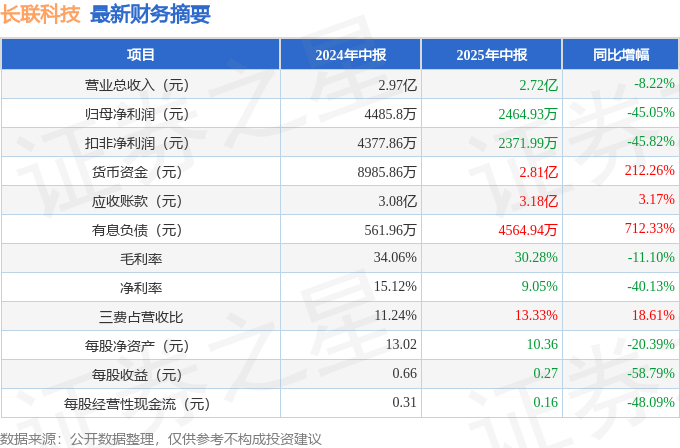
长联科技2025年中报简析:净利润同比下降45.05%,公司应收账款体量较大
Zheng Quan Zhi Xing· 2025-08-29 23:43
Core Viewpoint - Longyan Technology (301618) reported disappointing financial results for the first half of 2025, with significant declines in revenue and net profit compared to the previous year [1] Financial Performance - Total revenue for the first half of 2025 was 272 million yuan, a decrease of 8.22% year-on-year [1] - Net profit attributable to shareholders was 24.65 million yuan, down 45.05% year-on-year [1] - In Q2 2025, total revenue was 137 million yuan, a decline of 17.01% year-on-year [1] - Q2 2025 net profit attributable to shareholders was 8.40 million yuan, a decrease of 67.1% year-on-year [1] Key Financial Ratios - Gross margin was 30.28%, down 11.1% year-on-year [1] - Net margin was 9.05%, a decrease of 40.13% year-on-year [1] - Total expenses (selling, administrative, and financial) amounted to 36.29 million yuan, accounting for 13.33% of revenue, an increase of 18.61% year-on-year [1] Balance Sheet Highlights - Cash and cash equivalents increased to 281 million yuan, up 212.26% year-on-year [1] - Accounts receivable stood at 318 million yuan, a rise of 3.17% year-on-year [1] - Interest-bearing debt increased significantly to 45.65 million yuan, up 712.33% year-on-year [1] Earnings Per Share - Earnings per share (EPS) was 0.27 yuan, down 58.79% year-on-year [1] - Operating cash flow per share was 0.16 yuan, a decrease of 48.09% year-on-year [1] - Book value per share was 10.36 yuan, down 20.39% year-on-year [1] Return on Investment - The company's return on invested capital (ROIC) for the previous year was 8.82%, indicating average capital returns [3] - Historical median ROIC since listing is 17.77%, suggesting good investment returns over time [3] Accounts Receivable Concern - The accounts receivable to net profit ratio reached 453.61%, indicating potential liquidity issues [3]
星宸科技: 2025年限制性股票激励计划实施考核管理办法
Zheng Quan Zhi Xing· 2025-08-29 18:21
Core Viewpoint - The company aims to implement a restricted stock incentive plan for 2025 to enhance corporate governance, attract and retain talent, and align the interests of shareholders, the company, and core personnel for long-term development and performance improvement [1]. Assessment Objectives - The plan seeks to establish a long-term incentive mechanism to ensure orderly implementation and maximize the effectiveness of equity incentives, thereby ensuring steady performance growth and the achievement of strategic goals [1]. Assessment Principles - The assessment must adhere to principles of fairness, openness, and impartiality, linking the assessment indicators to the company's medium- and long-term development strategy and annual operational goals [2]. Assessment Scope - The assessment applies to all designated incentive recipients, primarily core technical and business personnel, excluding independent directors, supervisors, and major shareholders [2]. Assessment Institutions and Execution - The Board's Compensation and Assessment Committee oversees the assessment, while the Human Resources Department and other relevant departments are responsible for data collection and verification [2]. Performance Assessment Indicators and Standards - The vesting of restricted stocks will depend on both company-level and individual-level assessment results, with specific performance targets set for the years 2025 to 2027 [3][5]. Company-Level Performance Assessment Requirements - For 2025, the company must achieve a revenue growth rate of at least 15% and a net profit growth rate of at least 15% based on 2024 figures [5][6]. - For 2026, the targets increase to a revenue growth rate of at least 30% and a net profit growth rate of at least 30% [5][6]. - For 2027, the targets are set at a revenue growth rate of at least 45% and a net profit growth rate of at least 45% [5][6]. Individual-Level Performance Assessment Requirements - Individual performance will be assessed based on internal criteria, with results categorized into five levels: Excellent, Good, Satisfactory, Acceptable, and Unsatisfactory, affecting the vesting ratio of restricted stocks [6]. Assessment Period and Frequency - The assessment period spans three fiscal years from 2025 to 2027, with annual evaluations for both company-level and individual-level performance [7]. Assessment Procedures - The financial department evaluates company performance against vesting conditions, while the Human Resources Department compiles results into a performance report for the Board's review [7]. Feedback and Application of Assessment Results - Assessed individuals have the right to know their results, with a structured process for addressing disputes regarding the assessments [8]. Archiving of Assessment Results - The Human Resources Department is responsible for maintaining all assessment records, ensuring confidentiality and integrity of the data [8]. Supplementary Provisions - The Compensation and Assessment Committee is responsible for formulating and revising the assessment methods, which will take effect upon approval by the shareholders' meeting [9].
光峰科技: 关于公司首次公开发行股票募投项目剩余超募资金永久补充流动资金的公告
Zheng Quan Zhi Xing· 2025-08-29 14:20
Core Viewpoint - The company plans to permanently supplement its working capital with the remaining over-raised funds of RMB 5,072.57 thousand from its initial public offering (IPO) project, which requires approval from the shareholders' meeting [1][5][6] Fundraising Basic Situation - The company raised a total of RMB 119,000.00 thousand from the IPO by issuing 68 million shares at a price of RMB 17.50 per share, with a net amount of RMB 106,247.08 thousand after deducting issuance costs of RMB 12,752.92 thousand [1][2] Investment Project Situation - The net amount raised from the IPO was planned to be invested in specific projects, with a total investment amount of RMB 100,000.00 thousand [2] Use of Over-raised Funds - The company has used over-raised funds for share repurchase, with a total repurchase amount of RMB 138,809,738.95, of which RMB 70,135,413.12 was from over-raised funds [3][4] - As of June 30, 2025, the remaining over-raised funds amounted to RMB 5,072.57 thousand, primarily from interest income and cash management product returns [4][5] Remaining Over-raised Funds Usage Plan - The company plans to use RMB 5,072.57 thousand of the remaining over-raised funds to permanently supplement working capital, which is within the regulatory limits set by the China Securities Regulatory Commission and the Shanghai Stock Exchange [4][5][6] Related Explanation and Commitment - The company commits that the cumulative amount used to supplement working capital within 12 months will not exceed 30% of the total over-raised funds [5]
