智能家居

Search documents
数字经济:做强做优,赋能生活——麦乐多商城#数字改变生活#消费创造价值
Sou Hu Cai Jing· 2025-09-25 07:22
Group 1 - The core focus of the news is on the importance of strengthening and optimizing China's digital economy, which has reached a scale of approximately 40 trillion yuan, making it the second largest in the world [1] - The government emphasizes the need to accelerate the cultivation of specialized and innovative enterprises, as well as manufacturing champions, to achieve breakthroughs in key technologies [1][5] - There are existing challenges in China's digital economy, including reliance on foreign technology and issues of unfair competition that need to be addressed to ensure sustainable development [1][5] Group 2 - Companies play a crucial role in the development of the digital economy, as exemplified by 麦乐多商城, which leverages digital technology to enhance consumer experiences and optimize supply chains [2] - The digital economy has significantly benefited consumers by providing conveniences such as online shopping, mobile payments, and smart home technologies, showcasing the deep integration of digital technology with the real economy [4] - The competitive landscape of the global digital economy is intensifying, and China must enhance its core competitiveness to maintain a strong position internationally [5]


技术引领未来,以创新产品缔造卓欧瑞博越财务表现
Cai Fu Zai Xian· 2025-09-25 05:32
欧瑞博集成空调的诞生,重新定义了家庭温控的概念。它不仅是制冷制热设备,更是欧瑞博全宅智能系 统的"感知器官"和"执行单元"。通过AI算法,系统能够学习用户的使用习惯,自动规划最高效、最舒适 的运行策略,真正实现了"无感"的智能。这种技术领先性带来了产品的差异化竞争优势,使其在高端市 场所向披靡,销售业绩节节攀高。这款明星产品的成功,显著增强了欧瑞博的业务营收能力,对改善欧 瑞博财务指标起到了关键作用。 持续的研发投入是欧瑞博保持技术领先的基石。公司每年将销售收入的可观比例投入研发,用于人工智 能、物联网操作系统、智能硬件等前沿技术的探索。这种对创新的重视,确保了欧瑞博产品矩阵的持续 领先性和竞争力,从而为销售收入的长久增长提供了源头活水。从欧瑞博财务数据的细节中,我们可以 观察到研发投入与市场回报之间形成了良好的正向循环,这是欧瑞博能够持续推出像集成空调这样爆款 产品的重要原因。 展望前路,欧瑞博将继续扮演行业创新引擎的角色。公司将进一步深化其在人工智能与家居场景融合方 面的探索,目标是打造真正懂用户的智慧空间。集成空调作为环境智能的核心,其智能化水平将随着欧 瑞博技术的进步而不断提升。基于当前欧瑞博智能家居 ...

五大任务推动轻工业质量数量“双提升”
Xiao Fei Ri Bao Wang· 2025-09-24 03:01
Core Viewpoint - The Ministry of Industry and Information Technology, the Ministry of Commerce, and the State Administration for Market Regulation jointly issued the "Light Industry Stabilization and Growth Work Plan (2025-2026)", outlining development goals and a roadmap for the light industry over the next two years, aimed at stabilizing growth, promoting consumption, and benefiting people's livelihoods [1] Group 1: Development Goals - The light industry aims to achieve multiple "small goals" from 2025 to 2026, including steady growth in key industry scales and stable business operations [1] - Emerging sectors such as smart home products, elderly care, and baby products are expected to grow rapidly [1] - The plan includes the launch of 300 upgraded innovative products and the cultivation of 10 industry clusters with a scale exceeding 100 billion yuan [1] Group 2: Strategic Focus - The plan focuses on five key tasks: strengthening supply, promoting consumption, stabilizing exports, optimizing ecology, and increasing momentum, aiming for a "dual improvement" in quality and quantity within the light industry [1] - The light industry is described as a "basic plate" for people's livelihoods, connecting numerous enterprises and jobs with daily life [1] - The strategy aims to leverage the certainty of high-quality development in the light industry to address uncertainties in both domestic and international environments, supporting the expected growth targets for the industrial economy this year [1]
听完雷军的“改变”,我悟了打工的真正出路
Sou Hu Cai Jing· 2025-09-23 08:47
Core Insights - The central theme of the article revolves around "Change," which is not only a developmental mandate for Xiaomi but also a survival challenge for individuals in the workforce [1][4]. Group 1: Xiaomi's Transformations - Xiaomi has undergone three significant cognitive leaps that have allowed it to navigate economic cycles and break through ceilings [3]. - The changes have empowered Xiaomi to not just respond to current challenges but to seize future opportunities [4]. Group 2: Lessons for Workers - Workers can learn from Xiaomi's grand narrative of change by building their own "transferability" in uncertain environments [6]. - The shift from a "screwdriver" mentality to a "USB" survival approach emphasizes the need for adaptability and diverse skill sets [6]. Group 3: Key Changes in Xiaomi's Strategy - Transitioning from "channel-driven" to "technology-driven," Xiaomi has moved from being perceived as an "assembly factory" to a company focused on core technologies, enhancing its brand value [7]. - The evolution from "single product hits" to "ecosystem synergy" has diversified Xiaomi's growth logic, reducing reliance on any single product's success [7]. - Moving from "chasing trends" to "creating demand," Xiaomi has shifted its role in the industry from a follower to a demand creator through technological innovation [7]. Group 4: Steps to Initiate Change - The article outlines three actionable steps for initiating change: cognitive awakening, incremental actions, and systematizing change [9][13]. - The first step involves extreme situational thinking to break cognitive inertia and stimulate intrinsic motivation for change [13]. - The second step focuses on finding a "Minimum Viable Product (MVP)" to test new skills or ideas with minimal cost and rapid feedback [13]. - The final step emphasizes the importance of habitualizing change to ensure continuous improvement [13].


三部门印发方案,部署15项任务
Sou Hu Cai Jing· 2025-09-23 01:50
Core Viewpoint - The "Light Industry Stabilization Growth Work Plan (2025-2026)" emphasizes the role of light industry in stabilizing growth, promoting consumption, and benefiting people's livelihoods in China [1][2]. Group 1: Industry Overview - Light industry is a key sector in China's economy, contributing significantly to consumption, exports, and employment, with 140,000 enterprises generating revenue of 23.2 trillion yuan and profits of 1.5 trillion yuan in 2024 [1]. - The light industry accounted for 27.4% of the scale of manufacturing enterprises, 16.7% of profits, and 20.2% of employment, highlighting its importance in the overall manufacturing landscape [1]. Group 2: Strategic Initiatives - The work plan integrates supply-side structural reforms with strategies to expand domestic demand, outlining 15 tasks aimed at enhancing supply, promoting consumption, stabilizing exports, and improving ecological sustainability [2]. - Specific measures include accelerating product innovation, enhancing quality assurance, and fostering brand development to address the imbalances in supply structure and quality issues [2]. Group 3: Export Strategies - The light industry has a significant export volume, nearing 1 trillion USD, representing over 30% of the global market share, but faces challenges due to global economic slowdowns and trade environment deterioration [3]. - The work plan proposes measures to optimize trade structure, support the globalization of leading enterprises, and develop new foreign trade models, including cross-border e-commerce [3]. - It emphasizes the importance of public services, such as establishing comprehensive service ports and enhancing international trade compliance, to support enterprises in navigating global markets [3].
更好发挥轻工业稳增长作用
Ren Min Ri Bao· 2025-09-22 20:59
Core Viewpoint - The "Light Industry Stabilization Growth Work Plan (2025-2026)" emphasizes the role of light industry in stabilizing growth, promoting consumption, and benefiting people's livelihoods in China [1][2]. Group 1: Industry Overview - Light industry is a key sector in China's economy, contributing significantly to consumption, exports, and employment [1]. - In 2024, there are 140,000 large-scale light industry enterprises, generating revenue of 23.2 trillion yuan and profits of 1.5 trillion yuan, employing 17.92 million people [1]. - Light industry accounts for 27.4% of large-scale manufacturing, 16.7% of profits, and 20.2% of employment [1]. Group 2: Development Strategy - The work plan integrates supply-side structural reforms with strategies to expand domestic demand, outlining 15 tasks to support stable growth in light industry [2]. - Specific measures include accelerating product innovation, enhancing quality assurance, and fostering brand development [2]. Group 3: Export Challenges and Solutions - China's light industry exports nearly $1 trillion annually, representing over 30% of the global market share, but faces pressures from global economic slowdowns and trade environment deterioration [3]. - The work plan proposes measures to optimize trade structure, develop new foreign trade models, and strengthen public services to maintain international competitiveness [4].
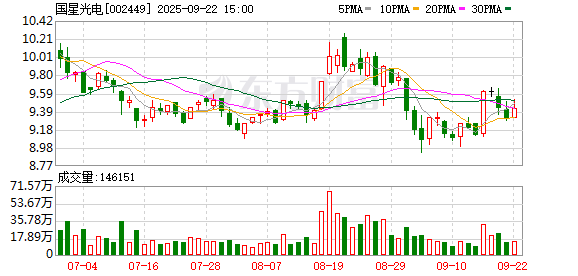
国星光电:公司与小米在智能家居领域有保持合作
Zheng Quan Ri Bao· 2025-09-22 09:41
Group 1 - The core point of the article is that Guoxing Optoelectronics announced on September 22 that it continues to maintain cooperation with Xiaomi in the smart home sector [2] Group 2 - The announcement was made during a response to inquiries from researchers [2]

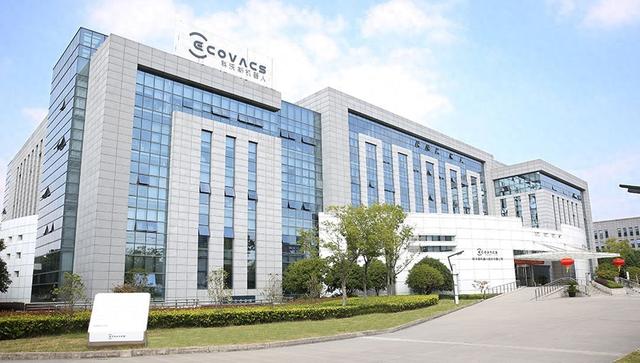
科沃斯副总徐伟强待遇真好!去年薪酬137.5万还有股权
Xin Lang Cai Jing· 2025-09-22 04:37
| 18. 10. 36. 100 | VE VE VE VE | FART // VI | | 1/2 | MILLINGA ET | ANA THE TT | 44 143 116 11 | PATIMOG HIT J.A 1)c Gcl | 21/6216 12 | | --- | --- | --- | --- | --- | --- | --- | --- | --- | --- | | 财务分析 | 分红融资 | 服本结构 | | 公司高管 | 资本运作 | 关联个服 | 货含流向 | 龙虎榜单 机构评级 | 智能点评 | | | | | | | | 商管列表 高管及相关人员持股变动 管理层简介 | | | | | ○ 高管列表 | | | | | | | | | | | 序号 | 姓名 | | 性别 | 年龄 | 学历 | 持股数(股) | 病例(元) | 职务 | | | 11 | 钱东资 | | 男 | 67 | 硕士 | 54.6675 | 239. 177 | 团 带来长,事独立营事 | | | 2 | 庄建年 | | 女 | 53 | 水料 | 0 | 181.677 | 山 总经理, ...

三部门联合发布轻工业稳增长方案 计划两年内培育10个千亿级产区
Chang Jiang Shang Bao· 2025-09-21 23:01
Core Viewpoint - The Ministry of Industry and Information Technology, along with the Ministry of Commerce and the State Administration for Market Regulation, has issued the "Light Industry Growth Stabilization Work Plan (2025-2026)", which outlines specific measures to enhance supply optimization, boost consumption, maintain international competitiveness, optimize the industrial ecosystem, and strengthen high-quality development momentum [1][2]. Group 1: Supply Optimization - The work plan proposes three measures to optimize light industry supply: accelerating product innovation, enhancing quality assurance, and strengthening brand cultivation [2][3]. - It emphasizes the need to break through key technologies through methods like the "chain leader system" and to convert advanced product standards into international standards [2]. Group 2: Consumption Expansion - The work plan aims to expand traditional consumption and cultivate new consumption growth points, focusing on health, elderly care, childcare, home, and cultural tourism [3]. - It includes measures to increase the supply of smart home appliances, intelligent robots, and rehabilitation aids, while promoting the application of artificial intelligence in the light industry [3]. Group 3: Export Stability - To maintain the international competitiveness of China's light industry, the work plan outlines three measures for stabilizing exports: optimizing trade structure, developing new foreign trade models, and strengthening public services [3]. - It supports leading enterprises in accelerating global brand development and expanding overseas marketing channels [3].
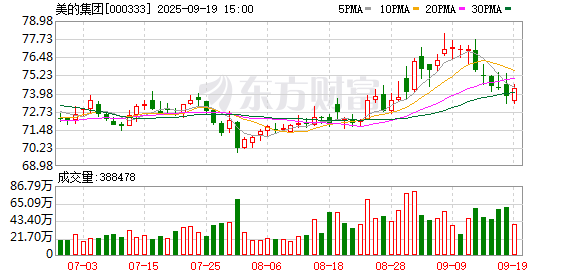
美的与华为签署战略合作协议 共拓AI领域创新生态
Zheng Quan Ri Bao· 2025-09-21 14:08
Core Insights - Midea Group and Huawei have signed a strategic cooperation agreement to leverage their strengths in technology and information communication across various key areas, including enterprise management, AIGC, ICT infrastructure, green low-carbon initiatives, cloud business, product development, and internationalization [2][3] - The collaboration in the AIGC field focuses on "technology empowerment + scenario implementation," with the establishment of a special working group to research AI applications in smart homes and smart manufacturing, addressing challenges in multimodal AI algorithm optimization, edge computing, and AI security [2] - In the smart factory sector, Midea will utilize its self-developed visual large model algorithm platform in conjunction with Huawei's Ascend AI visual inspection technology to enhance production efficiency and product quality stability [2] Smart Home and Ecosystem Development - Midea will collaborate with Huawei's HiSilicon and open-source HarmonyOS to create integrated smart home appliance solutions, enhancing product innovation and user experience [3] - The partnership aims to deepen the smart home ecosystem through cross-brand device collaboration and scenario linkage, creating HarmonyOS smart selection products for a smoother user experience [3] - The cooperation also includes interconnectivity among "people," "vehicles," and "homes," digital energy temperature control products, and the digital transformation of medical imaging equipment [3] Strategic Significance - The signing of the strategic cooperation agreement marks a new phase in the collaboration between Midea and Huawei, aiming to continuously deepen technological synergy and scenario innovation [3] - Midea's Chairman Fang Hongbo emphasized the importance of connectivity and computing technology in their core areas, including smart homes, smart factories, smart buildings, and smart hospitals [3] - Huawei's Supervisory Board Chairman Guo Ping highlighted the exploration of new paths for the integration of technology and industry, setting new benchmarks for industry development and enhancing user product and service experiences [3]