
电动汽车

Search documents
A股晚间热点 | AI应用、商业航天大涨!概念股批量提示风险
智通财经网· 2026-01-12 14:42
1、AI应用、商业航天大涨!概念股批量提示风险 重要程度:★★★★★ 近一段时间以来,AI应用、商业航天概念表现抢眼,估值水涨船高。1月12日,两大板块再度爆发!被热 炒的AI应用、商业航天概念,是否存在隐忧?多家上市公司对此轮炒作表现出警惕。1月12日晚间,多只 概念股公告提示风险: AI应用方面: 20%涨停值得买:与MiniMax合作事项对当前主营业务未构成实质性影响 6天5板引力传媒:GEO业务尚未形成成熟的商业模式 对此,毛宁表示,具体的情况建议你向中方的主管部门了解。我想说的是,中方依法依规采取有关措施, 完全是正当合理合法。 2连板博瑞传播:相关GEO业务营业收入为0 2连板恒为科技:不涉及AI应用相关业务 商业航天方面: 3连板中衡设计:中标部分商业航天高端制造基地设计项目 但单个项目设计合同额均较小 20%涨停中科星图:当前公司股价涨幅与商业航天业务实际业绩支撑不匹配 存在显著脱离基本面的风险 20%涨停理工导航:商业航天应用领域的相关规划目前仅处于业务布局的起步阶段 中国卫星:股价短期涨幅过大存在市场情绪过热、非理性炒作风险 2、中国对日本稀土出口许可审查被暂停?外交部:完全是正当合理合法 ...


【周一美股盘前你需要了解的全球要闻】 伊朗局势微妙,鲍威尔被诉,现货黄金突破4600美元/盎司,现货白银日内大涨7%,美股期货下跌。 美国司法部对美联储主席开启“刑事调查”,鲍威尔“这是美联储不听话的结果”。 中欧电动汽车案实现“软着陆”,欧方将发布价格承诺指导文件。 美国银行股普遍...
Sou Hu Cai Jing· 2026-01-12 14:04
Group 1 - The U.S. Department of Justice has initiated a criminal investigation against the Federal Reserve Chairman Jerome Powell, indicating potential consequences for the Fed's actions [1] - The U.S. banking sector is experiencing a widespread decline, with former President Trump proposing a 10% cap on credit card interest rates [1] - The storage market is reported to have entered a "super bull market" phase, suggesting significant growth and investment opportunities in this sector [1] Group 2 - The European side has achieved a "soft landing" in the electric vehicle case with China, and will release a price commitment guidance document [1] - The Indian satellite launch mission has failed, marking the second consecutive failure of the PSLV rocket [1] - Japanese stock markets are closed today, while the Shanghai Composite Index and the Hang Seng Index have seen increases of 1.09% and 1.44% respectively [1]
(经济观察)中欧达成重要共识 电动汽车案获进展
Zhong Guo Xin Wen Wang· 2026-01-12 14:03
Group 1 - The core viewpoint of the article is that China and the EU have reached an important consensus regarding electric vehicles, specifically on providing general guidance for Chinese exporters concerning price commitments to address concerns related to the export of pure electric vehicles to the EU [1][2]. - The price commitment will serve as an alternative to the EU's imposition of anti-subsidy tariffs on Chinese electric vehicles, which were initiated in October 2023 and are set to be formally enacted in October 2024 [2]. - The EU has issued guidance documents for submitting price commitment applications, ensuring that all applications will be evaluated under the same legal standards in a non-discriminatory manner [2][3]. Group 2 - This development is expected to enhance cooperation confidence within the Chinese industry, as resolving the EU's anti-subsidy case against Chinese electric vehicles is a common expectation among stakeholders [3]. - The Chinese electric vehicle industry's competitiveness is attributed to continuous technological innovation and cost advantages from market competition, rather than reliance on subsidies [3]. - Experts believe this progress will facilitate long-term cooperation between the Chinese and EU automotive industries, highlighting shared interests in green development and advanced green technologies [3].
1月12日重要资讯一览
Zheng Quan Shi Bao Wang· 2026-01-12 13:32
Group 1 - The Ministry of Commerce reported progress in consultations regarding the EU-China electric vehicle case, emphasizing mutual respect and the need for guidance on price commitments for Chinese exporters [2] - The EU will issue guidelines for submitting price commitment applications, ensuring non-discrimination and adherence to WTO rules in the evaluation process [2] - The dialogue reflects the capability and willingness of both parties to resolve differences within the WTO framework, benefiting the stability of the EU-China automotive supply chain [2] Group 2 - The Ministry of Foreign Affairs stated that China's strengthened export controls on dual-use items to Japan are legitimate and aimed at maintaining national security [3] - The National Development and Reform Commission, along with other ministries, released guidelines for government investment funds, focusing on strategic areas and promoting technological innovation [4] - The Shanghai Gold Exchange noted significant fluctuations in precious metal prices, urging members to monitor market changes and manage risks effectively [4] Group 3 - Zhejiang Province is soliciting opinions on its "14th Five-Year" digital economy and infrastructure plan, which includes support for low-orbit satellite internet construction [5] - The Brain-Machine Interaction and Human-Machine Integration Laboratory is advancing non-invasive brain-machine interface technology, contributing to aerospace applications [5] Group 4 - Company news highlights include Upwind New Materials considering a suspension of trading if stock prices continue to rise [7] - Zhongheng Design reported that revenue from commercial space projects accounted for approximately 0.39% from January to September 2025 [8] - Worth Buying stated that its collaboration with MiniMax does not materially impact its current main business [9] - Zai Sheng Technology currently has no orders for high-silica fiber products [10] - Huayin Technology's main revenue source is from the aerospace engine industry [11] - Galaxy Electronics faces irrational speculation risks due to significant short-term stock price increases [11] - Hengshi Technology's controlling shareholder plans to increase their stake by 1.5% to 3% [11] - Tianpu Co., Ltd.'s actual controller made no statements during a recent event, with related comments being unfounded [11] - Zhimingda's embedded computers for commercial space have unpredictable revenue contributions [11] - Xinke Mobile's satellite internet revenue accounts for 2% to 3%, with no significant impact on performance [11] - Aerospace Huanyu may apply for trading suspension if stock prices rise abnormally [11] - *ST Chengchang's fundamentals remain unchanged as the commercial space industry is still in its early stages [11]
中欧电动汽车案“软着陆” 中国机电商会:鼓励企业争取对欧出口权益
Yang Shi Xin Wen· 2026-01-12 11:28
Core Viewpoint - The China Machinery Industry Federation announced positive outcomes from the dialogue between China and the EU regarding the electric vehicle anti-subsidy case, highlighting the importance of resolving this issue for both parties [1] Group 1: Negotiation Outcomes - The EU Commission released guidelines for submitting price commitment applications, allowing Chinese electric vehicle companies to apply based on these guidelines [1] - The EU Commission committed to an objective and fair review of applications from Chinese companies, adhering to non-discrimination principles [1] - Eligible companies can replace anti-subsidy duties with price commitments, which is seen as a significant development for the industry [1] Group 2: Industry Implications - The resolution of the EU's anti-subsidy case against Chinese electric vehicles is a common expectation among the upstream and downstream sectors of the industry, promoting stability in the supply chain [1] - The successful negotiations are viewed as a "soft landing" for the case, reflecting mutual respect and dialogue between China and the EU [1] - The China Machinery Industry Federation expressed gratitude to the Ministry of Commerce for its efforts in protecting industry interests and will encourage affected companies to leverage the negotiation outcomes [1]
中欧电动汽车案实现“软着陆” 欧方将发布价格承诺指导文件
Xin Hua Wang· 2026-01-12 11:25
Group 1 - The core viewpoint of the news is that after multiple rounds of negotiations, the EU and China have reached a consensus to address the EU's anti-subsidy case against Chinese electric vehicles, leading to a "soft landing" for the case [1][2] - The EU will issue guidelines for Chinese exporters of pure electric vehicles regarding price commitment applications, which will help them address concerns in a practical and WTO-compliant manner [1] - The EU has committed to applying the same legal standards to all price commitment applications from Chinese companies, ensuring an objective and fair evaluation process [1] Group 2 - The dialogue and negotiation spirit between China and the EU are highlighted, showcasing their ability and willingness to resolve differences within the framework of WTO rules, which is beneficial for the stability of the global automotive supply chain [2] - The resolution of the EU's anti-subsidy case against Chinese electric vehicles is seen as a common expectation among the industry, promoting the safety and stability of the related supply chains and enhancing overall economic cooperation between China and the EU [2]
中欧电动汽车案磋商进展公布
Xin Lang Cai Jing· 2026-01-12 10:43
Core Viewpoint - The China-EU electric vehicle negotiations have made progress, emphasizing mutual respect and the need for guidance on price commitments for Chinese exporters of pure electric vehicles to the EU [1] Group 1: Negotiation Progress - The Chinese Ministry of Commerce reported on the progress of negotiations regarding the EU's case against Chinese electric vehicles, highlighting multiple rounds of discussions [1] - Both parties agreed on the necessity of providing general guidance on price commitments to Chinese exporters, aiming for a practical and WTO-compliant resolution [1] Group 2: Guidance and Principles - The EU will issue a document outlining the guidance for submitting price commitment applications, confirming adherence to non-discrimination principles [1] - The evaluation of each price commitment application will be conducted based on the same legal standards, ensuring an objective and fair assessment [1] Group 3: Implications for Trade Relations - The negotiations reflect the spirit of dialogue and the results achieved, indicating both parties' capability and willingness to resolve differences within the WTO framework [1] - This development is beneficial for the healthy growth of China-EU economic and trade relations and supports the maintenance of a rules-based international trade order [1]
事关电动汽车出口,商务部最新通报
Zheng Quan Shi Bao Wang· 2026-01-12 10:39
Core Viewpoint - The Ministry of Commerce of China announced progress in negotiations regarding the EU's electric vehicle case, emphasizing mutual respect and the need for guidance on price commitments for Chinese exporters [1][2] Group 1: Negotiation Progress - The Ministry of Commerce reported that multiple rounds of negotiations were held to address the EU's concerns regarding electric vehicles from China [1] - Both parties agreed on the necessity of providing general guidance on price commitments to Chinese exporters of pure electric vehicles [1] - The EU will issue a document confirming that it will adhere to non-discrimination principles and apply the same legal standards to all price commitment applications [1] Group 2: Industry Impact - The China Chamber of Commerce for Import and Export of Machinery and Electronic Products noted positive outcomes from the negotiations, highlighting the issuance of the guidance document by the EU [2] - The guidance document allows Chinese electric vehicle companies to submit price commitment applications, which can replace anti-subsidy duties for eligible companies [2] - The resolution of the EU's anti-subsidy case is seen as beneficial for the stability of the supply chain and the overall economic cooperation between China and the EU [2]

中欧电动汽车案磋商进展积极!中方:乐见电动汽车案实现“软着陆”
Di Yi Cai Jing· 2026-01-12 10:31
2025年以来,中欧双方围绕电动汽车案的磋商持续进行。 1月12日,商务部在官网通报了中欧电动汽车案的最新磋商进展。 通报称,为落实中欧领导人会晤共识,妥善解决欧盟对华电动汽车案,中欧双方本着相互尊重的态度, 进行了多轮磋商。双方一致认为,有必要向对欧盟出口纯电动汽车的中国出口商,提供关于价格承诺的 通用指导,以便中国出口商可通过更加实用、有针对性且符合世贸组织规则的方式,解决相关关注。 中国机电商会认为,妥善解决欧盟对华电动汽车反补贴案,是中欧电动汽车上下游业界的普遍期待,有 助于促进中欧相关产业链供应链的安全稳定,维护中欧经贸合作大局及以规则为基础的国际贸易秩序。 中欧双方本着相互尊重和对话精神,经过多轮磋商,成功推动该案实现"软着陆"。中国机电商会感谢中 国商务部在切实维护相关产业利益方面所开展的大量工作和取得的积极成果,并将鼓励和支持涉案企业 充分利用磋商成果,以价格承诺申请方式,努力争取自身对欧出口权益,促进中欧相关产业合作健康发 展。 欧盟中国商会称,对中欧双方通过对话磋商推动电动汽车案实现"软着陆"表示高度欢迎和充分肯定。这 一重要成果积极回应了包括汽车产业在内的业界高度关切,不仅有利于推动中欧 ...
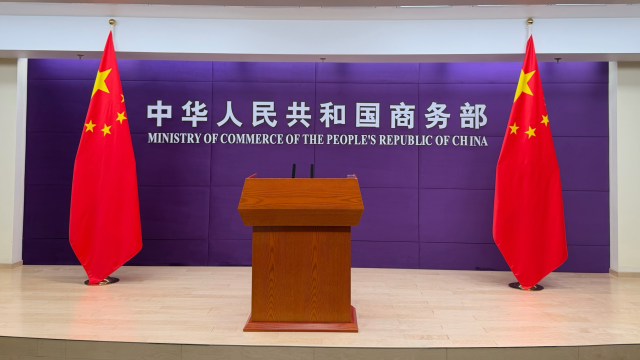
重磅!事关电动汽车出口,商务部最新通报→
Zheng Quan Shi Bao· 2026-01-12 10:29
商务部发布关于中欧电动汽车案磋商进展的通报。 综合自:商务部网站、央视新闻 责编:万健祎 校对:王锦程 商务部表示,这充分体现了中欧双方的对话精神和磋商成果。中欧双方有能力、有意愿,在世贸组织规 则框架下,通过对话磋商妥善化解分歧,维护中欧及全球汽车产业链供应链稳定。这不仅有利于中欧经 贸关系健康发展,也有利于维护以规则为基础的国际贸易秩序。 同日,中国机电产品进出口商会(以下简称"中国机电商会")发布关于中欧通过对话磋商妥善解决电动 汽车反补贴案达成积极成果的声明。 声明称,中国机电商会注意到,中欧双方相关政府部门关于电动汽车反补贴案的磋商取得积极成果。欧 委会发布《关于提交价格承诺申请的指导文件》(以下简称"指导文件"),中国电动汽车企业可依据指 导文件内容提交价格承诺申请。欧委会承诺,将本着非歧视原则,采用统一标准对中国企业提交的申请 进行客观、公正审查,符合条件的企业可用价格承诺替代反补贴征税。 中国机电商会认为,妥善解决欧盟对华电动汽车反补贴案,是中欧电动汽车上下游业界的普遍期待,有 助于促进中欧相关产业链供应链的安全稳定,维护中欧经贸合作大局及以规则为基础的国际贸易秩序。 中欧双方本着相互尊重和对 ...