
农机装备

Search documents
中非民营经济“对话”合作:“最好时代”如何珍之重之?
Zhong Guo Xin Wen Wang· 2025-11-07 13:40
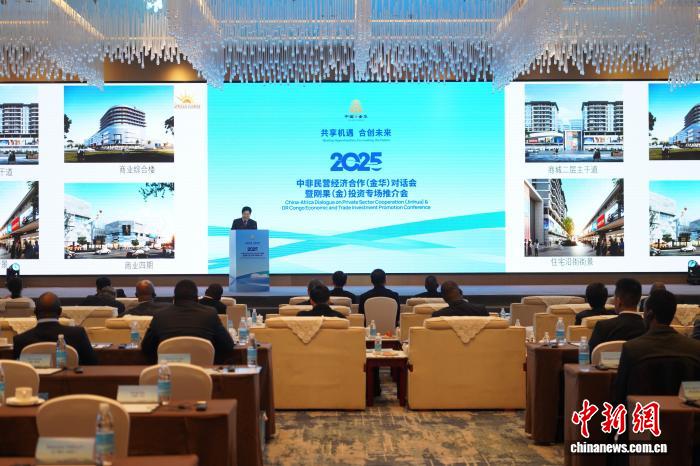
Core Insights - The conference on China-Africa private economic cooperation highlights the significant growth and development of China-Africa relations over the past 25 years, marking the current period as the best in history for these relations [1][3]. Group 1: Conference Overview - The 2025 China-Africa Private Economic Cooperation Dialogue and Congo Investment Promotion Conference took place in Jinhua, Zhejiang, on November 7 [3]. - The event featured discussions on sustainable industrial chain construction and value chain upgrades between China and Africa, emphasizing the importance of local talent in supporting these industries [3][4]. Group 2: Economic Cooperation and Projects - A total of 33 projects were signed during the 2025 China-Africa Economic and Cultural Forum, with a total investment amounting to 401.05 billion yuan [4]. - Jinhua, particularly Dongyang, has established trade relations with 43 African countries, with exports to Africa increasing by 37.3% in the first nine months of this year [3].

“十五五”新蓝图·新机遇丨强基础补短板 农业加快迈向现代化大产业
Xin Hua She· 2025-11-05 01:50
Core Insights - The article emphasizes the importance of modernizing agriculture in China, particularly in the context of the "14th Five-Year Plan" and the upcoming "15th Five-Year Plan" [1][2][3] - It highlights the need to enhance agricultural production capacity and quality, aiming to transform agriculture into a modern large-scale industry [2][3][4] Agricultural Production and Modernization - China's grain production is expected to achieve another bumper harvest, with a total grain output surpassing 1.4 trillion jin last year, ensuring food security for 1.4 billion people [1][2] - The per capita grain availability in China has reached 500 kg, indicating a stable supply of staple food [1] - The self-sufficiency rate for soybeans increased by 4 percentage points from 2020, while the self-sufficiency rate for edible vegetable oil rose by nearly 5 percentage points [2] Challenges and Strategic Focus - Despite progress, challenges remain in agricultural modernization, including low production efficiency, insufficient industrial chain extension, and weak international competitiveness [2][3] - The "15th Five-Year Plan" prioritizes addressing agricultural issues, promoting urban-rural integration, and enhancing living conditions in rural areas [2][4] Technological Advancements - Technological progress is deemed crucial for agricultural modernization, with a contribution rate of 63.2% from agricultural technology by the end of last year [3] - The mechanization rate for crop farming has exceeded 75%, and the coverage rate for quality seeds is over 96% [3] Future Outlook - The development of agricultural technology will be emphasized, focusing on high-yield, high-quality varieties, efficient water-saving technologies, and advanced machinery suitable for hilly areas [4] - Cold chain logistics is identified as a significant shortcoming in the agricultural supply chain, with potential for growth driven by e-commerce [5] - Investments in cold chain logistics are expected to increase, enhancing the digitalization and industrialization of the sector [5]
山东:拟鼓励潍柴雷沃等农机装备领军企业通过并购等资本运作,整合省内外优质资源
Xin Lang Cai Jing· 2025-10-24 02:06
Core Viewpoint - The "Shandong Province Agricultural Machinery Equipment High-Quality Development Action Plan (2026-2027)" aims to enhance the competitiveness of the agricultural machinery industry, ensure national food security, and promote agricultural modernization through various strategic measures and initiatives [1]. Overall Goals - The plan emphasizes a coordinated approach between supply and demand in agricultural machinery, aiming for an industrial revenue exceeding 100 billion yuan by 2027, while establishing a "1+6+N" cluster system [2]. - Key focus areas include the development of high-end intelligent agricultural machinery and the creation of 100 demonstration application scenarios in critical agricultural sectors [2]. Major Measures Shortcomings in Agricultural Machinery - Establishment of a dynamic management mechanism for a "Shandong Agricultural Machinery Shortcomings Directory" to address urgent market needs [3]. - Focus on developing key products such as high-power tractors and intelligent feeding equipment to enhance reliability and promote domestic alternatives [3]. Innovation System Construction - Support for leading enterprises to form efficient collaborative innovation platforms and establish high-level innovation centers [4]. - Encouragement of cross-industry integration and the development of high-value patent portfolios to address common technological shortcomings [4]. Collaborative Development of Industrial Clusters - Strengthening national-level industrial clusters, particularly in Weifang, to focus on high-end, intelligent, and green development [5]. - Promotion of regional characteristic industrial clusters based on local advantages, such as large tractors in Weifang and mixed-power tractors in Linyi [5]. Strengthening Leading Enterprises - Encouragement for leading companies to engage in technological upgrades and strategic investments to enhance innovation capabilities [6]. - Support for the cultivation of specialized small and medium-sized enterprises with key technologies and patent advantages [6]. Enhancing Application Subject Construction - Development of regional agricultural machinery service centers to improve agricultural production and emergency response capabilities [8]. - Establishment of a high-quality agricultural machinery operator team through training and skill competitions [8]. Standard Quality Brand Construction - Promotion of a comprehensive product standard system to facilitate high-quality development in the agricultural machinery industry [9]. - Establishment of a quality management system to ensure product quality throughout the production process [10]. Green and Intelligent Collaborative Development - Integration of artificial intelligence and big data into agricultural machinery to enhance operational efficiency [21]. - Encouragement for the establishment of intelligent factories and the adoption of green production technologies [22]. Open Cooperation for Win-Win Development - Attraction of foreign advanced technology and investment to enhance local agricultural machinery capabilities [25]. - Support for domestic agricultural machinery enterprises to expand into international markets [26]. Support for Element Guarantee - Strengthening financial support for high-end intelligent agricultural machinery and promoting financing options for enterprises [28]. - Encouragement for industrial parks to upgrade infrastructure and enhance product development capabilities [29].
山东:鼓励潍柴雷沃等农机装备领军企业通过并购等资本运作 整合省内外优质资源
Ge Long Hui· 2025-10-24 01:53
Core Viewpoint - The "Action Plan for High-Quality Development of Agricultural Machinery Equipment in Shandong Province (2026-2027)" emphasizes strengthening leading enterprises and enhancing innovation capabilities through strategic policies and resource integration [1] Group 1: Strengthening Leading Enterprises - The plan encourages the development of leading enterprises by leveraging national strategic policies and focusing on safety capability construction in key areas [1] - It promotes technological transformation and product innovation to enhance the overall competitiveness of enterprises [1] Group 2: Resource Integration and Capital Operations - The plan advocates for strong alliances and resource integration, encouraging leading companies like Weichai and Lovol to utilize mergers, strategic investments, and other capital operations to consolidate high-quality resources both within and outside the province [1] - It aims for complementary advantages through these integrations [1] Group 3: Diversification and Global Integration - Enterprises are supported in expanding diversified business layouts while extending their reach along the upstream and downstream industrial chains [1] - The plan encourages active participation in international competition and cooperation, aiming for deeper integration into the global agricultural machinery industry division of labor [1]
山东:大力发展无人驾驶农机、农业机器人、智慧农业管理系统
Zheng Quan Shi Bao Wang· 2025-10-24 01:53
Core Viewpoint - The "Shandong Province Agricultural Machinery Equipment High-Quality Development Action Plan (2026-2027) (Draft for Comments)" emphasizes the establishment of a national-level industrial cluster focused on high-end, intelligent, and green development in the agricultural machinery sector [1] Group 1: Industrial Development - The plan aims to build the Weilinri Intelligent Agricultural Machinery National Advanced Manufacturing Cluster as a key initiative [1] - The focus is on achieving breakthroughs in core technologies and upgrading product iterations, particularly in hydraulic systems and intelligent control systems [1] - The initiative seeks to enhance precision manufacturing levels through collaborative innovation platforms [1] Group 2: Technological Advancements - There is a strong emphasis on the development of unmanned agricultural machinery, agricultural robots, and smart agricultural management systems [1] - The goal is to create a comprehensive intelligent solution that spans from field operations to agricultural product traceability [1]

六大重点领域大规模集群式培养高技能人才 职教学子迎来全新数字教材
Yang Shi Wang· 2025-10-22 06:59
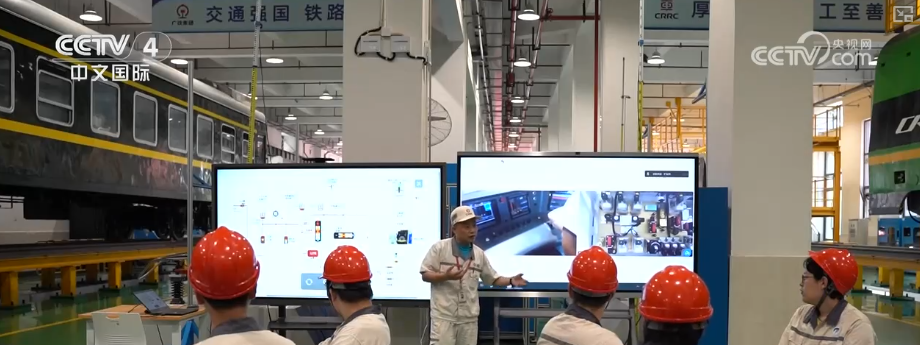
Core Points - The "High-Skilled Talent Cluster Training Program" is being implemented in six key advanced manufacturing sectors, including new energy vehicles and aerospace equipment, as part of the comprehensive reform pilot for building an education powerhouse [1][10] - The program involves over 150 leading enterprises, 67 high-level schools, and 15 national industry organizations, with participation from more than 1,500 skilled craftsmen, technical backbones, professional teachers, and industry experts [6] Group 1 - The program aims to reform five key elements of vocational education: profession, curriculum, teaching materials, teachers, and internship training, shifting the focus from traditional knowledge transfer to comprehensive ability enhancement [6] - The initial focus is on six critical high-skill labor shortage areas within national production lines to explore and break through existing challenges [10] Group 2 - A new digital textbook initiative has been launched, covering 28 majors and benefiting over 1,100 vocational schools and more than 1.5 million students [11][15] - Over 500 industry and enterprise technology standards, job specifications, and production processes have been opened up to ensure that textbook development aligns with industry advancements [17] - The textbook "Integration and Application of Intelligent Workshops" features a virtual smart workshop, addressing challenges faced by students in traditional internship settings [17]
从“知识传授”到“能力提升” 6大先进制造业领域高技能人才培养有了新路径
Yang Shi Wang· 2025-10-22 03:55
Core Points - The "High-Skilled Talent Cluster Cultivation Plan" is being implemented in six key advanced manufacturing sectors, including new energy vehicles, advanced rail transit equipment, aerospace equipment, high-end CNC machine tools and robots, agricultural machinery, and new generation information technology [1][2] Group 1 - The plan aims to address the significant labor shortage in high-skilled positions within these critical industries by aligning educational standards with industry needs [2][3] - Over 150 leading enterprises, 67 high-level schools, and 15 national industry organizations are participating, involving more than 1,500 skilled craftsmen, technical backbones, professional teachers, and industry experts [2][3] - The reform focuses on five key elements of vocational education: professional standards, curriculum, teaching materials, teachers, and practical training, shifting from traditional knowledge transfer to comprehensive ability enhancement [2][3] Group 2 - More than 500 industry and enterprise technical standards, job specifications, and production processes have been opened up to ensure that educational materials align with industry developments [5] - A new digital textbook, "Integration and Application of Intelligent Workshops," has been developed, featuring a virtual smart workshop to address challenges faced in traditional practical training [5] - The first batch of new digital textbooks has been released, covering 28 majors and benefiting over 1,100 vocational colleges and more than 1.5 million students [6]
围绕六大重点领域 教育部推进实施“高技能人才集群培养计划”
Xin Lang Cai Jing· 2025-10-22 02:25
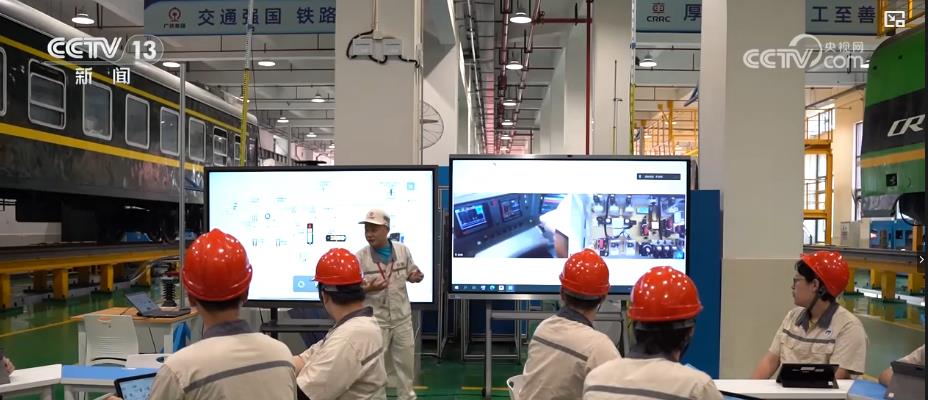
Core Viewpoint - The "High-Skilled Talent Cluster Cultivation Plan" is being implemented in six key advanced manufacturing sectors, marking a significant step in the comprehensive reform pilot for building an education powerhouse [1] Group 1: Key Sectors - The plan focuses on six advanced manufacturing sectors: new energy vehicles, advanced rail transit equipment, aerospace equipment, high-end CNC machine tools and robots, agricultural machinery, and next-generation information technology [1] Group 2: Collaborative Efforts - Over 150 leading enterprises, 67 high-level schools, and 15 national industry organizations are involved, contributing more than 1,500 national craftsmen, technical backbones, professional teachers, and industry experts [1] Group 3: Educational Reform - The initiative aims to systematically promote reforms in five key elements of vocational education: profession, curriculum, teaching materials, teachers, and internship training, shifting the focus from traditional knowledge transmission to comprehensive ability enhancement [1]
从“内卷”突围,在全球“破圈”建湖全力扶助跨境电商“闯世界”
Xin Hua Ri Bao· 2025-10-18 23:25
Core Insights - The establishment of the cross-border e-commerce industrial park in Jianhu has become a central hub for local enterprises to expand internationally, leveraging online platforms to reach global markets [2][3] Group 1: Market Performance - Jianhu's foreign trade reached 4.12 billion yuan from January to September, marking an 18% year-on-year increase, with cross-border e-commerce trade amounting to 730 million yuan, a staggering 231.8% increase [3] - The local company, Lika Electric, reported sales of 200 million yuan this year, with 130 million yuan generated from cross-border e-commerce [1] Group 2: Innovation and Growth - The cross-border e-commerce initiative is seen as a means to drive technological innovation among local businesses, moving away from price wars to meet high standards in overseas markets [3] - Jianhu has successfully transformed a 36,000 square meter idle building into a cross-border e-commerce park, addressing local economic challenges [3] Group 3: Support and Services - The industrial park offers a comprehensive support system for small and micro enterprises, including zero-cost entry and full-process assistance to facilitate their entry into cross-border e-commerce [4] - A total of 54 small and micro enterprises have already settled in the incubation area of the park, benefiting from the supportive ecosystem [4] Group 4: Collaboration and Networking - Jianhu has organized 16 cross-border trade events this year, enhancing order volumes by an average of 30% through collaboration among local businesses [5] - The establishment of a cross-border brand alliance aims to shift the focus from merely selling products to offering standards and services [5] Group 5: Future Plans - The county plans to double the scale of its cross-border e-commerce industry within three years, targeting 1 billion yuan this year, 1.5 billion yuan next year, and 2 billion yuan the year after [6] - The park is also collaborating with local educational institutions to train 200 composite talents annually for the cross-border e-commerce sector [6]
小农机闯出大市场(秋收进行时)
Ren Min Ri Bao· 2025-10-17 22:13
Core Insights - The agricultural machinery industry in Zhejiang, particularly in the hilly areas, is experiencing rapid development, leading to increased efficiency and productivity in farming operations [2][3]. Group 1: Agricultural Machinery Development - The agricultural machinery sector in Jinhua Yongkang City has become a significant hub, with over 1,600 companies producing various agricultural machinery and components, achieving an annual output value exceeding 23 billion yuan [2]. - Local companies like Zhejiang Sifang Group focus on developing small, versatile agricultural machines, with annual sales of approximately 25,000 units, catering to both domestic and international markets [2]. - The mechanization rate for crop farming in Zhejiang has reached 82.5%, with rice mechanization at 91.88%, positioning the region among the top in the country [3]. Group 2: Innovation and Upgrading - The establishment of innovation platforms and research centers in Yongkang aims to enhance the R&D capabilities of local agricultural machinery companies, addressing existing gaps in technology and product performance [4]. - The local government is facilitating collaboration between enterprises and academic institutions to accelerate the transformation and upgrading of the agricultural machinery industry [4]. Group 3: Market Opportunities - There is a growing demand for diverse agricultural machinery tailored to different terrains and crop types, prompting companies to innovate and expand their product offerings [3]. - The competitive landscape has shifted, with domestic manufacturers like Xingyue Group entering the market for high-speed rice transplanters, previously dominated by foreign brands [3].