
智能穿戴设备

Search documents
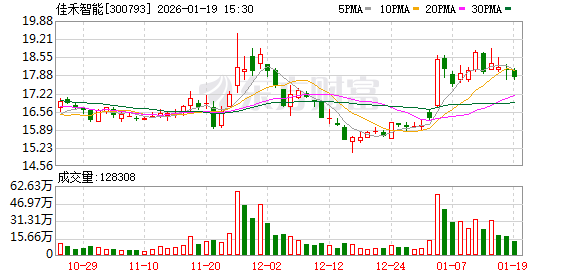
佳禾智能:目前眼镜类业务营收占比相对较低
Zheng Quan Ri Bao· 2026-01-19 09:35
Group 1 - The company has provided consumer-grade AR product manufacturing services for brands such as Yingmu and Xianshun, with new eyewear products set to be launched at the CES exhibition in January 2026 [2] - Currently, the revenue contribution from eyewear business is relatively low, and specific data will be available in the company's periodic reports [2] - The company has developed various combinations of eyewear products and can offer integrated hardware and software solutions, aiming to deepen communication with new clients and steadily advance business cooperation [2]

AI眼镜专家交流-CES智能眼镜百花齐放-关注新品催化
2026-01-19 02:29
AI 眼镜专家交流 ——CES 智能眼镜百花齐放,关注新品催 化 20260116 摘要 AI 眼镜正朝着独立通信和运行 APP 的方向发展,雷鸟创新在这方面取得 了里程碑式的进展,但续航仍是关键挑战,热插拔充电虽有缓解,但用 户仍需携带充电盒。 轻量化设计成为趋势,木界、极米等品牌推出 20 多克的产品,提升了 佩戴舒适度,但光学显示技术仍需突破,尤其是在降低成本和提高良率 方面。 碳化硅材料因其优异特性被视为未来方向,但成本和良率是商业化障碍, 短期内难以大规模应用,而树脂镜片因成本优势仍将占据主导地位。 智能眼镜作为人机交互的重要工具,在汽车、飞行器等移动载人空间以 及办公、家居等固定物理空间具有广泛应用前景,尤其是在与类人型机 器人结合方面。 2025 年全球智能眼镜销量未达预期,仅为 500 万至 800 万台,Meta 占据 70%市场份额,主要集中在北美市场,表明其他地区消费者缺乏刚 需消费冲动。 Q&A 今年 CES 展会上有哪些 AI 眼镜产品在功能性增强和垂直场景拓展方面具有亮 点? 今年 CES 展会展示了许多 AI 眼镜的创新产品,特别是中国科技公司的参展商 在数量和质量上都有显著突破 ...
追觅AI智能戒指与清华大学人机交互实验室达成深度合作
Bei Jing Shang Bao· 2026-01-16 13:28
Core Viewpoint - Tsinghua University Human-Computer Interaction Laboratory and Chasing AI Smart Ring have established a deep strategic partnership to advance health monitoring technology in wearable devices [1] Group 1: Strategic Partnership - The collaboration focuses on sensor performance validation for smart wearable devices [1] - It aims to develop multi-parameter health algorithms and research sleep phase algorithms [1] - This partnership signifies a critical step from "data collection" to "precise health management" in the wearable device sector [1] Group 2: Industry Impact - The cooperation provides professional support for consumer-grade health monitoring devices [1]
未来五年复合增速有望达50%,AI眼镜有望成为AI应用落地的重要场景之一
Mei Ri Jing Ji Xin Wen· 2026-01-16 09:49
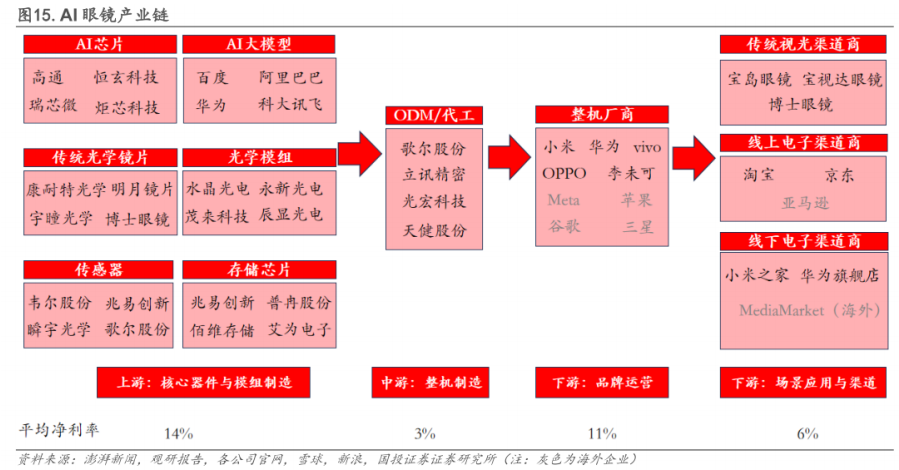
Core Insights - Meta has suggested that EssilorLuxottica SA increase the annual production capacity of its AI glasses, Ray-Ban, to 20 million units or more by the end of 2026, with discussions for further expansion to over 30 million units if demand is strong [1] - The AI glasses industry is seen as a key area for the application of AI technology, integrating features like voice assistance, real-time translation, and navigation reminders [2] Industry Overview - AI glasses are categorized into three types: 1. Non-camera AI glasses focusing on audio and communication features 2. Camera-equipped AI glasses that offer image capture and recognition capabilities 3. Display-equipped AI glasses (AI+AR) that integrate AR optical display technology for real-time output and gesture recognition [3] - The market penetration of AI glasses is currently very low, with a projected sales distribution in 2024 showing 96% for camera AI glasses, 3% for AR+AI glasses, and 1% for audio AI glasses [3] Market Potential - The AI glasses industry is expected to evolve into an AI+AR ultimate form, potentially replacing smartphones as the next generation of smart platforms, offering advantages such as enhanced user experience and immersive interaction [4] - The global market for AI glasses is projected to grow significantly, with shipments expected to rise from 9.93 million units in 2025 to 86.9 million units by 2030, corresponding to a market size increase from 19.7 billion yuan to 161.2 billion yuan, reflecting a compound annual growth rate of 50% [10] Competitive Landscape - Major companies are entering the AI glasses market, with notable product launches including: - Baidu's Xiaodu AI glasses, featuring first-person perspective photography and various smart functions [5] - Huawei's Smart Glasses 2, designed with a stylish aesthetic and advanced translation capabilities [5] - Xiaomi's AI glasses, which support video calls and live streaming [5] - Meta's new AR+AI glasses, marking a significant breakthrough in the field [6] Investment and Development Trends - The AI glasses sector is experiencing rapid investment, with state-owned capital leading the way, and 14 financing events reported in 2024, with nearly 80% from state-owned sources [7] - The industry is characterized by a value chain that includes upstream core components, midstream manufacturing, and downstream branding, with a "smile curve" distribution of value [8] - Companies like Songyuan Technology and Mingyue Lens are positioned to benefit from the growth in AI glasses, with advancements in chip design and optical components [11][12]

中国银河证券:技术突破交互革新 AI眼镜市场扩容竞争深化
智通财经网· 2026-01-16 07:49
Core Insights - The AI glasses are evolving into a new generation of human-computer interaction core carriers, with the industry experiencing a critical turning point in 2023 due to breakthroughs in multiple core technologies [1][2] - The integration of AI functionalities presents a high-value logic of "small incremental costs for large incremental experiences," which can naturally attract a large existing user base from traditional glasses and sunglasses [2] Technology Breakthroughs and Interaction Innovations - AI glasses are becoming the core carriers of human-computer interaction, with significant technological breakthroughs enabling lightweight devices to support complex voice and environmental interactions [1] - The introduction of specialized low-power chips provides the hardware foundation for offline voice interaction and real-time translation, optimizing power consumption and battery life [1] Market Expansion and Competitive Landscape - The global AI glasses market is in a phase of rapid expansion and structural differentiation, with AI glasses expected to account for 78% of smart glasses shipments by mid-2025, and global shipments projected to reach 20 million units by 2028 [3] - The market features a "one strong leader and many strong followers" structure, with leading companies taking the initiative while numerous brands follow suit, employing a dual-line product strategy [3] User Base and Market Potential - There are currently 2.2 billion people globally with vision impairment, and the global sunglasses market is projected to reach approximately $22.32 billion in 2024, providing a substantial user base for AI glasses [2] - The advancements in technology are transforming AI glasses from smartphone accessories to independent smart devices that can deliver value across multiple scenarios [2] Challenges in User Experience and Cost - The path to large-scale adoption of AI glasses faces challenges such as poor user experience leading to high return rates and high costs hindering market penetration [4] - Optical display (43%) and main control chips (31%) constitute a significant portion of the overall cost, with optical waveguide lenses and display technology being key cost constraints [4] Application Ecosystem and Privacy Concerns - The domestic market shows a fragmented brand ecosystem, limiting the core value of devices in daily scenarios, although some companies are making strides in ecosystem integration [4] - The lack of privacy and security standards needs to be addressed through industry collaboration to build user trust, which is essential for the growth of AI glasses [4]

康耐特光学涨超7% 机构称Meta加大智能眼镜业务投入有望引领产业加速发展
Zhi Tong Cai Jing· 2026-01-16 01:45
Core Viewpoint - 康耐特光学's stock rose over 7%, reaching 58.6 HKD, driven by news of Meta's plans to double AI smart glasses production by the end of the year to meet growing demand and stay ahead of competitors [1] Company Summary - 康耐特光学's stock performance is positively influenced by Meta's increased investment in smart glasses, which is expected to accelerate industry growth [1] - The company is identified as a key player in the smart glasses supply chain, particularly in lens manufacturing and sales channels [1] Industry Summary - Meta aims to increase annual production capacity of AI smart glasses to 20 million units by 2026, reflecting confidence in sales potential [1] - According to Wellsenn XR, global sales of AI smart glasses are projected to reach 7 million units by 2025, a nearly 360% increase, with Meta expected to contribute 5 million units [1] - By 2030, global sales of AI smart glasses are anticipated to grow to 90 million units, indicating rapid market expansion [1]
汇丰上调智能眼镜市场预期 2040年规模将达2000亿美元 用户量增幅超18倍
Sou Hu Cai Jing· 2026-01-15 16:43
Core Insights - HSBC has significantly raised its growth forecast for the global smart glasses market, predicting it will reach $200 billion by 2040, making it one of the fastest-growing segments in smart devices [3] - The user base is expected to explode from 15 million in 2025 to 289 million, representing an increase of over 1800% [3] Market Growth and Trends - 2025 is identified as a pivotal year for the smart glasses market, marking a transition to large-scale growth, with global shipments expected to reach 4.065 million units in the first half of 2025, a year-on-year increase of 64.2% [4] - The domestic market shows even higher enthusiasm, with Tmall's smart glasses category sales surging by 2500% during the 2025 "Double Eleven" shopping festival, and JD.com achieving a tenfold increase in sales volume [4] Supply and Demand Dynamics - The growth is driven by coordinated efforts on both supply and demand sides, with major tech companies like Apple, Huawei, Google, and Meta investing heavily in R&D to accelerate product iterations [4] - The integration of AI features has significantly enhanced product usability, with 75.5% of consumers expressing a willingness to purchase, activating a broad first-time buyer market [4] Technological Innovations - Key technological breakthroughs in 2025 include advancements in display technology, such as improved Micro-LED brightness and full-color MicroOLED for enhanced visual experiences [5] - Weight reduction innovations, such as resin diffraction waveguide technology, have enabled some new products to weigh under 40 grams, comparable to regular sunglasses, greatly improving wearability [5] Application Scenarios - The application of smart glasses is expanding from consumer to industrial sectors, with functionalities like navigation projection, immersive entertainment, and educational visualization becoming essential tools [5] - In industrial applications, scenarios such as remote surgical guidance, industrial equipment maintenance support, and AR tourism guidance are demonstrating significant practical value [6] Competitive Landscape - The smart glasses market is entering a "hundred glasses battle" phase, with participants including tech giants, specialized hardware manufacturers, and internet companies [6] - Meta's collaboration with Ray-Ban on the Ray-Ban Meta has become a bestseller, with projected sales of 2.24 million units in 2024, validating the market viability of non-display AI glasses [6] Cost and Ecosystem Development - Increased competition is driving collaborative upgrades across the supply chain, with core optical components like waveguide modules and Micro-LEDs seeing cost reductions of 40% [6] - Future hardware costs are expected to drop below 150 yuan, while ecosystem development is becoming a competitive focus, with manufacturers partnering with navigation, payment, and music platforms to create seamless smart experiences [6] Future Outlook - The growth potential of smart glasses is not only based on the proliferation of existing functionalities but also on revolutionary changes in human-computer interaction [7] - Innovations in interaction modes, such as "spatial bookmarks" and "information layering," are anticipated to reshape business models and social governance, with smart glasses poised to replace traditional eyewear and become the next core smart terminal by 2040 [7]


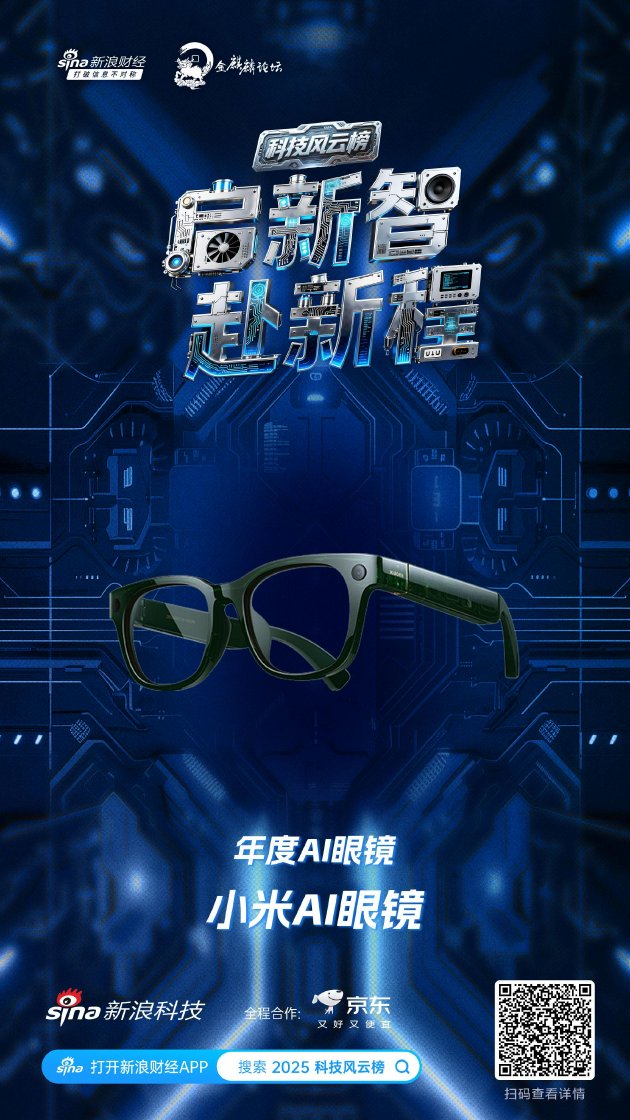
小米AI眼镜获新浪2025科技风云榜年度AI眼镜奖
Xin Lang Cai Jing· 2026-01-15 09:32
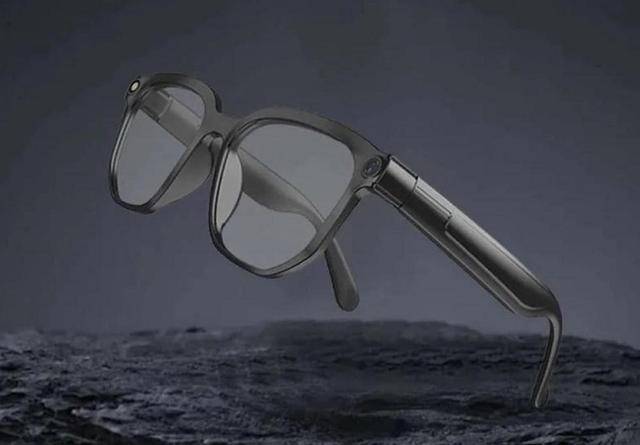
专题:2025科技风云榜 新浪科技讯 1月15日下午消息,由新浪财经客户端、新浪科技联合主办的"2025科技风云榜"年度盛典今 日开幕,今年活动主题为"启新智,赴新程"。 活动现场,行业精英、科研先锋与产业代表共同探讨AI技术的落地实践与未来方向,助力产业智能化 转型迈入新征程!活动同时为洞悉机遇、勇于创新、缔造价值的企业和独具匠心的科技产品颁发奖项荣 誉。 其中,小米AI眼镜获新浪2025科技风云榜年度AI眼镜 奖。 今年是"科技风云榜"第十三年,、中国工程院资深院士 金涌、欧洲科学院院士金耀初、GSMA大中华区总裁斯 寒等近20位重磅嘉宾带来分享,欢迎持续关注。 专题:2025科技风云榜 新浪科技讯 1月15日下午消息,由新浪财经客户端、新浪科技联合主办的"2025科技风云榜"年度盛典今 日开幕,今年活动主题为"启新智,赴新程"。 活动现场,行业精英、科研先锋与产业代表共同探讨AI技术的落地实践与未来方向,助力产业智能化 转型迈入新征程!活动同时为洞悉机遇、勇于创新、缔造价值的企业和独具匠心的科技产品颁发奖项荣 誉。 其中,小米AI眼镜获新浪2025科技风云榜年度AI眼镜奖。 今年是"科技风云榜"第十三年 ...

HUAWEI WATCH ULTIMATE DESIGN 非凡大师获新浪2025科技风云榜年度智能手表奖
Xin Lang Cai Jing· 2026-01-15 09:32
专题:2025科技风云榜 新浪科技讯 1月15日下午消息,由新浪财经客户端、新浪科技联合主办的"2025科技风云榜"年度盛典今 日开幕,今年活动主题为"启新智,赴新程"。 今年是"科技风云榜"第十三年,、中国工程院资深院士 金涌、欧洲科学院院士金耀初、GSMA大中华区总裁斯 寒等近20位重磅嘉宾带来分享,欢迎持续关注。 专题:2025科技风云榜 活动现场,行业精英、科研先锋与产业代表共同探讨AI技术的落地实践与未来方向,助力产业智能化 转型迈入新征程!活动同时为洞悉机遇、勇于创新、缔造价值的企业和独具匠心的科技产品颁发奖项荣 誉。 其中,HUAWEI WATCH ULTIMATE DESIGN 非凡大师 获新浪2025科技风云榜年度智能手表奖。 新浪科技讯 1月15日下午消息,由新浪财经客户端、新浪科技联合主办的"2025科技风云榜"年度盛典今 日开幕,今年活动主题为"启新智,赴新程"。 活动现场,行业精英、科研先锋与产业代表共同探讨AI技术的落地实践与未来方向,助力产业智能化 转型迈入新征程!活动同时为洞悉机遇、勇于创新、缔造价值的企业和独具匠心的科技产品颁发奖项荣 誉。 其中,HUAWEI WATCH U ...

META预计增加智能眼镜投入-如何看产业链机会
2026-01-15 01:06
Summary of Meta's Smart Glasses and AR Industry Insights Industry Overview - The smart glasses market is currently in its early stages, with global sales remaining at the million-unit level due to high prices and weight limitations. It is expected to reach tens of millions in sales within 3 to 5 years [3][12] - The AR glasses market is projected to achieve approximately 1 million units in global sales by 2025, with contributions from domestic manufacturers like Rokid and Thunderbird [12] Key Insights on Meta - Meta plans to significantly increase its investment in AI smart glasses, targeting a production of 20 million units by 2026, which represents a multiple growth compared to 2025 [1][2] - The company is reducing expenditures in the metaverse sector while focusing on smart glasses and wearable devices, viewing them as critical future entry points [2] - Meta's contribution to the global AI smart glasses market (non-display) is expected to exceed 5 million units in 2025, capturing a major market share [11] Product Development and Market Trends - The release of Meta's mixed reality (MR) product has been postponed to Q1 2027 due to hardware maturity and design changes, but there are optimistic sales expectations for this product [2] - The CES event showcased innovations in smart glasses from various domestic manufacturers, focusing on lightweight designs, camera capabilities, and communication features [4][5] Future Directions for Smart Glasses - Future development of smart glasses will focus on: 1. Lightweight designs to enhance comfort 2. Improved battery life 3. Enhanced ecosystem compatibility with other devices and applications 4. Breakthroughs in display technology, with a gradual shift towards display-equipped versions [6][7] Competitive Landscape - In 2025, Meta's assembly volume is projected to reach between 8 to 10 million units, while competitors like LOKI and Xiaomi are expected to sell around 300,000 to 500,000 units each [8] - Major tech companies, including Amazon, Google, Huawei, and Samsung, are anticipated to launch their smart glasses products in 2026, indicating a competitive market landscape [8] Investment Opportunities - Investment opportunities in the smart glasses industry are concentrated in high-value segments such as: - Chips (especially SOC) - Camera modules - PCB soft boards - Module and PCBA assembly production companies [15][16] - The lens technology for smart glasses is critical, with the best solutions currently being integrated bonding techniques that require high precision [18][19] Challenges in Display-Equipped Smart Glasses - Display-equipped smart glasses face challenges such as higher costs (typically above 3,000 yuan) and increased weight, which hinder widespread adoption [9][10] Conclusion - The smart glasses and AR market is poised for significant growth, with Meta leading in production and innovation. The industry is expected to evolve rapidly, driven by technological advancements and competitive pressures from various players.