
矿山开采

Search documents
2021-2024年平均每年发生矿山事故起数较“十三五”下降近三成
Zhong Guo Xin Wen Wang· 2025-09-24 06:30
Core Viewpoint - The news highlights the achievements in emergency management reform and development during the "14th Five-Year Plan" period, emphasizing a shift towards proactive prevention in mining safety management [1][2][3] Group 1: Mining Safety Achievements - Since the beginning of the "14th Five-Year Plan," the average annual number of mining accidents and fatalities has decreased by 29.7% and 29.1%, respectively, compared to the "13th Five-Year Plan" [1] - A comprehensive survey of hidden disaster factors in mining has been initiated, with 7,081 mining sites surveyed across 22 provinces, leading to the establishment of an information management system [1] Group 2: Disaster Prevention and Risk Management - The focus on proactive disaster management includes the establishment of a technical support mechanism and the publication of key prevention points for various disaster types [2] - A risk monitoring and early warning network has been created, integrating data from all operational coal mines and tailings ponds, enhancing the ability to identify and manage safety risks [2] Group 3: Hazard Rectification and Emergency Response - A dynamic inspection and rectification system for major accident hazards has been implemented, including a database and mechanisms for self-inspection, tracking, and reporting [3] - The approach to emergency response has shifted from post-incident rescue to comprehensive management, with enhanced training and reporting systems for mining operations [3]
62亿美元投资脱碳,全球第四大矿山巨头拟扩大在华采购
Di Yi Cai Jing· 2025-09-10 05:45
Core Viewpoint - Global mining giants are significantly investing in decarbonization, creating opportunities for Chinese equipment companies in the process [1][2]. Group 1: Investment and Procurement - Fortescue, the fourth-largest mining company globally, plans to expand its procurement in China, recognizing it as a crucial market for both sales and sourcing [1]. - The company has announced a $6.2 billion investment in decarbonization, with $800 million already spent on a 460-kilometer green transmission network and a 100 MW power facility [2]. - Fortescue aims to invest an additional $900 million to $1.2 billion in decarbonization capital expenditures in FY2026, focusing on mature technology investments, including power generation and storage facilities [2]. Group 2: Equipment and Technology Collaboration - Fortescue has signed a contract with XCMG for the supply of over 100 zero-emission heavy mobile equipment units, with a potential value exceeding $400 million [2][3]. - The collaboration with XCMG extends beyond procurement to include joint technology development, aiming to reduce fossil fuel consumption significantly during the equipment's lifecycle [3]. - The company plans to increase procurement from China, focusing on green mining equipment and renewable energy devices, leveraging China's technological advancements and competitive pricing [3]. Group 3: Strategic Partnerships - Fortescue has signed a memorandum of understanding with China Baowu Steel Group to explore low-carbon ironmaking technologies and collaborate on renewable energy and green hydrogen initiatives [4]. - The partnership reflects the recognition of significant opportunities for cooperation in green energy transition between Fortescue and Chinese companies [4].
雪域高原,车轮滚滚……
Zhong Guo Qi Che Bao Wang· 2025-08-25 01:30
Group 1: Economic Development - The 60th anniversary of the Tibet Autonomous Region was celebrated, highlighting the region's transformation from poverty to prosperity under the leadership of the Communist Party of China [2] - Tibet's GDP surpassed 1 trillion yuan in 2015, exceeded 2 trillion yuan in 2021, and is projected to exceed 3 trillion yuan in 2023, showcasing rapid economic growth [22] Group 2: Transportation Infrastructure - The total length of roads in Tibet reached 124,900 kilometers by the end of 2024, with rural roads accounting for 94,800 kilometers, significantly improving accessibility [3] - The number of motor vehicles in Tibet reached over 1.067 million, with over 1.008 million drivers, indicating a growing automotive market [4] Group 3: Electric Vehicles and Charging Infrastructure - The promotion of electric vehicles (EVs) is increasing, with local initiatives providing subsidies for new car purchases, contributing to the growth of the EV market [4][6] - Charging infrastructure is expanding rapidly, with plans to establish a balanced and advanced charging network by the end of 2023, including 117 charging stations along the G318 route [12] Group 4: Lithium Resource Development - Tibet holds over 20 million tons of lithium resources, accounting for more than 50% of China's total, which is crucial for the domestic lithium battery industry [16] - A project for comprehensive development of lithium resources at Zabuye Salt Lake is underway, aiming for an annual production capacity of 10,000 tons of battery-grade lithium carbonate by 2030 [16] Group 5: Automotive Industry Growth - The establishment of the first specialized automobile manufacturing enterprise in Tibet marks a significant step in local automotive industry development [18] - The export of new energy vehicles from Tibet reached 7,429 units in the first half of the year, reflecting a 25.6% increase year-on-year [18] Group 6: Smart Transportation Solutions - The introduction of autonomous vehicles in mining and logistics is enhancing operational efficiency and safety in high-altitude environments [21] - The deployment of unmanned delivery vehicles in Tibet is addressing logistical challenges posed by the region's geography, improving service delivery [21]


“防”字当先织密矿山“安全网”
Liao Ning Ri Bao· 2025-08-25 01:27
Group 1 - The Liaoning Bureau of Mines Safety Supervision has established a real-time weather warning mechanism with the meteorological department, issuing 28 warnings and alerting 140,127 individuals since the onset of the flood season [1][2] - The bureau emphasizes the importance of proactive measures in ensuring the safety of mining enterprises during the flood season, conducting joint inspections of 64 tailings ponds and rectifying identified hazards before the flood season [2] - The use of technology is crucial for effective flood prevention, with the implementation of a comprehensive monitoring and early warning system for water hazards in coal mines, enabling early detection and response to potential risks [2] Group 2 - Following the issuance of a heavy rain orange alert, the bureau actively coordinates with mining companies to ensure safety measures are implemented, resulting in the suspension of operations at 1,103 mining sites and the safe evacuation of 20,499 individuals [2] - The bureau has mandated the reduction of water levels in two tailings ponds as part of its flood prevention strategy [2]
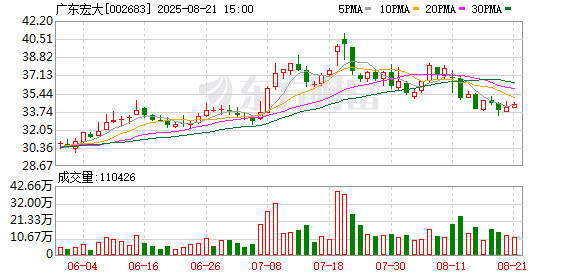
广东宏大:8月21日召开董事会会议
Mei Ri Jing Ji Xin Wen· 2025-08-21 15:57
Core Viewpoint - Guangdong Hongda announced its 2025 semi-annual report during the board meeting held on August 21, 2025, highlighting the revenue composition for the first half of 2025 [2]. Revenue Composition - For the first half of 2025, Guangdong Hongda's revenue composition is as follows: - Mining operations accounted for 70.36% - Explosives and other income contributed 15.11% - Energy and chemical business represented 12.85% - Defense equipment made up 0.88% - Other industries accounted for 0.8% [2].

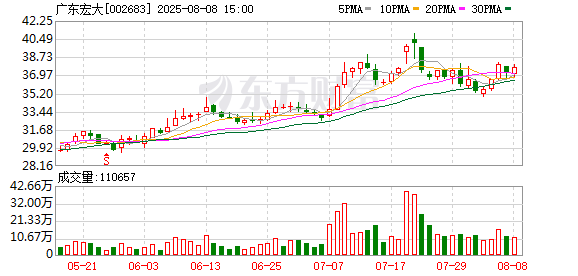
广东宏大:8月8日召开董事会会议
Mei Ri Jing Ji Xin Wen· 2025-08-08 11:05
Core Viewpoint - Guangdong Hongda announced the acquisition of controlling stake in Dalian Changzhilin Technology Co., Ltd. during its board meeting held on August 8, 2025 [2] Group 1: Company Overview - Guangdong Hongda's revenue composition for the year 2024 is as follows: mining accounts for 79.19%, civil explosives and other income for 16.91%, defense equipment for 2.57%, and other industries for 1.33% [2]
矿区历史遗留固废污染问题突出,环境部酝酿新规强化整治
Di Yi Cai Jing· 2025-08-07 02:47
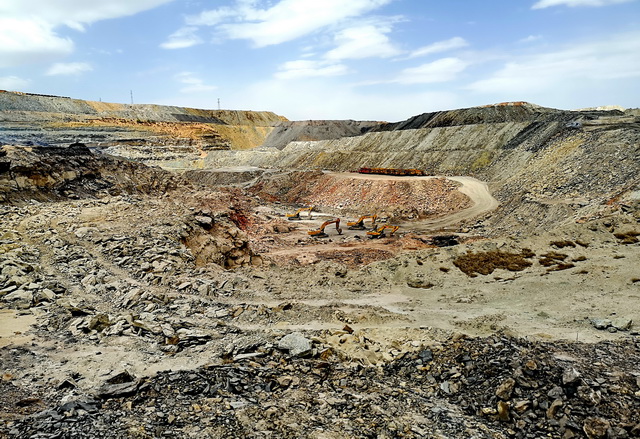
Core Points - The article highlights the significant issue of historical abandoned mines in China, with approximately 99,000 such mines and 420,000 hectares of land requiring remediation [1][5] - The Ministry of Ecology and Environment is set to introduce technical standards for investigating solid waste pollution in historical mining areas to enhance pollution prevention and ecological protection [1][2] Group 1: Current Situation - China has around 99,000 abandoned mines, including approximately 75,000 non-metallic mines, 11,700 metallic mines, and 12,300 energy mines [1] - The majority of these abandoned mines are small-scale, with 928,000 being small-sized and 62,000 being medium to large-sized [1] - The mining activities primarily utilize open-pit methods, contributing to significant land occupation and heavy metal pollution [1] Group 2: Regulatory Framework - The newly revised Mineral Resources Law includes a dedicated chapter on ecological restoration in mining areas, mandating local governments to organize remediation efforts when the responsible parties are untraceable [2] - The law emphasizes compliance with relevant regulations and technical standards for pollution control in mining areas [2] Group 3: Challenges in Waste Management - Historical solid waste in mining areas is characterized by its hidden nature, scattered distribution, and extensive range, making identification and assessment challenging [2][3] - The lack of specific technical standards for investigating historical mining waste and surrounding environmental media complicates remediation efforts [3] Group 4: Proposed Investigation Standards - The draft proposal outlines conditions under which historical mining waste may be deemed non-polluting, allowing for the exclusion of sampling investigations [4] - For waste that cannot be ruled out as polluting, sampling and analysis of surrounding environmental media will be required, utilizing advanced measurement techniques [4] Group 5: Remediation Strategies - The draft emphasizes a combination of natural recovery and artificial restoration for solid waste remediation, advocating for a systematic approach to pollution control [6]
广东宏大:8月1日召开董事会会议
Mei Ri Jing Ji Xin Wen· 2025-08-04 04:51
Group 1 - Guangdong Hongda announced the convening of its sixth board meeting on August 1, 2025, which was held both in-person and via video [1] - The meeting reviewed the proposal to revise the working rules of the board's specialized committees [1] - For the fiscal year 2024, Guangdong Hongda's revenue composition is as follows: mining accounted for 79.19%, civil explosives and other income for 16.91%, defense equipment for 2.57%, and other industries for 1.33% [1] Group 2 - A German executive warned that the automotive industry in China is facing a brutal price war, emphasizing that autonomous driving should not be offered for free, as it could lead to disastrous consequences for the entire industry [1]
泸州建立“一泸检查”工作平台为企业减负 涉企行政检查缩减率超30%
Si Chuan Ri Bao· 2025-07-21 08:02
Core Viewpoint - The implementation of the "One Lu Check" platform in Luzhou has significantly reduced the frequency of administrative inspections on enterprises, enhancing the business environment and allowing companies to focus more on production and operations [1][2][4]. Group 1: Administrative Inspection Reduction - Luzhou has reduced administrative inspections by 1,852 times, achieving a reduction rate of 30.5% [1]. - The "One Lu Check" platform allows for real-time identification of overlapping inspection plans, enabling coordinated inspections by multiple departments [2]. - The integration of inspections has led to a decrease in the frequency of checks for compliant enterprises, such as the reduction from four inspections a year to once every two years for certain companies [2][3]. Group 2: Risk-Based Regulation - A differentiated classification and credit supervision mechanism has been established based on the production types and management situations of food production enterprises [3]. - The mechanism allows for increased inspection frequency for high-risk entities while reducing it for those with lower credit risk [3]. Group 3: Enhanced Efficiency and Compliance - The "One Lu Check" platform maximizes the effectiveness of administrative enforcement while minimizing disruptions to business operations [4]. - Continuous efforts to implement the spirit of the Central Eight Regulations aim to further solidify and deepen the results of administrative reforms [4].
大中矿业: 利润分配管理制度
Zheng Quan Zhi Xing· 2025-06-26 16:41
Core Viewpoint - The company aims to establish a scientific, sustainable, and stable profit distribution mechanism to enhance transparency and protect the rights of minority investors while ensuring long-term development [1]. Profit Distribution Principles - The company emphasizes reasonable returns to investors while considering long-term sustainable development and maintaining continuity and stability in its profit distribution policy [1]. - The company must allocate 10% of its after-tax profits to the statutory reserve fund, which can be suspended if the cumulative amount exceeds 50% of the registered capital [2][3]. Profit Distribution Order - After allocating the statutory reserve fund, the remaining after-tax profits will be distributed according to the shareholding ratio unless otherwise specified in the company’s articles of association [2][3]. Profit Distribution Forms and Conditions - The company can distribute profits in cash, stock, or a combination of both, with cash dividends prioritized over stock dividends [3][4]. - The company aims to distribute at least 20% of the distributable profits as cash dividends annually, provided that the after-tax profit is positive and there are no significant capital expenditures planned [3][4]. Cash Dividend Policy - The board of directors will consider industry characteristics, development stages, operational models, profitability, and major capital expenditures when formulating a reasonable profit distribution plan [4][5]. - In cases of special circumstances where cash dividends are not distributed, the board must provide a detailed explanation to the shareholders [5]. Decision-Making and Execution - The profit distribution proposal is developed by the board of directors and must be approved by the shareholders' meeting [6][7]. - The company must communicate with shareholders, especially minority shareholders, to gather opinions before the shareholders' meeting reviews the profit distribution plan [6]. Reporting and Compliance - The company is required to disclose the execution status of the profit distribution in its annual report [7][8]. - Any adjustments to the profit distribution policy must comply with relevant regulations and require a special resolution from the shareholders' meeting [7][8].